Artwork
Hunting Scene
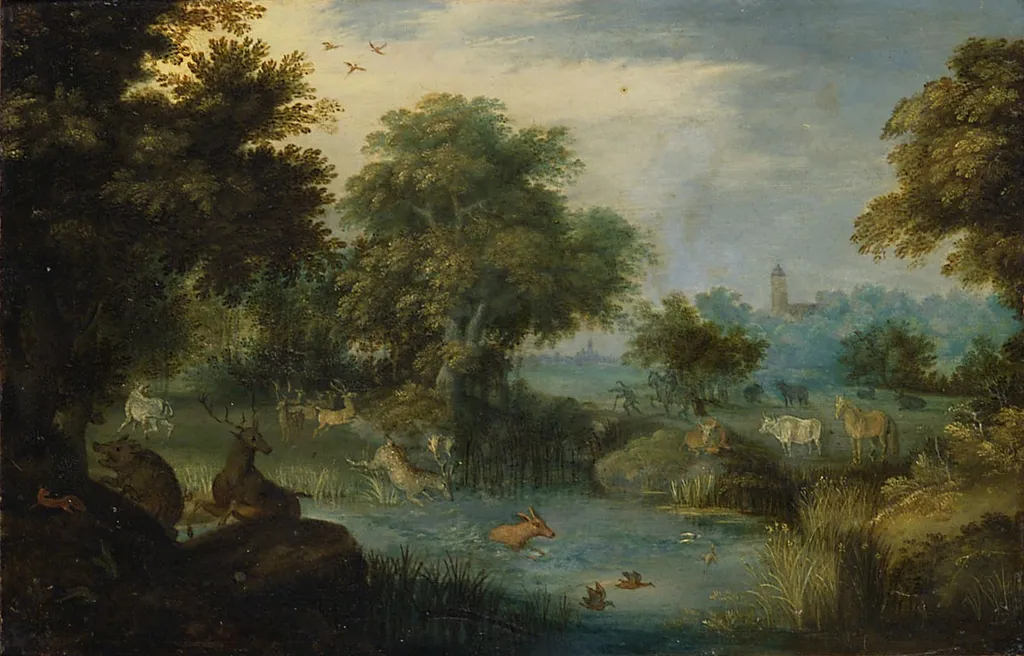
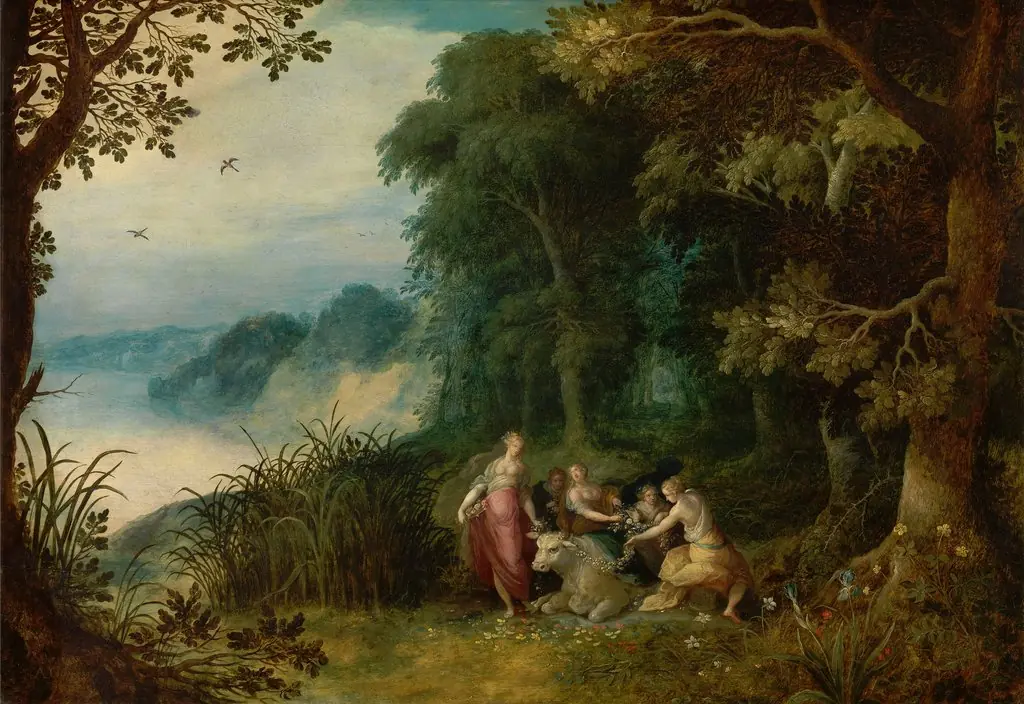
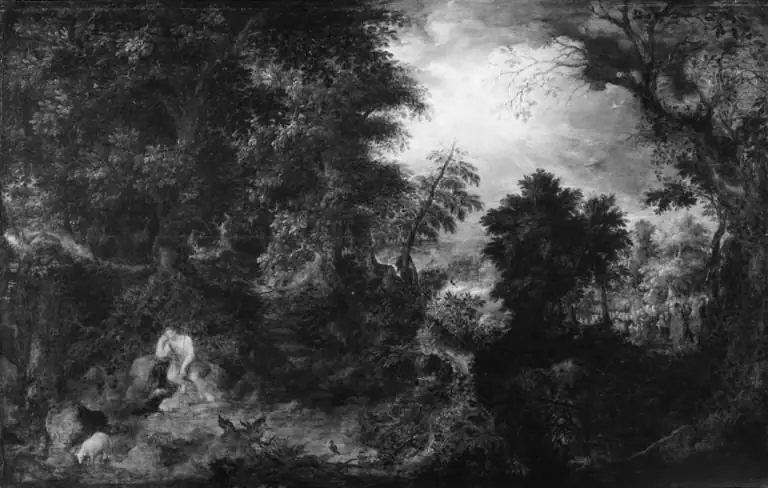
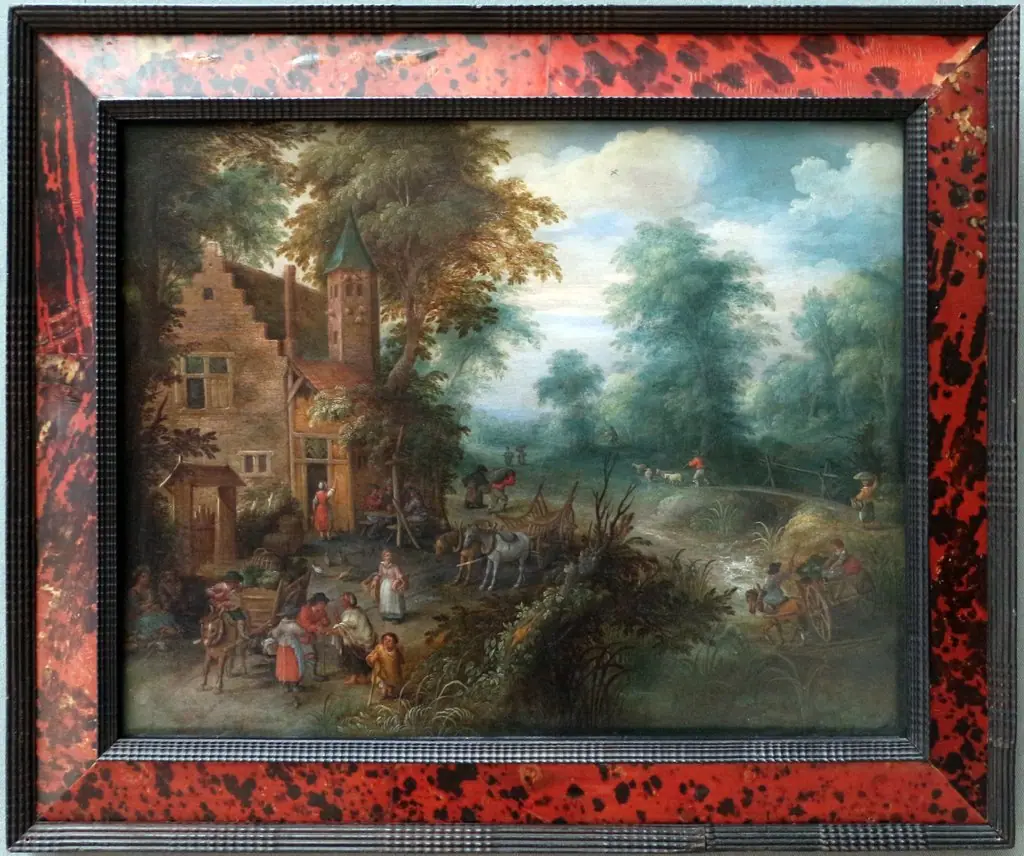
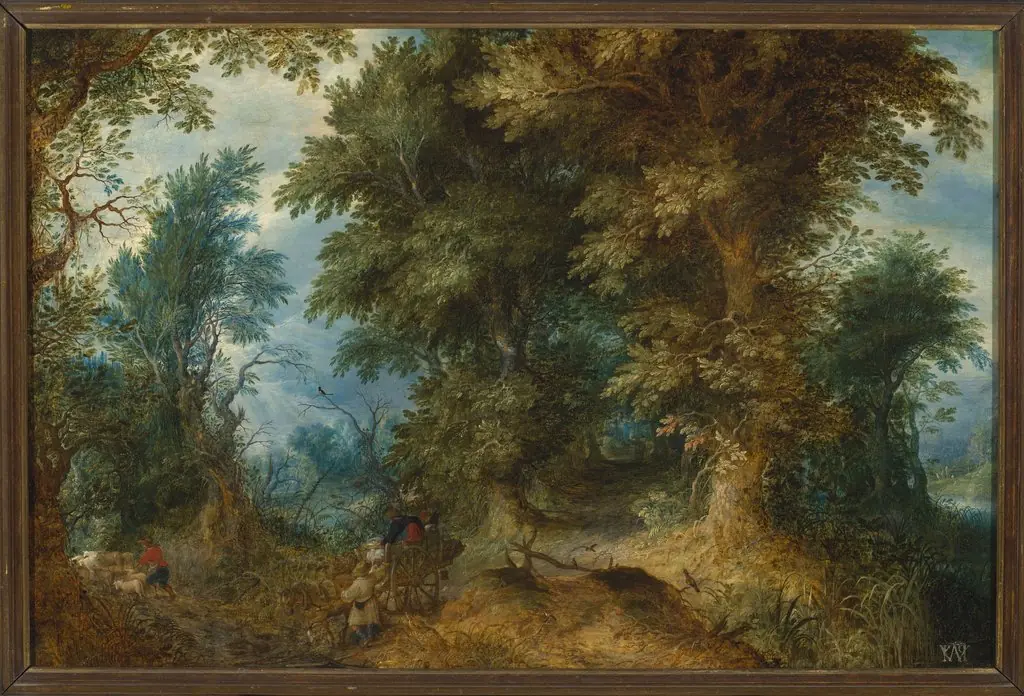
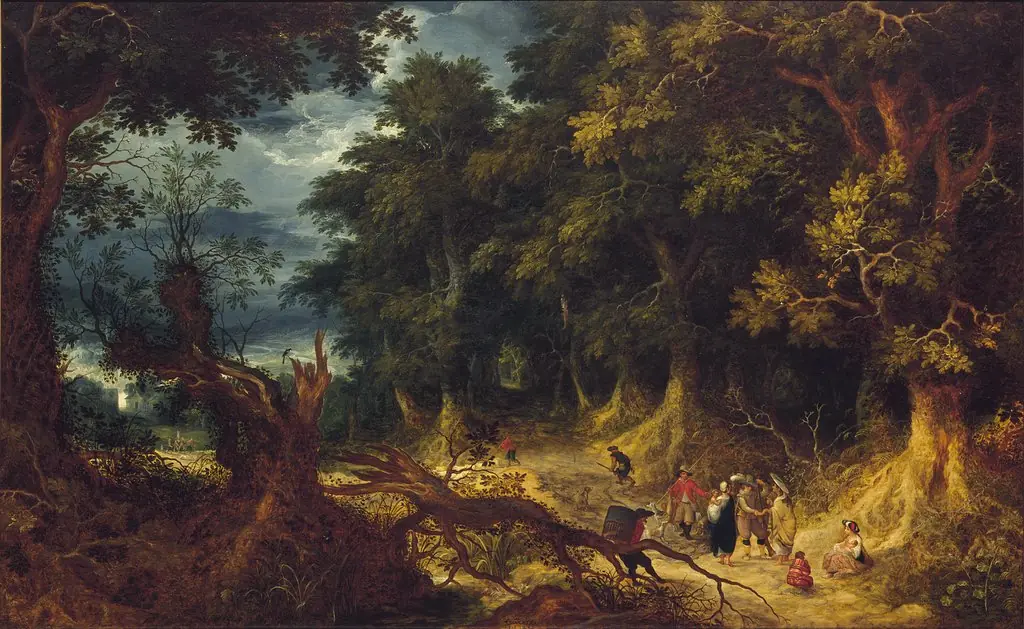
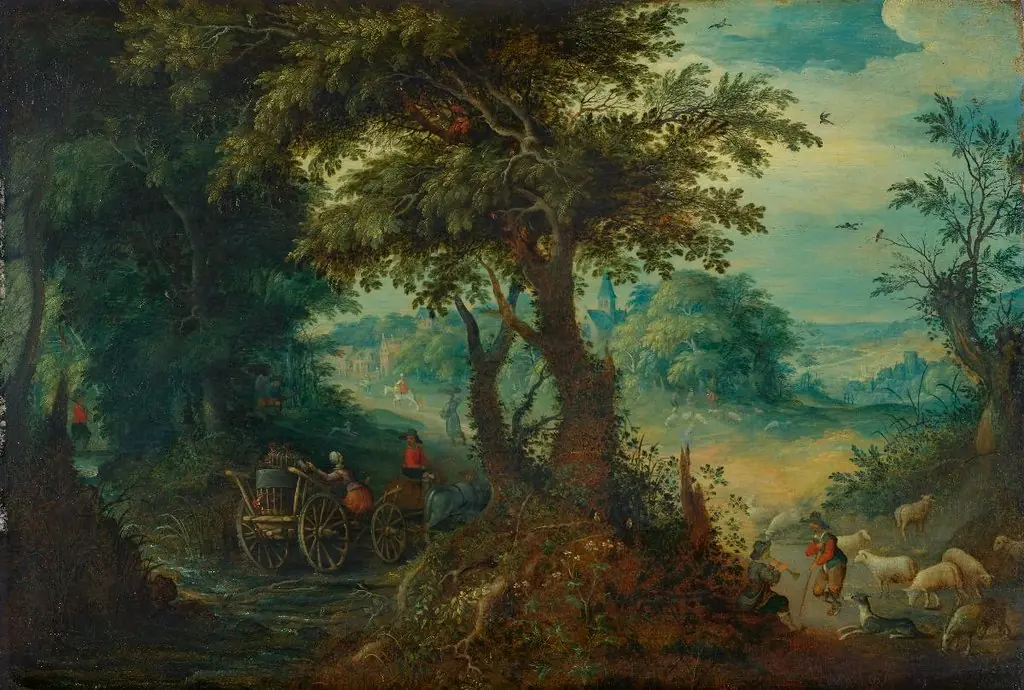
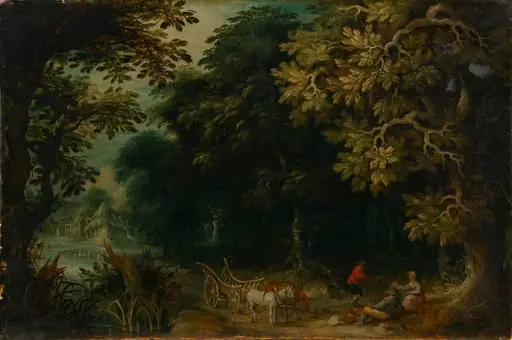
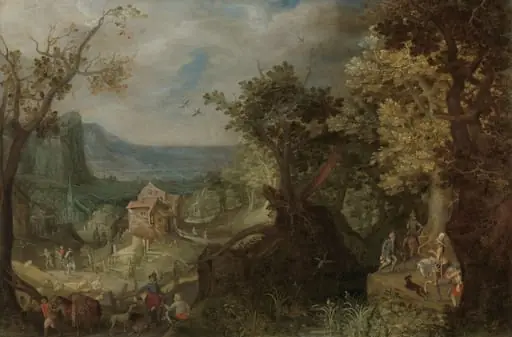
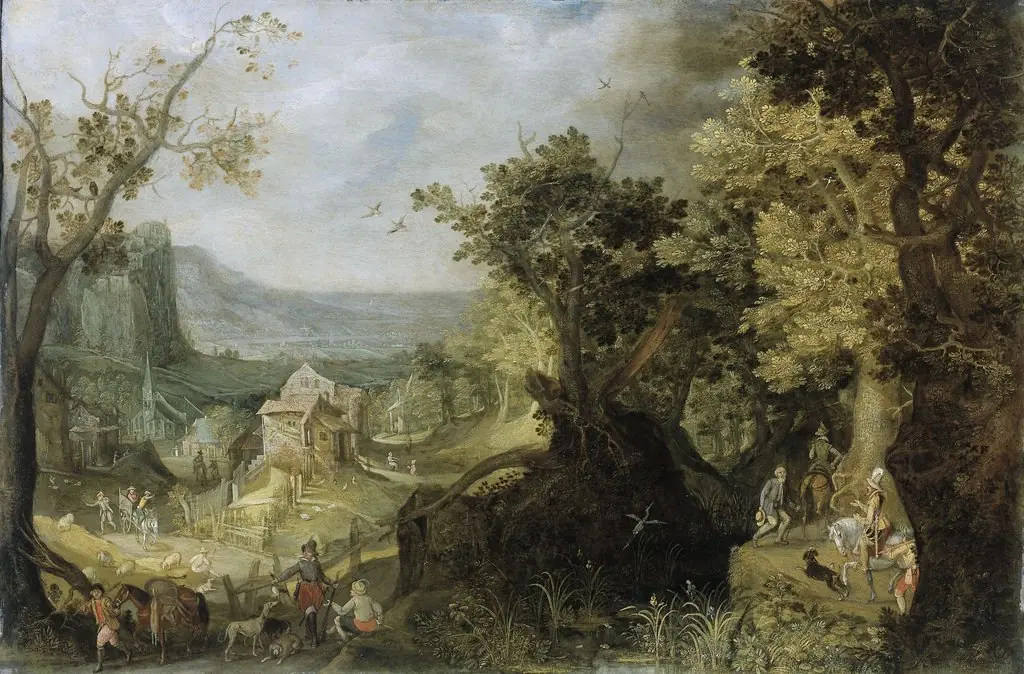
Hunting Scene is an oil painting by the Flemish Baroque painting artist Abraham Govaerts. It dates from 1613 and is held in the collection of the Kunsthistorisches Museum.
About this work
Technique & Style
Stylistically, the piece integrates the genres of landscape and animal art, depicting a hunting scene within a natural setting.
Executed in 1613, this landscape painting by Abraham Govaerts utilizes oil paint as its primary medium. The work is characterized by its small scale, measuring 18 cm in height and 28 cm in width. Stylistically, the piece integrates the genres of landscape and animal art, depicting a hunting scene within a natural setting. The compact dimensions suggest a format intended for close viewing, typical of cabinet paintings from this period.
History & Provenance
Abraham Govaerts painted Hunting Scene in 1613 as an oil on panel work measuring 18 cm by 28 cm. The painting entered the collection of the Kunsthistorisches Museum, where it remains on display.
The work’s provenance is straightforward, moving directly from the artist’s studio to the museum’s holdings without documented intermediaries. It was commissioned by an unidentified patron in the early 17th century, reflecting the period’s demand for landscape scenes featuring hunting subjects.
Govaerts’ technique combines detailed animal rendering with a naturalistic landscape backdrop, exemplifying the genre’s evolution in Flemish art. The painting is catalogued in the museum’s records as part of its permanent collection, confirming its continuous ownership since creation.
The painting Hunting Scene by Abraham Govaerts (1613) is part of the collection at the Kunsthistorisches Museum, where it is recorded under its accession details. It has been exhibited in museum displays focusing on 17th-century Flemish landscape and animal painting, including presentations of the museum’s holdings of works from the early 1600s. The work measures 28 cm in width and 18 cm in height, created in oil paint as documented in its cataloging information.
Legacy
The Hunting Scene by Abraham Govaerts has been recognized for its contribution to early Baroque landscape painting, particularly in its integration of animal subjects within naturalistic settings. Its compositional approach influenced later artists working within the Flemish tradition, especially in the depiction of hunting motifs as symbolic and decorative elements. The work's presence in a major institutional collection has contributed to scholarly discussions on 17th-century genre painting, reinforcing the legacy of Govaerts as a precursor to more prominent animal painters of the period.
Overview
Abraham Govaerts painted this oil-on-panel work in 1613, aligning with the Flemish Baroque tradition of small-scale landscape compositions. Rather than executing every element himself, Govaerts typically designed the wooded settings and enlisted specialists to add figures, animals, or other details. This collaborative method was common among Antwerp artists of the period, allowing for refined, multi-layered scenes that balanced naturalism with narrative.
Subject & Meaning
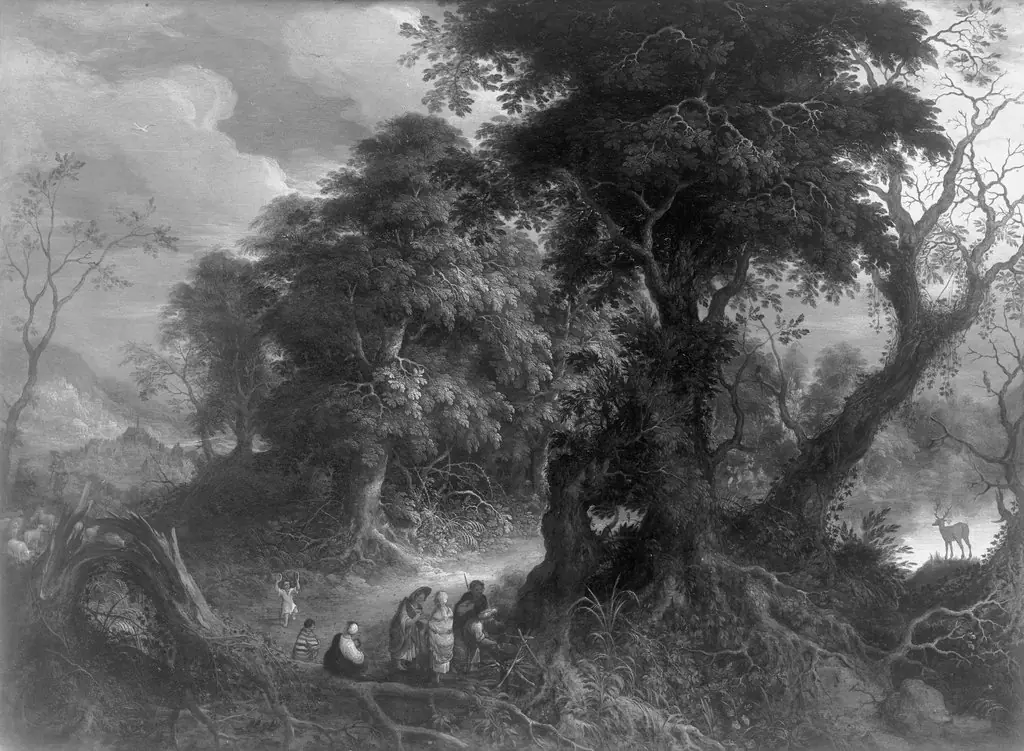
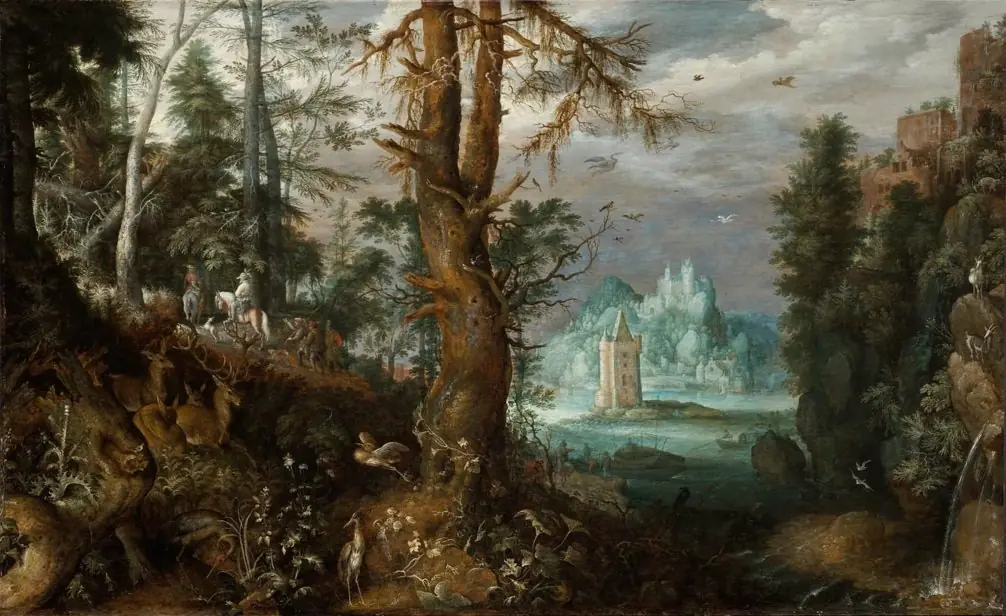
The painting illustrates a woodland hunt, with deer gathered near a stream and a distant rider on horseback suggesting pursuit. Though the action is implied rather than violent, the scene evokes the aristocratic pastime of hunting, a subject tied to noble leisure and control over nature. The composition avoids overt drama, instead emphasizing harmony between humans, animals, and the forest environment.
Context
In early 17th-century Antwerp, landscape painting flourished alongside religious and mythological works. Artists like Govaerts responded to a market demanding scenes of nature that combined realism with idealized serenity. His work reflects broader trends in Northern European art, where forests became symbolic spaces, both literal and metaphorical, of retreat, order, and the human relationship with the wild.
Artist & collection
Artist
Abraham Govaerts (1589 – 9 September 1626) was a Flemish painter who specialized in small cabinet-sized forest landscapes in the manner of Jan Brueghel the Elder and Gillis van Coninxloo.