Artwork
Minerva as patroness of Arts and Sciences
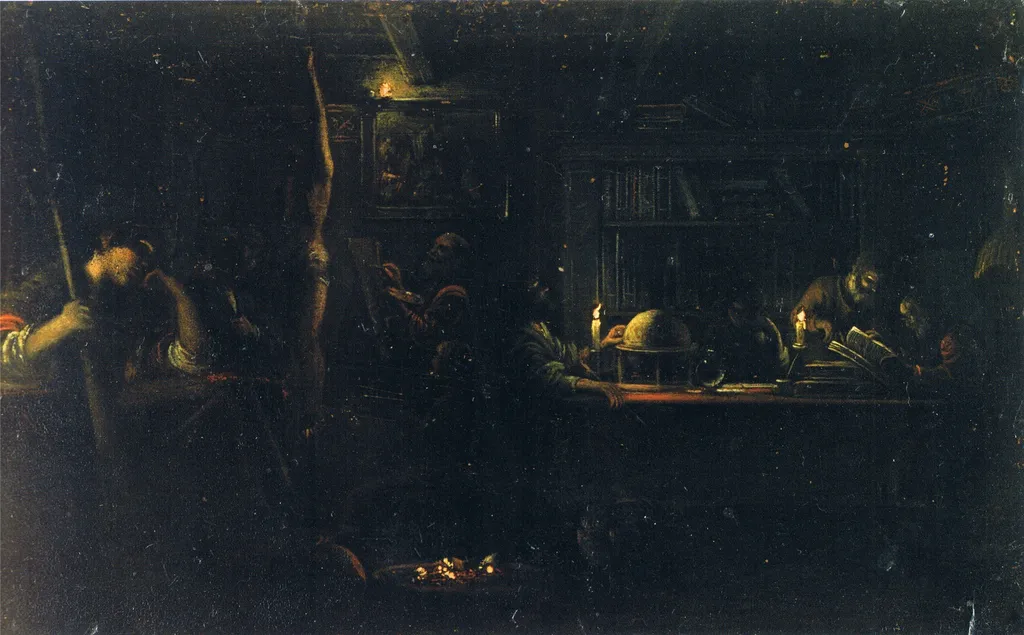
Minerva as patroness of Arts and Sciences is an oil painting by the Early Baroque Italian artist Adam Elsheimer. It dates from 1600 and is held in the collection of the Fitzwilliam Museum.
About this work
Overview
Elsheimer’s focus on subtle lighting and mythological themes distinguished his output within early Baroque art, blending naturalism with symbolic depth.
Adam Elsheimer, a German artist working in Rome around 1600, painted this small copper panel depicting Minerva, the Roman goddess of wisdom. Executed in oil, the work belongs to the cabinet painting tradition, intimate, finely detailed works intended for private collections. Elsheimer’s focus on subtle lighting and mythological themes distinguished his output within early Baroque art, blending naturalism with symbolic depth.
Subject & Meaning
Minerva, identified by her helmet and shield, stands as the embodiment of intellectual and artistic authority. She holds a torch, symbolizing enlightenment, while a laurel wreath marks her divine status. Around her, figures engage in scholarly and creative acts, reading, writing, observing, suggesting the transmission of knowledge under her guidance.
The composition frames her as a quiet, commanding center of learning, not through grandeur but through serene presence.
Technique & Style
Elsheimer rendered the scene on copper, a support prized for its smooth surface and ability to capture fine detail. His use of chiaroscuro creates a nocturnal atmosphere, with the torch’s glow illuminating Minerva and her followers against a deep, star-speckled sky. The figures are rendered with precision, their gestures and expressions carefully calibrated to convey reverence and intellectual engagement without theatricality.
History & Provenance
Painted circa 1600 during Elsheimer’s Roman period, the work reflects his engagement with classical antiquity and contemporary humanist ideals. It likely entered private collections in Italy or Germany soon after completion. While its early ownership is undocumented, its survival in relatively intact condition speaks to its sustained appreciation among connoisseurs of small-scale, intellectually driven art.
Context
In early 17th-century Rome, mythological subjects were often reinterpreted through a humanist lens, aligning classical figures with contemporary values of learning and virtue. Elsheimer’s approach diverged from monumental Baroque drama, favoring quiet, contemplative scenes. His integration of celestial elements and intimate scale resonated with collectors who valued erudition and technical mastery over spectacle.
Legacy
Elsheimer’s nuanced lighting and mythological compositions influenced a generation of Northern European painters, notably Rembrandt and Rubens, who admired his ability to convey emotion and atmosphere in miniature. Though less widely known today, his work helped shape the visual language of Baroque narrative painting, particularly in its emphasis on psychological subtlety and controlled luminosity.
Artist & collection
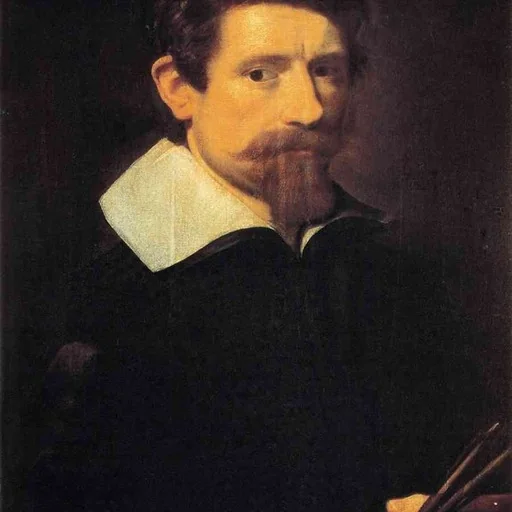
Artist
Adam Elsheimer (18 March 1578 – 11 December 1610) was a German Baroque painter who worked in Rome.