Artwork
Saint Christopher
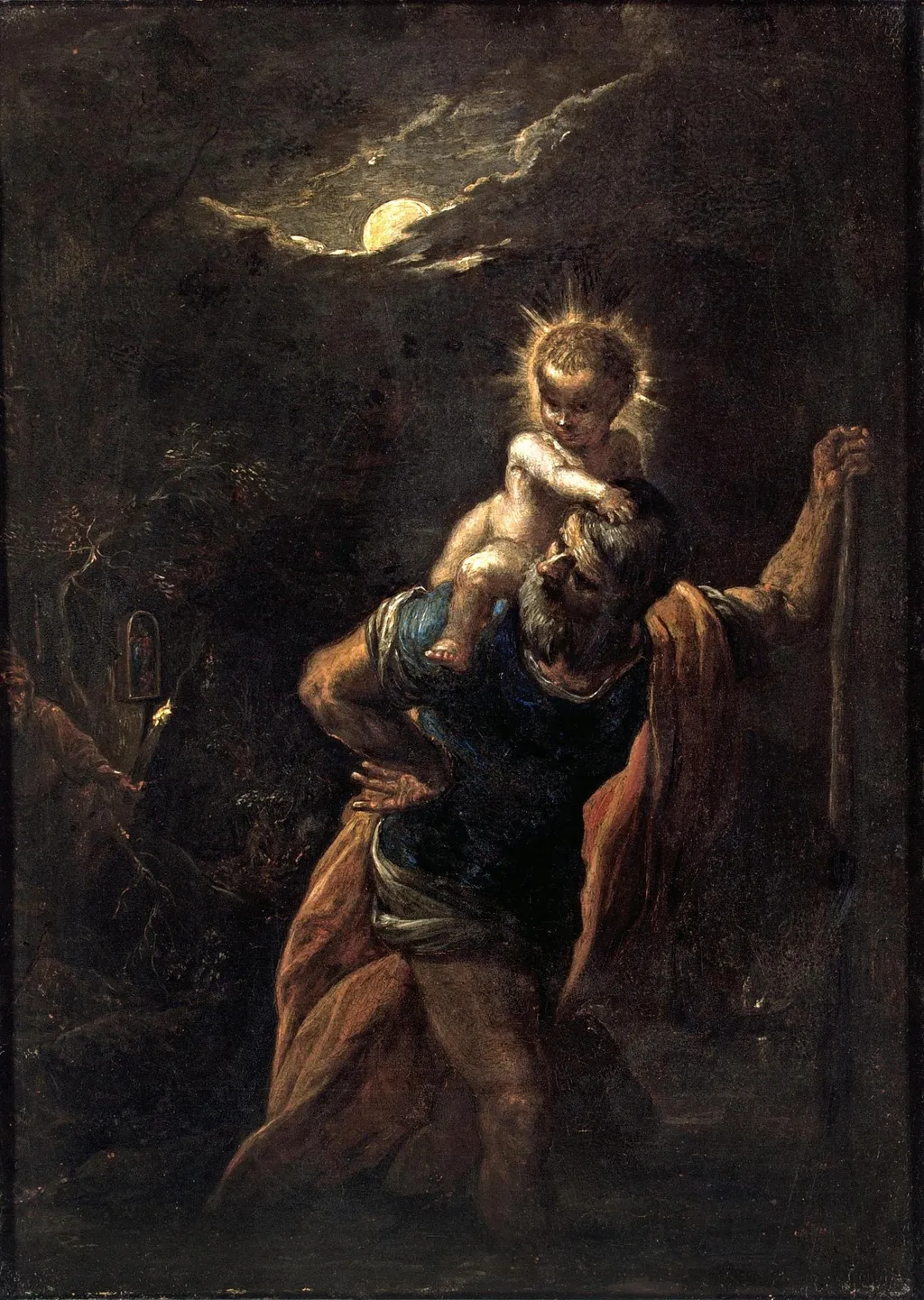
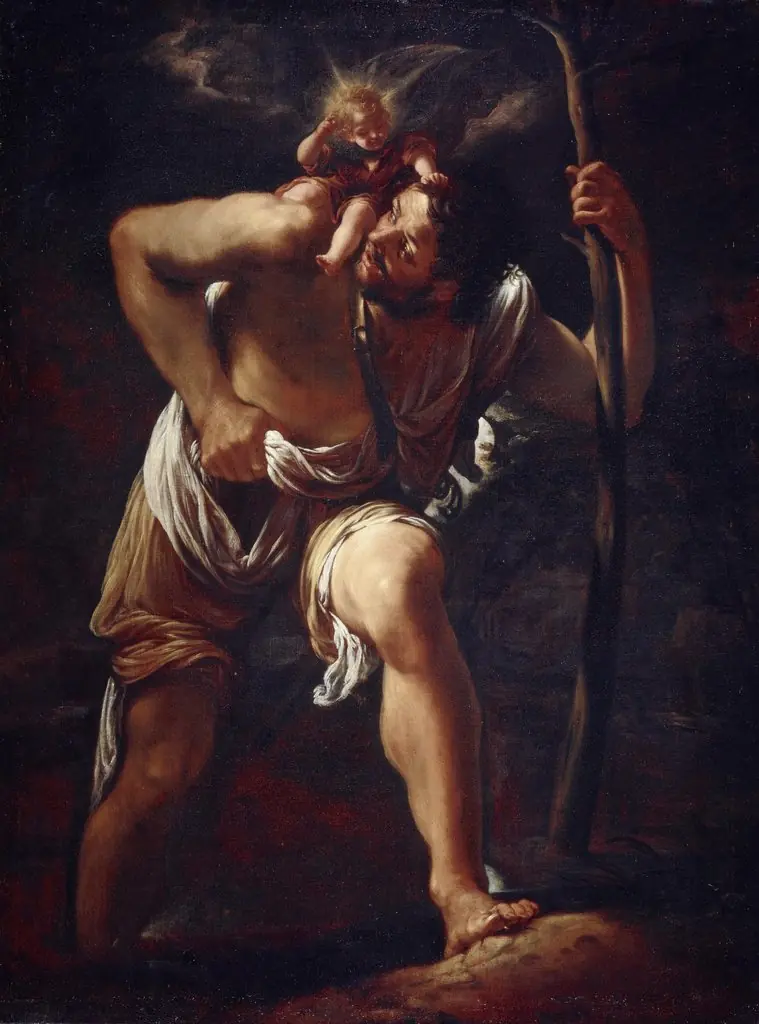
Saint Christopher is an oil painting by the Mannerist artist Adam Elsheimer. It dates from 1600 and is held in the collection of the Hermitage Museum.
About this work
Overview
Saint Christopher is a religious painting on copper created by the German Baroque artist Adam Elsheimer around 1598.
Saint Christopher is a religious painting on copper created by the German Baroque artist Adam Elsheimer around 1598. Measuring 22.5 cm in height and 17.5 cm in width, the work is a small-scale cabinet painting made in Germany. It is currently held in the State Hermitage Museum in St. Petersburg, under the accession number GE-694, and is displayed in the Small Hermitage, room 255. The painting is an important early example of Elsheimer's specialized practice of painting in oil on copper, a medium that allowed for meticulous detail and innovative lighting effects, which would later profoundly influence contemporaries such as Peter Paul Rubens and Rembrandt.
Subject & Meaning
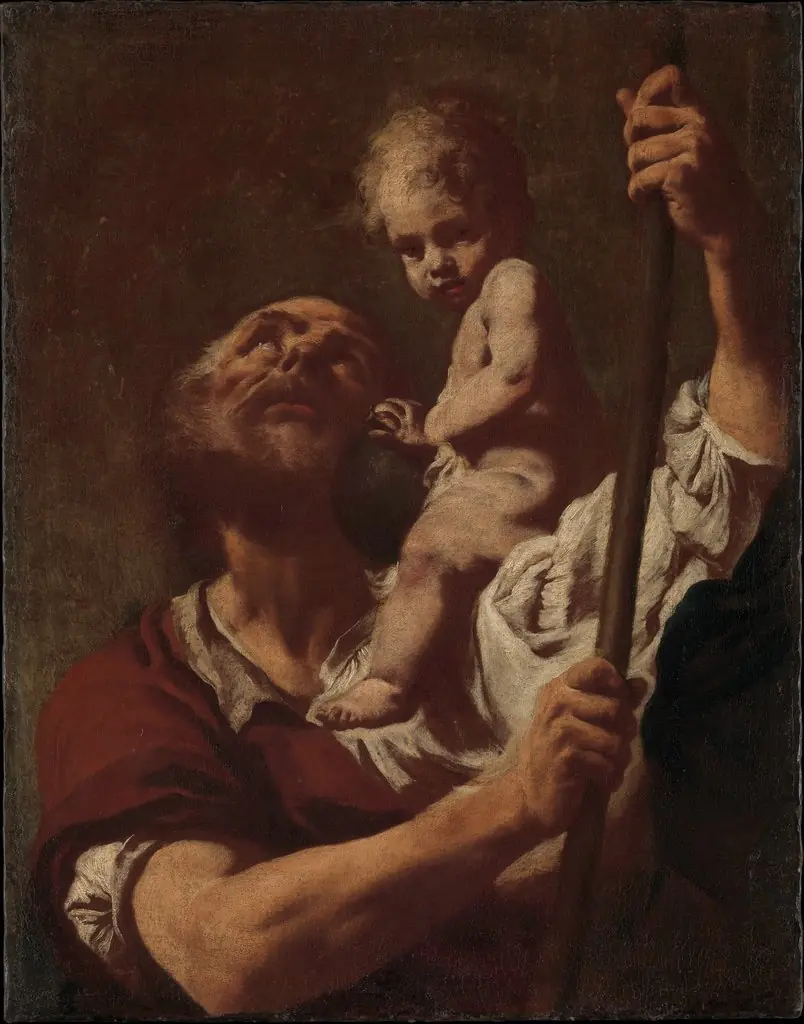
The artwork depicts the legendary Saint Christopher, the patron saint of travelers, carrying the young Christ child across a treacherous river. At the center of the vertical composition, a bearded man supports the nude child on his shoulders. The child grasps the man's head with both hands and wears a radiant halo, symbolizing his divinity. The saint holds a tall staff in his raised right hand and places his left hand on his hip, bearing the physical burden of the child's weight. To the left, a faintly visible figure holding a lantern near a small shrine-like structure further contextualizes the nocturnal journey. The painting serves as a symbolic representation of faith and enlightenment, exploring the dualities of burden and redemption, where the Christ child acts as a source of illumination in a dark world.
Technique & Style
Executed in oil on copper, the painting demonstrates Elsheimer's meticulous rendering of detail, a technique facilitated by the smooth copper support. The composition is dominated by a nocturnal setting, employing a palette of deep browns, blacks, and muted blues. Strong chiaroscuro illuminates the central figures against the dark surroundings, with warm highlights on their skin and the moon. A full moon, partially obscured by clouds in the upper center, provides one light source, while the glowing halo of the Christ child provides another, defining the emotional and spiritual essence of the scene. The brushwork appears loose and painterly, with visible texture in the darker areas and a sketch-like quality to the finish, distinguishing it from the highly polished finish typical of other copper paintings of the era.
History & Provenance
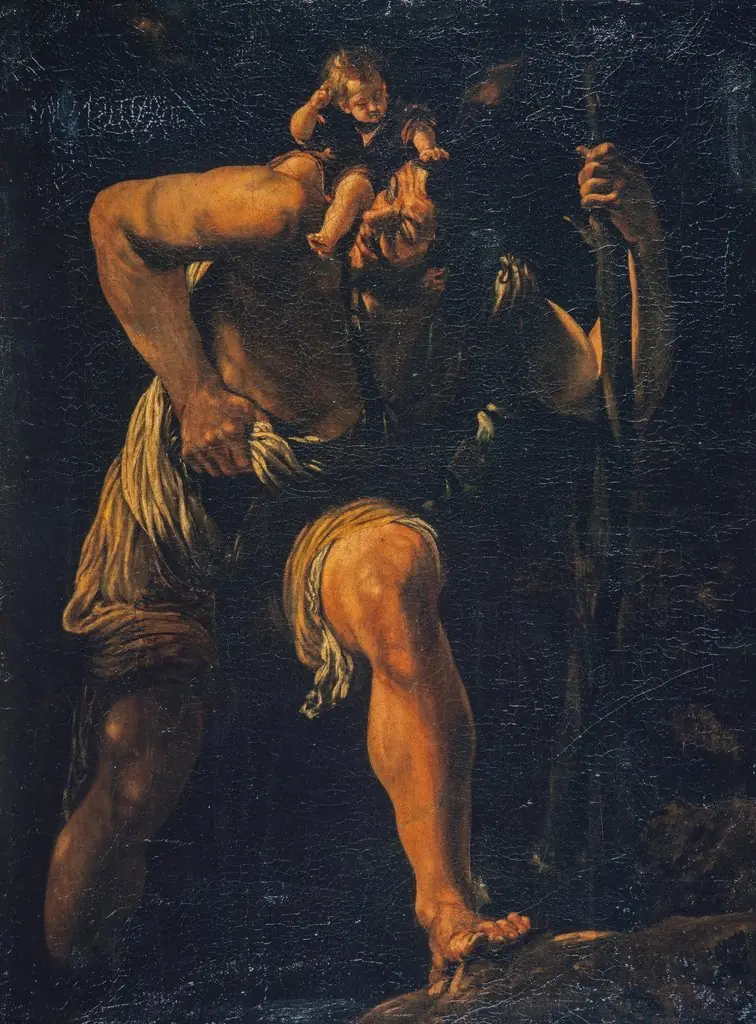
Created between 1598 and 1599, the painting dates to Elsheimer's early career before his permanent move to Rome. The work was acquired for the Hermitage collection between 1763 and 1774. It remains in the collection of the State Hermitage Museum in St. Petersburg today. The composition also circulated through later copies, including an oil on canvas version after Elsheimer, measuring 95 by 78 cm, which is held at Tamworth Castle and was acquired around 1923.
Context
Adam Elsheimer was a German Baroque painter born in Frankfurt am Main in 1578. Though his career was short and his output small, he was highly influential. After training under Philipp Uffenbach, he traveled to Italy via Munich around 1598, the same year as the Saint Christopher. He likely worked as an assistant to Johann Rottenhammer in Venice, who specialized in cabinet paintings. By 1600, Elsheimer settled in Rome, where he joined the Accademia di San Luca in 1606 and befriended Peter Paul Rubens and Paul Bril. Elsheimer had a preference for rare or original subjects and innovative landscape conceptions. His perfectionism and slow working method limited his production, but his works were disseminated widely through prints by Hendrick Goudt, allowing his intimate cabinet paintings to reach a broad audience of artists and collectors.
Own this work as a print
Artist & collection
Artist
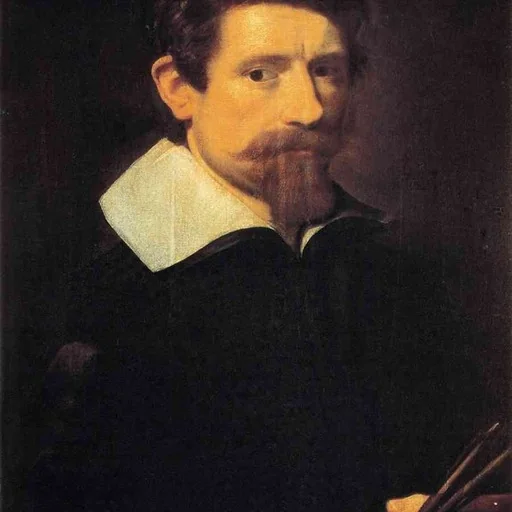
Adam Elsheimer (18 March 1578 – 11 December 1610) was a German Baroque painter who worked in Rome.