Artwork
Seven Sorrows Polyptych:Sorrowing mother
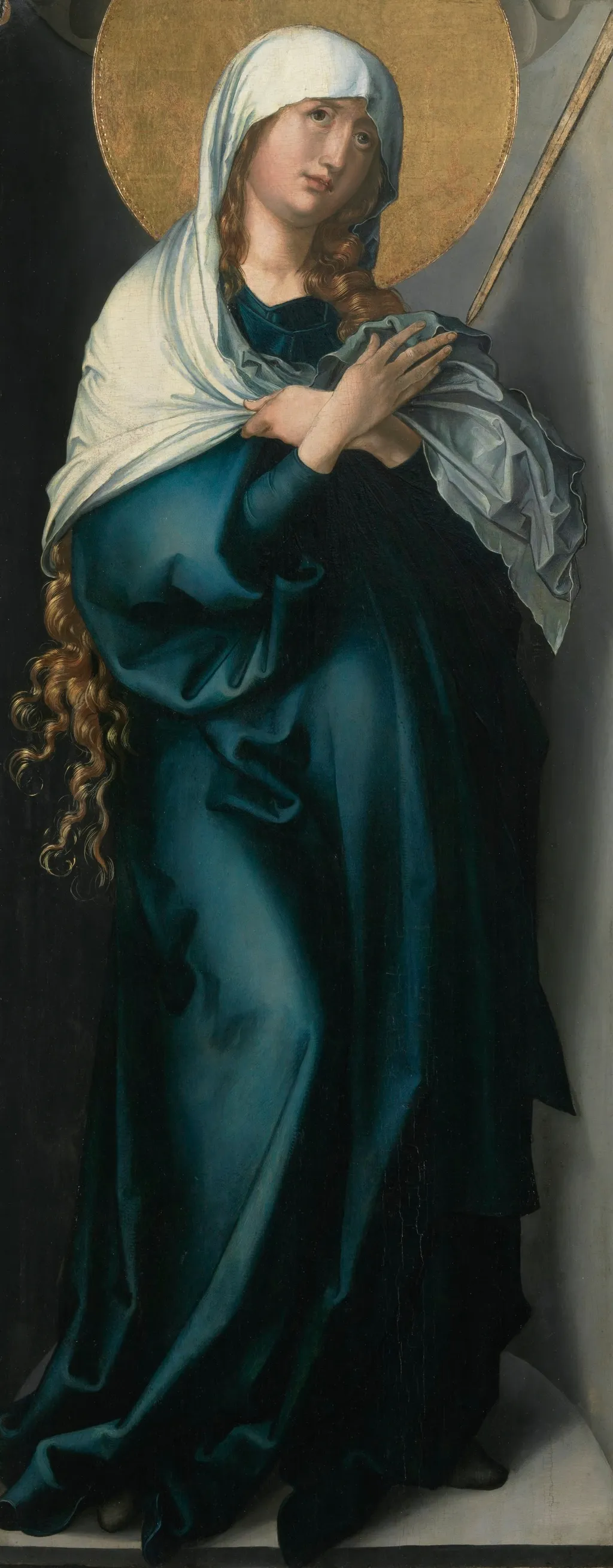
Seven Sorrows Polyptych:Sorrowing mother is an oil painting by the Northern Renaissance artist Albrecht Dürer. It dates from 1498 and is held in the collection of the Alte Pinakothek.
About this work
Subject & Meaning
The composition functions as the focal point of the larger altarpiece structure, concentrating the viewer's meditation on the suffering of the mother of Christ.
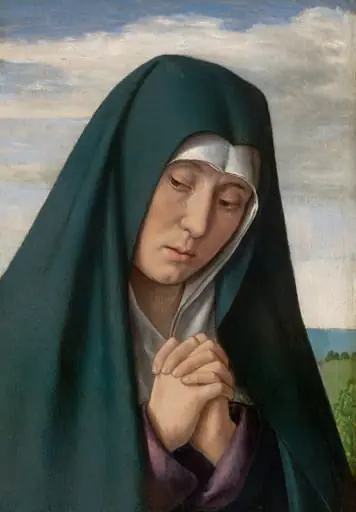
This panel serves as the central component of the Seven Sorrows polyptych, explicitly depicting the Virgin Mary under the title Our Lady of Sorrows. As a work of religious art, the image focuses on the Virgin's grief, embodying the specific devotional theme of her seven sorrows. The composition functions as the focal point of the larger altarpiece structure, concentrating the viewer's meditation on the suffering of the mother of Christ.
By isolating this figure in the central position, the work emphasizes the theological significance of Mary's emotional participation in the passion narrative.
Technique & Style
The central panel of the Seven Sorrows Polyptych is painted in oil on pine, a medium aligned with Northern European practice of the 1490s.
Handling is restrained yet precise, with smooth transitions in the modelling of the Virgin’s face and hands, and delicate glazing to convey luminous flesh and drapery folds. The composition is tightly focused on the half-length figure, emphasizing quiet sorrow through controlled gesture and expression rather than dramatic movement.
The condition appears stable; no major paint losses or significant craquelure are noted in the sources consulted.
History & Provenance
The painting, dated to 1496, was created by Albrecht Dürer as the central panel of the Seven Sorrows Polyptych. Executed in oil on pine, the work depicts Our Lady of Sorrows and measures 110 cm in height by 43.6 cm in width. Historical records indicate the piece was owned by Benediktbeuern Abbey.
It is currently held in the collection of the Alte Pinakothek in Munich, where it remains a key example of religious art from the German Renaissance.
The central panel of the Seven Sorrows Polyptych, titled Sorrowing Mother, is held in the collection of the Alte Pinakothek in Munich. The work is currently associated with Benediktbeuern Abbey, which serves as its listed owner. The panel depicts the Our Lady of Sorrows and was created in 1496 using oil paint on pine.
Regarding its public display, the painting was featured in the exhibition titled Renaissance and Reformation. German Art in the Age of Dürer and Cranach.
Context
The Sorrowing Mother panel was executed by Albrecht Dürer in 1496 as part of the Seven Sorrows Polyptych, a religious work commissioned for Benediktbeuern Abbey and now housed in the Alte Pinakothek, Munich. The central panel depicts the Virgin Mary in mourning, reflecting the devotional focus on Christ's Passion characteristic of late medieval German art. Its material construction in oil on pine and its dimensions of 110 cm by 43.6 cm align with contemporary practices in large-scale devotional painting.
The work has been featured in scholarly discussions of Dürer's role in the transition from Gothic to Renaissance aesthetics, particularly in relation to his engagement with both Northern and Italian artistic influences during the late 15th century.
Legacy
The Sorrowful Mother panel from the Seven Sorrows Polyptych has shaped devotional imagery for centuries, especially within the German Renaissance tradition. Its portrayal of the Virgin Mary in contemplative grief informed later representations of Marian sorrow across Central European art, influencing both religious print cycles and regional altar compositions. The panel's compositional intensity and emotional clarity were cited by 19th-century art historians as exemplars of Late Gothic spirituality, contributing to renewed scholarly interest in Dürer's devotional works during the German Romantic period.
Its presence in the Alte Pinakothek has ensured continued public engagement with this thematic cycle since the early 19th century.
Overview
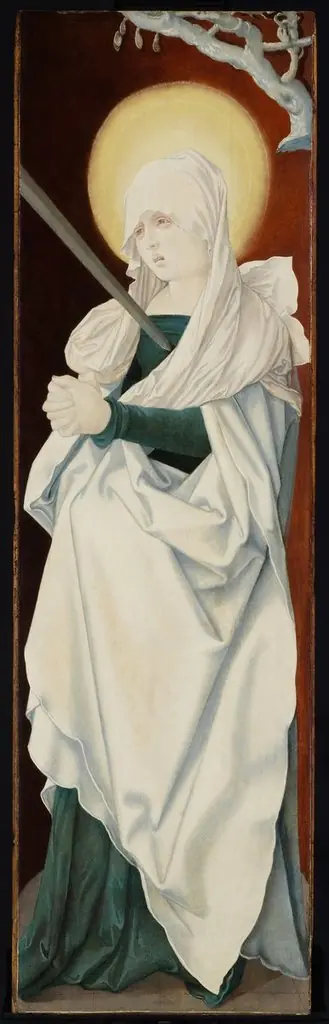
Albrecht Dürer’s Seven Sorrows Polyptych: Sorrowing Mother is an oil painting executed in 1498. It forms one panel of a larger polyptych now displayed in Munich’s Alte Pinakothek. The work belongs to the Northern Renaissance and presents the Virgin Mary in the devotional role of Our Lady of Sorrows, emphasizing her emotional response to Christ’s suffering.
Artist & collection
Artist
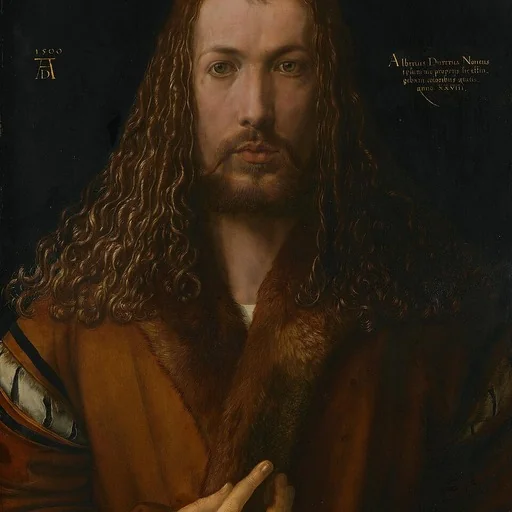
Albrecht Dürer spent his life in Nuremberg, a busy German city where artists traded prints like currency.

![Madonna and Child [obverse], by Albrecht Dürer](https://artifactworldgallery.com/img/albrecht-durer--madonna-and-child-obverse--d7b8ebf05d22ebe5-w320.webp)
![Lot and His Daughters [reverse], by Albrecht Dürer](https://artifactworldgallery.com/img/albrecht-durer--lot-and-his-daughters-reverse--b4ebf9b282faa17a-w320.webp)
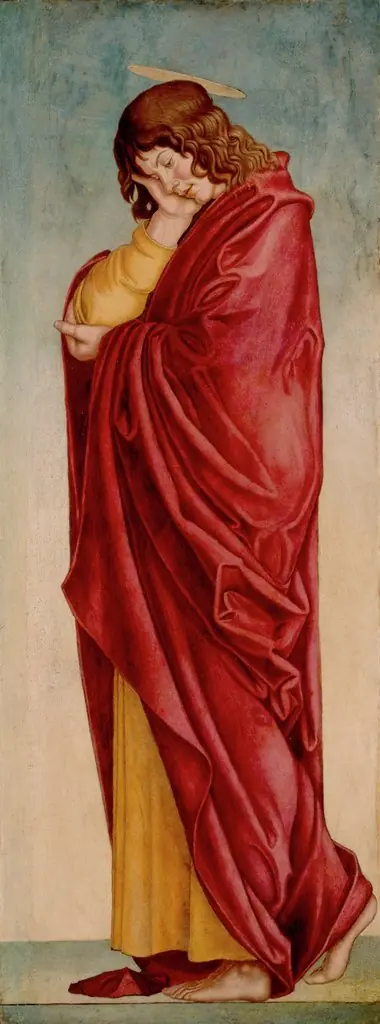 The Mourning Saint John
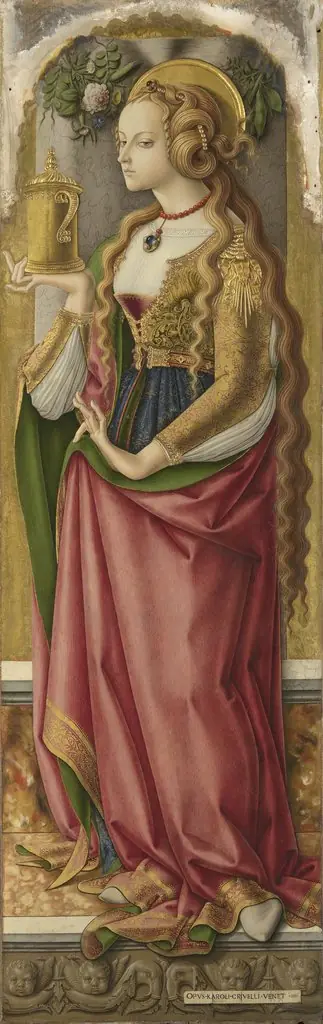 Mary Magdalen
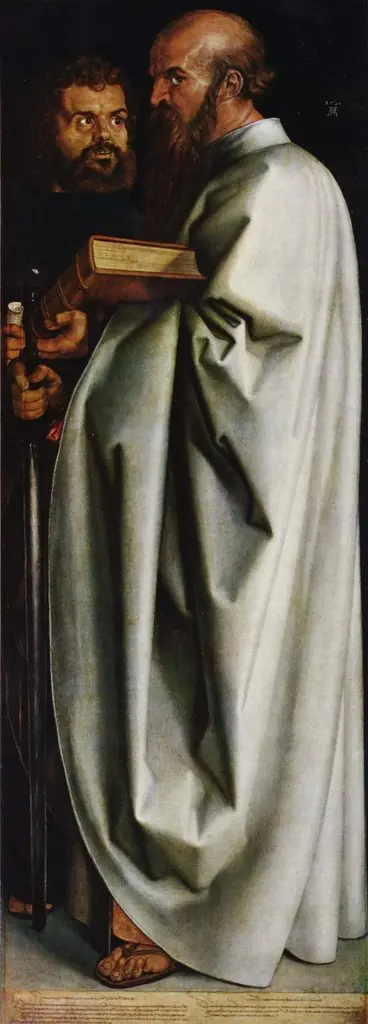 The Four Apostles: Saints Mark and Paul
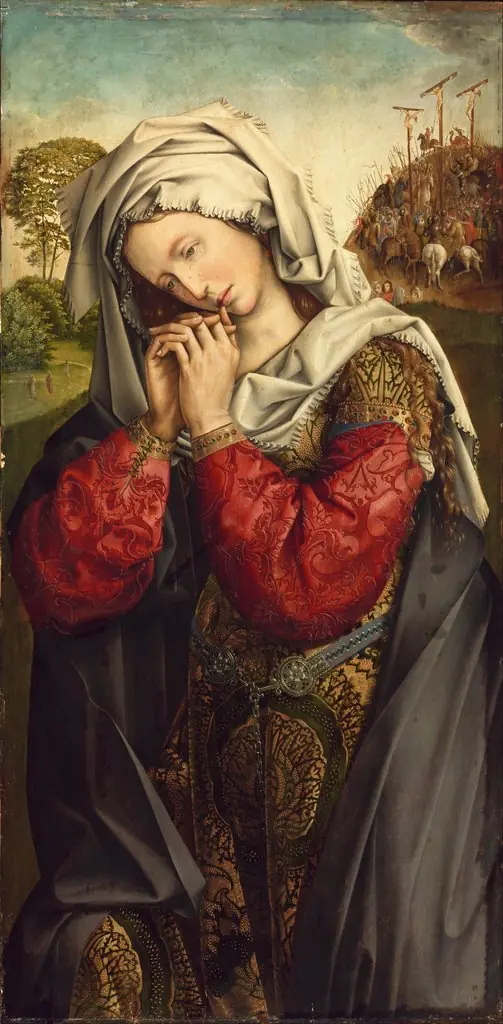 The Mourning Mary Magdalene
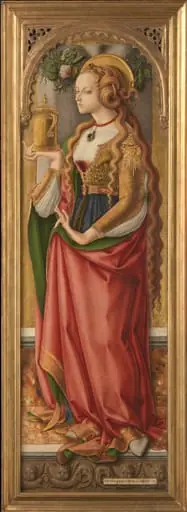 Maria Magdalena
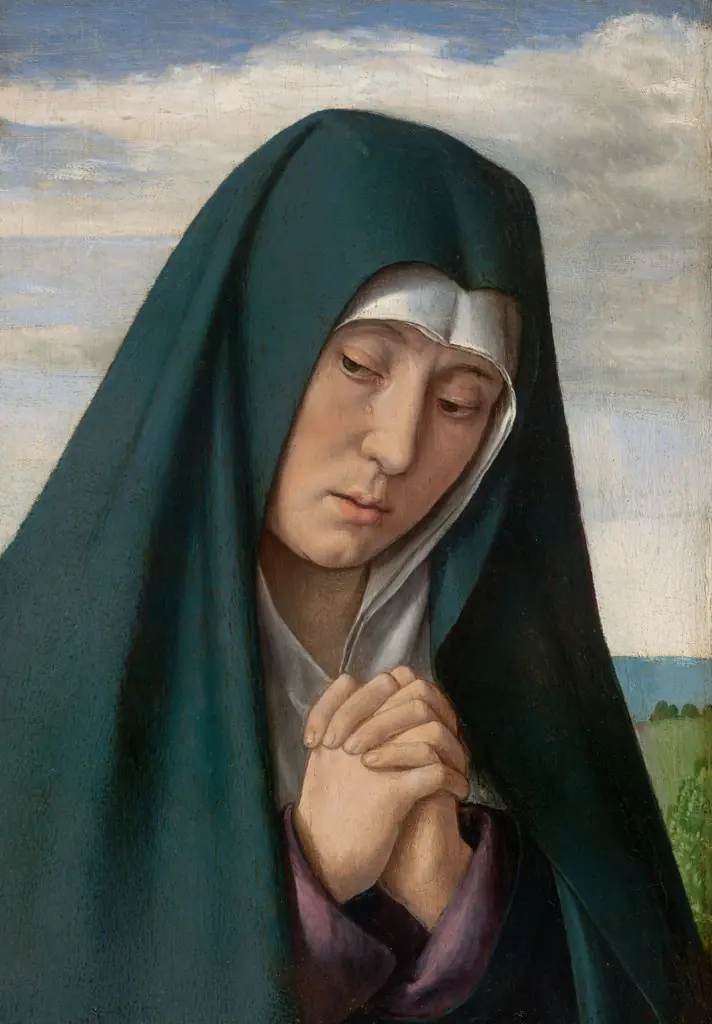 Fragment from Christ Carrying the Cross: Mourning Virgin
 The Four Apostles: Saints John and Peter
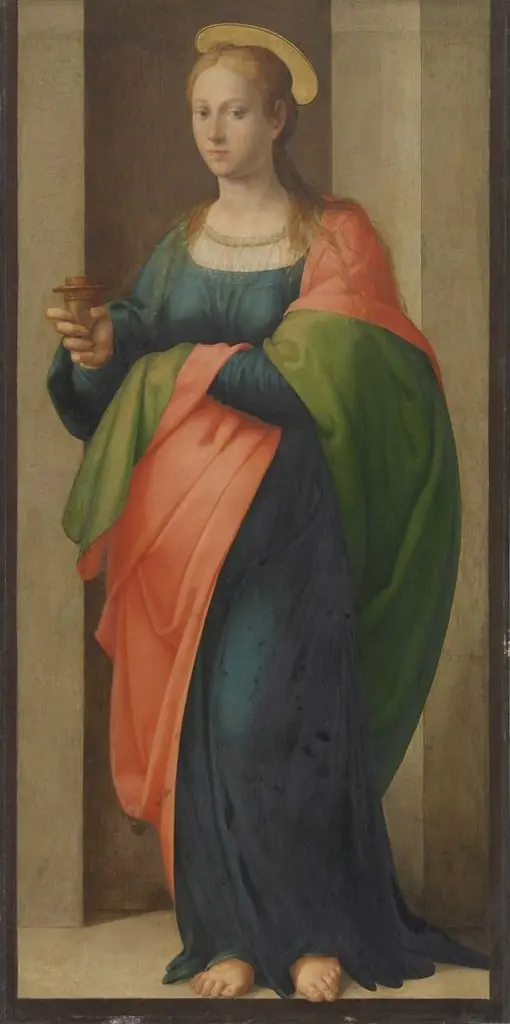 Saint Mary Magdalene
 Fragment from Christ Carrying the Cross: Mourning Virgin
 Saint Lawrence