Artwork
Portrait of Countess de Koller (nee Maria Riznich)
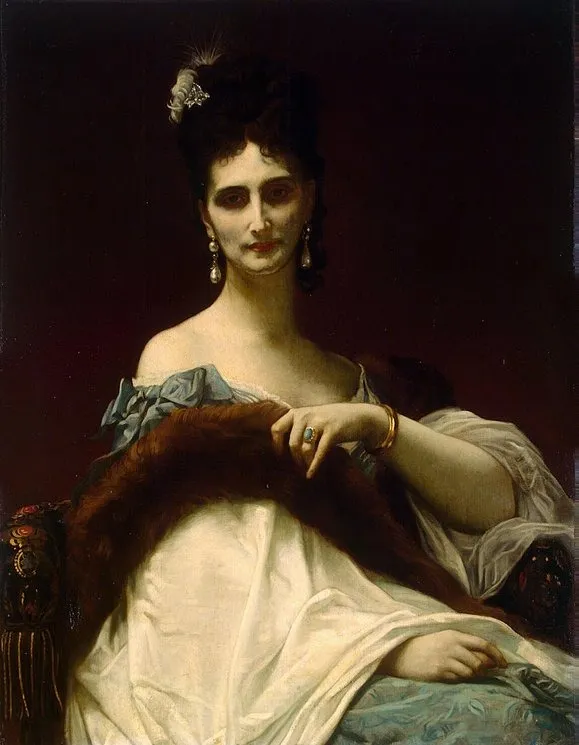
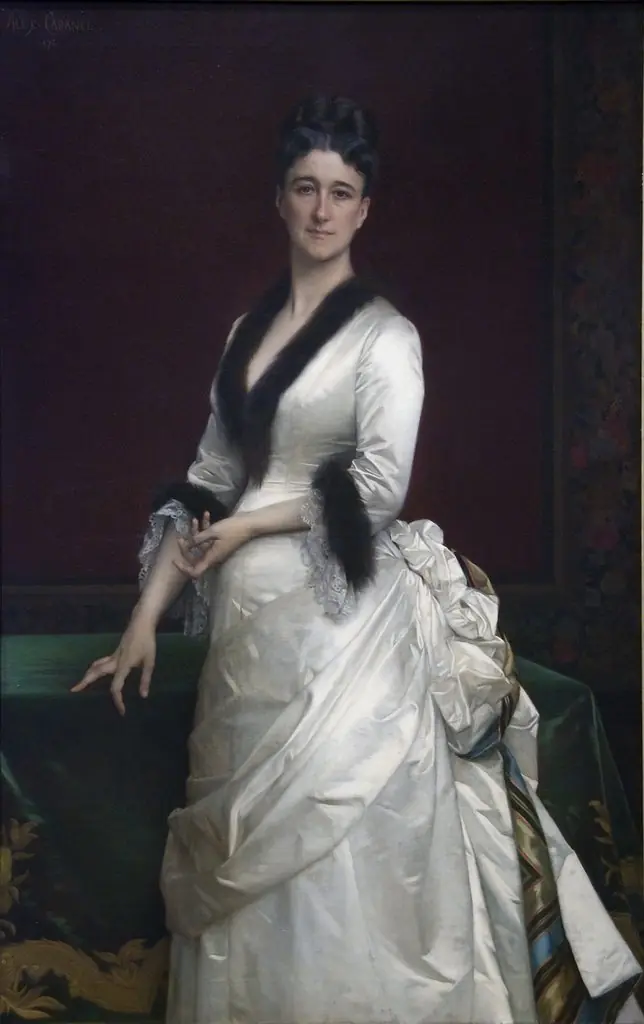
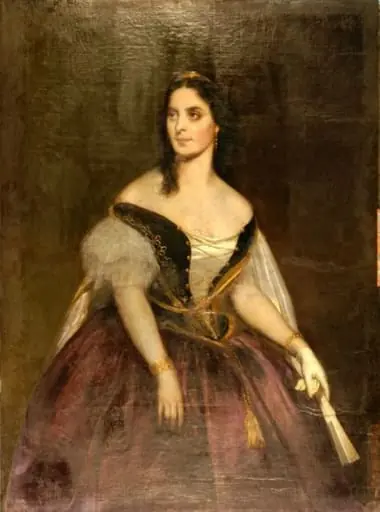
Portrait of Countess de Koller (nee Maria Riznich) is an oil painting by the Orientalist artist Alexandre Cabanel. It dates from 1873 and is held in the collection of the Hermitage Museum.
About this work
Overview
The Portrait of Countess de Koller (née Maria Riznich) is an oil on canvas painting by the French academic artist Alexandre Cabanel, dated 1873.
The Portrait of Countess de Koller (née Maria Riznich) is an oil on canvas painting by the French academic artist Alexandre Cabanel, dated 1873. Measuring 99 by 76 centimeters, the work depicts a seated aristocratic woman in three-quarter view against a dark, warm background. The painting is held in the collection of the Hermitage Museum in Saint Petersburg, Russia, where it entered as part of the institution's holdings of nineteenth-century European painting. As a product of Cabanel's mature period, the portrait exemplifies the polished technique and elegant sensibility that made him one of the most celebrated portraitists of the French Second Empire and the early Third Republic.
Subject & Meaning
The sitter, Maria Kellerowa Riznicz, was a Russian aristocrat who married into the title of Countess de Koller. Cabanel presents her as an embodiment of refined social status through carefully chosen iconographic details. She wears an off-the-shoulder white gown with pale blue or green fabric visible at the sleeves and bodice, over which a rich brown fur stole drapes across her chest and left arm. Her dark upswept hair is ornamented with a jeweled feathered plume, while dangling pearl earrings, a gold bracelet, and a ring on her right hand further signal wealth and position. The direct gaze and subdued expression have been interpreted as suggesting an inner life or psychological weight beneath the surface of aristocratic composure. The dark background isolates the figure, emphasizing both her presence and a possible sense of isolation within her social sphere.
Technique & Style
Cabanel executed the portrait in oil on canvas with the smooth, highly finished brushwork characteristic of French academic practice. The surface shows particular care in rendering textures: the porcelain-like quality of skin, the softness of fur, the sheen of silk, and the sparkle of jewelry are all differentiated with precision. Lighting falls softly on the face, shoulders, and hands while the background recedes into deep shadow, a dramatic chiaroscuro effect that one commentator noted gives the sitter the appearance of an actress strongly lit on stage. The palette is restrained, consisting primarily of warm browns, creamy whites, and muted blues or greens. The composition is anchored by the ornate dark upholstered chair with its tasseled fringe, which provides a structural counterweight to the figure's elegant posture. This handling aligns the work with the art pompier tradition, the late French academicism with which Cabanel is inseparably associated.
History & Provenance
The painting was created in France in 1873, during the period when Cabanel was at the height of his international renown as a portraitist. The work's subsequent provenance led to its acquisition by the Hermitage Museum in Saint Petersburg, though the precise circumstances of its transfer from the artist or the sitter's family to the Russian state collection are not specified in available sources. The painting is currently located at the Hermitage Museum, where it is catalogued under the title Portrait of Countess de Koller (née Maria Riznich). Its dimensions are recorded as 99 centimeters in height by 76 centimeters in width. No exhibition history outside the museum's permanent display is documented in the sources provided.
Context
Alexandre Cabanel (1823-1889) was the leading exponent of art pompier, a term derived variously from the resemblance of ancient helmets in academic paintings to those of Parisian firemen, from servile devotion to antiquity symbolized by Pompeii, or simply from the movement's pompous treatment of any subject. Within this framework, Cabanel achieved extraordinary success: he was a favorite of Napoleon III, exhibited regularly at the Paris Salon, and received numerous prestigious commissions for both historical subjects and portraits of European high society. The Portrait of Countess de Koller belongs to the latter category, representing his activity as a portraitist to international aristocracy. Critical reception of such works has historically been divided between appreciation for technical virtuosity and dismissal of the genre as superficial or overly flattering. More recent scholarship has reevaluated these portraits as documents of social performance and as displays of the painter's remarkable skill in capturing texture and surface.
Legacy
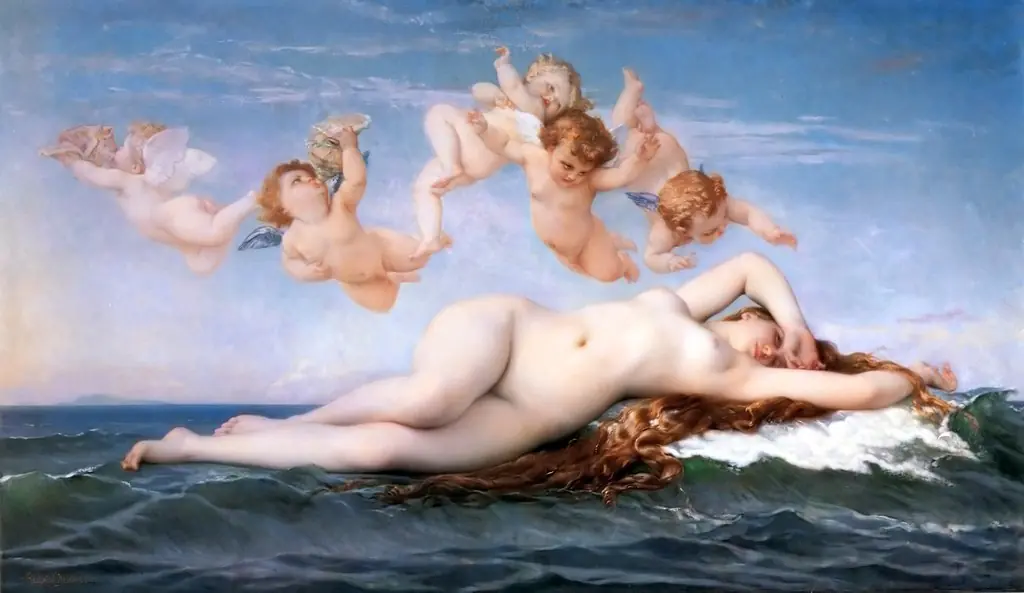
The Portrait of Countess de Koller remains in the Hermitage Museum as a representative example of Cabanel's portraiture and of French academic painting more broadly. While individual works by Cabanel have not achieved the same iconic status as his most famous composition, The Birth of Venus (1863), his portraits collectively demonstrate the persistence and adaptability of academic conventions in an era increasingly dominated by avant-garde movements. The painting's afterlife is primarily institutional: it functions within the Hermitage's encyclopedic collection as an specimen of nineteenth-century French portraiture and of the international networks of aristocratic patronage that sustained academic art. Its continued display ensures access for scholars studying the intersection of French painting and Russian collecting, as well as for general audiences encountering the refined aesthetics of the Second Empire.
Artist & collection
Artist
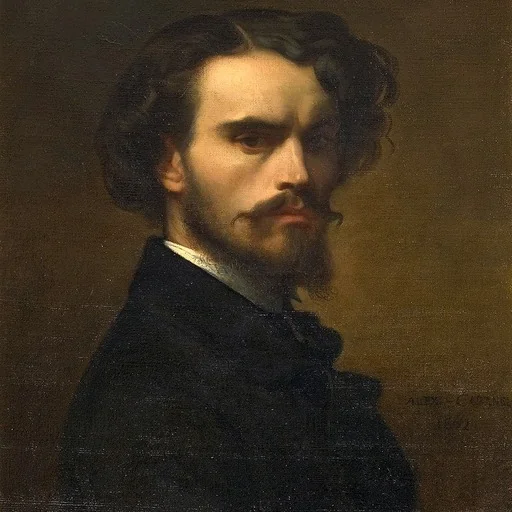
Alexandre Cabanel (French:; 28 September 1823 – 23 January 1889) was a French painter.

- Portrait of a Lady
 Împărătesa Elisabeta
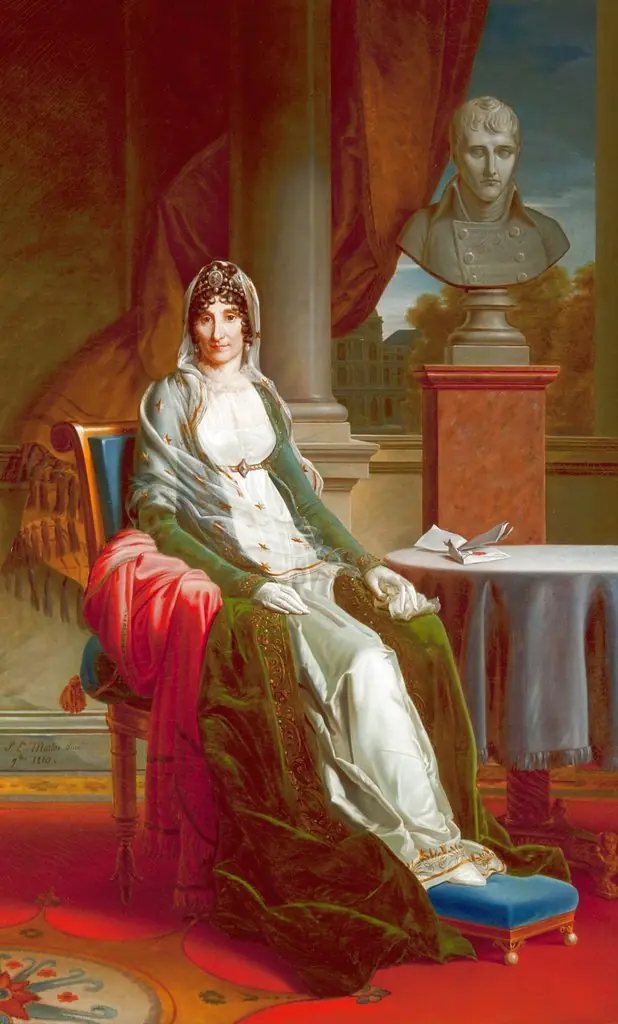 Portrait of Madame Mère
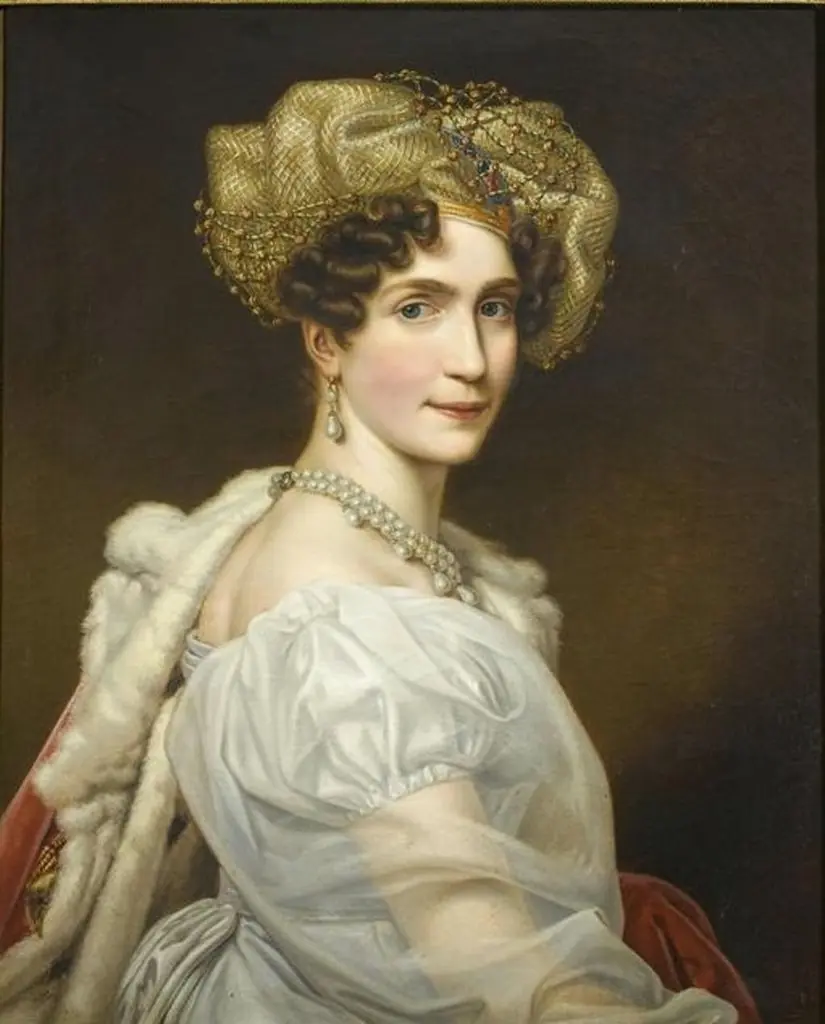 Augusta of Bavaria, Duchess of Leuchtenberg
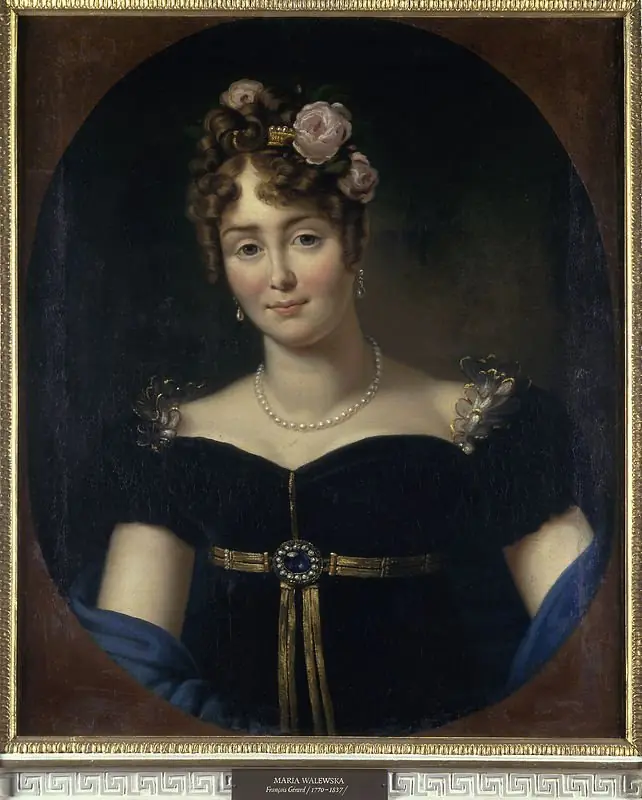 Portrait of Maria Walewska (1786–1817)
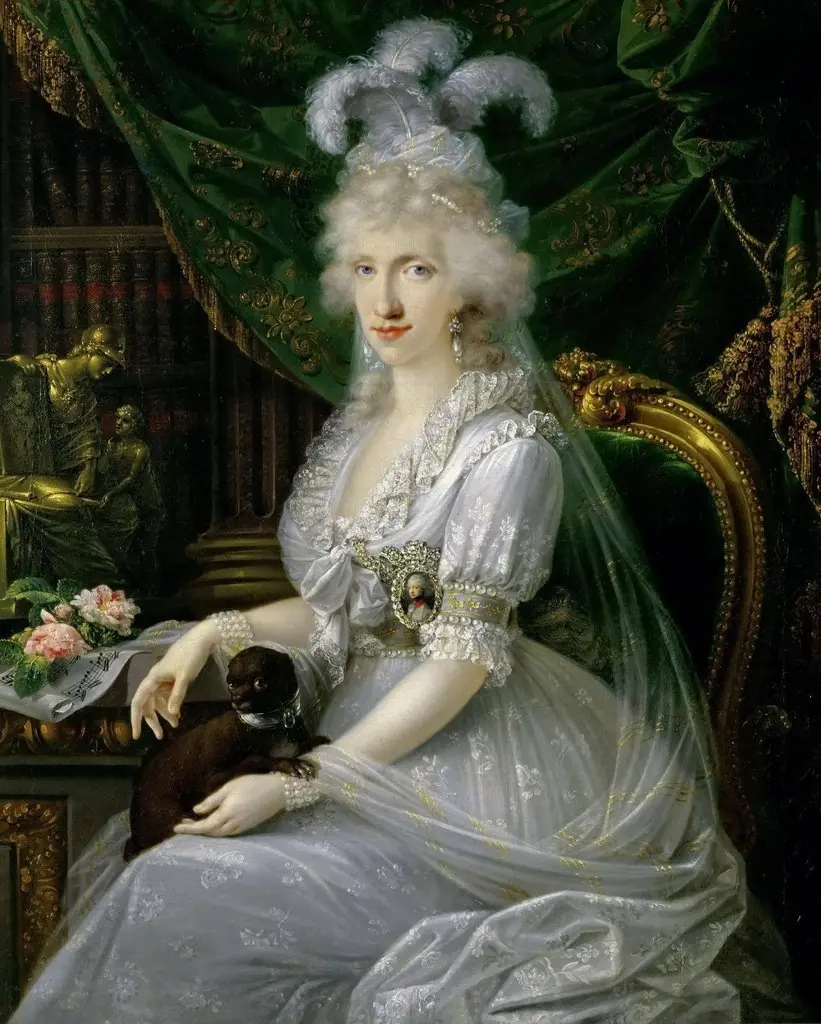 Luisa Maria Amelia Teresa of Naples and Sicily, Princess of Naples and Sicily (1773-1802), Grand Duchess Consort of Tuscany, wife of Archduke Ferdinand III of Tuscany
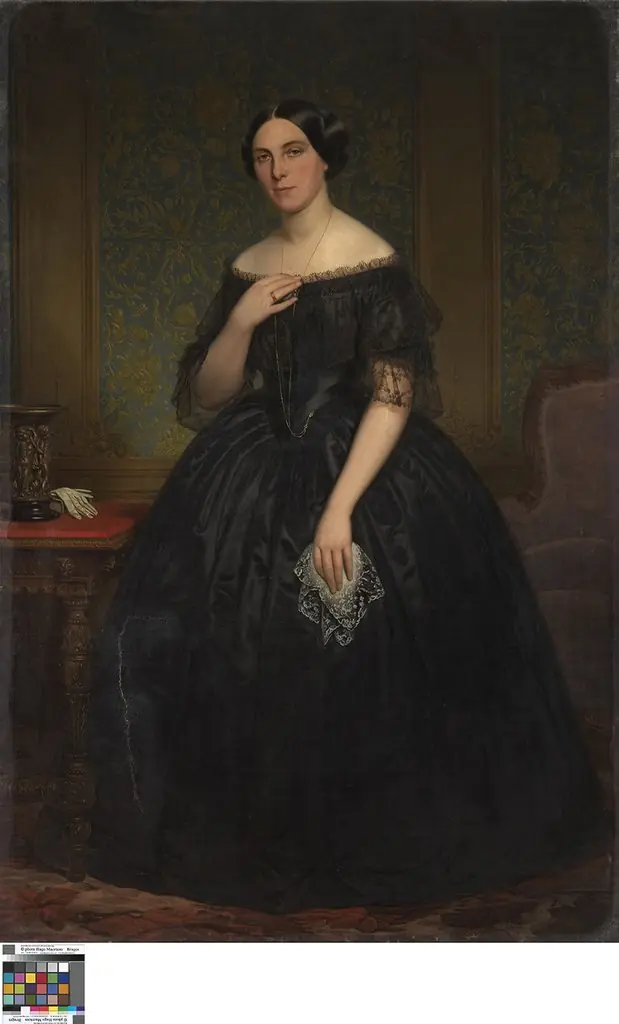 Portret van Beatrix van Herreweghe
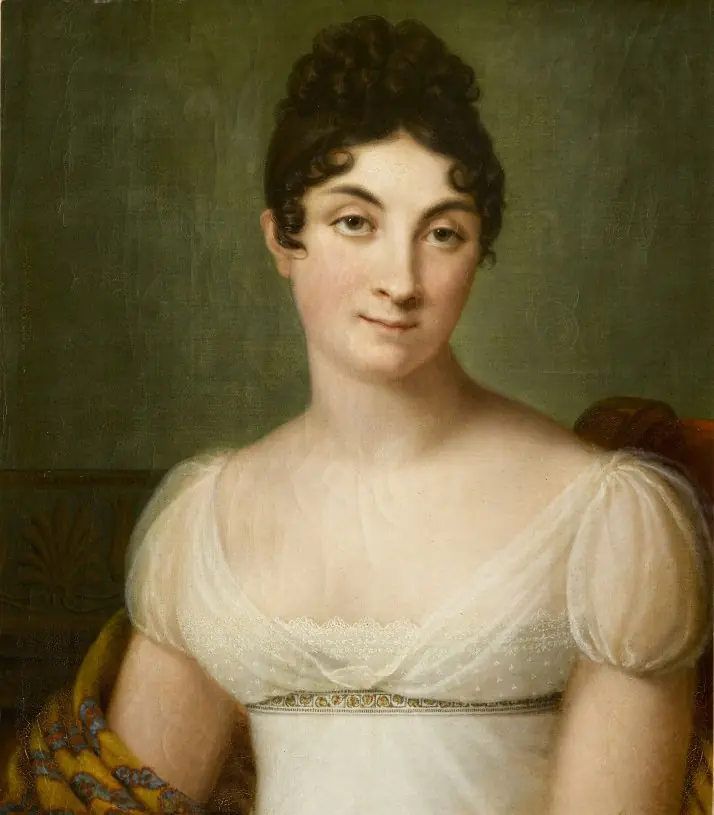 Portrait de Claire Élisabeth de Vergennes, Comtesse de Rémusat
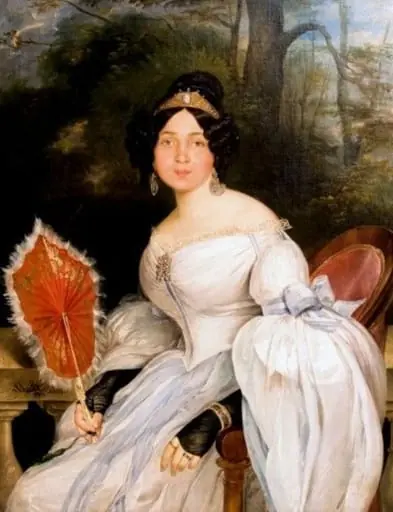 Portret de femeie cu evantai
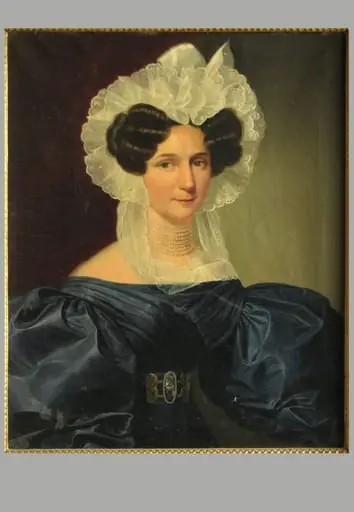 Maria Streidlin (în registrul inventar: Portret de femeie). Pandant: Portret de bărbat
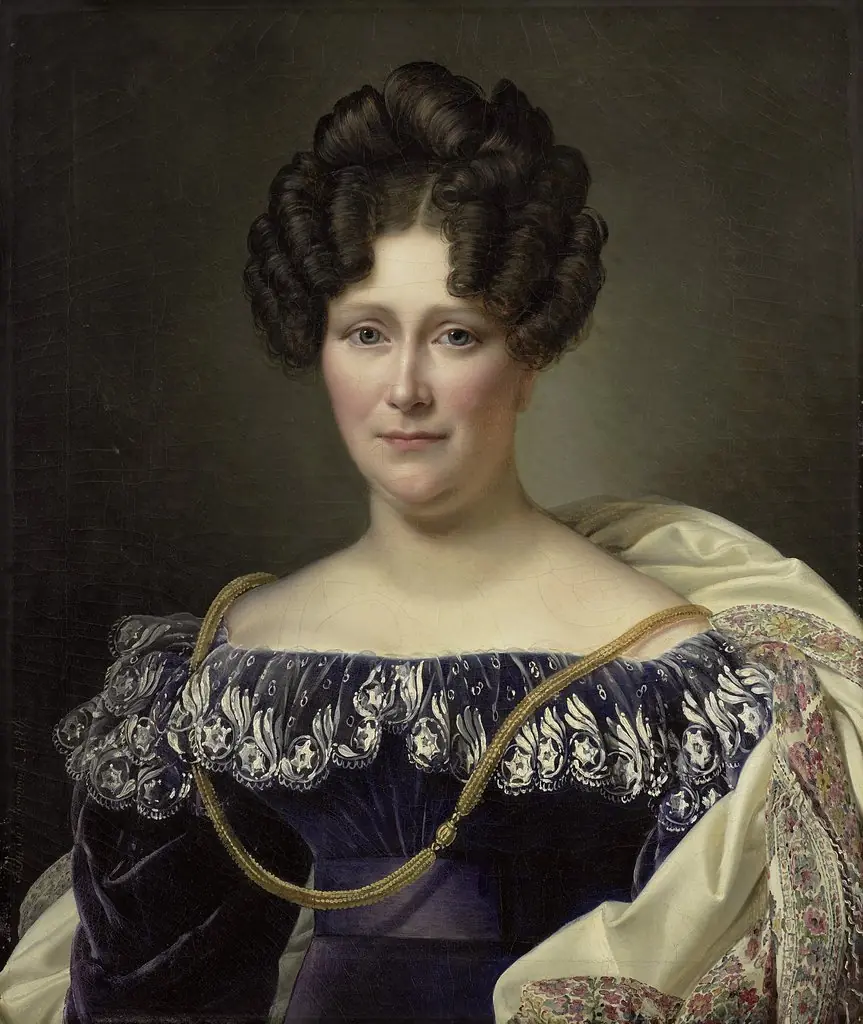 Portrait of Johanna Henriette Engelen, second Wife of Daniel Francis Schas
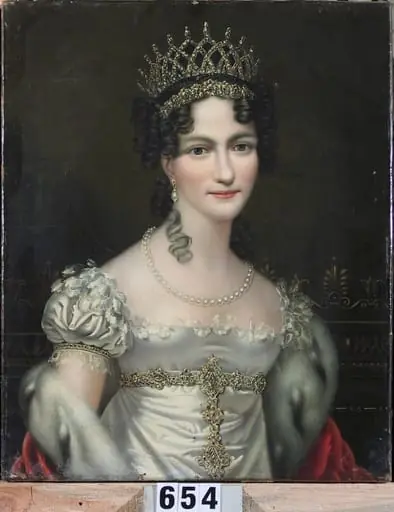 Carolina Augusta, soția împăratului austriac Franz I