Artwork
Saint Augustine between Christ and the Virgin
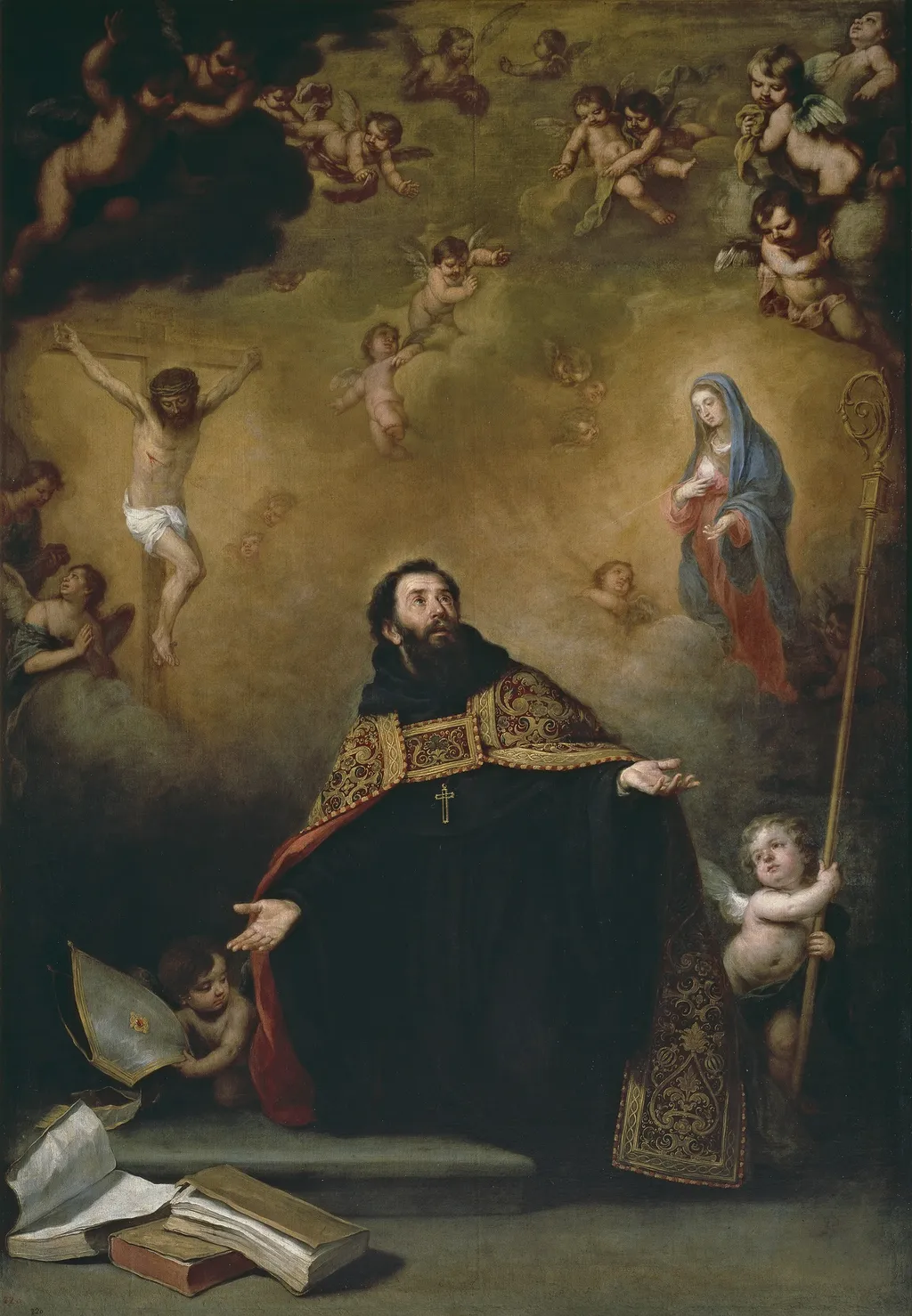
Saint Augustine between Christ and the Virgin is an oil painting by the Spanish Baroque Tenebrist artist Bartolomé Esteban Murillo. It dates from 1664 and is held in the collection of the Museo del Prado.
About this work
Subject & Meaning
The work reflects Murillo's late-seventeenth-century religious vision, blending devotional intimacy with Counter-Reformation ideals of saintly intercession.
The painting portrays Augustine of Hippo positioned between Christ and the Virgin Mary, a composition emphasizing his role as a Doctor of the Church receiving divine guidance. Augustine is identified by his bishop's mitre, crosier, and the book he holds, symbols of his episcopal authority and scholarly contributions. The work reflects Murillo's late-seventeenth-century religious vision, blending devotional intimacy with Counter-Reformation ideals of saintly intercession.
Executed in oil on canvas in 1664, the painting was owned by Ferdinand VII of Spain before entering the collection of the Museo del Prado, where it remains.
Technique & Style
Executed in 1664, this religious work by Bartolomé Esteban Murillo is an oil painting on canvas. The composition is large in scale, measuring 274 cm in height by 195 cm in width. Stylistically, it functions as a devotional image depicting Augustine of Hippo positioned between Christ and the Virgin.
The saint is identified through specific iconographic attributes, a book, a crosier, and a mitre, that mark his ecclesiastical status within the sacred narrative.
History & Provenance
Created in 1664 by Bartolomé Esteban Murillo, this oil painting on canvas depicts Saint Augustine flanked by Christ and the Virgin. The work was owned by Ferdinand VII of Spain and now resides in the collection of the Museo del Prado in Madrid, where it is classified as religious art. The canvas measures 274 cm in height by 195 cm in width. No specific accession number or recorded exhibition history is provided in the available sources.
Context
Critical reception of the work has been shaped by its devotional character within Murillo's oeuvre, an artist whose sacred paintings, including the celebrated series for the Capuchin convent in Seville, established his reputation for accessible spirituality. Scholarship emphasizes how this depiction of Augustine synthesizes Counter-Reformation themes with Baroque naturalism, reflecting Murillo's role in shaping Spanish religious art during the late seventeenth century. Its acquisition by Ferdinand VII and presence in the Prado underscore its significance within institutional efforts to preserve Spain's artistic heritage.
Overview
Bartolomé Esteban Murillo’s 1664 oil on canvas, Saint Augustine between Christ and the Virgin, presents a solemn religious tableau typical of Spanish Baroque tenebrism. Central to the composition is Augustine of Hippo, robed in black with gold trim, holding a book and a staff, flanked by a standing Christ and the Virgin Mary. The work resides in Madrid’s Museo del Prado.
Own this work as a print
Artist & collection
Artist
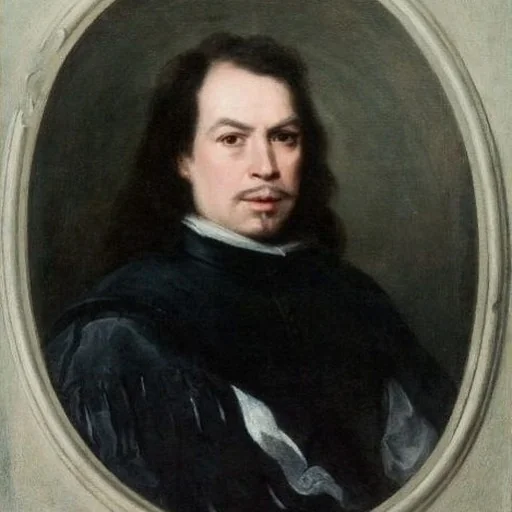
Bartolomé Esteban Murillo ( mure-IL-oh, m(y)uu-REE-oh, Spanish:; late December 1617, baptised 1 January 1618 – 3 April 1682) was a Spanish Baroque painter.

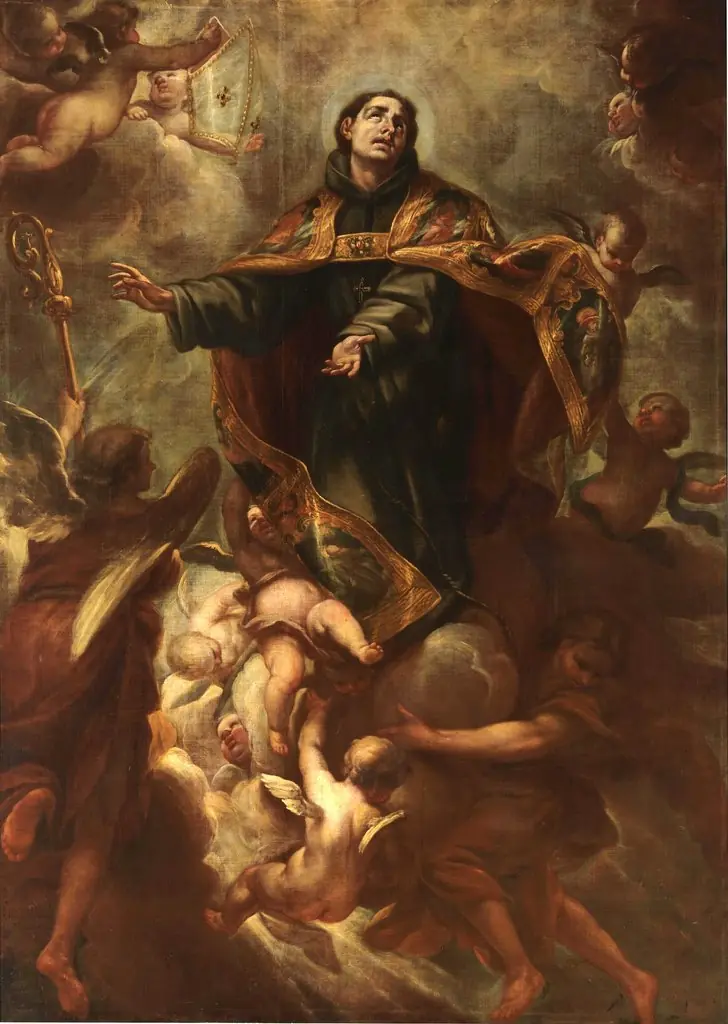 Saint Louis Bishop in Glory
 Saint Romanus of Antioch and Saint Barulas
 Saint Benedict's Vision of the Globe and the three Angels
 Heilige, die eine Monstranz anbeten
 The Vision of Saint Francis of Paola
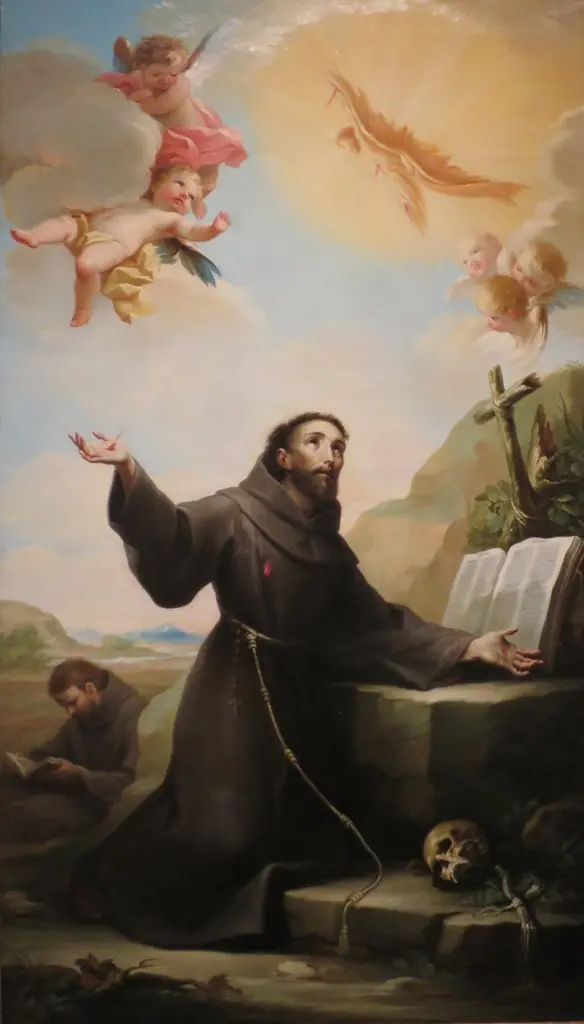 Saint Francis of Assisi Receiving the Stigmata
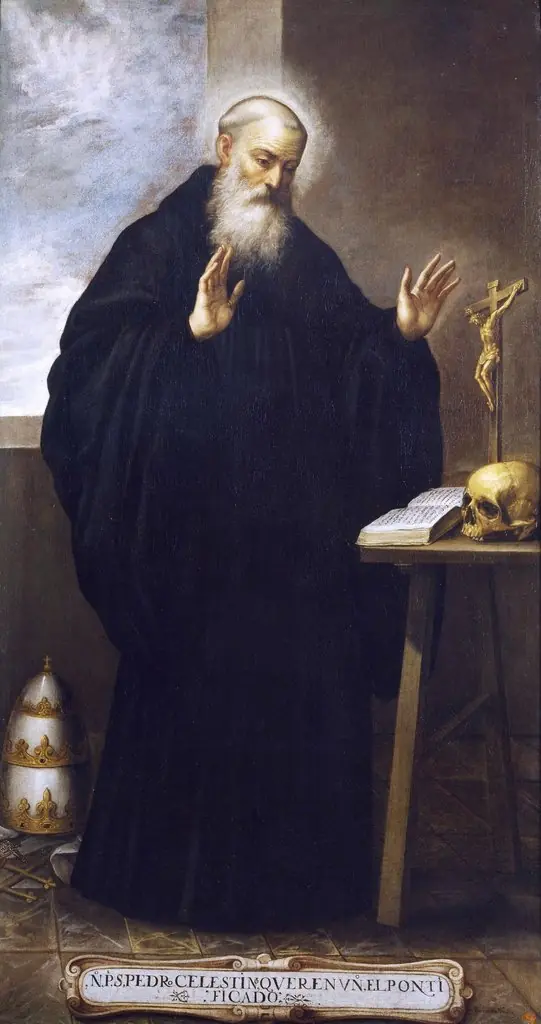 San Pedro Celestino papa
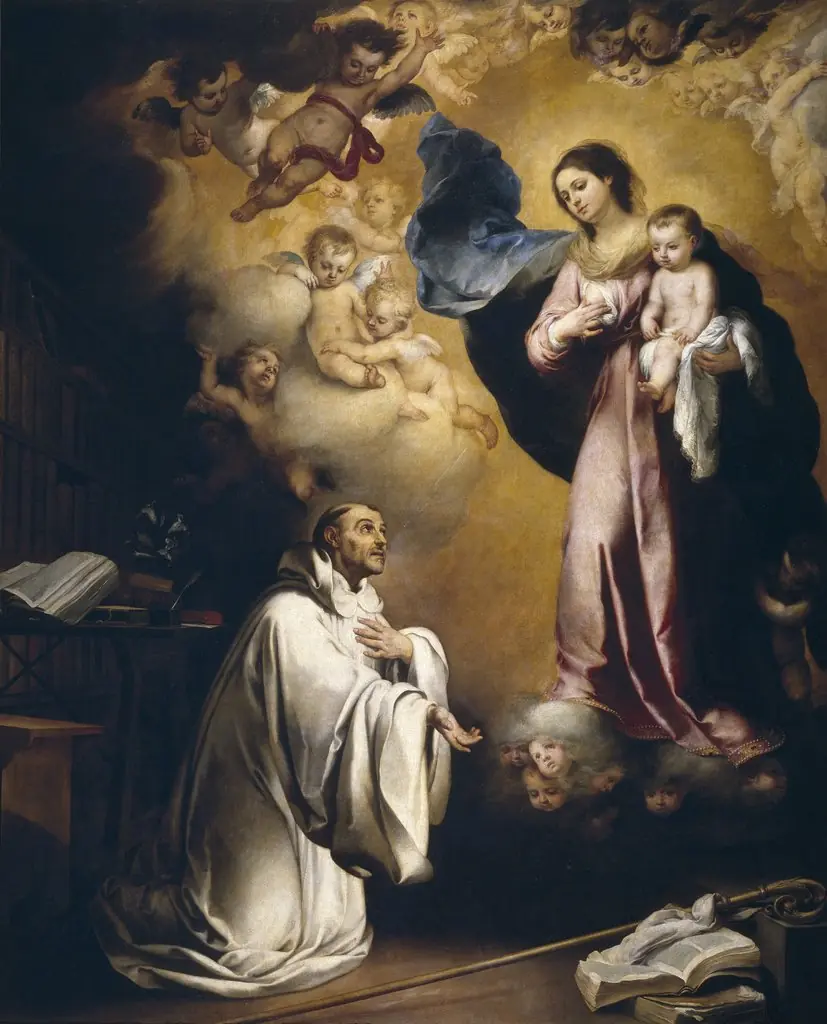 The Apparition of the Virgin to Saint Bernard
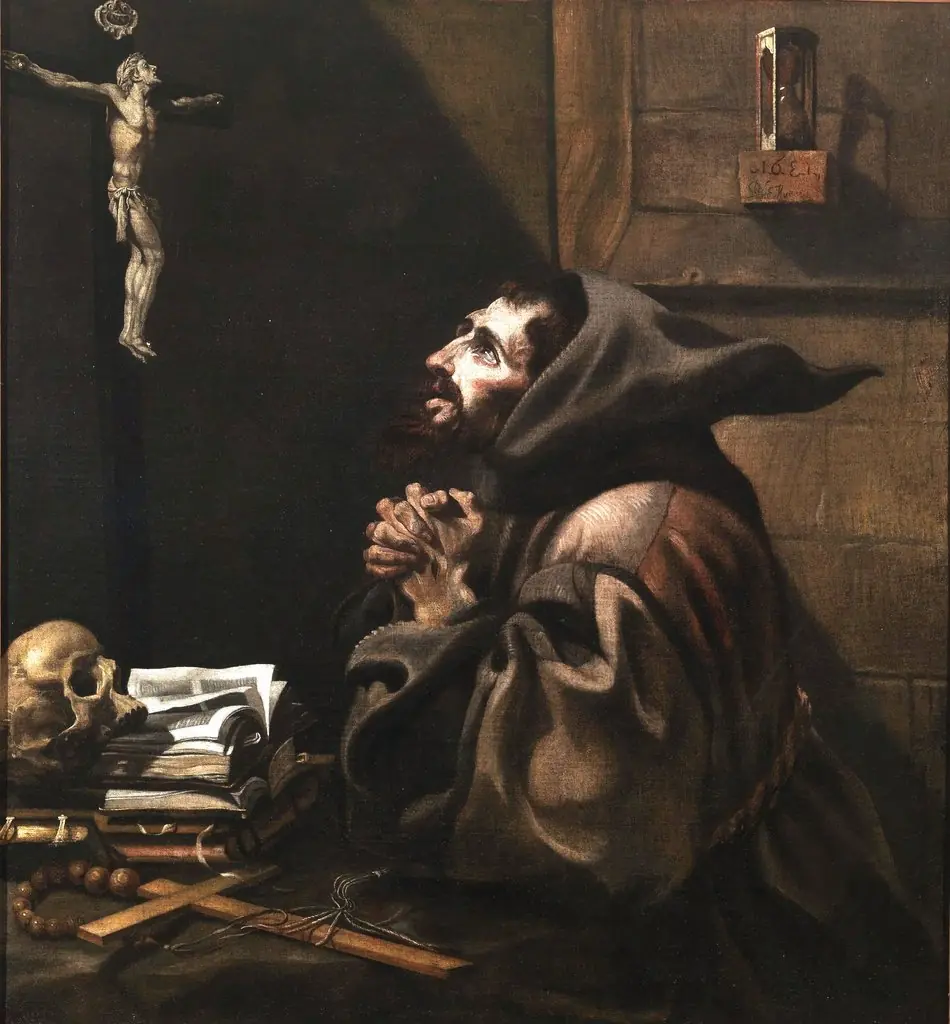 St. Francis in Prayer
 Triumph of St Norbert