Artwork
Textile Merchant
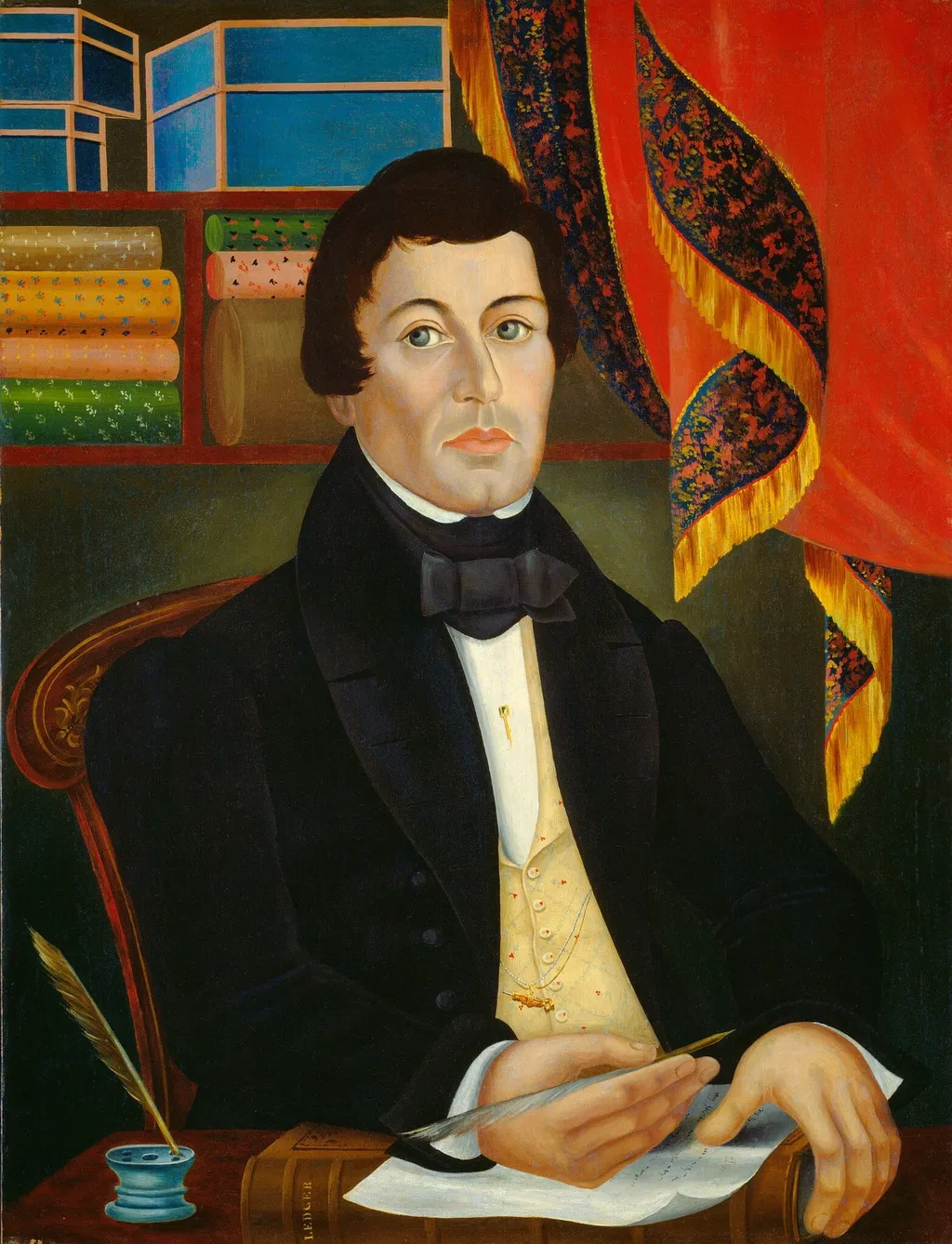
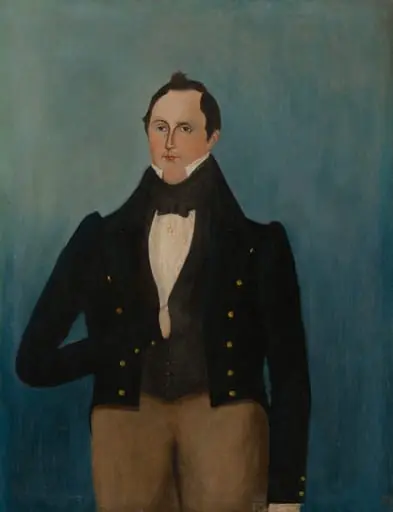
Textile Merchant is an oil painting. It dates from 1840 and is held in the collection of the National Gallery of Art.
- Inscription
- Inscribed:at top of paper: Darien
About this work
Technique & Style
The composition is a subdued genre scene in which a seated figure, identified as a textile merchant, is rendered with careful attention to costume and props.
The work is painted in oil on a plain-weave canvas support using oil paint, executed in 1840 by an unidentified American artist of the nineteenth century.
The composition is a subdued genre scene in which a seated figure, identified as a textile merchant, is rendered with careful attention to costume and props. The palette is earth-toned and restrained, with muted browns, grays, and ochers dominating the background and garment, while the face and hands are softly modeled in lighter tones to convey volume. Brushwork is smooth and blended, avoiding visible impasto, and the handling emphasizes quiet realism rather than painterly bravura.
The painting remains in good condition, with no major tears or losses reported; stretcher marks and a faint craquelure are consistent with the medium and period.
History & Provenance
The painting Textile Merchant, dated 1840, was originally recorded as originating from Darien, Connecticut. Its ownership history traces to Binghamton, New York, where it was acquired by Thurston Thacher of Hyde Park, New York. Thacher noted that the work had been found in Norwich, New York, and that the sellers were related to the subject, though they possessed limited knowledge of its specific history beyond its Connecticut origins.
Thacher sold the portrait in 1950 to Edgar William and Bernice Chrysler Garbisch. The work subsequently entered the collection of the National Gallery of Art in Washington, D.C., as a gift from the Garbisches in 1953.
Textile Merchant is held in the collection of the National Gallery of Art in Washington, D.C. It was acquired by Edgar William and Bernice Chrysler Garbisch in 1950 from the estate of Thurston Thacher, who had purchased the work in Binghamton, New York, and recorded it as originating from Darien, Connecticut. The painting was subsequently gifted to the National Gallery of Art in 1953. The work measures 86.3 cm in height and 66 cm in width, reflecting its documented dimensions.
Exhibition history includes its presentation as part of the National Gallery of Art's permanent collection displays, though specific exhibition venues beyond the museum's own galleries are not detailed in the available records.
Overview
The canvas depicts a solitary figure seated at a desk, dressed in a dark jacket and vest, his hair dark and his posture attentive as he holds a quill poised over a sheet of paper. Behind him a shelf displays rolled fabrics, and a red curtain forms the backdrop, situating the scene within a space associated with textile trade.
Subject & Meaning
The work centers on a textile merchant engaged in written correspondence, suggesting the administrative side of commerce in the period. The presence of fabric rolls emphasizes his professional identity, while the act of writing hints at record‑keeping, contracts, or communication essential to trade.
Context
Set within the broader Romantic movement, the piece reflects the era’s interest in portraying ordinary individuals and their occupations with a sense of reverence. By foregrounding a merchant rather than a mythic hero, the artist aligns with Romanticism’s shift toward personal experience and the dignity of work.
Artist & collection

- Newport Sea Captain at Green Desk
 Portrait of a Man
 Man with a Tune Book: Possibly Mr. Cook
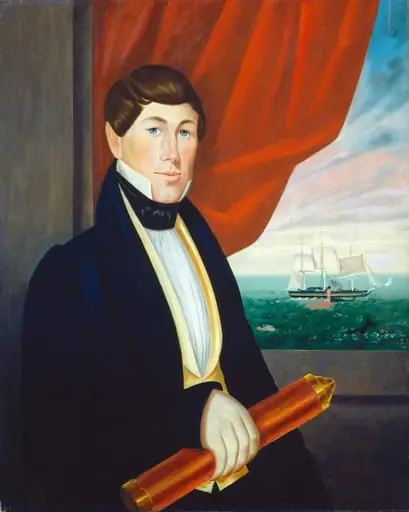 Connecticut Sea Captain
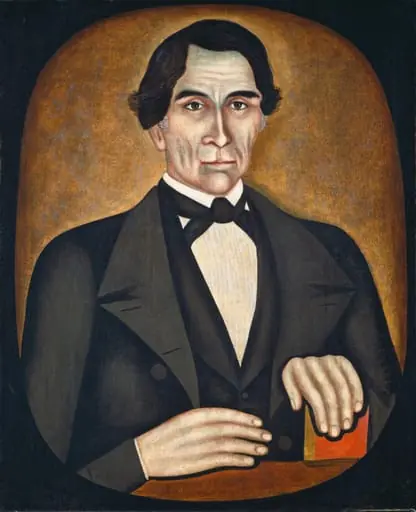 Portrait of a Man
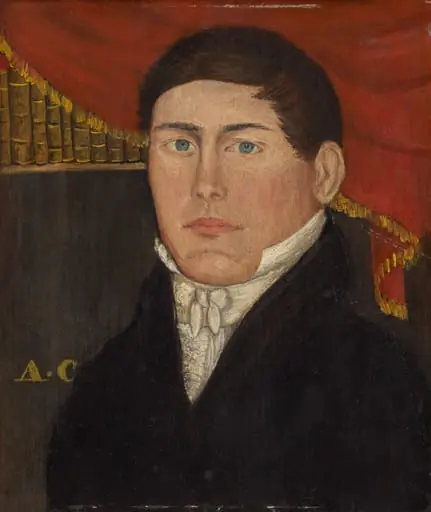 Dr. Alvah Cook
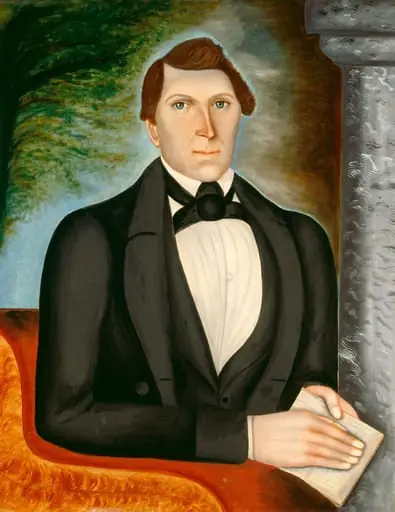 John Stone
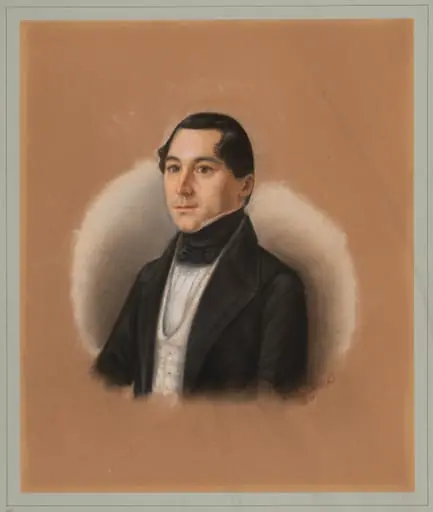 Schubert, Emilie: Portrait of the Husband of Auguste Schubert (attributed)
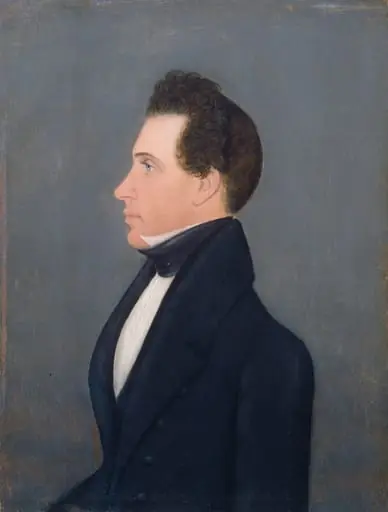 Profile Portrait of a Man
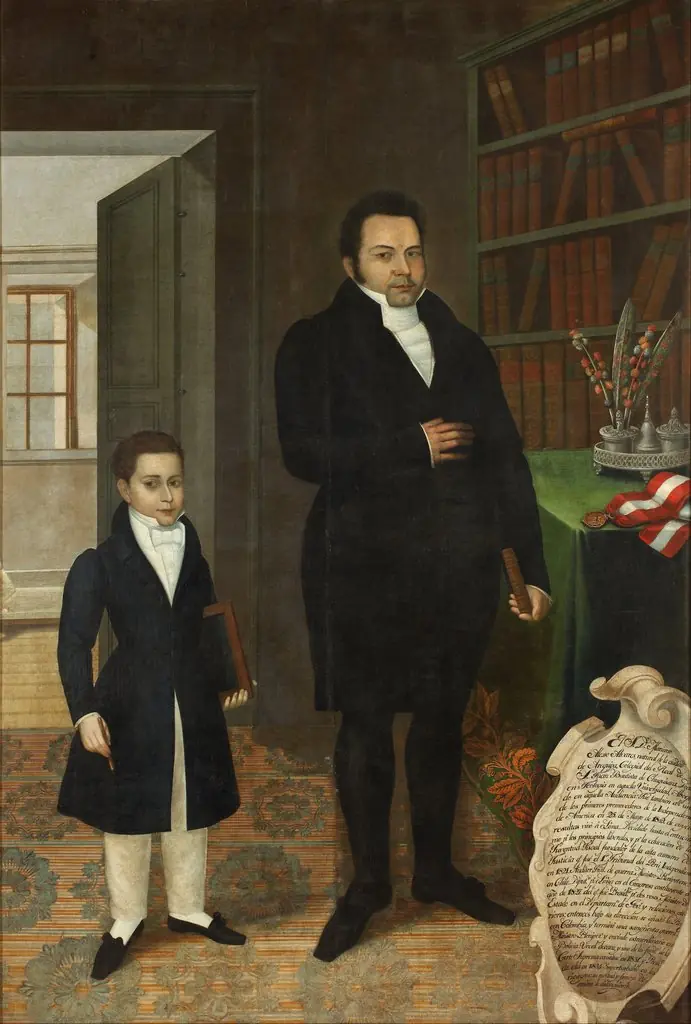 Mariano Alejo Álvarez and his Son
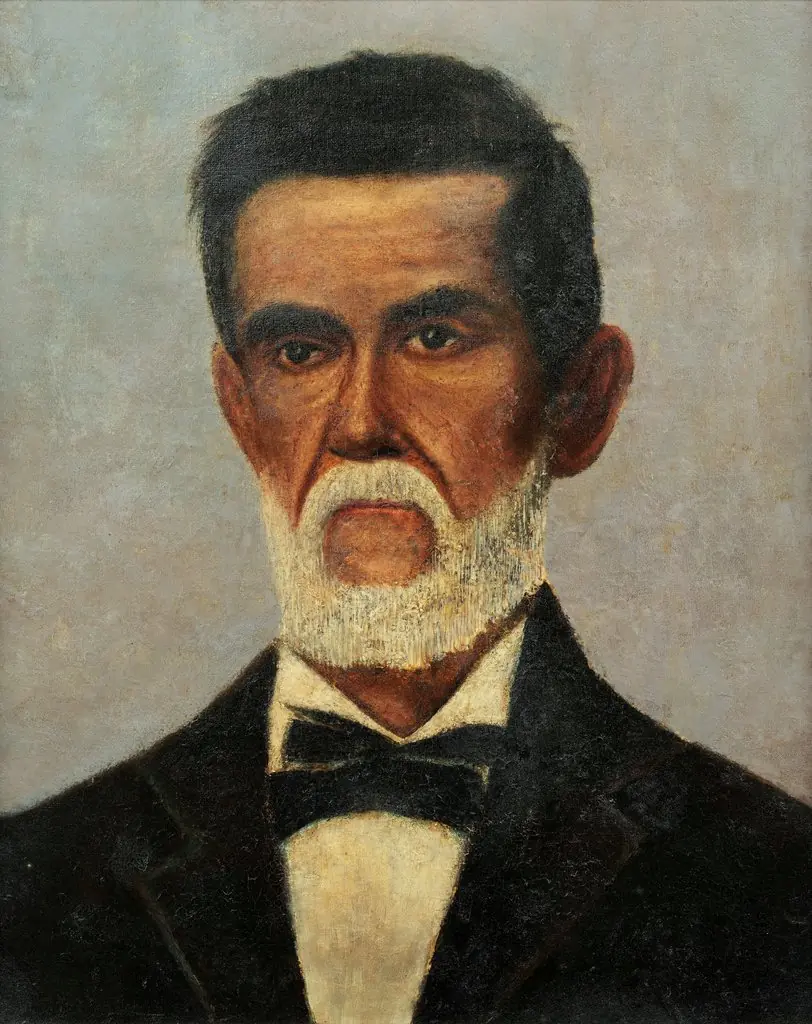 José Ferraz de Almeida (The Artist's Father)
 Anonymous Man