Artwork
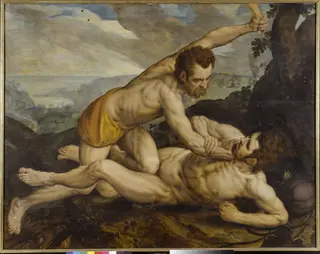
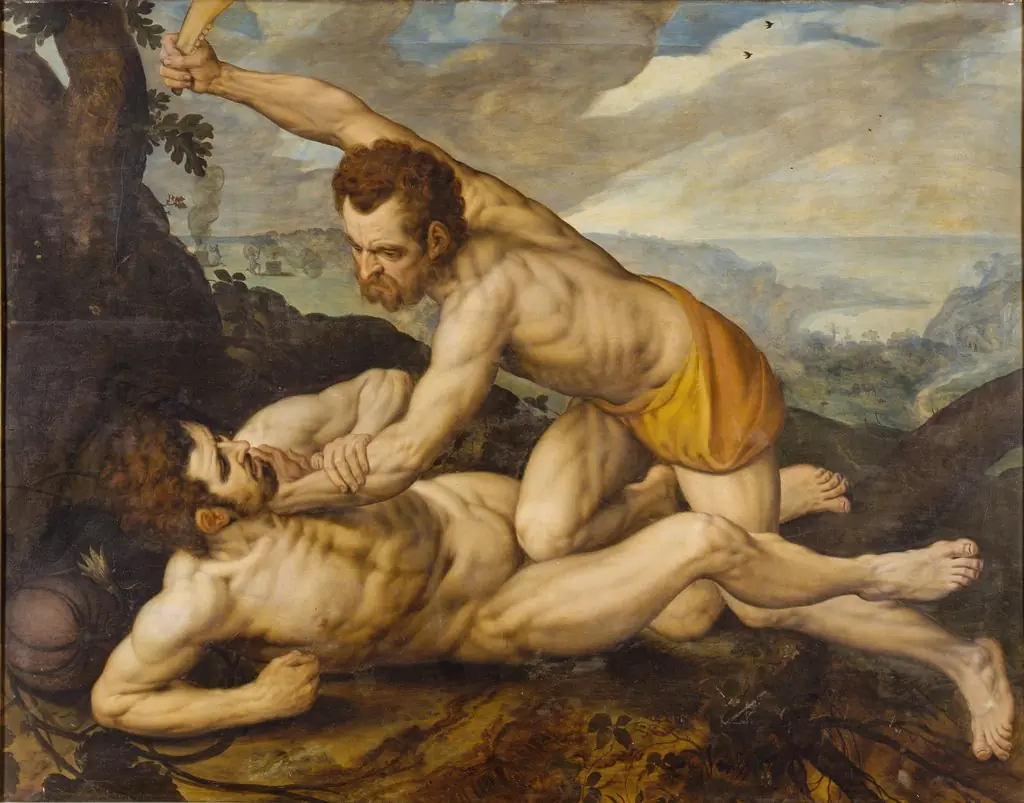
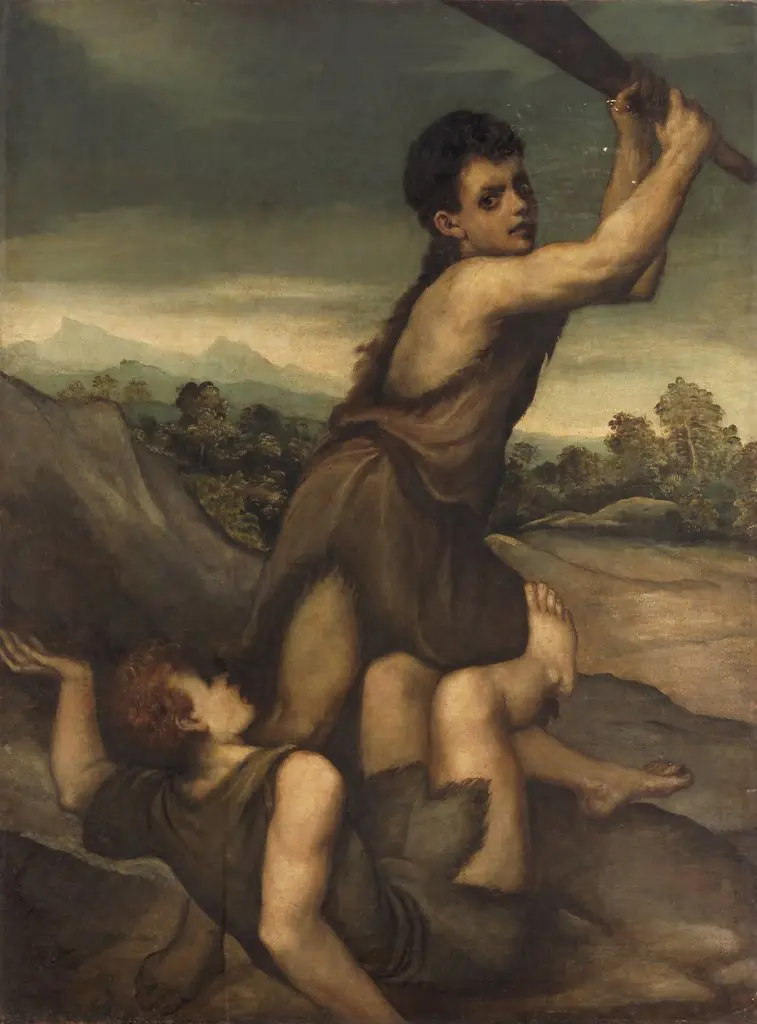
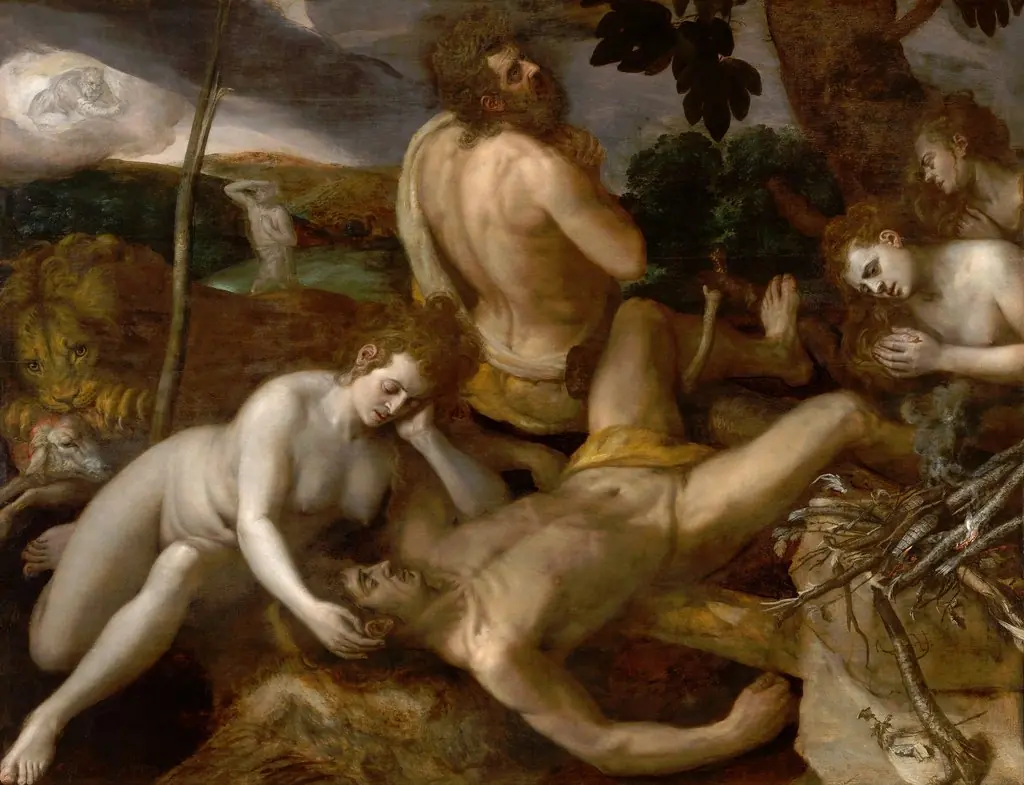
Cain kills Abel
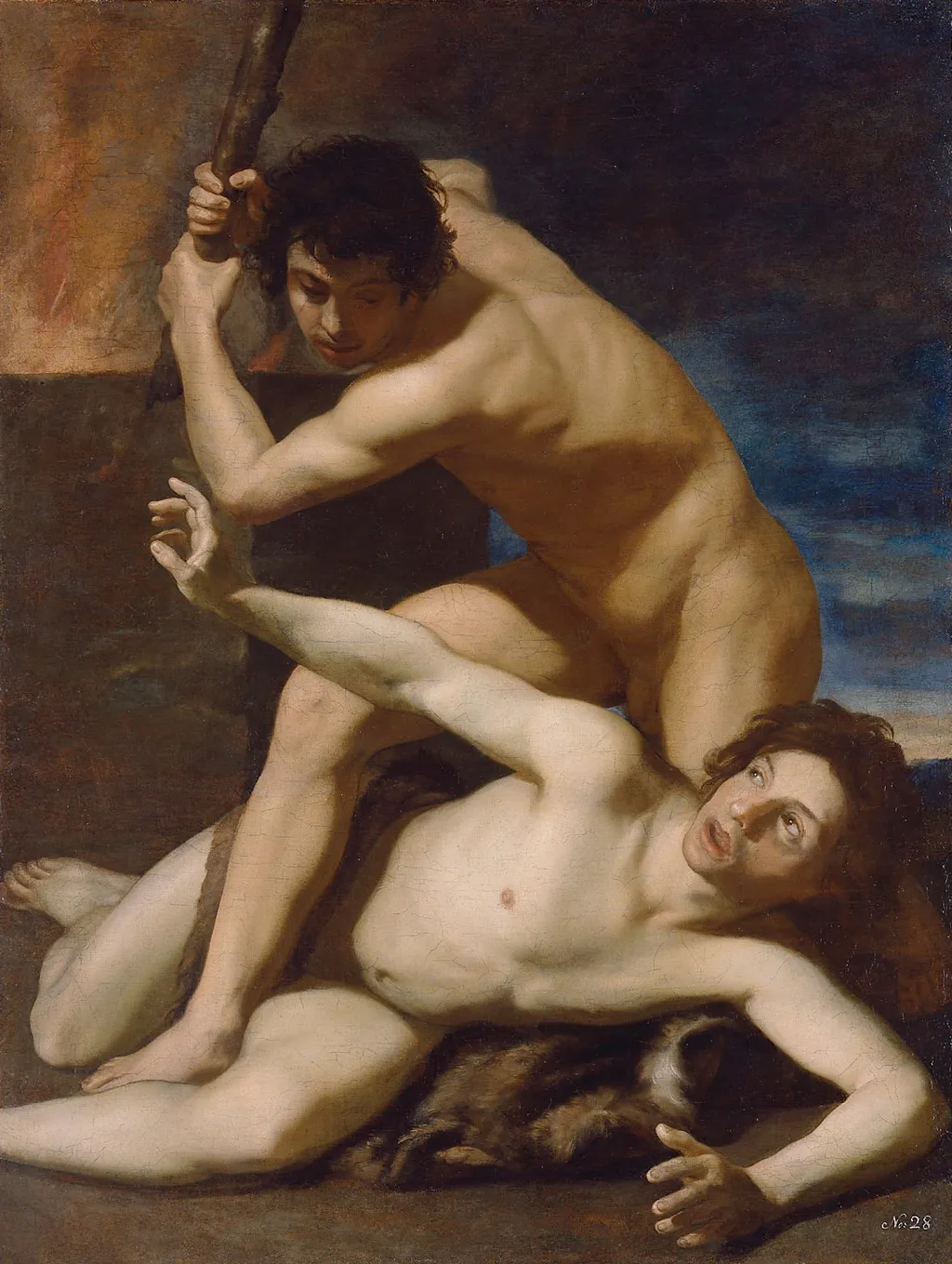
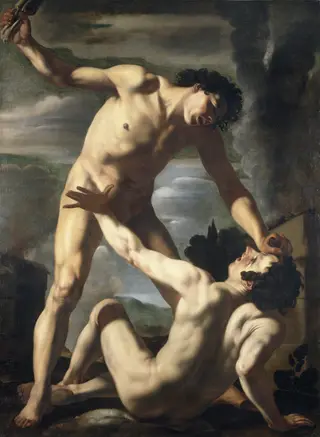
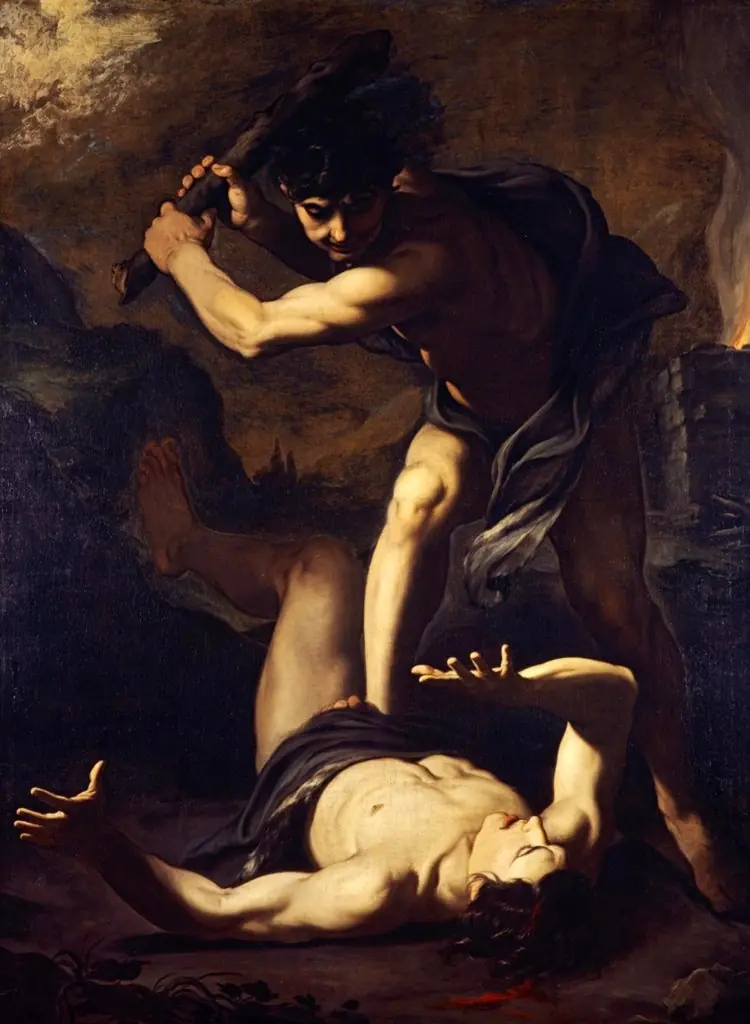
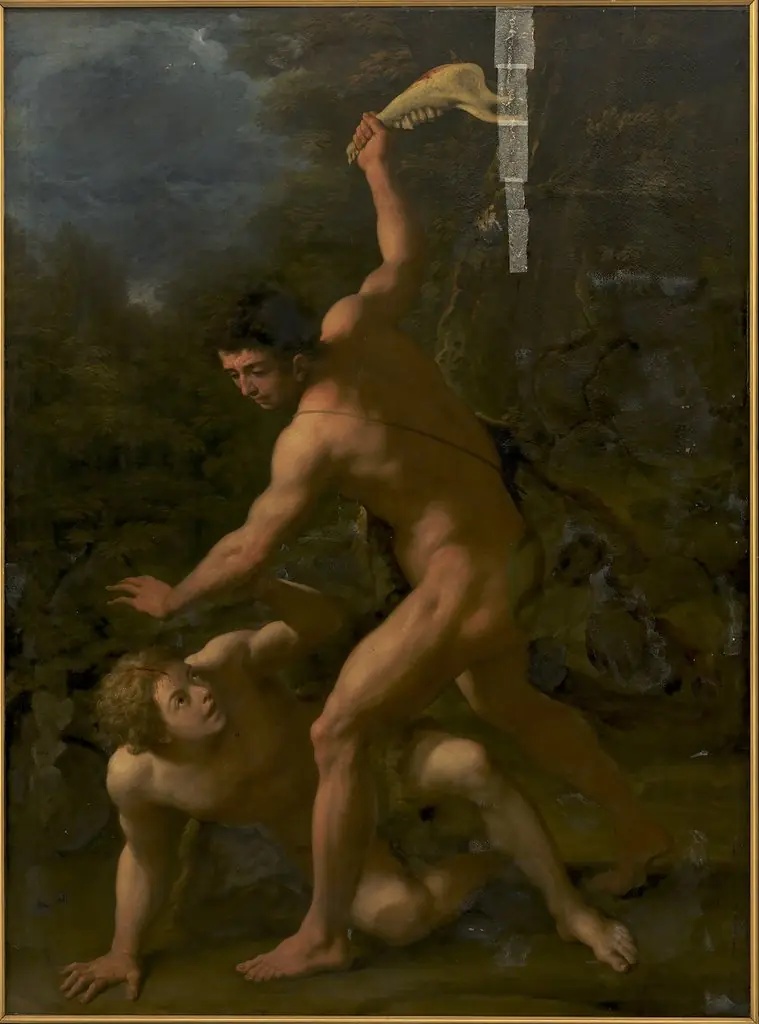
Cain kills Abel is an oil painting by the Early Baroque Italian artist Bartolomeo Manfredi. It dates from 1615 and is held in the collection of the Kunsthistorisches Museum.
About this work
Subject & Meaning
The work portrays the two male figures central to this foundational story of fratricide, rendered in oil on canvas as a religious subject.
Bartolomeo Manfredi's painting depicts the biblical narrative of Cain killing Abel, the first murder recorded in the Book of Genesis. The work portrays the two male figures central to this foundational story of fratricide, rendered in oil on canvas as a religious subject.
The painting's iconography belongs to a long tradition of visualizing the Genesis episode, in which Cain, driven by jealousy over his brother's accepted offering, slays Abel in the field. By treating this Old Testament subject through the dramatic, naturalistic style associated with Caravaggio's circle, Manfredi emphasizes the raw human violence of the moment rather than treating it as abstract theology.
The work thus represents the origin of sin and mortality in the Judeo-Christian tradition, while also functioning as a meditation on envy, sacrifice, and divine judgment.
Technique & Style
Cain kills Abel is executed in oil paint on canvas, a medium and support consistent with Bartolomeo Manfredi's early seventeenth-century practice. The work is classified as a religious painting, and its handling reflects the Caravaggesque style associated with Manfredi, employing the dramatic chiaroscuro and naturalistic figure treatment characteristic of that circle. The canvas measures 152 cm in height and 115 cm in width, an upright format suited to the vertical confrontation between the two figures.
History & Provenance
The painting Cain kills Abel was created by Bartolomeo Manfredi in 1615 as an oil on canvas work. It entered the collection of James Hamilton, 1st Duke of Hamilton, and subsequently passed to Archduke Leopold Wilhelm of Austria, remaining in the Habsburg family until accession by the Kunsthistorisches Museum in Vienna. The work has been part of the museum's permanent display and was featured in the exhibition Caravaggio and Bernini.
Bartolomeo Manfredi's Cain kills Abel is held in the collection of the Kunsthistorisches Museum in Vienna. The painting entered the museum's holdings through the historic collections of James Hamilton, 1st Duke of Hamilton, and Archduke Leopold Wilhelm of Austria. While specific accession numbers are not detailed in the available records, the work is cataloged within the museum's inventory as an oil on canvas painting from 1615. The artwork has been featured in the exhibition titled Caravaggio and Bernini.
Context
The work is situated within the Baroque religious painting tradition, reflecting Counter-Reformation emphases on narrative clarity and emotional intensity. Scholarship situates it within Manfredi's oeuvre as an example of Caravaggisti influence adapted to private devotional subjects, particularly through its dramatic chiaroscuro and psychological realism. Its provenance through the Hamilton collection and Archduke Leopold Wilhelm underscores its significance within 17th-century European collecting networks, while its inclusion in the 'Caravaggio and Bernini' exhibition highlights sustained critical engagement with its stylistic affinities and religious narrative interpretation.
Legacy
The painting has been featured in exhibitions such as Caravaggio and Bernini, highlighting its role in discussions of Baroque religious art. Its provenance through the collections of James Hamilton, 1st Duke of Hamilton, and Archduke Leopold Wilhelm of Austria has contributed to its scholarly recognition. The work remains part of the Paintings collection at Kunsthistorisches Museum, where it is studied as an example of Manfredi's influence on religious subject matter in the early 17th century.
Overview
Bartolomeo Manfredi's 'Cain kills Abel,' executed in 1615, is a seminal example of early Baroque religious painting that adapts the Caravaggesque style to a biblical narrative. The composition focuses tightly on the fratricide, depicting Cain standing over his fallen brother, Abel, in a moment of violent climax. Manfredi renders the scene with dramatic chiaroscuro, using stark contrasts of light and shadow to model the figures' muscular forms and heighten the emotional intensity.
Cain, characterized by dark hair, grips a heavy club in his right hand, poised to deliver the fatal blow, while Abel, distinguished by lighter hair, lies prone on the ground, his expression conveying terror and resignation. The artist eliminates extraneous background details, forcing the viewer's attention onto the physical struggle and the psychological weight of the act. This work reflects Manfredi's pivotal role in disseminating Caravaggio's naturalism to a generation of followers, known as the Caravaggisti.
By focusing on the raw, unidealized humanity of the figures and the immediacy of the violence, Manfredi moves away from Mannerist conventions, establishing a gritty realism that defined his career and influenced the development of genre painting in the early seventeenth century.
Artist & collection

Artist
Bartolomeo Manfredi was an Italian painter, a leading member of the Caravaggisti of the early 17th century.