Artwork
The Mystic Marriage of Saint Catherine
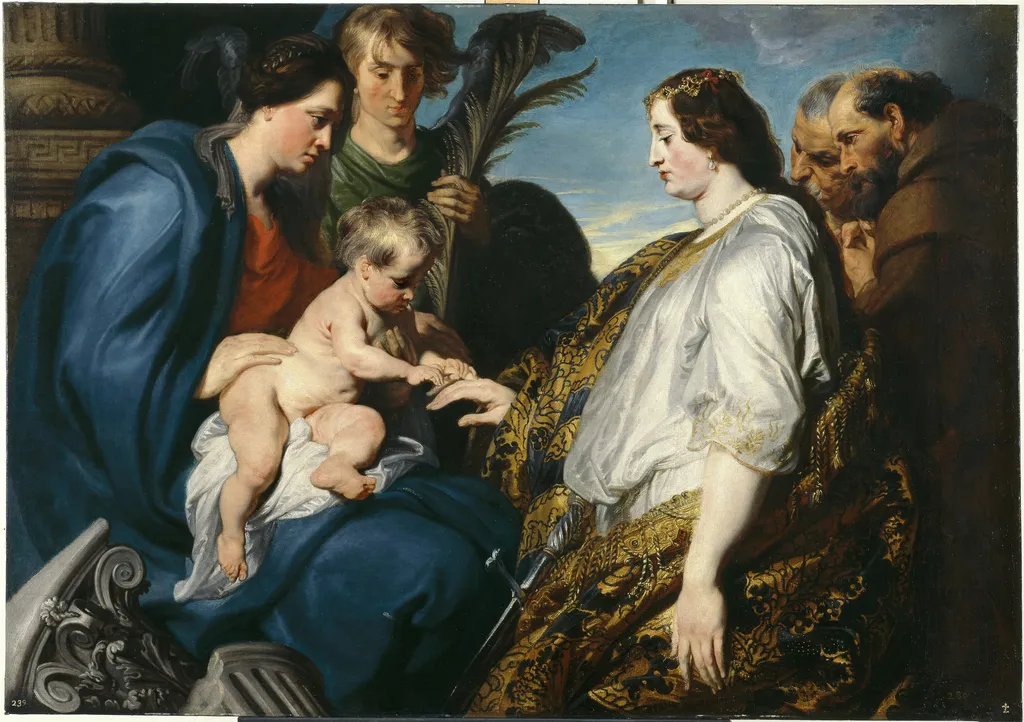
The Mystic Marriage of Saint Catherine is an oil painting by the Flemish Baroque painting artist Anthony van Dyck. It dates from 1618 and is held in the collection of the Museo del Prado. Created in 1618, this oil painting belongs to the Flemish Baroque tradition.
About this work
Subject & Meaning
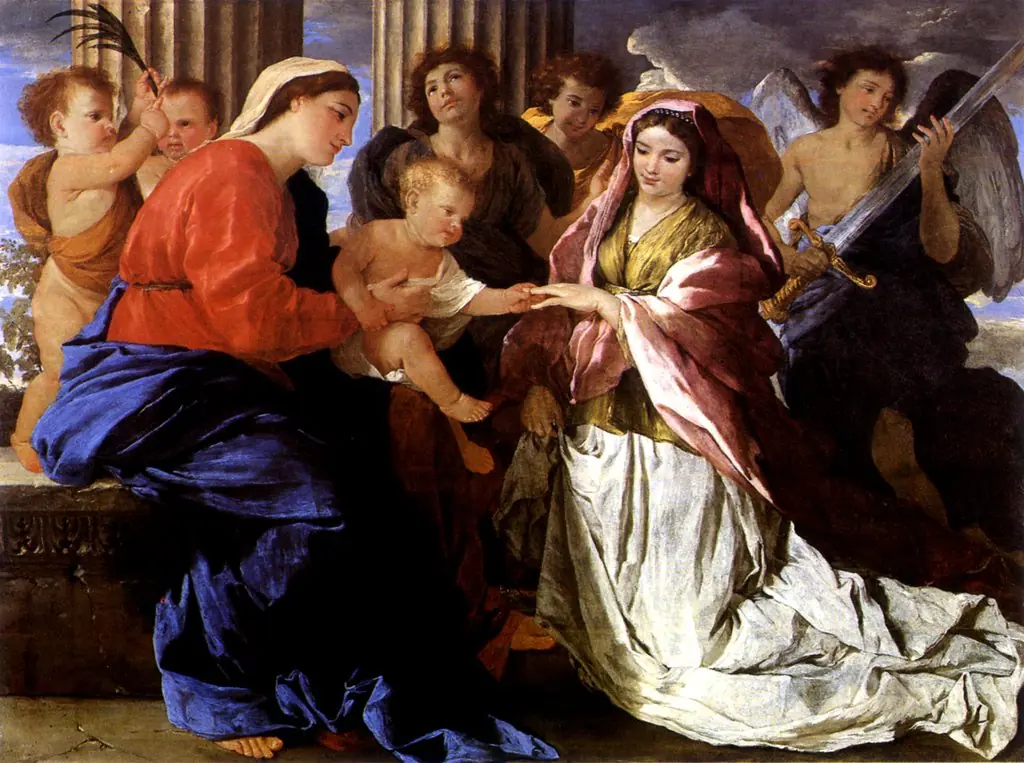
The composition includes traditional iconographic elements such as a crown, a wheel, and a sword, referencing her martyrdom.
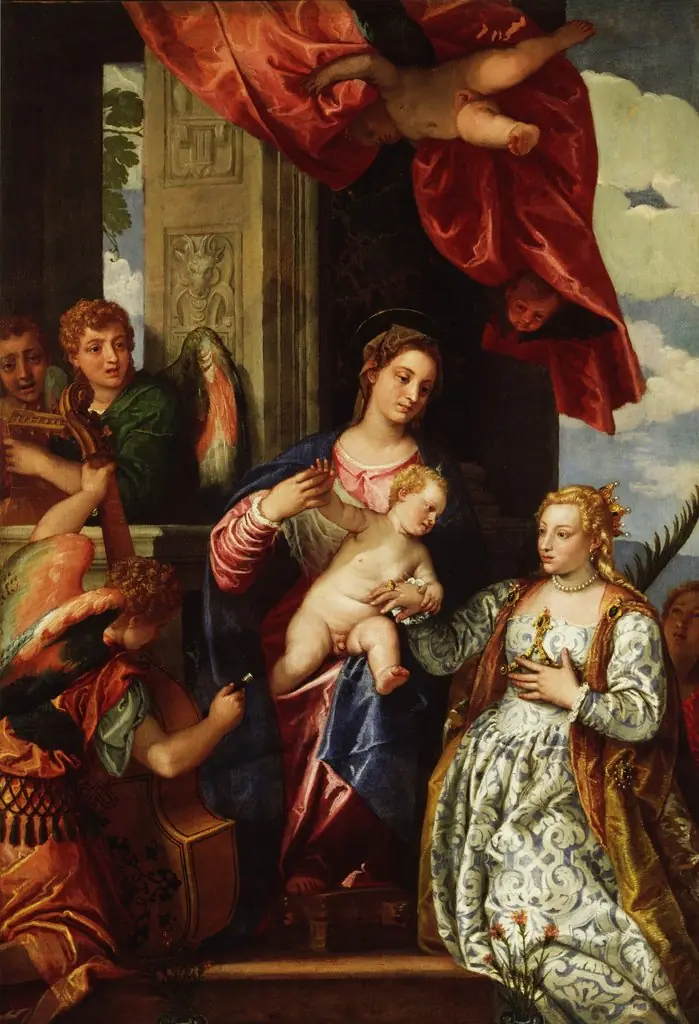
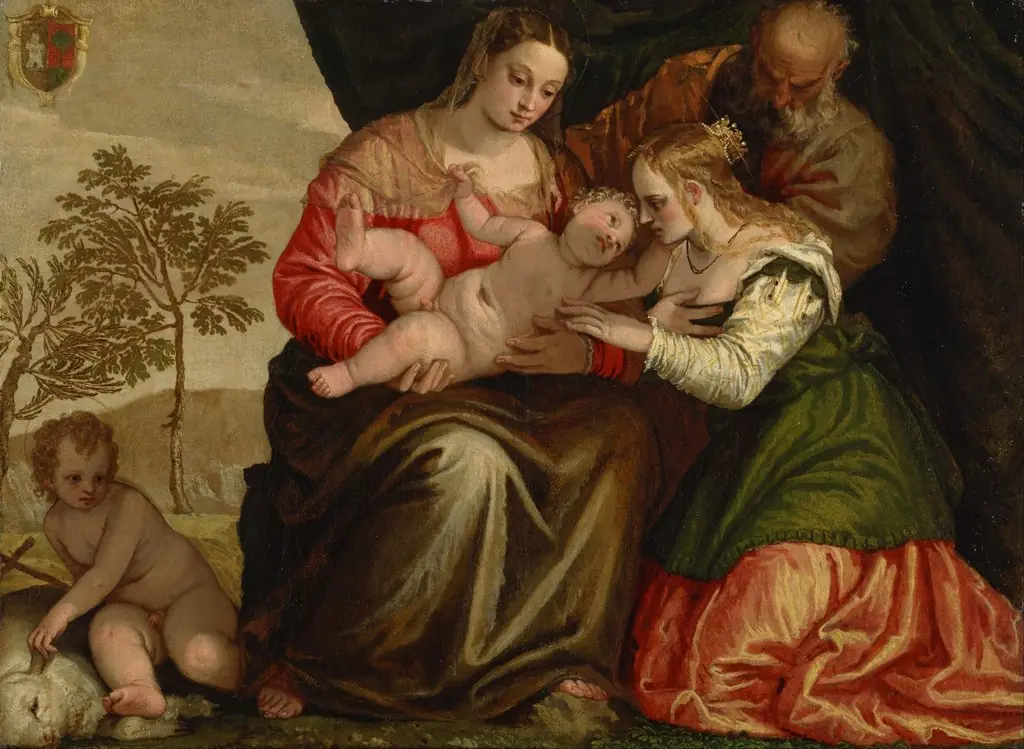
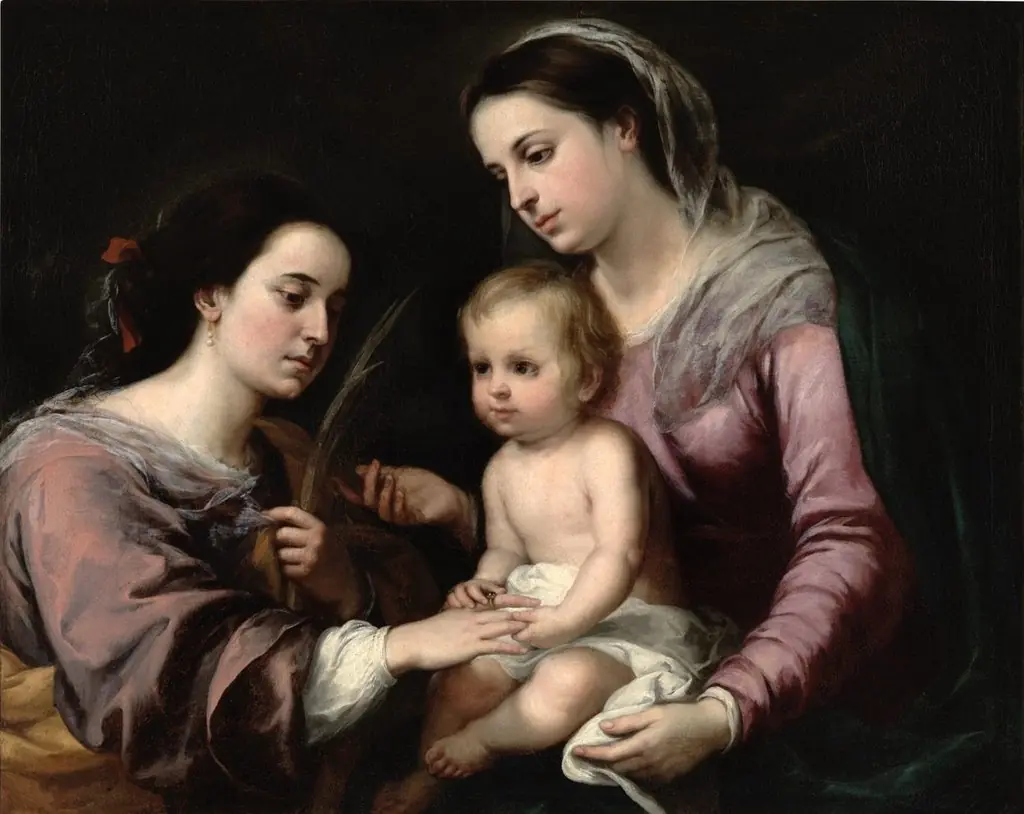
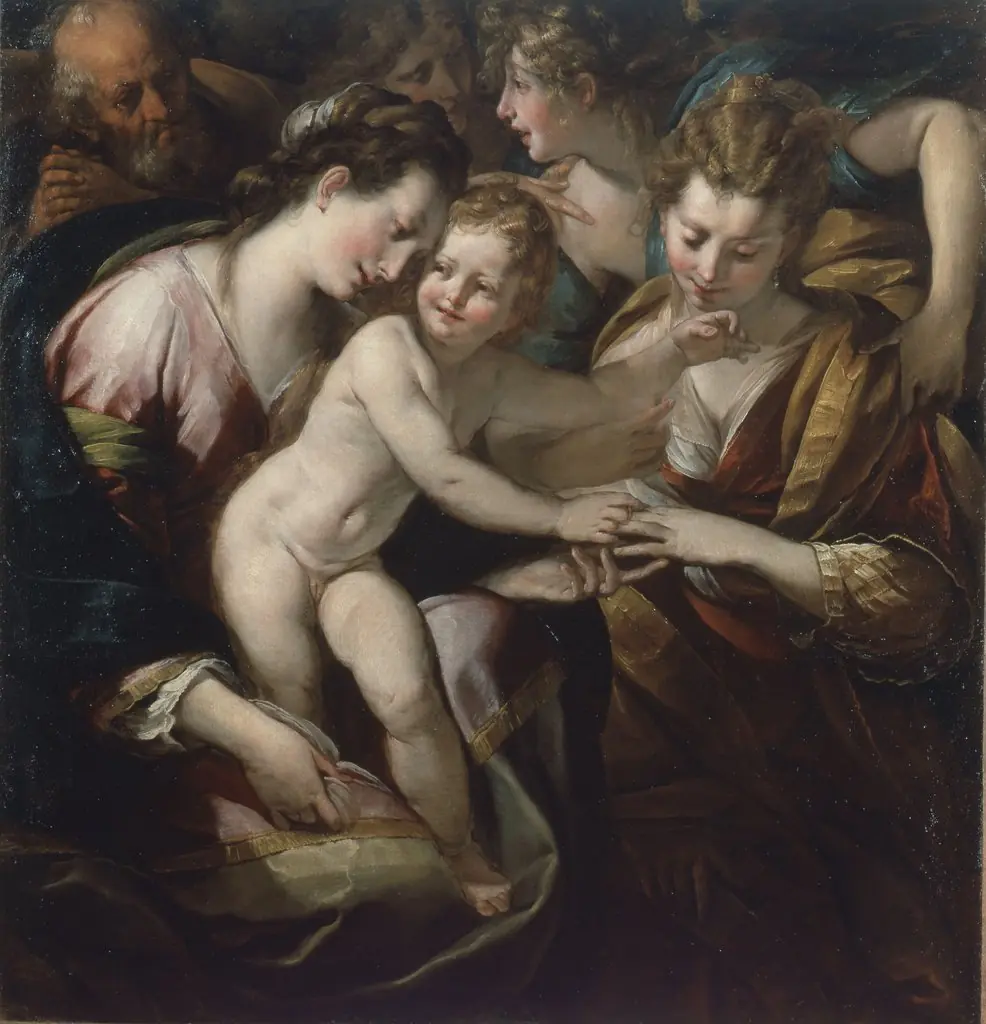
The Mystic Marriage of Saint Catherine depicts Saint Catherine of Alexandria in a visionary union with the Christ Child, symbolizing her mystical espousal to the divine. The composition includes traditional iconographic elements such as a crown, a wheel, and a sword, referencing her martyrdom. The architectural backdrop and delicate gestures underscore the sacred intimacy of the marriage metaphor, while the surrounding motifs reinforce themes of faith, devotion, and spiritual union.
Technique & Style
The Mystic Marriage of Saint Catherine is executed in oil paint on canvas, a support and medium consistent with Anthony van Dyck's standard practice for religious compositions of the period. The work measures 124 cm in height by 174 cm in width, giving it a horizontal orientation suited to its multi-figure devotional arrangement.
Stylistically, the painting belongs to the religious genre and treats the mystic marriage of Saint Catherine of Alexandria, depicting the saint alongside attributes such as a sword and a ring, set within an architectural element. The combination of sacred subject matter with classical architectural framing reflects the early Baroque handling typical of Van Dyck's 1618 production.
History & Provenance
Painted in 1618, the work is one of van Dyck's early religious compositions executed during his Antwerp period.
The painting entered the Spanish royal collection by 1746, when it was inventoried at the Royal Palace of La Granja de San Ildefonso under Philip V. It later transferred to the Royal Palace of Aranjuez and, by the early nineteenth century, was recorded in the inventory of Ferdinand VII. The work has remained in Spanish state collections and is currently held by the Museo del Prado in Madrid.
Historically, the painting passed through the hands of Spanish monarchs including Philip V, Elisabeth Farnese, Charles III, and Ferdinand VII. No specific inventory or accession numbers are provided in the available records, nor is there documented information regarding a formal exhibition history for this piece.
Overview
Created in 1618, this oil painting belongs to the Flemish Baroque tradition. It presents a compact group of five figures illuminated by a focused, soft light that separates them from a darkened backdrop of a distant city and a stone railing. The central action shows a woman in a white, gold‑trimmed dress receiving a ring from a child, while other figures observe the scene.
Context
During the early 17th century, devotional images of saints were common in Flemish churches and private collections. Van Dyck’s interpretation aligns with Counter‑Reformation aims, emphasizing personal piety through intimate, emotionally charged scenes. The inclusion of a cityscape and architectural elements situates the miracle within a recognizable, contemporary setting.
Own this work as a print
Artist & collection
Artist
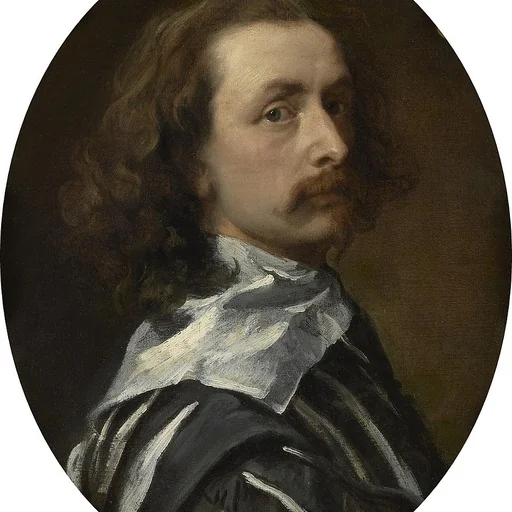
Sir Anthony van Dyck (; Dutch: Antoon van Dijck; 22 March 1599 – 9 December 1641) was a Flemish Baroque artist, who became the leading court painter in England after success in the Spanish Netherlands and Italy.