Artwork
Time Clipping Cupid's Wings
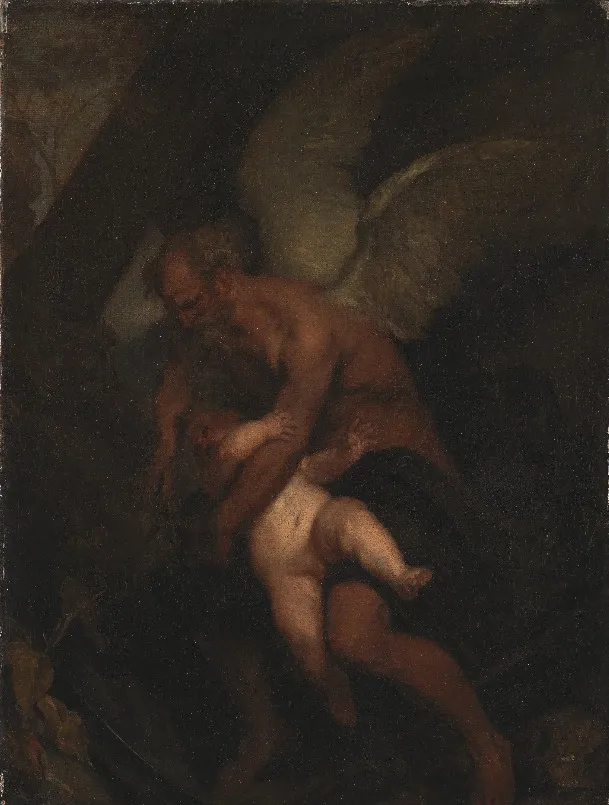
Time Clipping Cupid's Wings is an oil painting by the Flemish Baroque painting artist Anthony van Dyck. It dates from 1627 and is held in the collection of the Statens Museum for Kunst.
About this work
Subject & Meaning
Cupid, often symbolizing desire and passion, appears subdued, reinforcing the idea that even love is transient and subject to temporal decay.
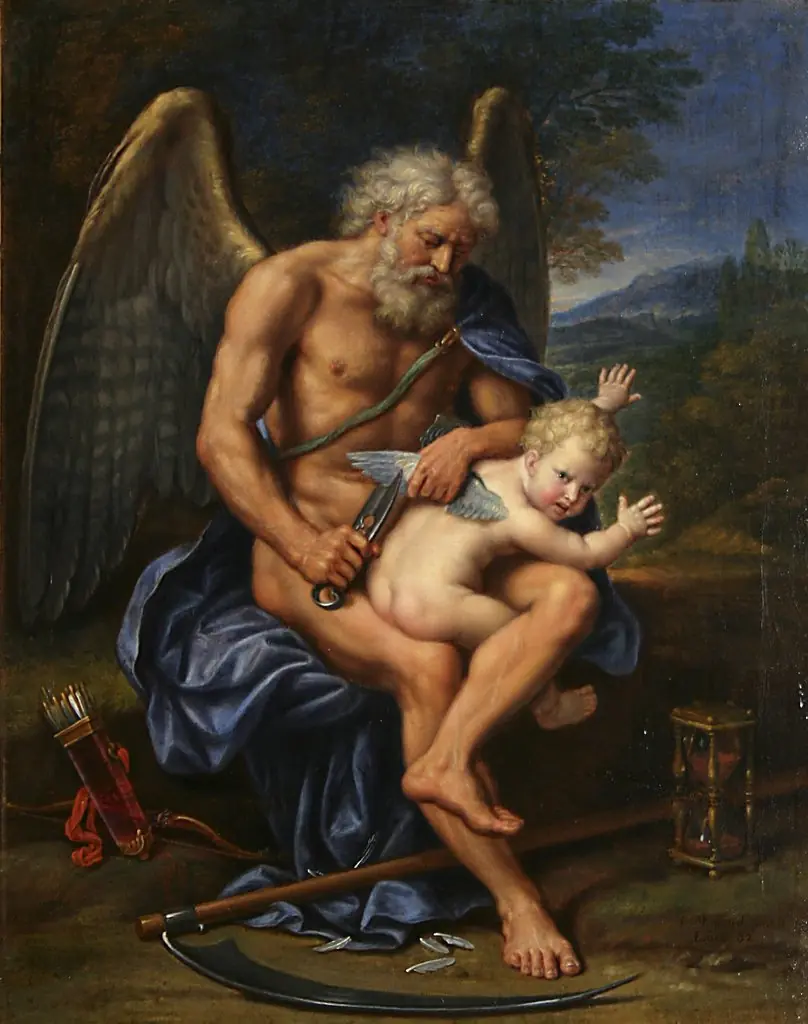
Anthony van Dyck’s Time Clipping Cupid’s Wings (1627) depicts the allegorical confrontation between Father Time and Cupid, embodying a classical theme of love’s vulnerability to the passage of time. Father Time, typically represented as an aged, winged figure, is shown restraining Cupid while cutting the god of love’s wings with shears. Cupid, often symbolizing desire and passion, appears subdued, reinforcing the idea that even love is transient and subject to temporal decay.
The work draws on the Renaissance and Baroque tradition of personifying abstract concepts, where Time’s scythe and hourglass signify mortality, while Cupid’s wings represent fleeting passion. By clipping Cupid’s wings, van Dyck visualizes the inevitability of love’s erosion under time’s influence, a moralizing message about the ephemeral nature of human emotions.
Technique & Style
Created in 1627, Time Clipping Cupid's Wings is executed in oil paint on a canvas support. The work is classified as a mythological painting that depicts the figures of Father Time and Cupid. Stylistically, the piece is a large-scale composition, measuring 417 cm in height and 293 cm in width.
The painting serves as a visual interpretation of the theme 'Time clipping the Wings of Love', utilizing the artist's characteristic handling of oil media to render the allegorical scene.
History & Provenance
Time Clipping Cupid's Wings is an oil painting on canvas created in 1627 by Anthony van Dyck. It was first documented in 1627 as a mythological work depicting Father Time and Cupid. The painting entered the collection of the Statens Museum for Kunst in Copenhagen, where it remains in the museum's holdings.
Its dimensions are 417.0 cm in height and 293.0 cm in width. The work was likely commissioned for a private patron before entering the museum's collection. It is classified as a mythological painting from the Baroque period, reflecting van Dyck's mastery in rendering complex allegorical subjects.
Overview
Created in 1627, this oil painting by Anthony van Dyck portrays a youthful, winged figure reminiscent of Cupid, positioned on its stomach against an almost black backdrop. The child’s plump form and outstretched arms suggest a moment of awakening or playful repose, while the stark contrast of light and shadow draws immediate attention to the figure.
Context
The piece belongs to a broader Baroque fascination with classical mythology, where artists used familiar deities to comment on contemporary concerns. Van Dyck’s choice to depict Cupid in a domestic, almost tender setting reflects a shift from grandiose mythic battles toward more intimate, humanized interpretations of ancient narratives.
Artist & collection
Artist
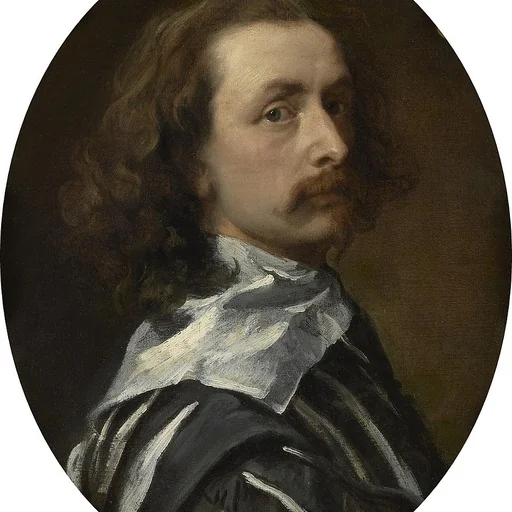
Sir Anthony van Dyck (; Dutch: Antoon van Dijck; 22 March 1599 – 9 December 1641) was a Flemish Baroque artist, who became the leading court painter in England after success in the Spanish Netherlands and Italy.

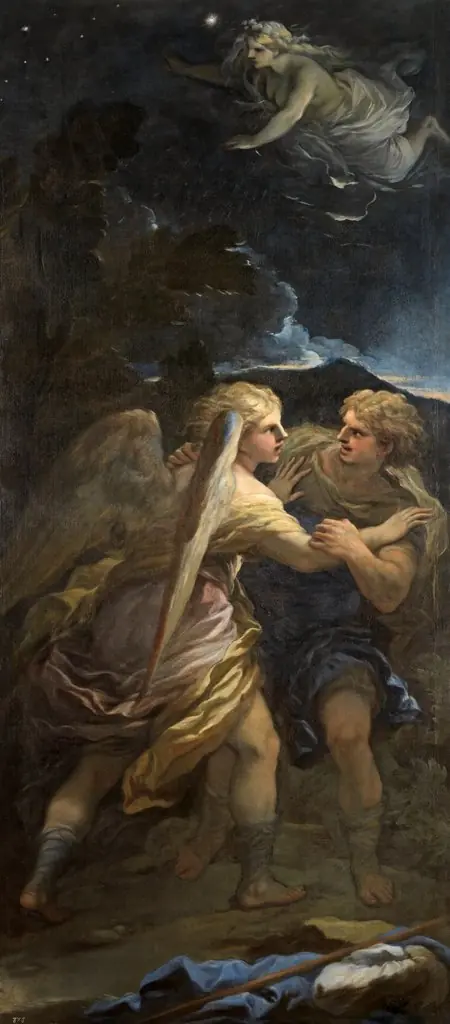 Lucha de Jacob con el ángel
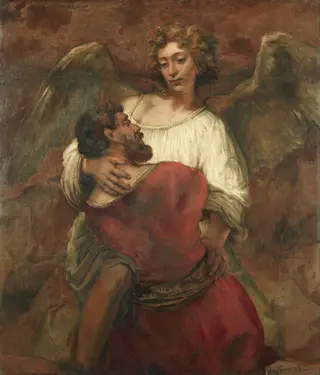 Jacob wrestling with the angel
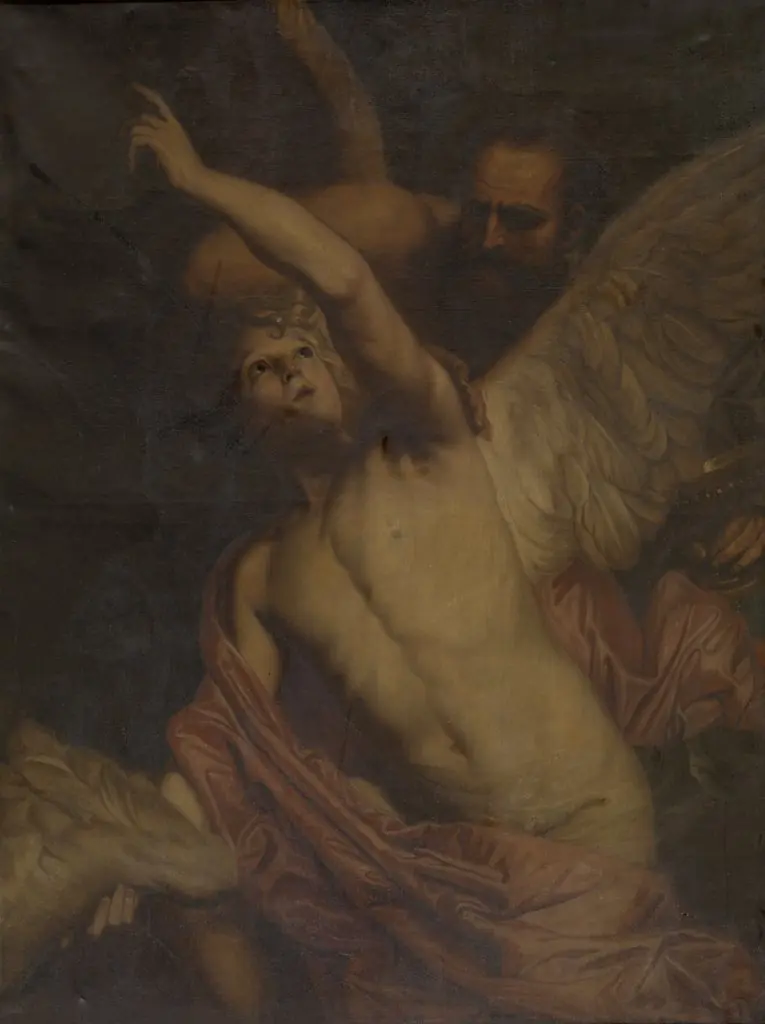 Icarus and Daedalus
 Lupta lui Iacob cu îngerul
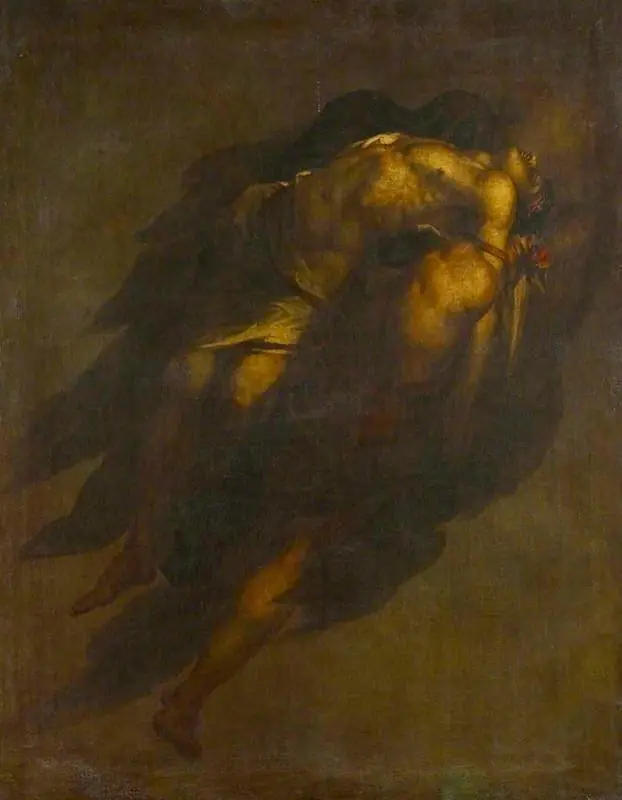 The Dead Sarpedon, Borne by Sleep and Death (from Homer's 'The Iliad')
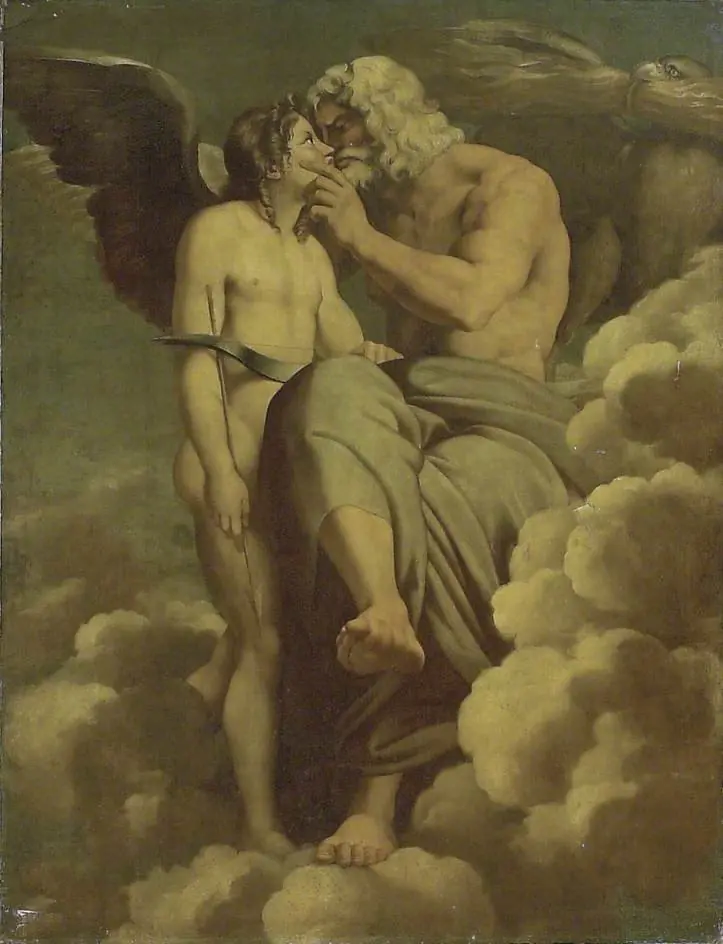 Jupiter and Cupid
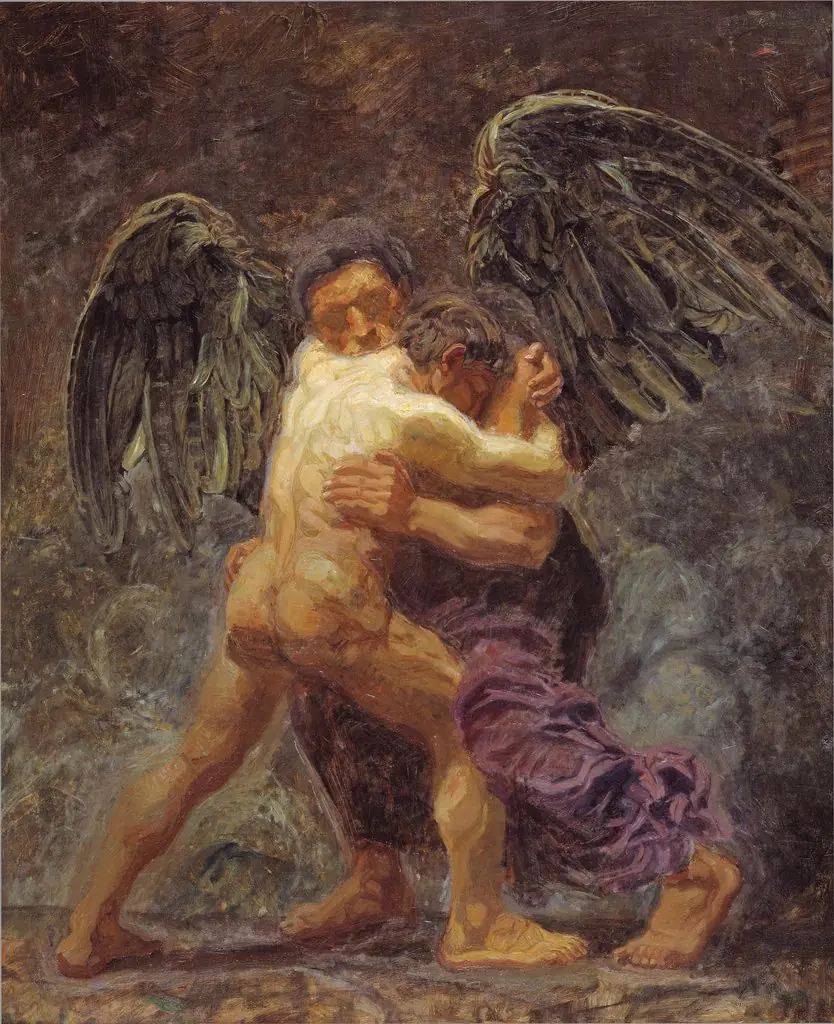 Jacob Wrestling with the Angel
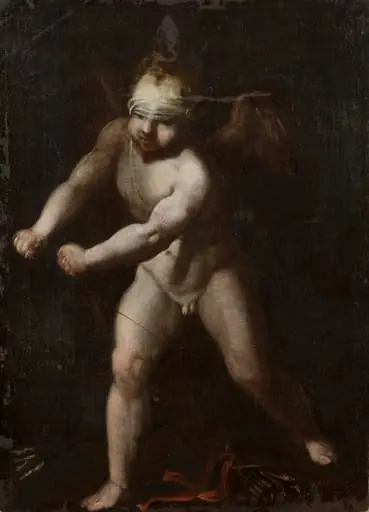 Amor încordându-și arcul
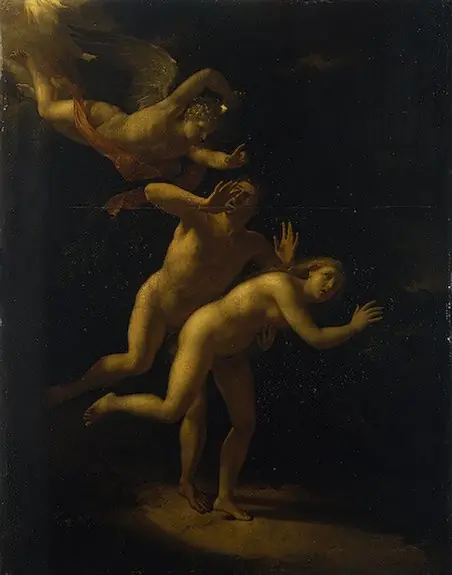 The Expulsion
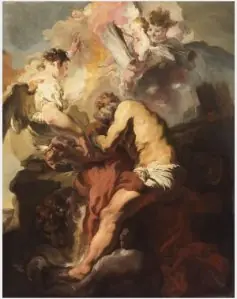 The Vision of Saint Jerome
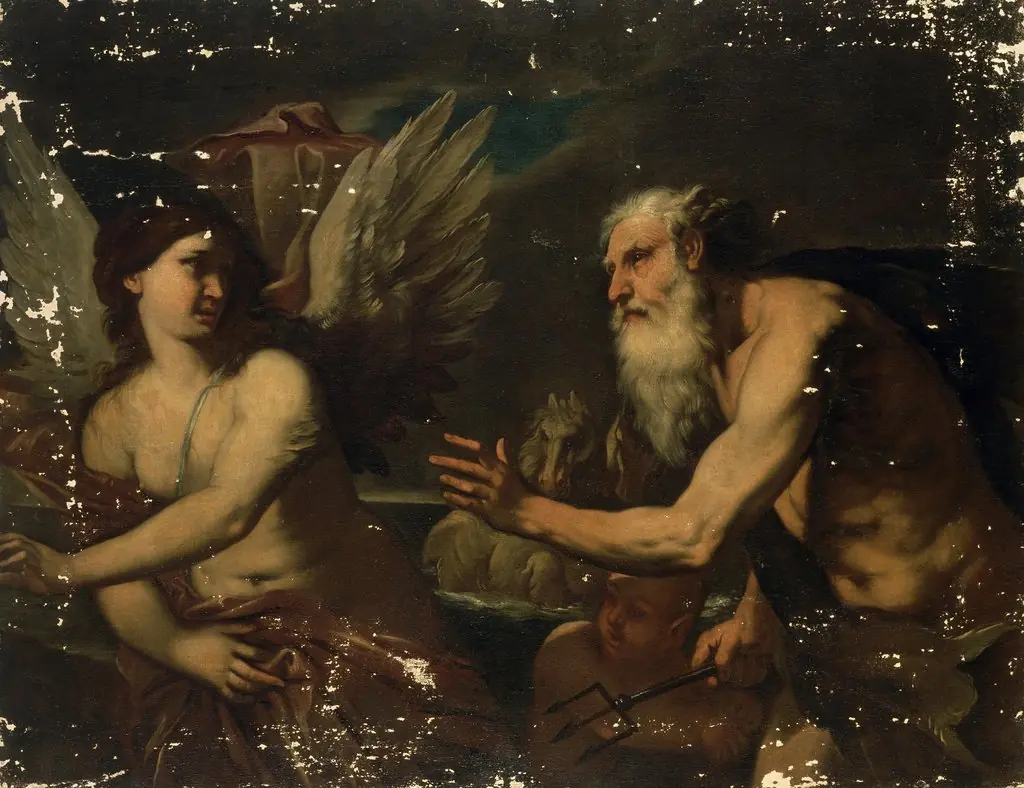 Neptune and Сoronis
- Time Clipping Cupid's Wings