Artwork
The Mystic Marriage of Saint Catherine
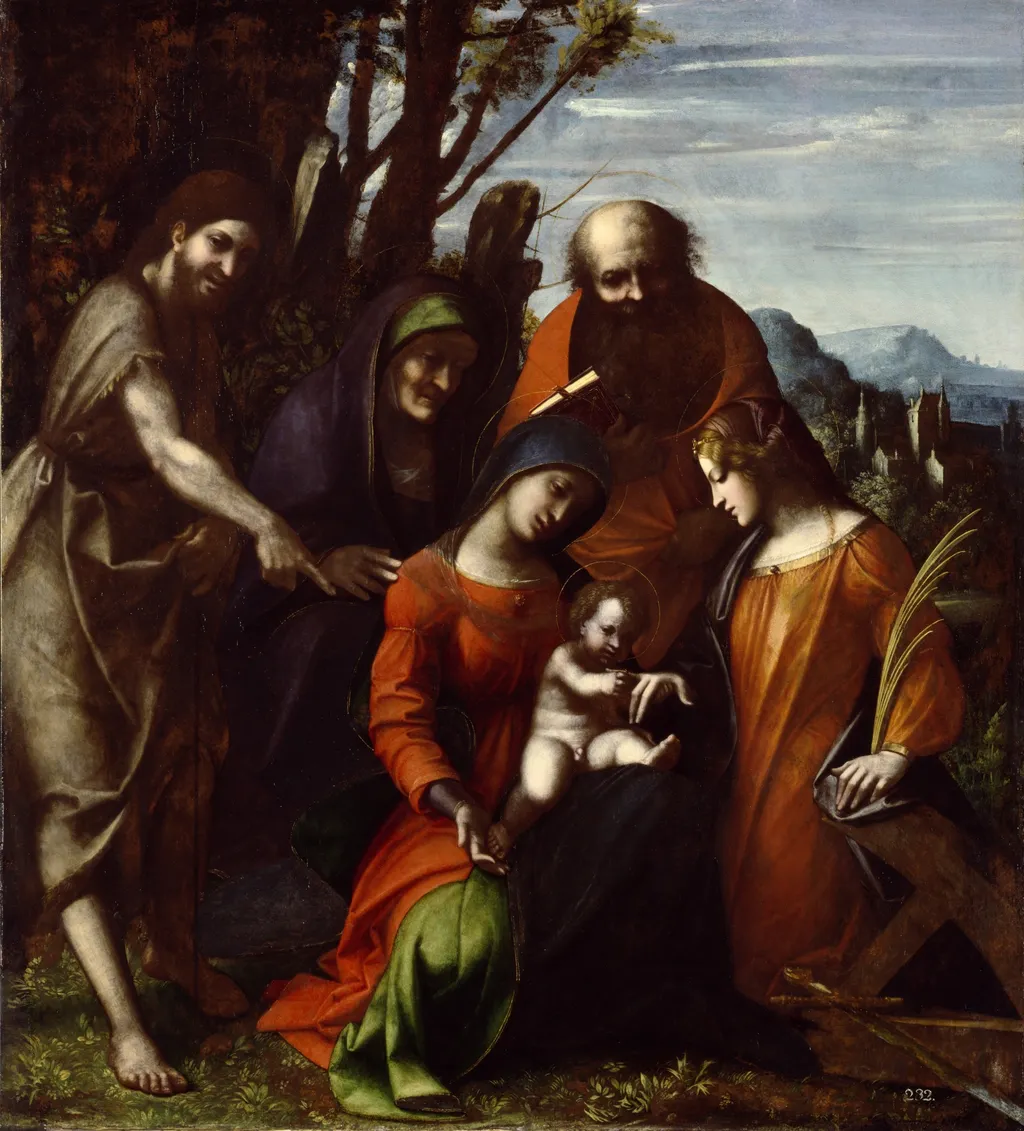
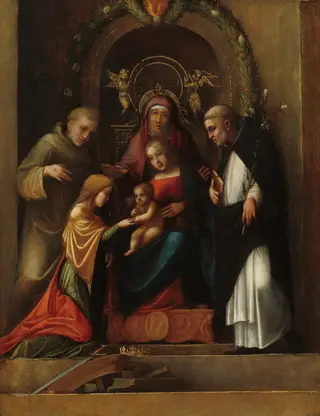
The Mystic Marriage of Saint Catherine is an oil painting by the Early Renaissance artist Antonio da Correggio. It dates from 1512 and is held in the collection of the Detroit Institute of Arts.
About this work
Subject & Meaning
The scene is witnessed by Saint John the Baptist, who directs the viewer's gaze toward the central action, and by Saint Anne, who stands behind the Virgin.
The painting depicts the mystic marriage of Saint Catherine of Alexandria, a subject drawn from medieval legend in which the saint, having vowed perpetual virginity, is symbolically wed to the Christ Child. Correggio shows the Christ Child seated on the Virgin's lap extending a ring toward Catherine, who kneels in profile with her right hand raised to receive it; attributes such as the martyr's palm and the broken wheel lie nearby, while a sword marks the instrument of her execution. The scene is witnessed by Saint John the Baptist, who directs the viewer's gaze toward the central action, and by Saint Anne, who stands behind the Virgin. An unidentified male saint in red, possibly Saint Joseph or Zechariah, holds a book to the right.
The composition emphasizes Catherine's spiritual dedication and the ideal of bridal consecration to Christ, a theme resonant with monastic and female religious devotion. The tranquil landscape and soft, diffused light frame the sacred encounter, reinforcing the vision's intimacy and sanctity.
Technique & Style
Created circa 1512, this work is executed in oil paint on a panel support. The composition is characterized by a Lombard chromatic scheme dominated by brown tones, punctuated by vivid reds and oranges in the drapery. A muted, diffused light models the figures, creating soft, sfumato shadows that integrate the subjects with the surrounding shaded landscape.
The lighting is selective: while the background and most figures are bathed in a gentle haze, the face of Saint Catherine is illuminated more intensely to emphasize an idealized profile. Stylistically, the painting reflects Venetian influences filtered through the work of Dosso Dossi, prioritizing a strong sense of nature that envelops the scene. The handling shows a softness and atmospheric depth that distinguishes it from the artist's earlier, more rigid works.
History & Provenance
The work is dated to about 1512 and is associated with Correggio's early period, placed before the Madonna and Child with Saint Francis (Dresden) and after the earlier Mystic Marriage of Saint Catherine (Washington).
It is recorded in the Gonzaga collection at Mantua and was among the works sold to Charles I of England. Following the king's execution in 1649, the painting was dispersed in the Commonwealth sale and entered a London private collection, then passed through Vienna and Amsterdam before being acquired in 1925 by Duveen Brothers, who brought it to the United States. It was sold to Anna Scripps Whitcomb, who donated it to the Detroit Institute of Arts in 1926, where it is held under accession number 25.125. The painting measures 167.64 cm in height and 155.26 cm in width.
Context
The painting is generally placed within Correggio's youthful phase, dated to around 1512, after his earlier Mystic Marriage of Saint Catherine now in Washington and before the Madonna and Child with St Francis in Dresden. Italian-language scholarship situates the work stylistically within an Emilian milieu shaped by Lombard coloring in brown tones, while registering an awareness of Venetian modes filtered through Dosso Dossi, particularly in the treatment of the surrounding landscape. The composition's emphasis on nature and the softened, sfumato lighting are cited as characteristic of this early moment in the artist's development.
The placement of the Christ Child has also been noted to recall Cima da Conegliano's altarpiece formerly in Parma Cathedral, suggesting Correggio's engagement with earlier Venetian devotional prototypes.
Legacy
The Mystic Marriage of Saint Catherine entered English collections in the seventeenth century as part of the Gonzaga dispersal, a provenance that later shaped its reception among northern European connoisseurs and dealers. By the early twentieth century the panel had passed through London, Vienna, and Amsterdam before being acquired in 1925 by Duveen Brothers, who introduced it to American collectors. Its donation to the Detroit Institute of Arts in 1926 made the work accessible to early twentieth-century American audiences encountering Correggio's poised compositions and softly modeled forms.
Within Italian art-historical writing, the painting has been cited as a key example of Correggio's youthful fusion of Venetian colorism with Lombard compositional restraint, ensuring its continued reference in studies of sixteenth-century devotional imagery.
Overview
Created around 1512, this oil on panel by Antonio da Correggio portrays a devotional episode known as the Mystic Marriage of Saint Catherine. The composition is housed in the Detroit Institute of Arts and is generally placed among the artist’s early works, bridging the period between his Dresden Madonna and Child with St Francis and the Washington version of the same subject.
Own this work as a print
Artist & collection

Artist
Antonio Allegri da Correggio, usually known as just Correggio, was an Italian Renaissance painter who was the foremost painter of the Parma school of the High Renaissance, who was responsible for some of the most…





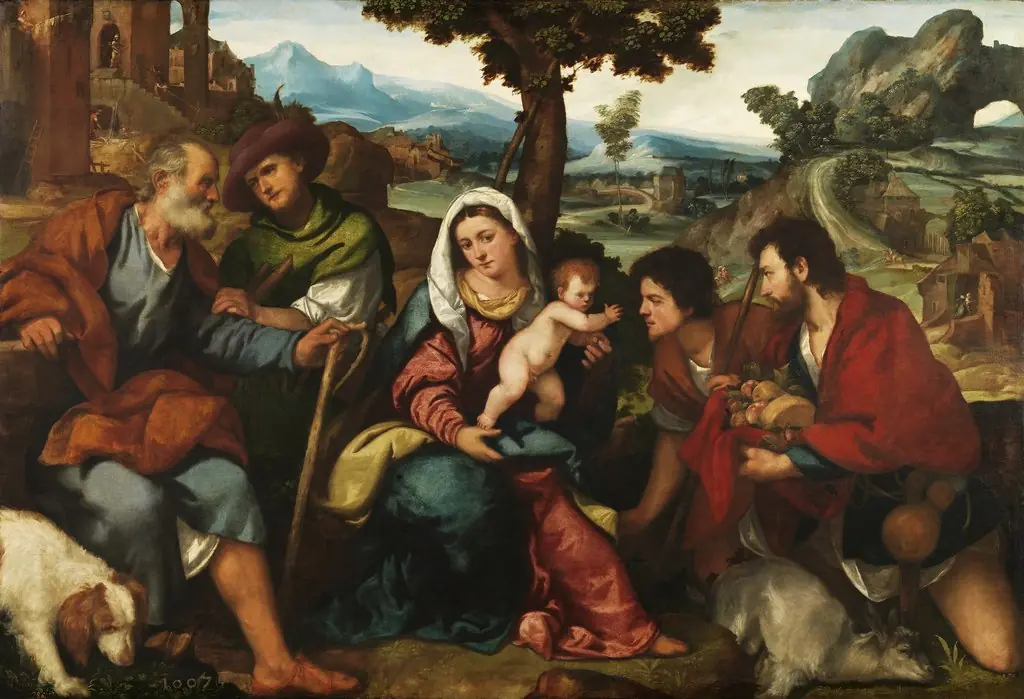 The Adoration of the Shepherds
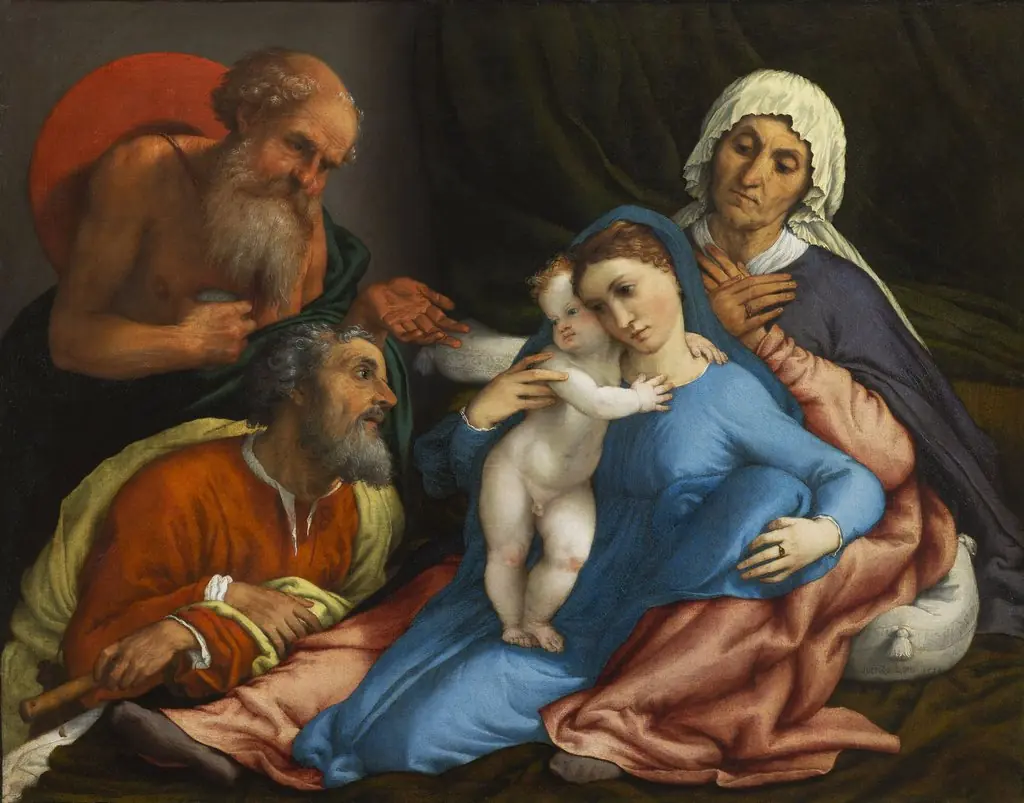 Madonna and Child with Saints
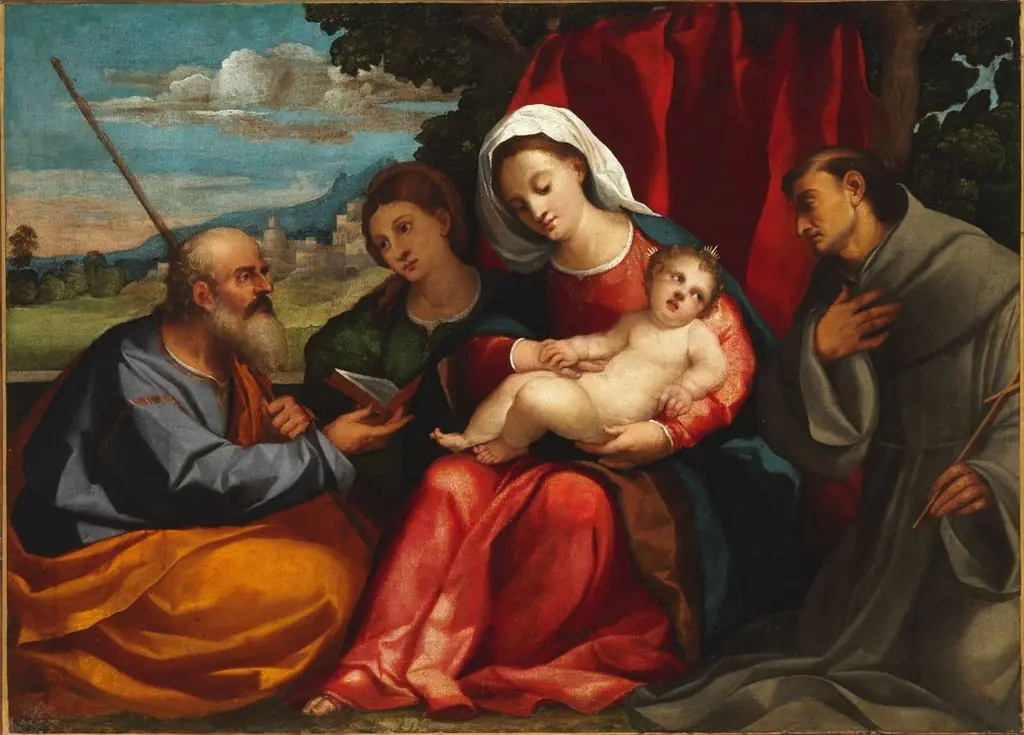 The Holy Family with a Female Saint and Saint Francis of Assisi
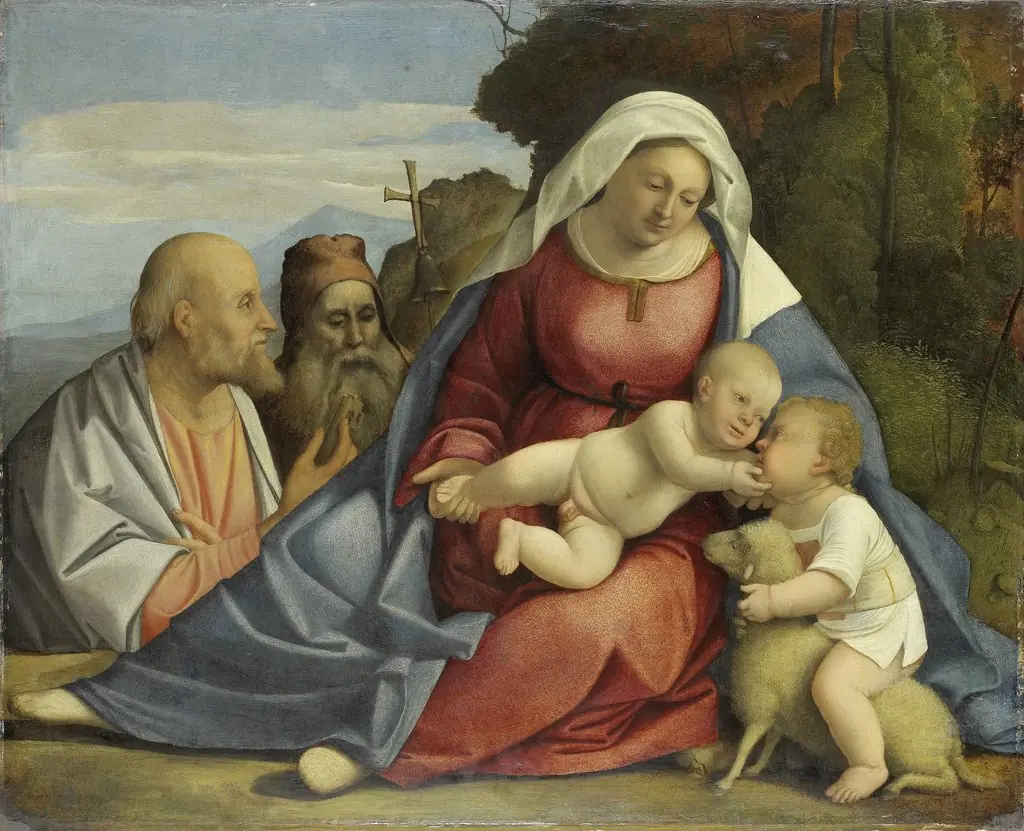 Virgin and Child with young John the Baptist, Saints Peter and Antony Abbot
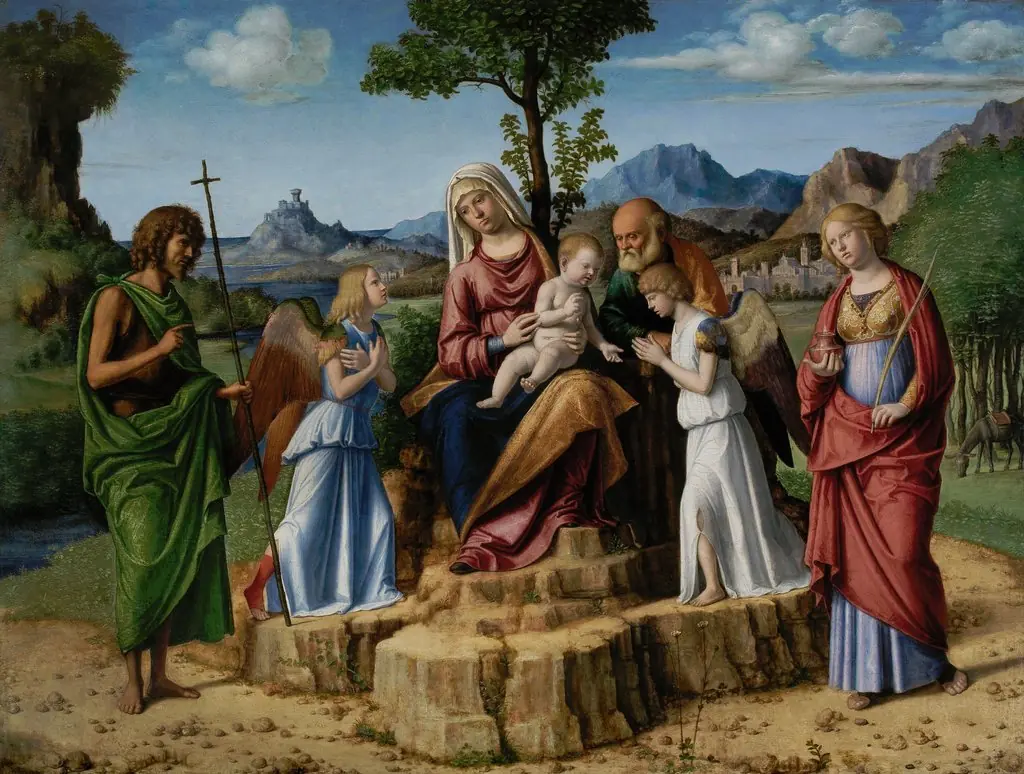 Rest on the Flight into Egypt
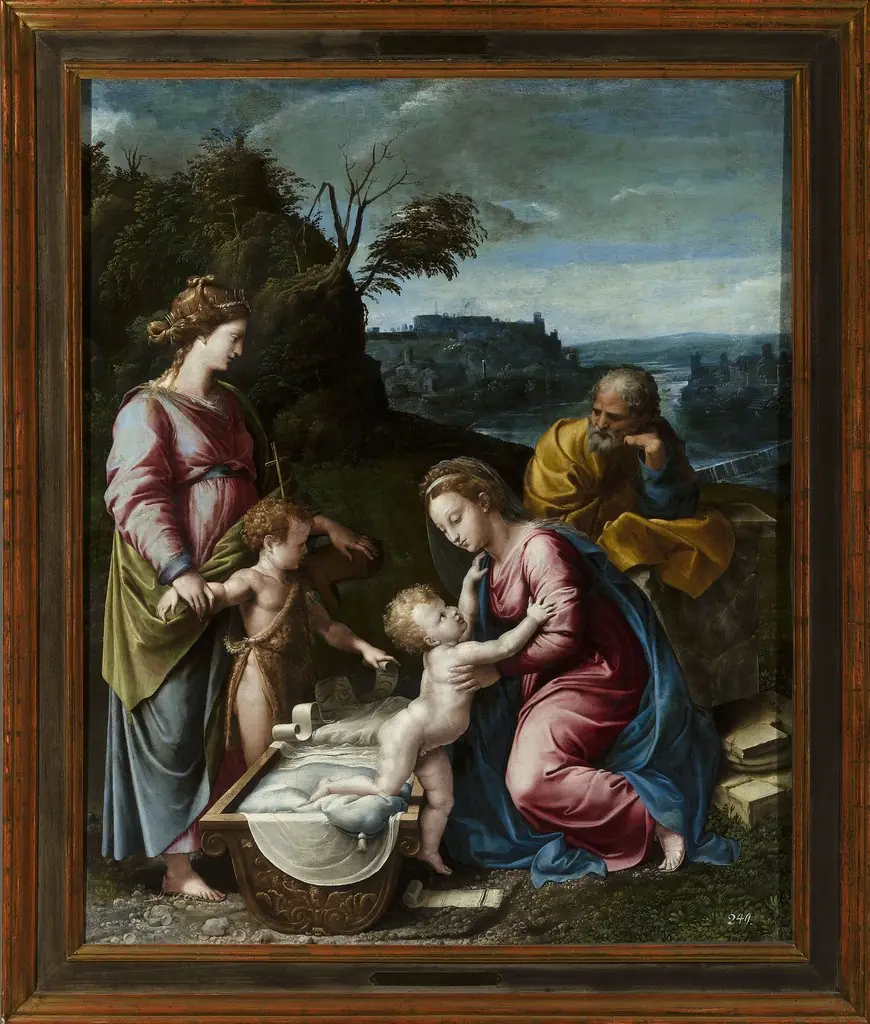 Holy Family with St. John the Baptist and St. Catherine of Alexandria
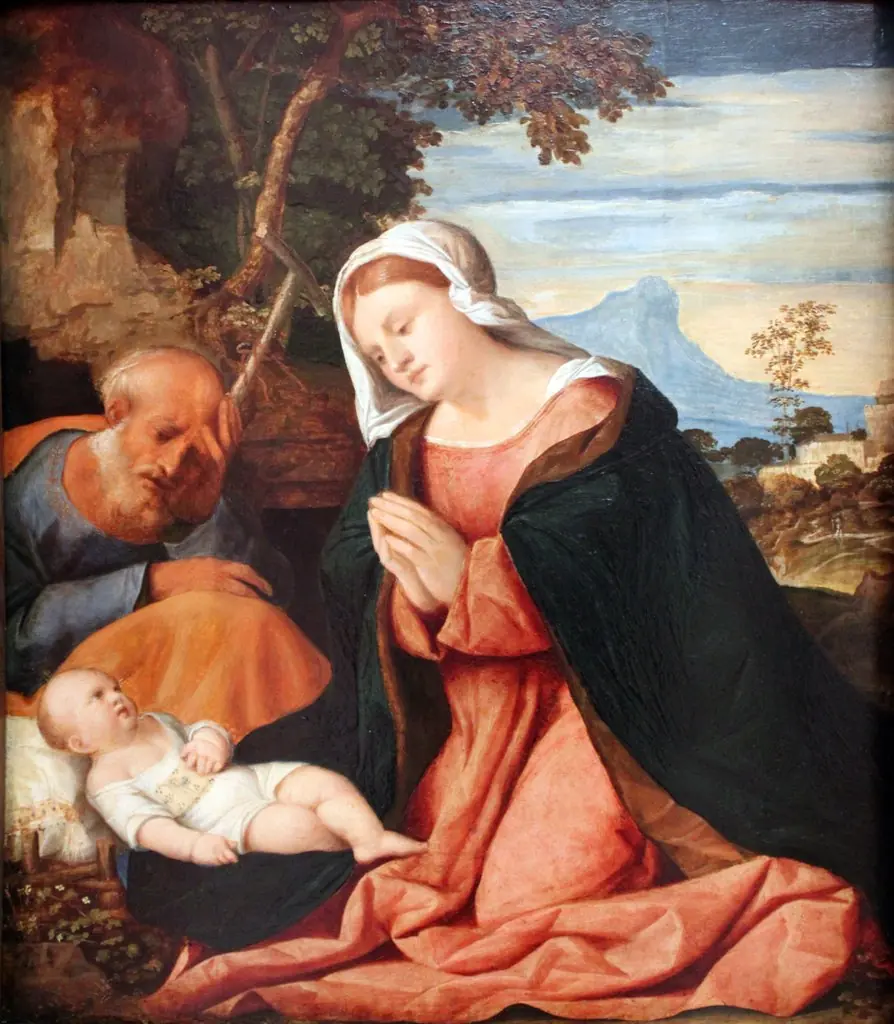 The Holy Family
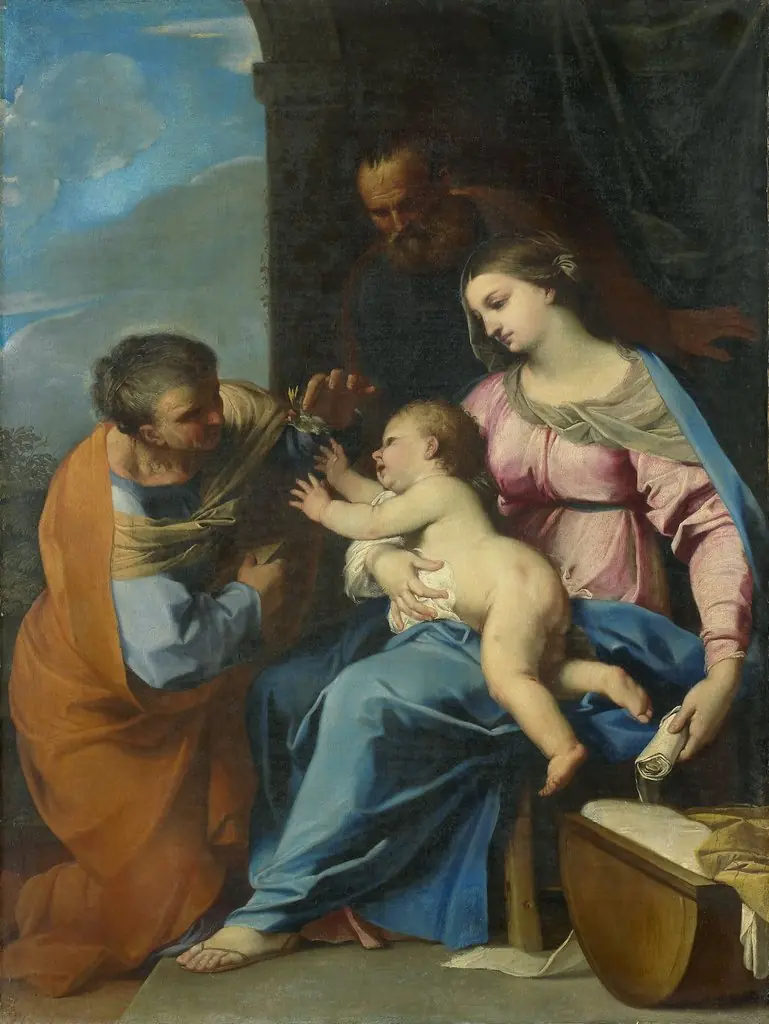 Holy Family
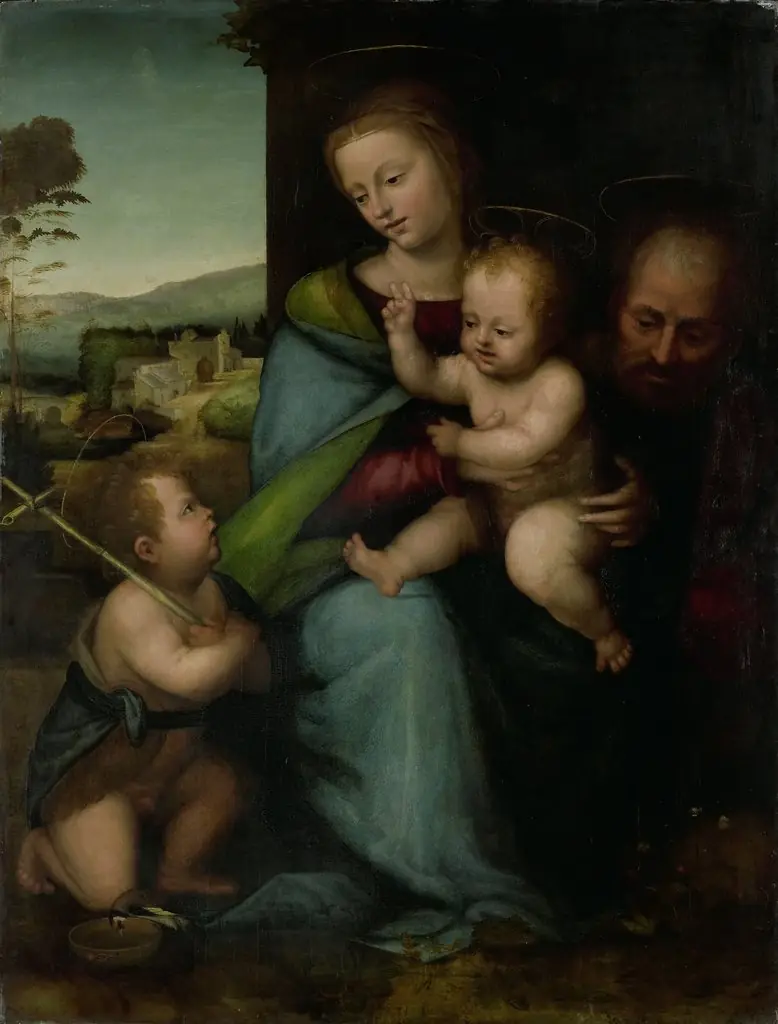 The Holy Family with the Infant John the Baptist
 The Holy Family with the Infant St John
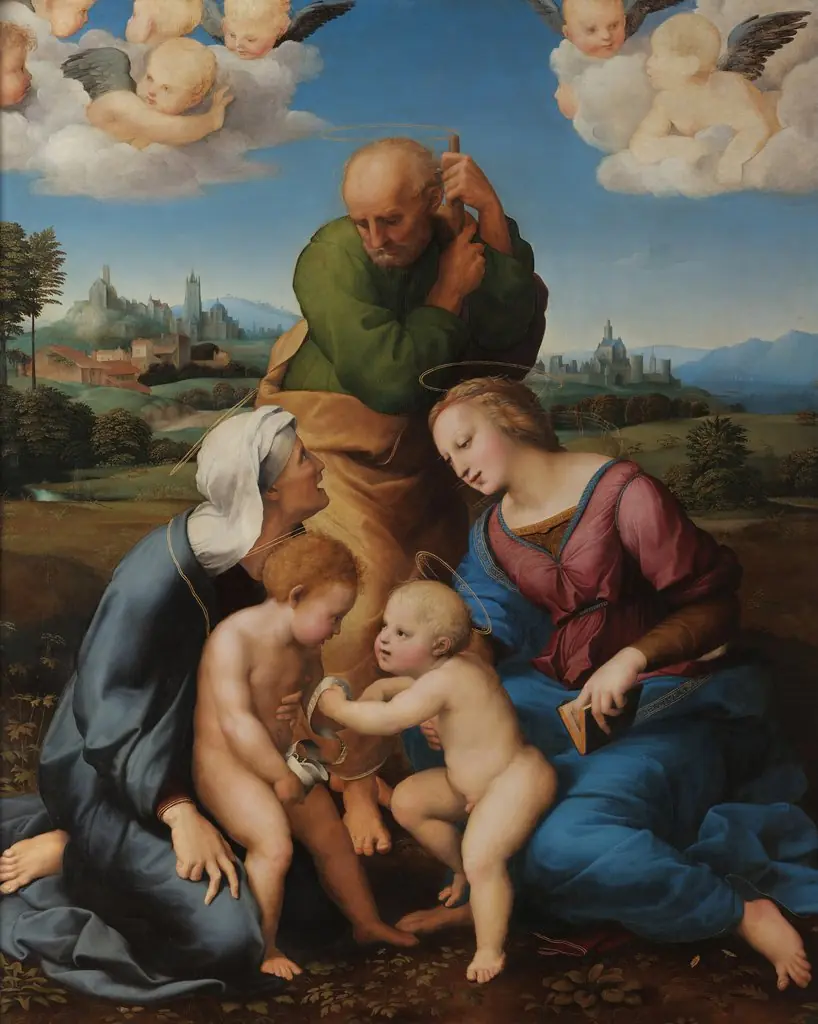 Canigiani Holy Family
- The Mystic Marriage of Saint Catherine