Artwork
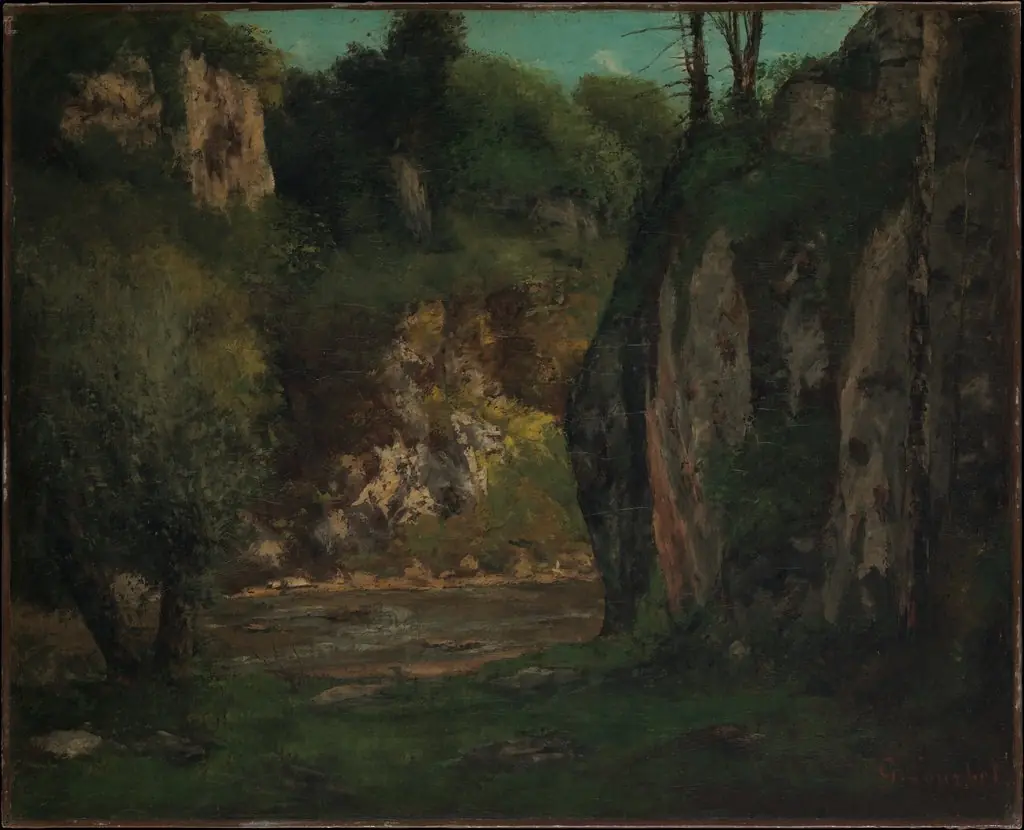
A Spring in a Narrow Gorge
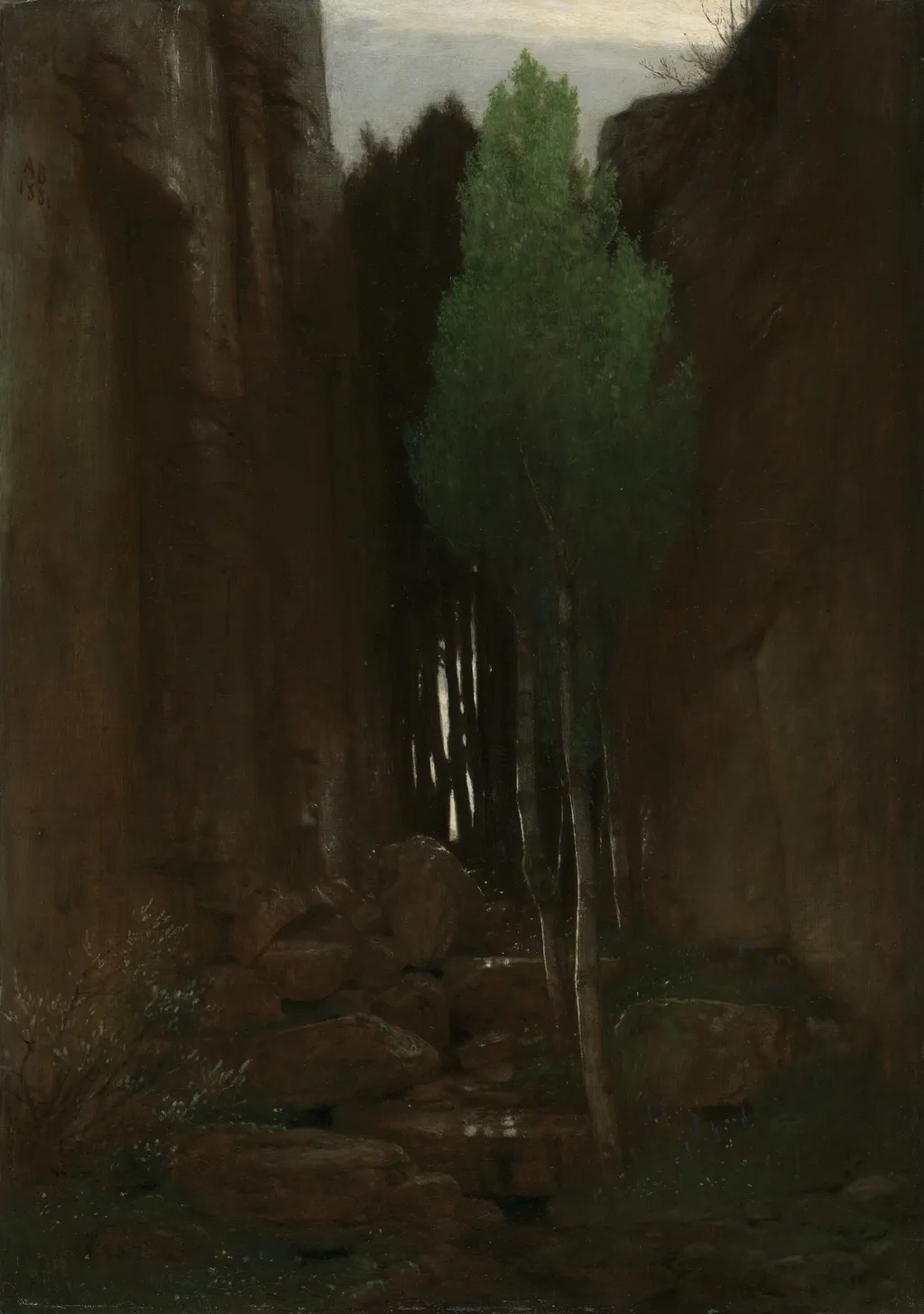
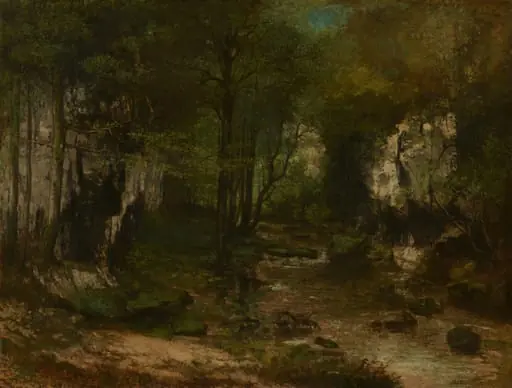
A Spring in a Narrow Gorge is an oil painting by the Symbolist artist Arnold Böcklin. It dates from 1891 and is held in the collection of the J. Paul Getty Museum.
About this work
Overview
A Spring in a Narrow Gorge is an 1891 oil painting by Arnold Böcklin, currently in the collection of the J. Paul Getty Museum.
Subject & Meaning
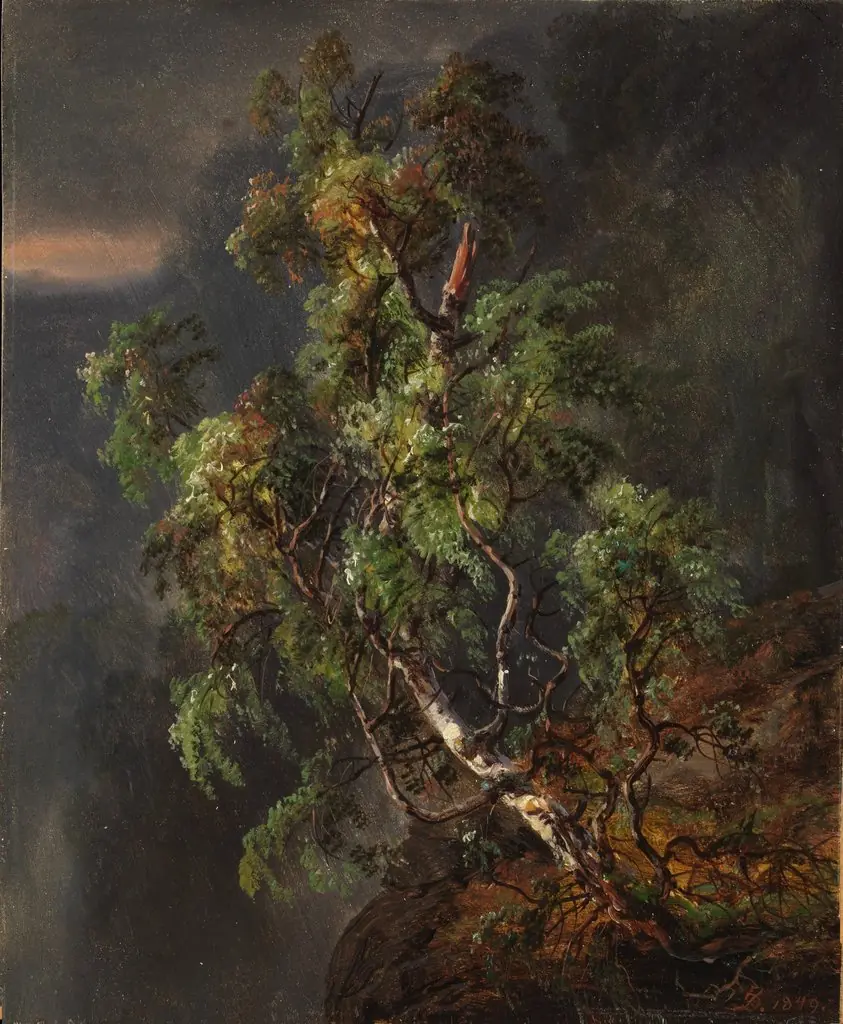
The painting depicts a serene natural scene: a spring emerges from the ground within a narrow, deeply shaded gorge, flanked by towering dark cliffs. The contrast between the gloom of the cliffs and the lighter, greener spring area evokes a sense of calm and tranquility.
Technique & Style
Böcklin employed a chiaroscuro-like approach, using dark earth tones (browns, greys) for the cliffs to create depth, while lighter hues defined the spring and its rocky, verdant surroundings, enhancing the overall atmospheric effect.
History & Provenance
Created in 1891, the painting is part of the J. Paul Getty Museum's collection, though specific acquisition details are not provided here.
Context
While specific contextual influences on this work are not detailed, it reflects Böcklin's broader exploration of nature and the emotional potentials of landscape painting during the late 19th century.
Legacy
The painting's legacy is intertwined with Böcklin's overall reputation; for those interested in the artist's broader oeuvre, further research into his landscape and symbolic works is suggested.
Own this work as a print
Artist & collection
Artist
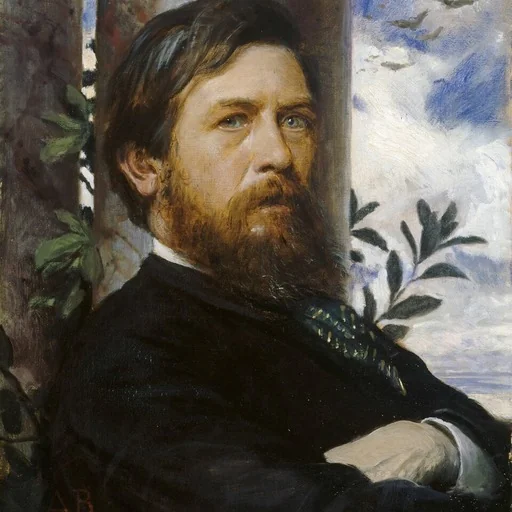
Arnold Böcklin was a Swiss Symbolist painter. His five versions of the Isle of the Dead inspired works by several late Romantic composers.