Artwork
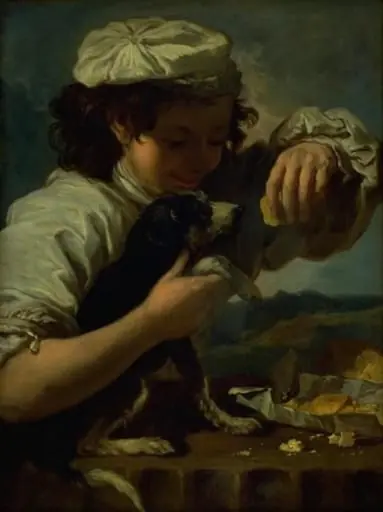
Boy with a dog
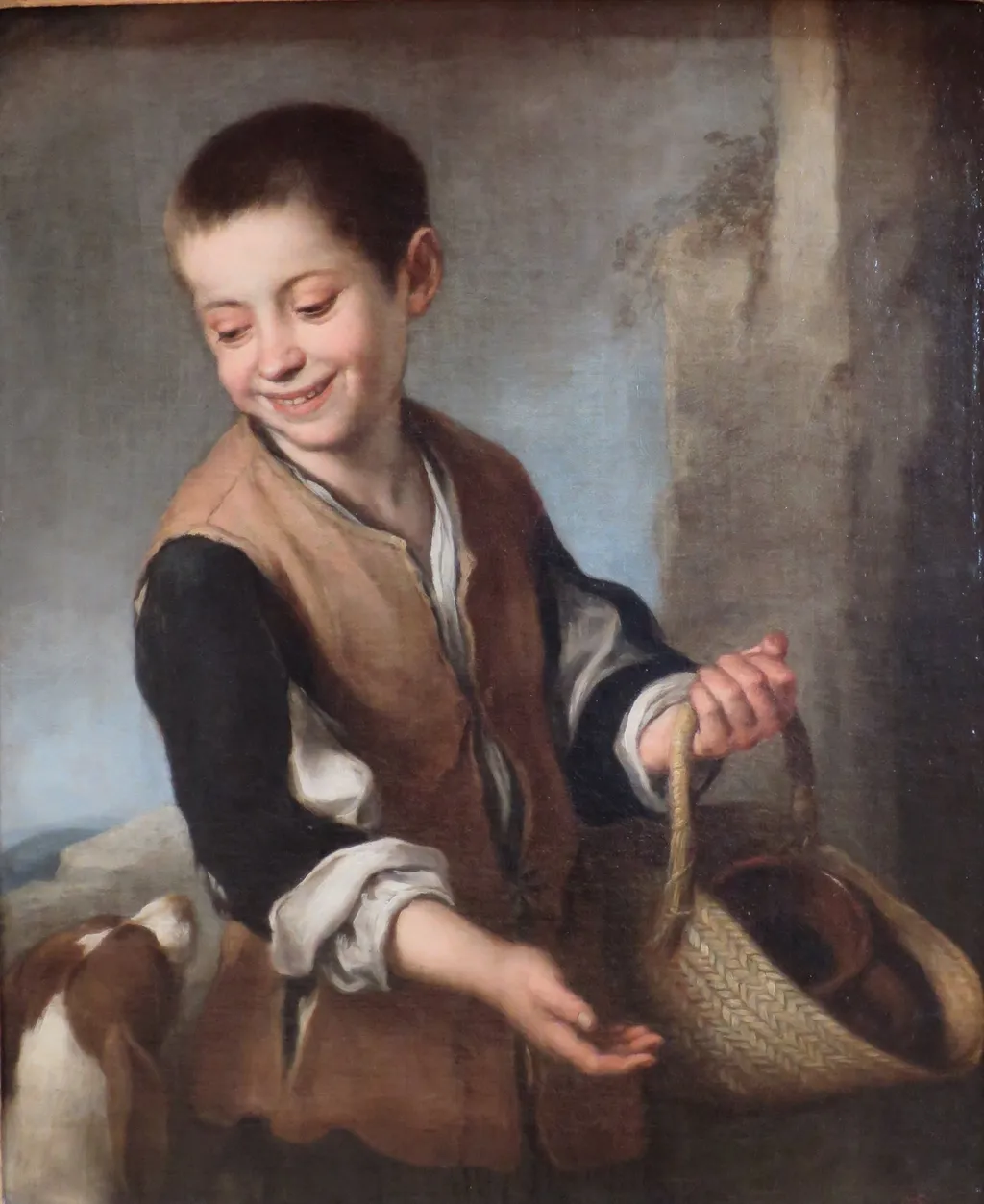
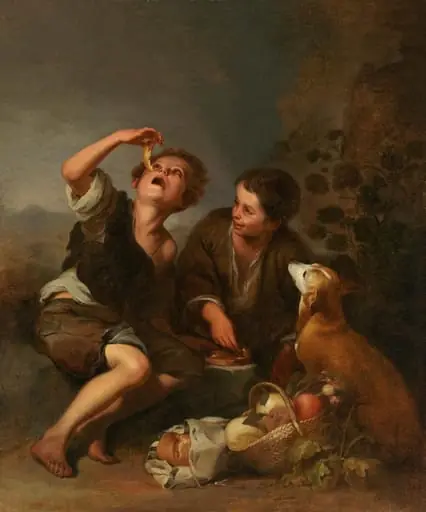
Boy with a dog is an oil painting by the Spanish Baroque Tenebrist artist Bartolomé Esteban Murillo. It dates from 1655 and is held in the collection of the Hermitage Museum.
About this work
It was bought by the Hermitage Museum from the Comte de Choiseul collection in 1772, after being created in the mid‑17th century.
Boy with a Dog is an oil painting by the Spanish artist Bartolomé Esteban Murillo, dated around 1655. The work shows a young boy and his pet, rendered in oil on canvas. It was bought by the Hermitage Museum from the Comte de Choiseul collection in 1772, after being created in the mid‑17th century. Murillo’s gentle handling of the scene reflects his skill with everyday subjects.
The painting stays in good condition. It offers a quiet glimpse of 17‑century life.
If you
Subject & Meaning
The painting depicts a ragged, mischievous, and cheerful boy playing with a dog. This subject serves as a thematic model for many of Murillo's works featuring children, portraying them as victims of the severe hardships that afflicted Seville in the mid-seventeenth century.
The imagery reflects a specific historical context where the city was depleted by heavy taxes and economic competition from Cádiz, compounded by the devastating plague of 1649. Through this genre scene, the work represents the resilience and spirit of youth amidst the widespread poverty and social struggle of the era.
Technique & Style
Bartolomé Esteban Murillo executed Boy with a Dog in oil on canvas, with the support measuring 70 by 60 cm. Stylistically, the work operates as a genre scene depicting a ragged, mischievous, yet cheerful boy playing with a dog. This portrayal aligns with Murillo's broader thematic model of representing destitute children, reflecting the social hardships and poverty that plagued Seville in the mid-seventeenth century following the 1649 plague.
History & Provenance
The painting was created in Spain around 1655-1660 by Bartolomé Esteban Murillo. It entered the collection of Étienne François, duc de Choiseul, before being acquired by the Hermitage Museum in Saint Petersburg in 1772 from the Comte de Choiseul collection. The work remains in the Hermitage Museum's Cabinet de Monseigneur le duc de Choiseul collection to this day. Murillo painted this genre scene depicting a boy playing with a dog as part of his series of children-themed works reflecting mid-17th century social hardships in Seville after the 1649 plague. Boy with a Dog is held in the collection of the Hermitage Museum in Saint Petersburg, Russia. The institution acquired the work in 1772 from the collection of Étienne François, duc de Choiseul (Comte de Choiseul). While one source suggests a creation date around 1650, most records place its execution between 1655 and 1660. The provided texts do not list specific public exhibitions or loan history for the painting, focusing instead on its permanent residence and acquisition details.
Context
The work Boy with a dog by Bartolomé Esteban Murillo is situated within Spanish Baroque painting of the mid-seventeenth century, reflecting the social hardship in Seville after the 1649 plague and economic pressures on the city.
Scholarship emphasizes the painting's genre scene character and its depiction of a ragged, cheerful boy playing with a dog, themes recurring throughout Murillo's oeuvre.
The composition is housed in the Hermitage Museum and was acquired from the collection of Étienne François, duc de Choiseul, in 1772.
Legacy
The painting has come to symbolize Murillo's focus on the lives of humble children, a theme that shaped his reputation in later centuries. Contemporary accounts and later scholarship highlight its emotional resonance, portraying a ragged boy playing with a dog as an emblem of mid-seventeenth-century hardship in Seville. This imagery influenced perceptions of Murillo's genre scenes and contributed to the broader cultural memory of Spanish Baroque art.
Its presence in the Hermitage Museum since acquisition from the Comte de Choiseul collection in 1772 cemented its legacy, with repeated references across encyclopedic entries in multiple languages underscoring its enduring scholarly and public interest.
Own this work as a print
Artist & collection
Artist
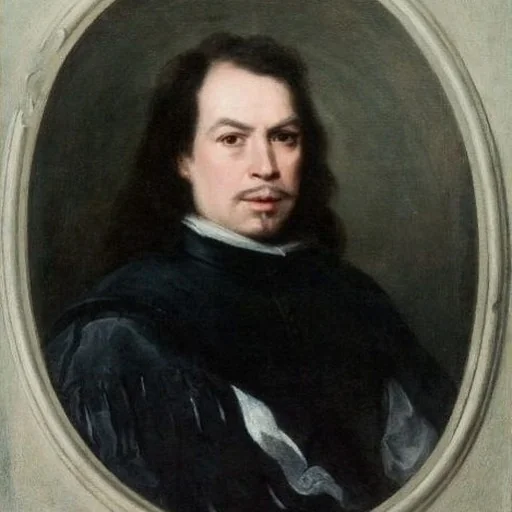
Bartolomé Esteban Murillo ( mure-IL-oh, m(y)uu-REE-oh, Spanish:; late December 1617, baptised 1 January 1618 – 3 April 1682) was a Spanish Baroque painter.