Artwork
Rebecca and Eliezer
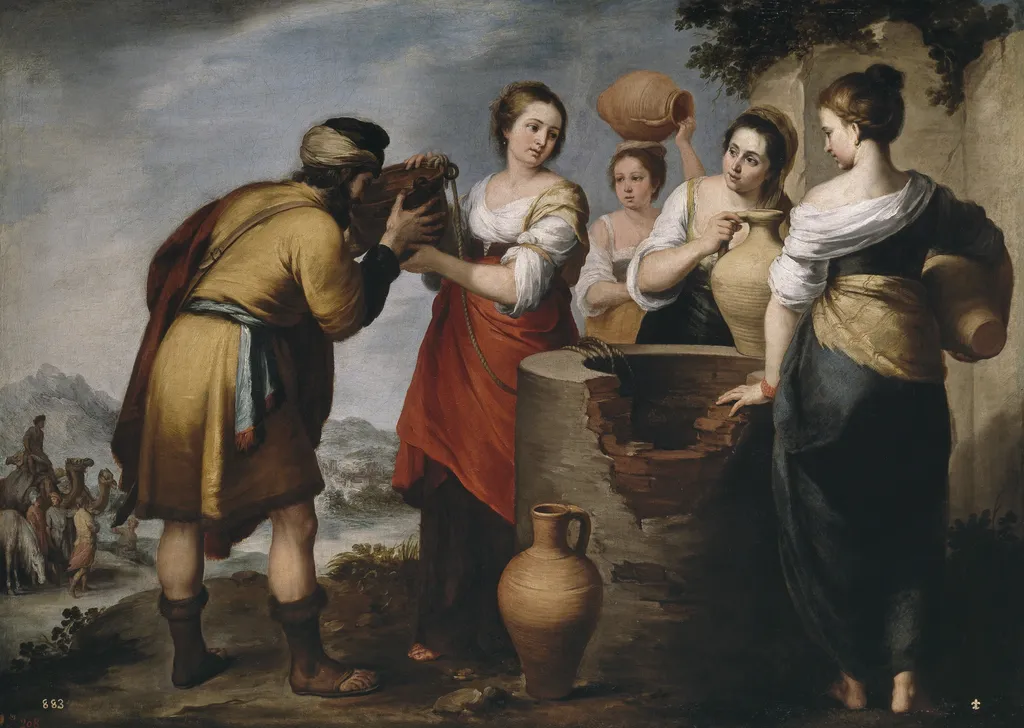
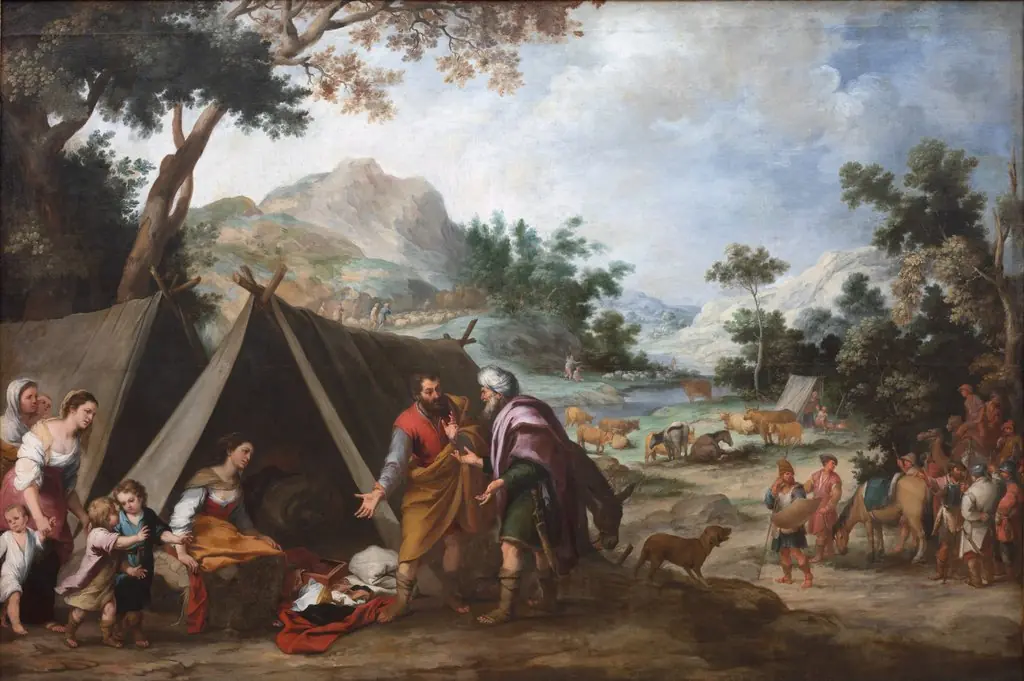
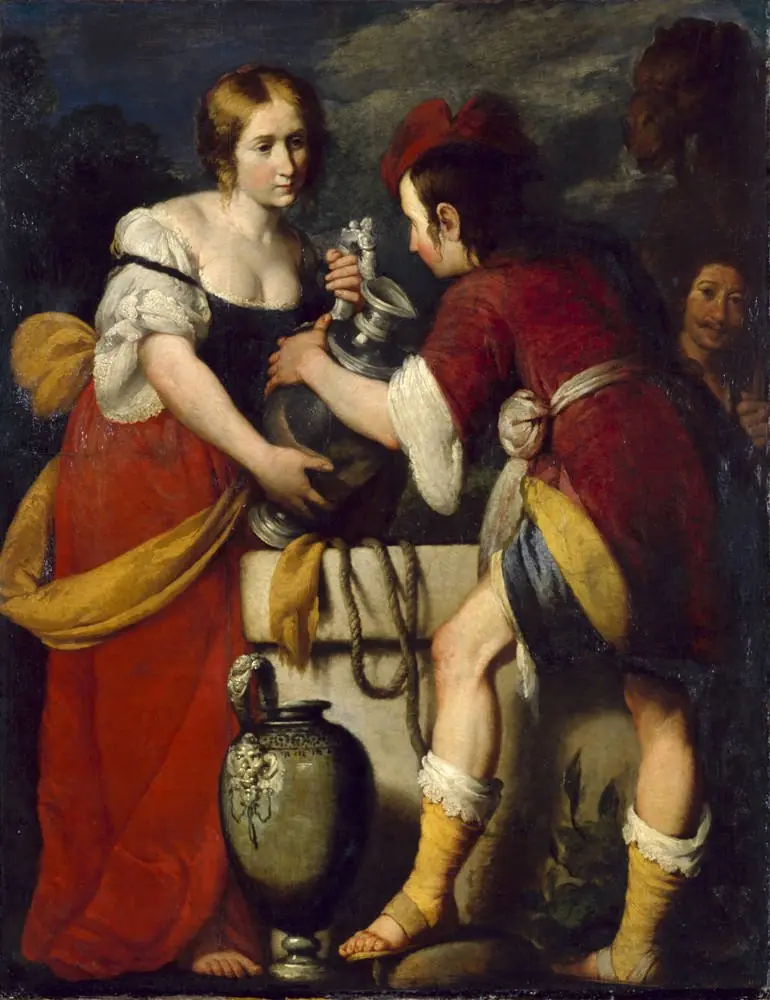
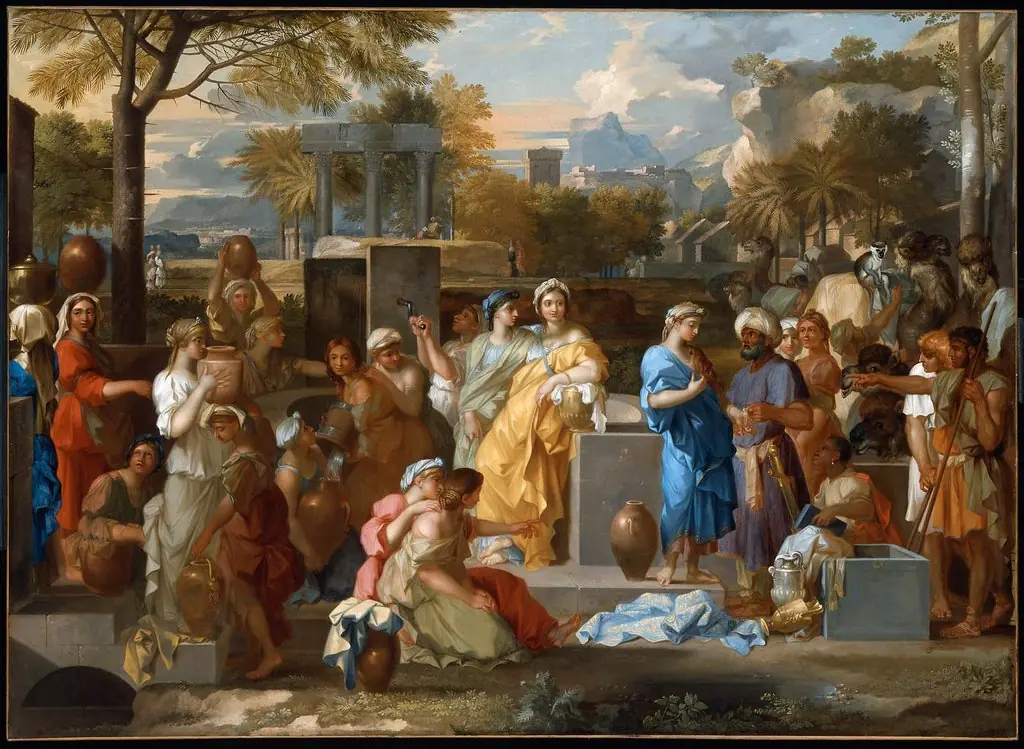
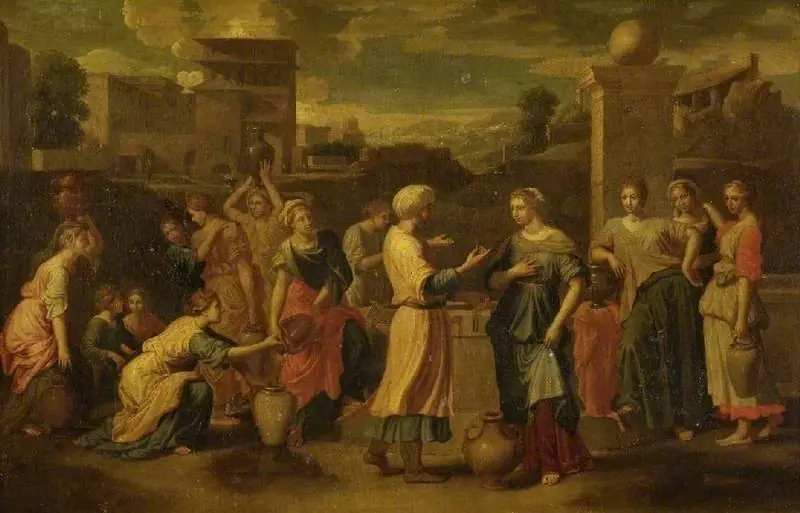
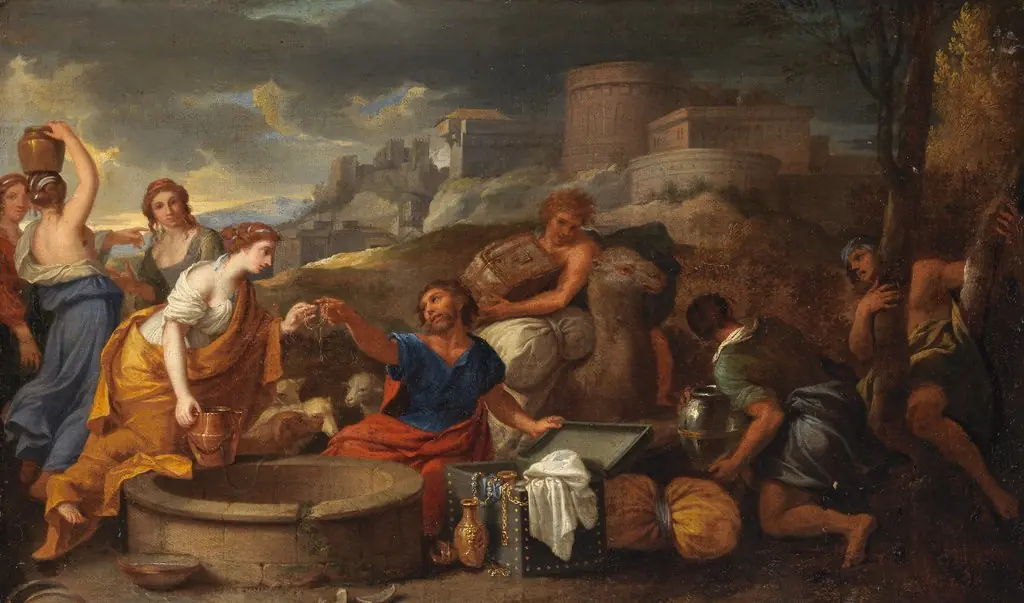
Rebecca and Eliezer is an oil painting by the Early Baroque Italian artist Bartolomé Esteban Murillo. It dates from 1660 and is held in the collection of the Museo del Prado.
About this work
Subject & Meaning
Rebecca and her companions are depicted as young women from the Triana neighborhood or a typical seventeenth-century Spanish village, gathering at a fountain.
Painted around 1660, this work illustrates a narrative from the Book of Genesis in which Abraham's servant, Eliezer, seeks a wife for Isaac. The scene captures the specific moment Eliezer identifies Rebecca as the chosen bride after she offers water not only to him but also to his camels, fulfilling a divine sign. While the biblical account includes ten camels and specific gifts of gold, Murillo's composition focuses on Rebecca drawing water from a well, flanked by three young women holding amphorae. In the middle ground, the traveler's companions, horse, and two camels await their turn to drink.
The iconography transforms the ancient biblical event into a contemporary Andalusian setting, characteristic of the Seville-born artist. Rebecca and her companions are depicted as young women from the Triana neighborhood or a typical seventeenth-century Spanish village, gathering at a fountain. Aside from their clothing, the scenery and social interaction reflect daily life in Spain rather than the historical landscape of Mesopotamia, grounding the sacred story in a familiar, local reality.
Technique & Style
Executed in oil on canvas, this horizontal composition dates to approximately 1660. The work measures 108 cm in height by 151.5 cm in width, though some records indicate dimensions of 107 cm by 171 cm. Stylistically, the painting transposes the biblical narrative into a recognizable Andalusian setting, depicting the figures as contemporary young women from Seville's Triana district gathering at a fountain. Murillo populates the scene with local color, including attendants holding amphorae and travelers with camels waiting in the middle ground, effectively merging sacred history with the everyday life of seventeenth-century Spain.
History & Provenance
The painting was created around 1660 by Bartolomé Esteban Murillo, depicting a biblical scene from Genesis 24 in which Eliezer tests Rebecca by asking her to draw water for his camels. Murillo produced this work early in the second half of the seventeenth century, employing oil on canvas. The composition shows Rebecca at a fountain with companions holding amphorae, while Eliezer and his entourage wait nearby. The work measures 108 cm in height and 151.5 cm in width, and was painted in a horizontal format. Following its creation, the painting entered the Spanish royal collection, being owned successively by Ferdinand VII, Charles III, Elisabeth Farnese, and Philip V of Spain. It has been part of the Museo del Prado's holdings since entering the collection, where it remains on display in Madrid.
Bartolomé Esteban Murillo's *Rebecca and Eliezer* is held in the collection of the Museo del Prado in Madrid, Spain. The painting has been associated with the Spanish royal lineage, having been owned by monarchs including Philip V, Elisabeth Farnese, Charles III, and Ferdinand VII. While the work is currently part of the Prado's holdings, its provenance also links it to the Royal Palace of Aranjuez and the Royal Palace of La Granja de San Ildefonso, indicating its movement within royal residences before its final accession to the museum. The source material does not provide a specific inventory or accession number for the work, nor does it list a history of specific exhibitions.
Context
The painting Rebecca and Eliezer by Bartolomé Esteban Murillo has been discussed in scholarly literature as an example of 17th-century Spanish religious art that draws from biblical narratives in Genesis. Art historians note its significance within Murillo's broader oeuvre of genre and devotional scenes, particularly his use of contemporary Andalusian settings to depict Old Testament stories. The work is part of the collection at the Museo del Prado and has been studied in the context of Spanish Baroque painting and the representation of biblical episodes in European art. Its depiction of Rebecca at a well has attracted attention for its composition and narrative clarity, reflecting both the artist's technical skill and his engagement with theological themes.
Scholarship on the painting often situates it within the wider context of Murillo's religious works, highlighting how he adapted familiar Spanish environments to convey sacred stories. This approach is discussed in academic analyses of his output, including studies referenced in Spanish-language encyclopedias and museum publications. The painting remains a key example of how 17th-century artists interpreted familiar biblical scenes through the lens of their own cultural surroundings.
Own this work as a print
Artist & collection
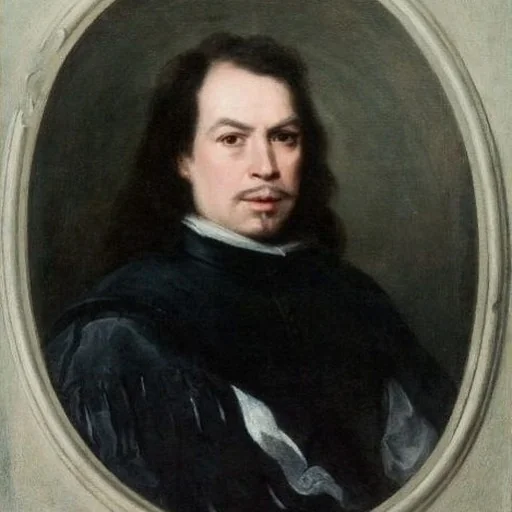
Artist
Bartolomé Esteban Murillo ( mure-IL-oh, m(y)uu-REE-oh, Spanish:; late December 1617, baptised 1 January 1618 – 3 April 1682) was a Spanish Baroque painter.