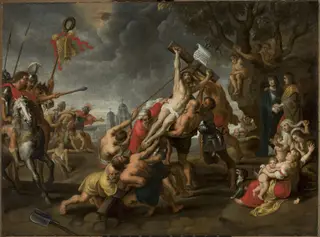
Artwork
The Martyrdom of St. Andrew
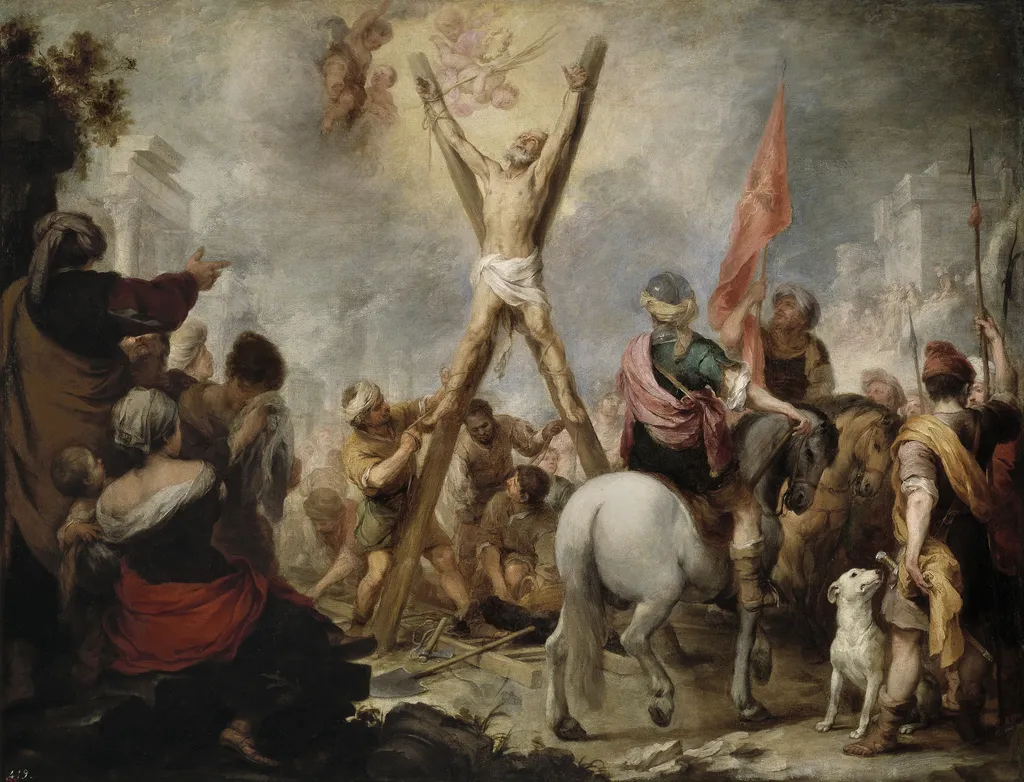
The Martyrdom of St. Andrew is an oil painting by the Spanish Baroque Tenebrist artist Bartolomé Esteban Murillo. It dates from 1675 and is held in the collection of the Museo del Prado.
About this work
Subject & Meaning
The painting depicts the crucifixion of Saint Andrew, the apostle who, according to a third-century account, was bound to an X-shaped cross in Patras.
The painting depicts the crucifixion of Saint Andrew, the apostle who, according to a third-century account, was bound to an X-shaped cross in Patras. The composition centers on the martyr gazing upward toward a divine light from which cherubs descend bearing the palm of martyrdom. Andrew continues to preach during his agony, surrounded by a crowd that includes soldiers on horseback, a woman holding a child, and a dog that turns away from the scene.
The work conveys a spiritual atmosphere through its intense illumination and the presence of heavenly figures, emphasizing the saint's faith and divine reward amidst suffering. The horizontal format and coloristic style reflect influences from Peter Paul Rubens and José de Ribera, enhancing the dramatic and emotional impact of the martyrdom.
History & Provenance
The Martyrdom of St. Andrew is an oil on canvas work created by Bartolomé Esteban Murillo between 1675 and 1682. The painting was commissioned as a specific order, a rarity for the artist who typically avoided such explicit martyrdom subjects. Murillo executed the piece during his final years, adopting a distinctively coloristic style influenced by Peter Paul Rubens and José de Ribera.
The composition features a special atmospheric technique characteristic of the artist's late period. Currently, the work is held in the collection of the Museo del Prado in Madrid. Historical records indicate the painting was previously owned by Ferdinand VII of Spain, establishing a clear line of royal ownership prior to its museum residence.
The Martyrdom of St. Andrew is held in the Museo del Prado in Madrid, according to multiple sources. Wikidata also lists an associated location at the Royal Palace of Aranjuez, and records the painting as formerly owned by Ferdinand VII of Spain. No specific inventory or accession number is provided in the available sources.
The sources confirm the painting's presence in the Prado's collection but do not detail a formal exhibition history, loans, or display records beyond its standing as part of the museum's holdings. The French-language source notes that the Prado likewise preserves the work's presumed pendant, The Conversion of St. Paul, situating both pieces within the same institutional collection.
Context
Scholarship identifies The Martyrdom of St. Andrew as a late Murillo work marked by a shift toward a more coloristic and luminous palette, aligning with the influence of Peter Paul Rubens and José de Ribera’s tenebrist manner. The painting’s horizontal format and agitated composition reflect Rubens’s treatment of the same subject, while its dramatic lighting and agitated crowd anticipate Murillo’s mature devotional style. Its pairing at the Museo del Prado with La Conversion de san Pablo underscores the artist’s late-career engagement with narrative religious painting, departing from his earlier, more restrained approaches to sacred subjects.
The inclusion of quotidian details, a woman with a child, soldiers on horseback, and a detached dog, further situates the work within Murillo’s broader late production, where genre-like realism tempers the sacred scene.
Legacy
The Martyrdom of St. Andrew is recognized for its stylistic synthesis of Flemish and Spanish Baroque traditions, significantly influencing the perception of Murillo's late period. Art historians note that the work's tone and composition are heavily indebted to Peter Paul Rubens, particularly regarding Rubens' own depiction of the same martyrdom. Additionally, the painting reflects a clear influence from the tenebrist style of José de Ribera, specifically his Martyrdom of Saint Philip.
This convergence of influences marks a departure from Murillo's earlier, more purely Spanish manner, showcasing a more colorful approach adopted in his final years. The presence of specific atmospheric techniques and realistic details, such as the unimpressed dog in the foreground, further cements the work's reputation as a mature example of the artist's evolving style before his death.
Overview
Bartolomé Esteban Murillo's painting, The Martyrdom of St. Andrew, executed between 1675 and 1682, depicts the final moments of the apostle. This oil on canvas work is a significant example of the artist's later career and is currently housed in the collection of the Museo del Prado. It showcases his engagement with dramatic religious narratives, characteristic of the Spanish Baroque period.
Technique & Style
Murillo's approach to this dramatic subject reflects the influence of earlier Baroque masters. The composition and emotional intensity draw parallels with Peter Paul Rubens's own treatment of Saint Andrew's martyrdom. Additionally, the work echoes the stark realism and powerful depiction of suffering found in Jusepe de Ribera's The Martyrdom of Saint Philip, indicating a broader engagement with contemporary and preceding artistic trends in its execution.
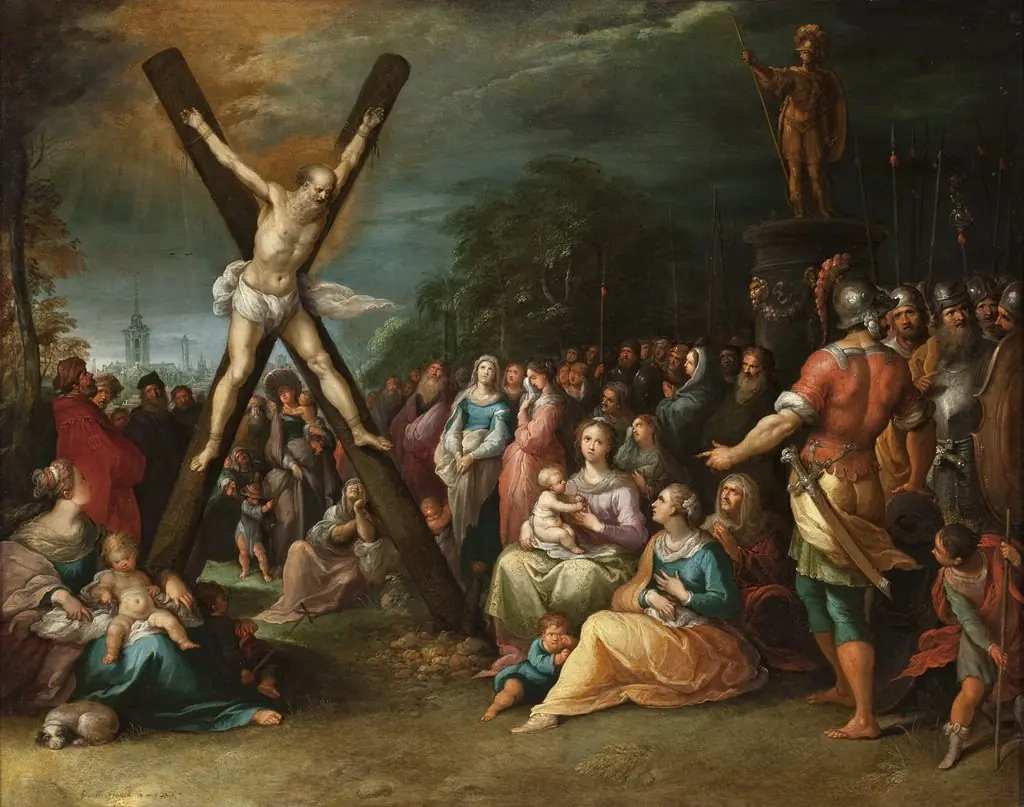
Own this work as a print
Artist & collection
Artist
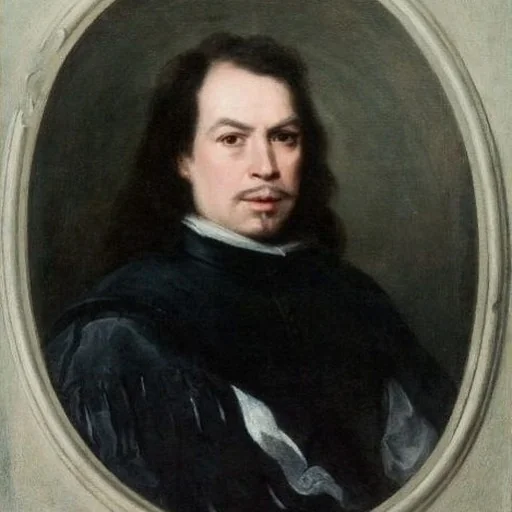
Bartolomé Esteban Murillo ( mure-IL-oh, m(y)uu-REE-oh, Spanish:; late December 1617, baptised 1 January 1618 – 3 April 1682) was a Spanish Baroque painter.