Artwork
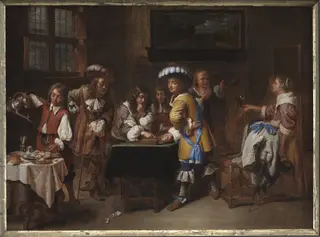
The Prodigal Son receiving his Inheritance
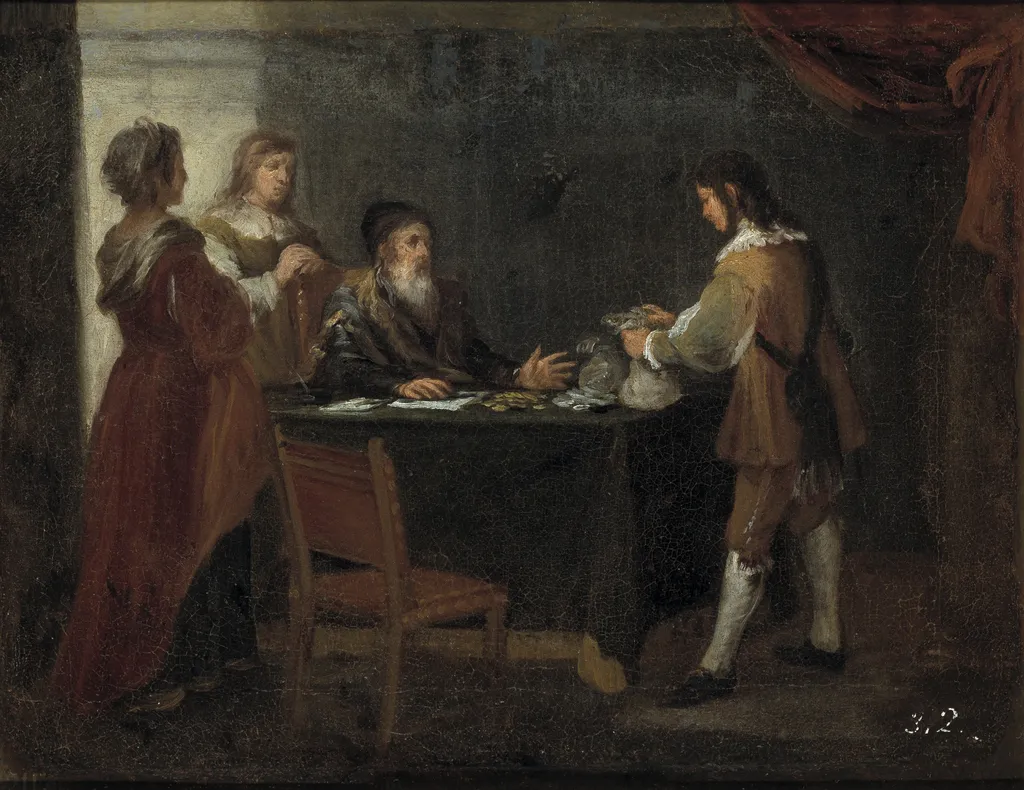
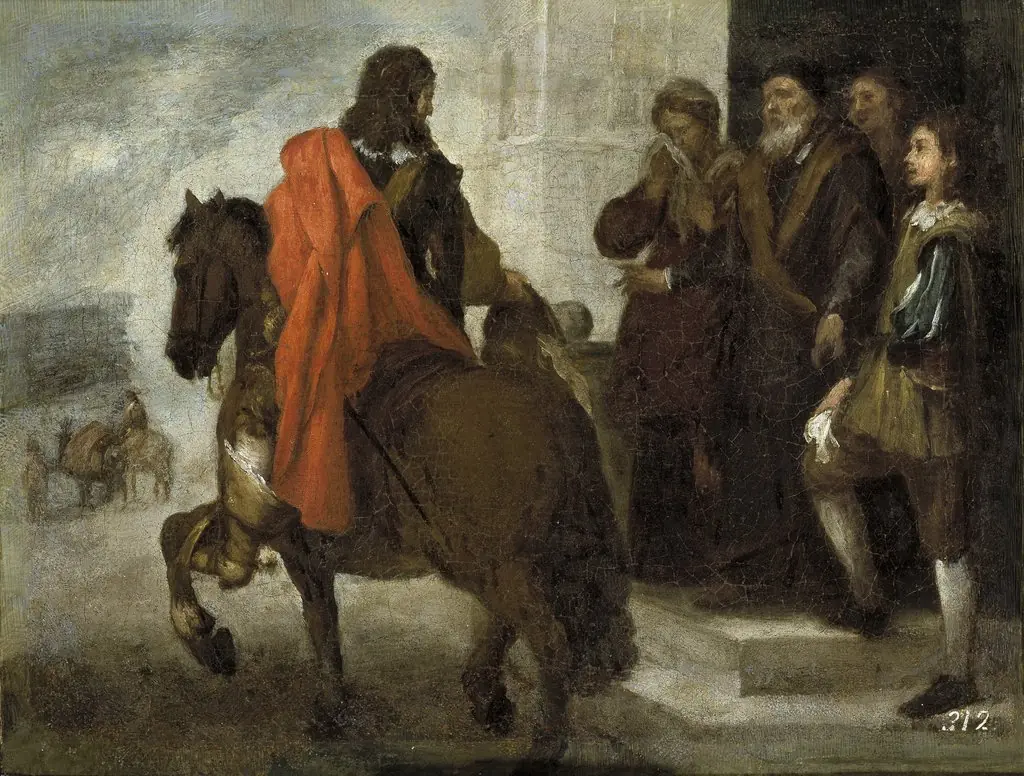
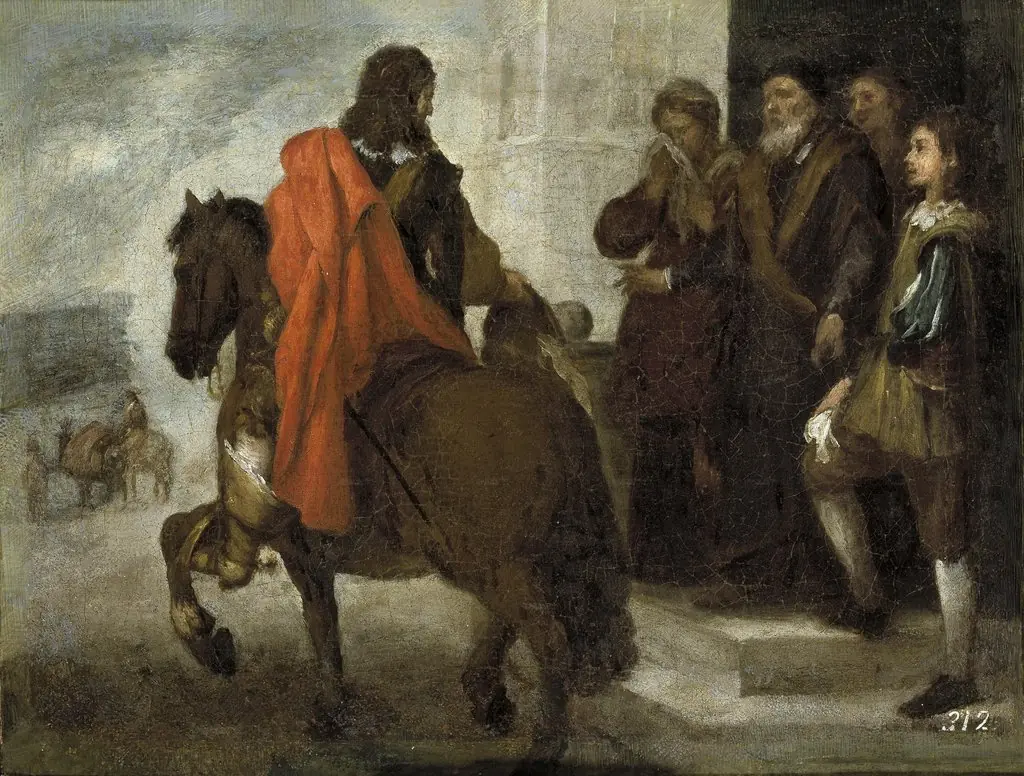
The Prodigal Son receiving his Inheritance is an oil painting by the Early Baroque Italian artist Bartolomé Esteban Murillo. It dates from 1660 and is held in the collection of the Museo del Prado.
About this work
Subject & Meaning
Bartolomé Esteban Murillo's 1660 oil painting depicts a specific moment from the Parable of the Prodigal Son.
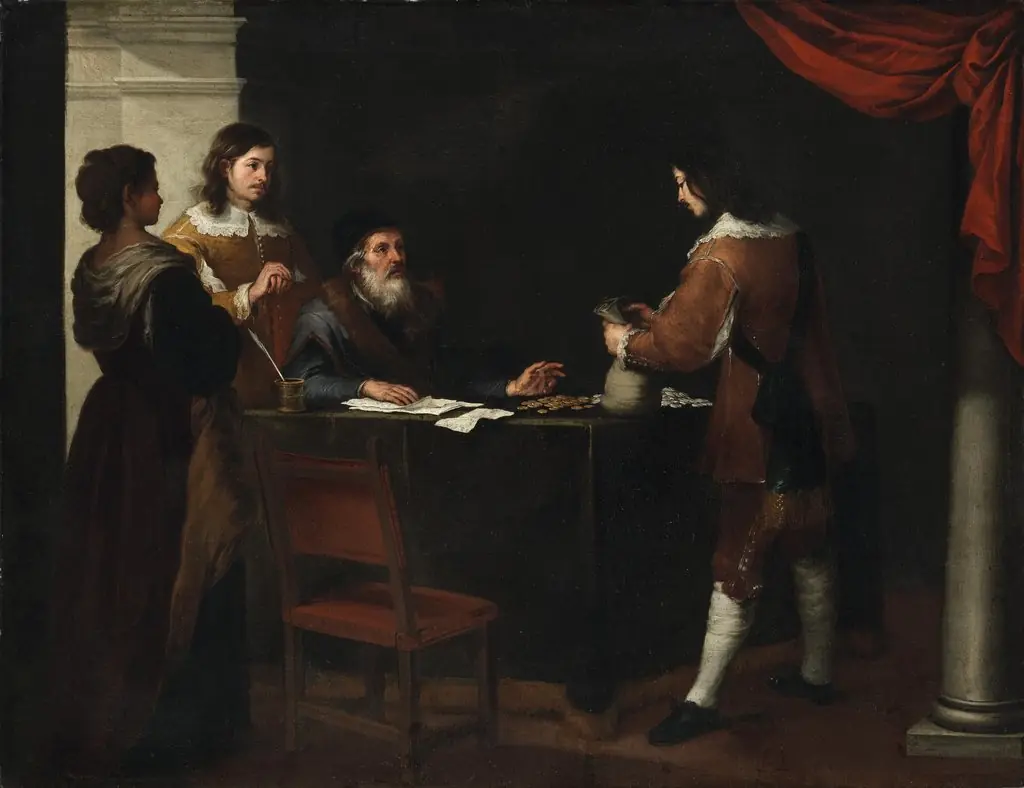
Bartolomé Esteban Murillo's 1660 oil painting depicts a specific moment from the Parable of the Prodigal Son. The visual narrative centers on the biblical figure receiving his inheritance, a transaction illustrated by the presence of money, a table, and a seat within the composition. As a work of religious art, the piece serves to visualize the scriptural account of the son requesting his share of the estate before departing for a distant country.
The inclusion of these specific objects anchors the scene in the material reality of the inheritance division, representing the pivotal moment of separation and the beginning of the protagonist's subsequent journey.
Technique & Style
The work is an oil painting executed on canvas, a modest-scale composition measuring 27 cm in height by 34 cm in width. Classified within the religious genre, it forms part of a series by Bartolomé Esteban Murillo devoted to the Parable of the Prodigal Son. The painting's modest dimensions and oil-on-canvas support are consistent with Murillo's small-format cabinet pictures of the 1660 period.
The depicted elements, money, a seat, and a table, anchor the narrative of the prodigal son receiving his inheritance.
History & Provenance
Bartolomé Esteban Murillo created the oil-on-canvas painting The Prodigal Son receiving his Inheritance in 1660. The work depicts the Parable of the Prodigal Son and measures 27 cm in height by 34 cm in width. Historical records indicate that the piece was owned by Ferdinand VII of Spain.
The painting is currently held in the collection of the Museo del Prado, located within the Royal Palace of Madrid.
The painting is housed in the Museo del Prado in Madrid, where it is recorded under the accession number P00968. It entered the royal collection through the inheritance of Ferdinand VII of Spain and has been part of the museum's permanent display since its acquisition. The work was exhibited in the Prado's retrospective of Murillo's religious paintings in 1952 and again in the 2005 exhibition 'Murillo: The Prodigal Son and Other Masterpieces.'
Overview
Bartolomé Esteban Murillo, a Spanish painter of the Baroque period, completed an oil painting titled The Prodigal Son receiving his Inheritance in 1660. The work belongs to the religious genre and is part of the collection of the Museo del Prado in Madrid.
Context
Executed during the early Baroque phase in Spain, the work reflects Murillo’s dual interest in sacred narratives and everyday scenes. By placing the biblical episode in a contemporary interior, the artist connects the moral lesson to the social realities of his time, a practice common among Baroque painters.
Own this work as a print
Artist & collection
Artist
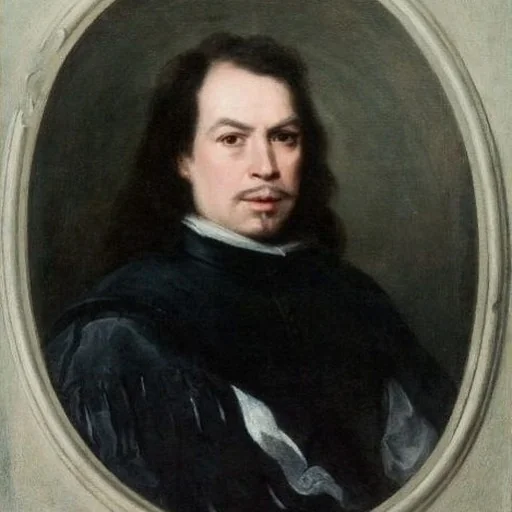
Bartolomé Esteban Murillo ( mure-IL-oh, m(y)uu-REE-oh, Spanish:; late December 1617, baptised 1 January 1618 – 3 April 1682) was a Spanish Baroque painter.