Artwork
Saint Bonaventure and Saint Anthony of Padua
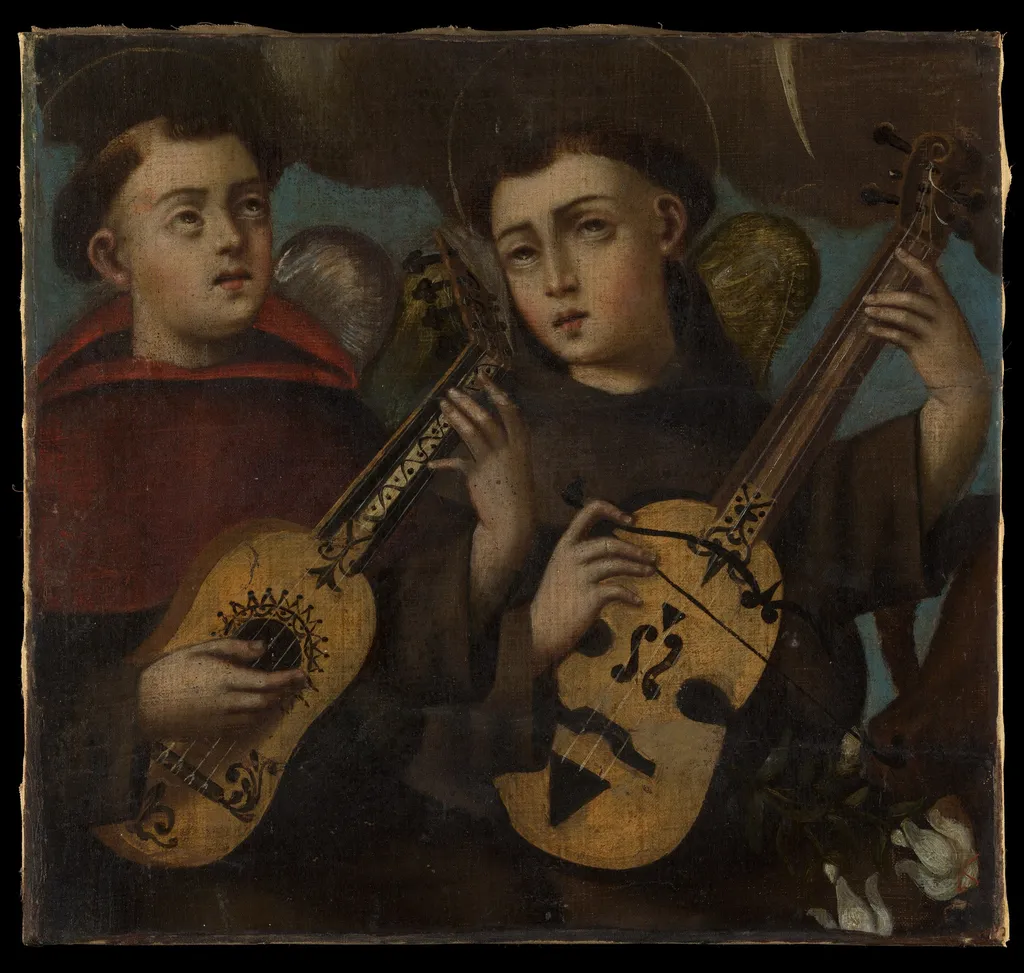
Saint Bonaventure and Saint Anthony of Padua is an oil painting by the Byzantine icon painting artist Basilio Santa Cruz Pumacallao. It dates from 1690 and is held in the collection of the Metropolitan Museum of Art.
About this work
Overview
Painted in 1690 by Basilio Santa Cruz Pumacallao, this oil on canvas work depicts two Franciscan saints in a formal, frontal composition.
Painted in 1690 by Basilio Santa Cruz Pumacallao, this oil on canvas work depicts two Franciscan saints in a formal, frontal composition. Created in Cusco, Peru, it belongs to the Cuzco School, a colonial artistic tradition blending European Baroque conventions with indigenous and Andean sensibilities. The painting is now part of The Metropolitan Museum of Art’s collection, representing the fusion of religious iconography and local craftsmanship in Spanish America.
Subject & Meaning
The painting portrays Saint Bonaventure, identified by his red habit, and Saint Anthony of Padua, in brown, both venerated figures in the Franciscan order. Their inclusion together suggests a devotional emphasis on contemplation and preaching. The instruments they hold, guitar and violin, symbolize harmony in divine worship, referencing the medieval notion of sacred music as a path to spiritual elevation, rather than literal historical attributes.
Technique & Style
Pumacallao employed chiaroscuro to model the figures with subtle volume, enhancing their three-dimensionality against a muted blue-gray background. The faces are rendered with calm, direct gazes, aligning with Byzantine iconographic traditions that prioritize spiritual presence over naturalism. Stiff postures and stylized drapery reflect the Cuzco School’s adherence to European models, adapted through local interpretive practices that favored clarity and symbolic resonance over dynamic movement.
History & Provenance
Basilio Santa Cruz Pumacallao, of Quechua and Ladino descent, was active in Cusco during the late 17th century, a period when indigenous artists increasingly shaped religious imagery under colonial patronage. This work likely originated in a convent or church setting before entering private or institutional collections. Its acquisition by The Metropolitan Museum of Art underscores its significance as a documented example of Andean colonial artistry within global collections.
Context
In colonial Peru, religious art served both devotional and political functions, reinforcing Catholic orthodoxy while incorporating indigenous visual languages. The Cuzco School emerged as a distinct regional style, blending Spanish Baroque composition with pre-Columbian attention to pattern and color. Pumacallao’s work reflects this synthesis, where European saints are rendered through a lens shaped by Andean aesthetics and liturgical needs.
Legacy
This painting contributes to the broader recognition of indigenous artists in colonial Latin America, challenging assumptions of purely European authorship in religious imagery. Its preservation and display in a major international museum affirm its role as a cultural artifact that bridges transatlantic traditions. Scholars continue to study such works to understand how local identities were expressed within imposed religious frameworks.
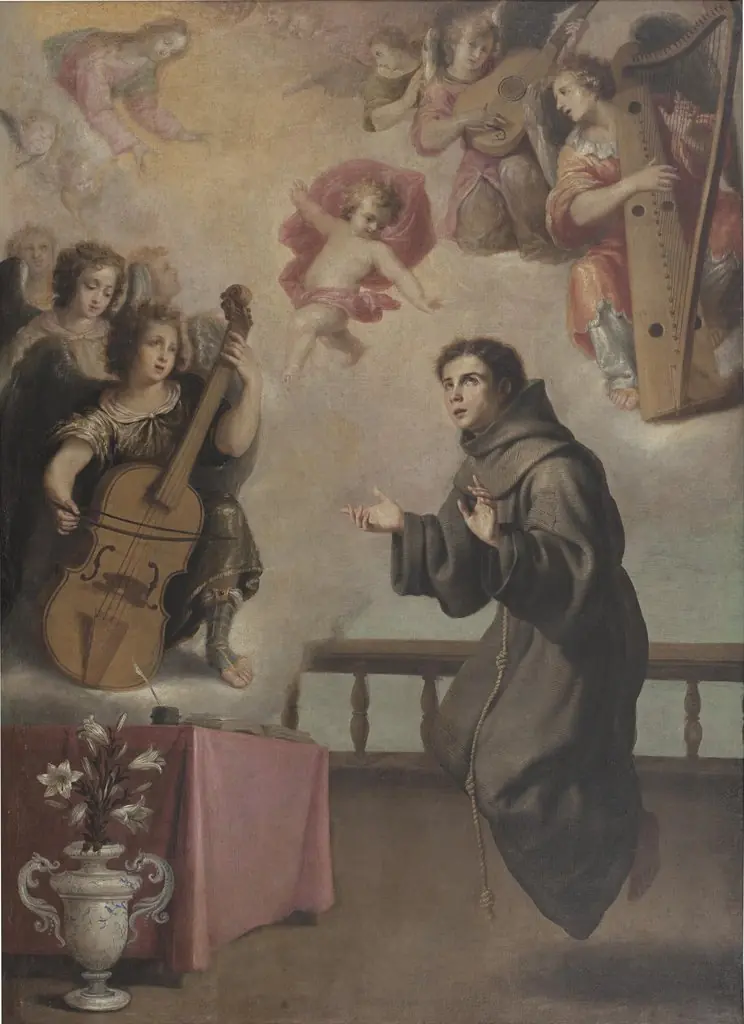
Own this work as a print
Artist & collection
Artist
Basilio Pacheco de Santa Cruz Pumacallao (1635–1710) or Basilio de Santa Cruz Puma Callao was a Peruvian painter of Quechua (Inca) and Ladino origin from Cusco, Peru.

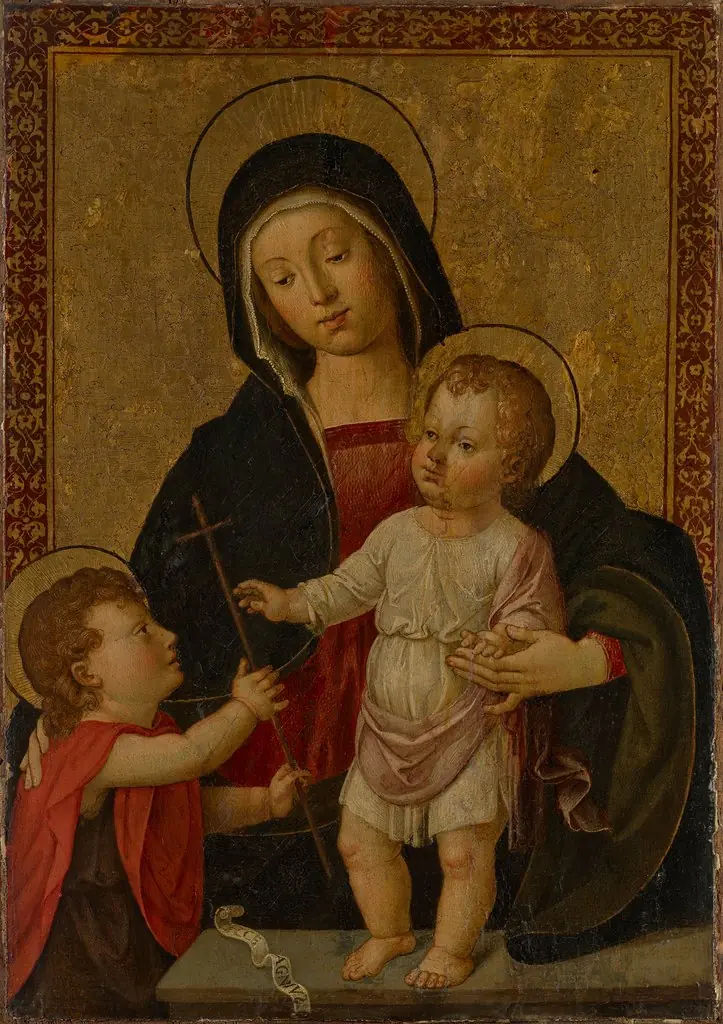 The Virgin and Child with the Young St. John
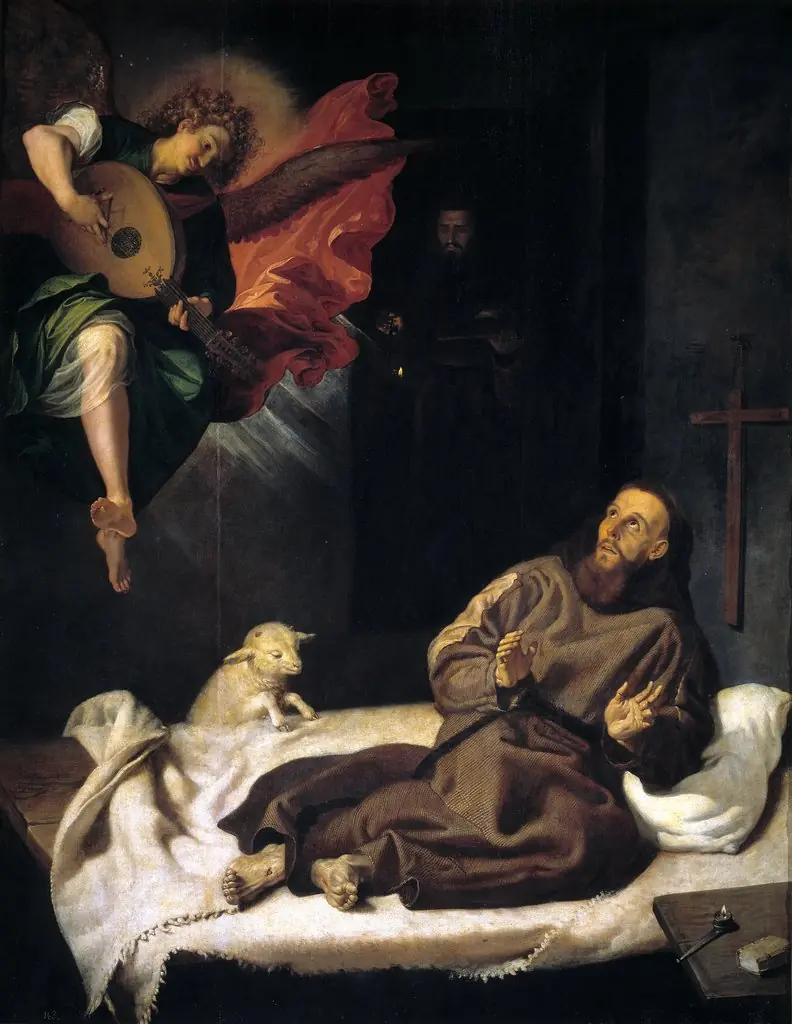 Saint Francis comforted by a Angel
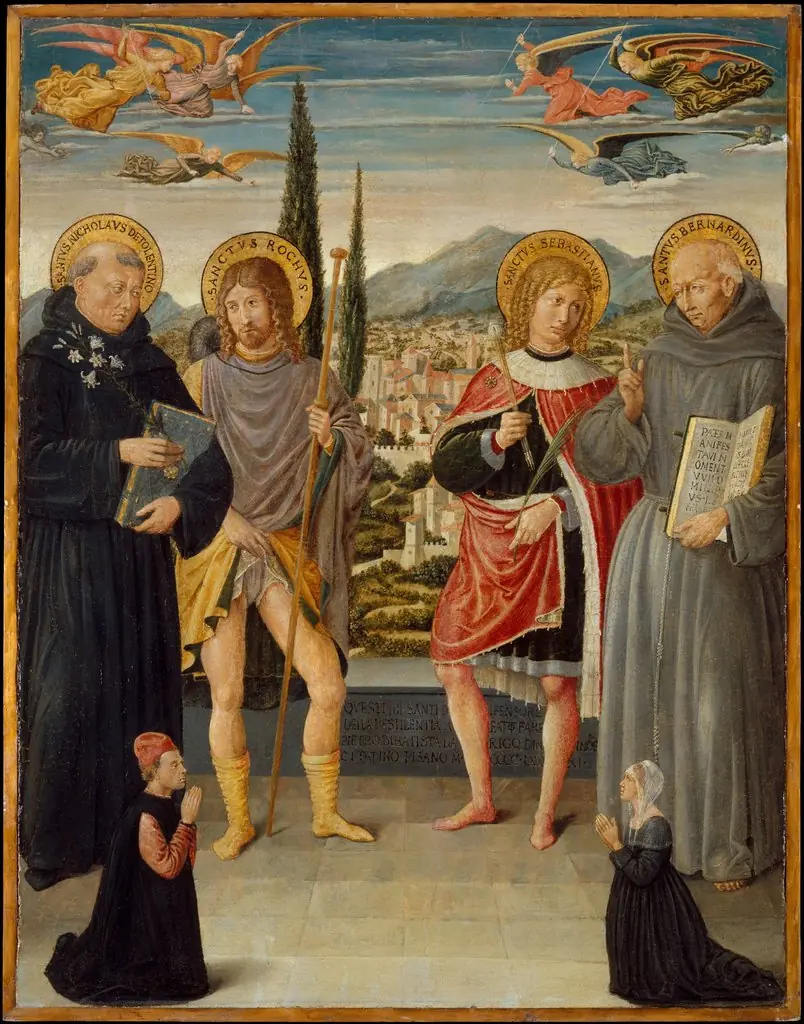 Saints Nicholas of Tolentino, Roch, Sebastian, and Bernardino of Siena, with Kneeling Donors
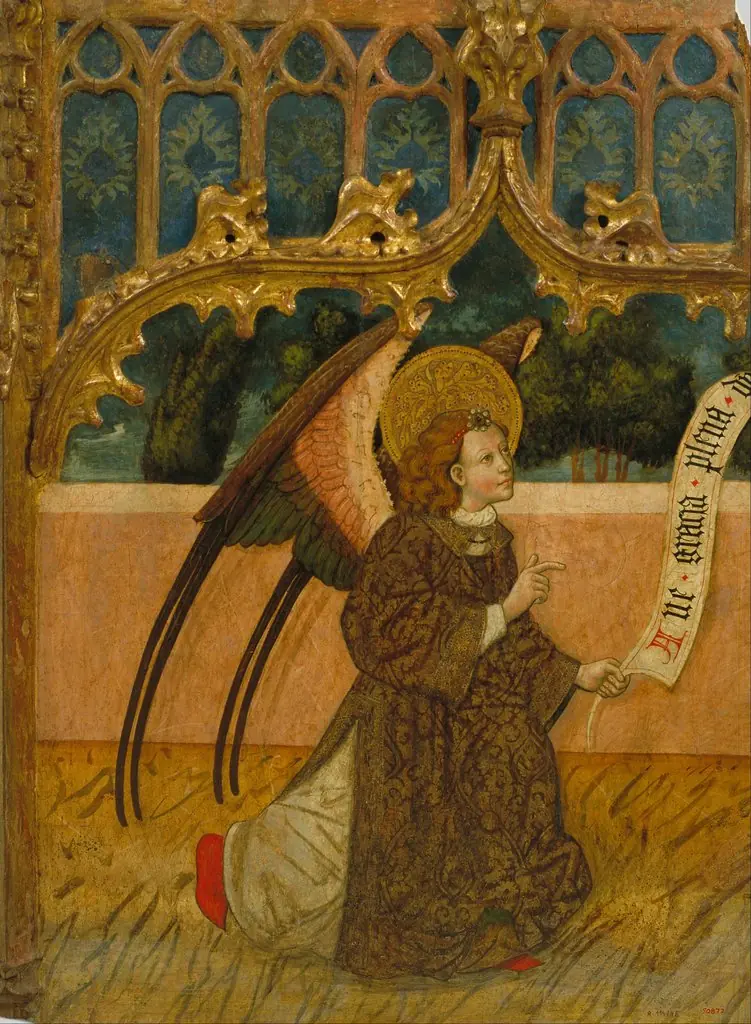 Archangel Gabriel from an Annunciation
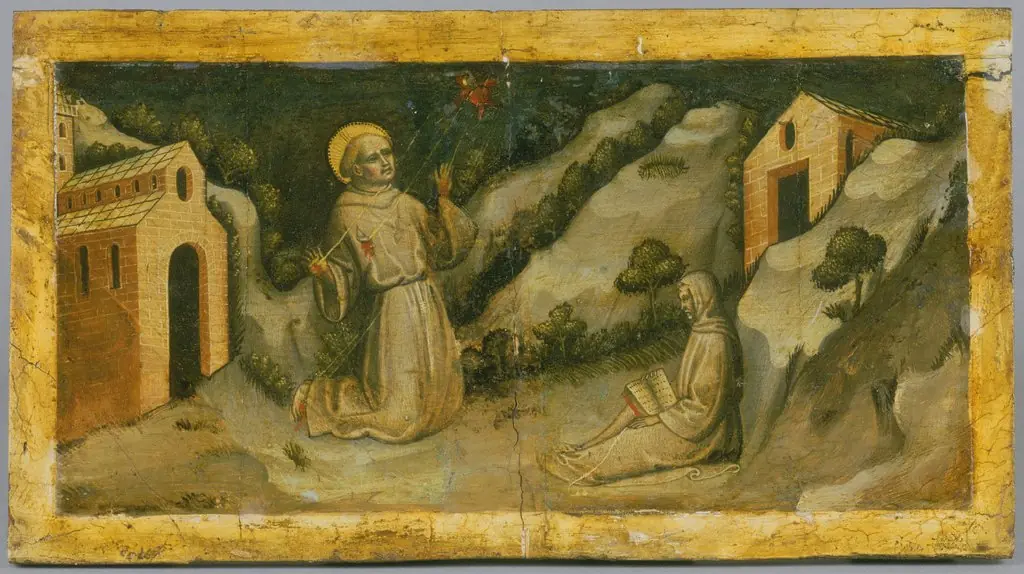 Saint Francis of Assisi Receiving the Stigmata
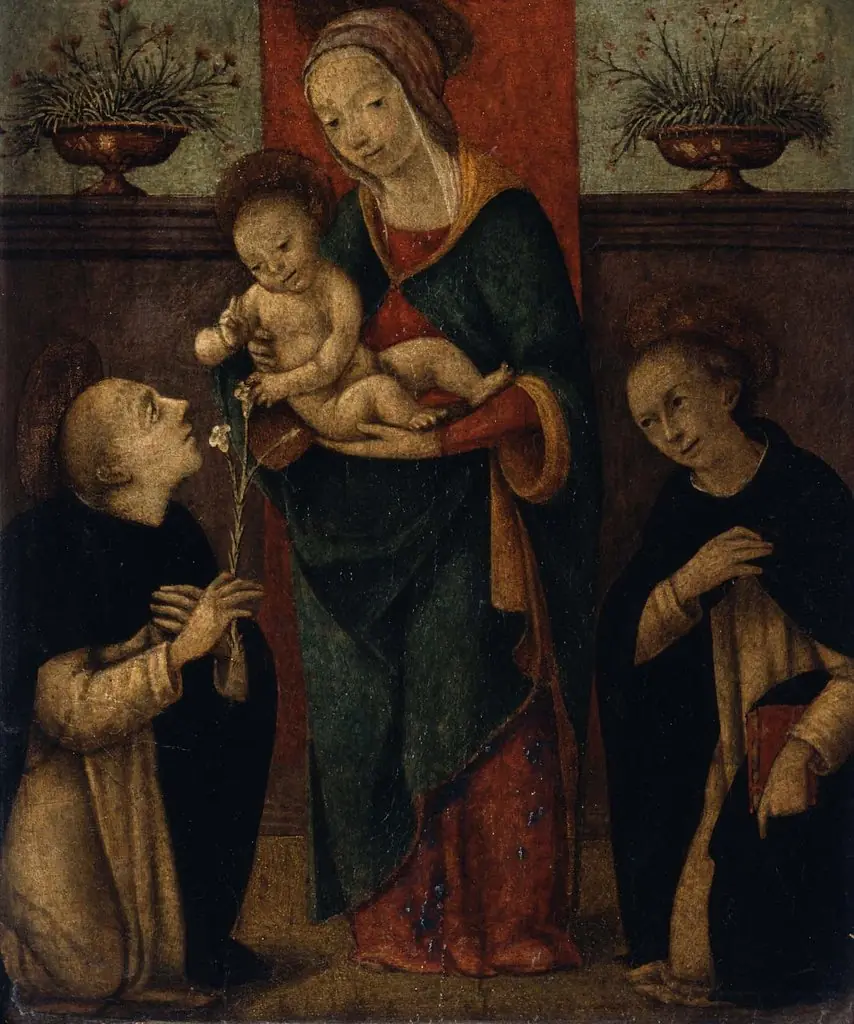 Virgin and Child with Saints Dominic and Thomas Aquinas (?)
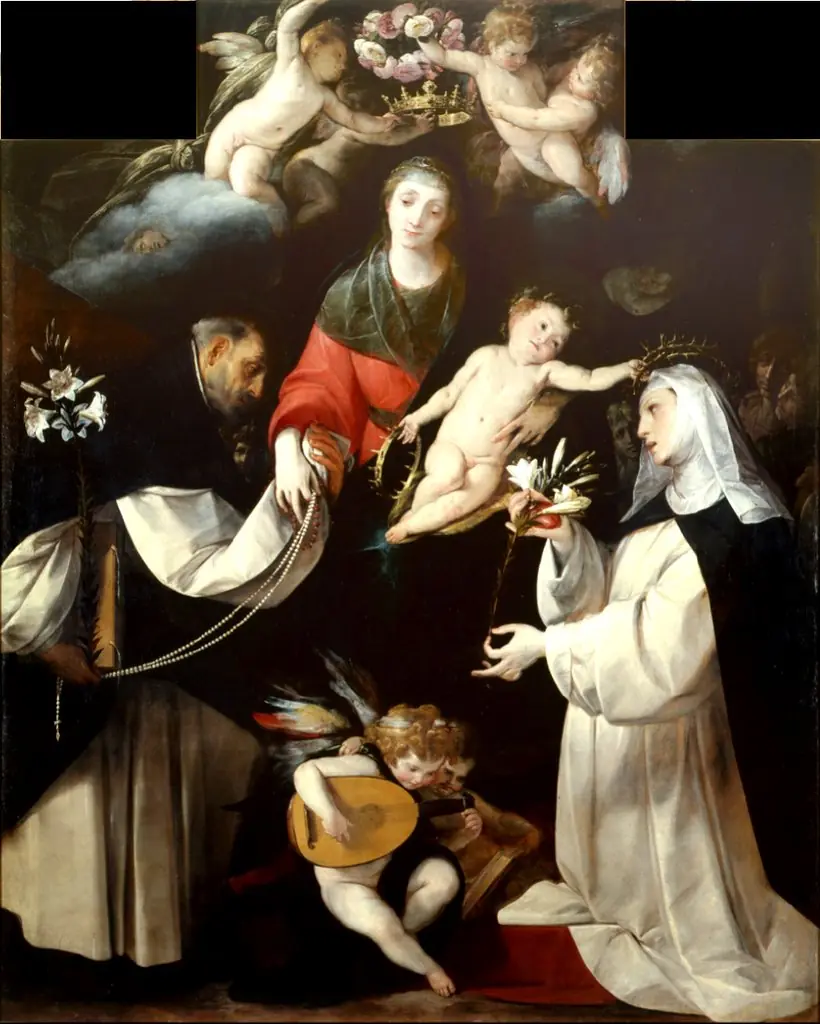 The Madonna of the Rosary
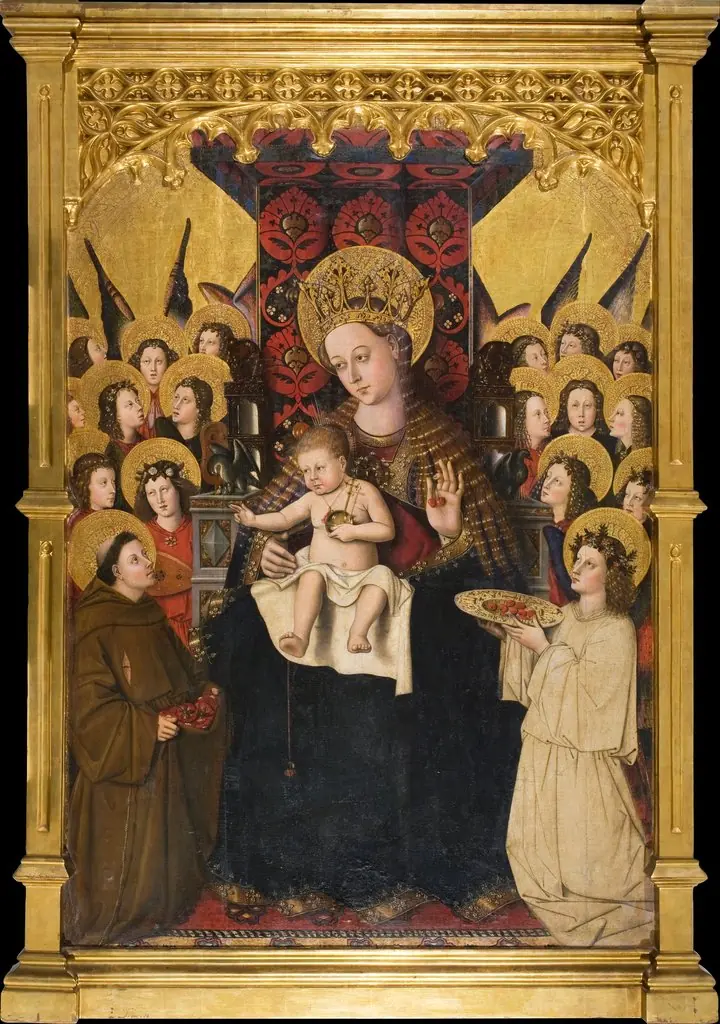 Virgin of the Porziuncola
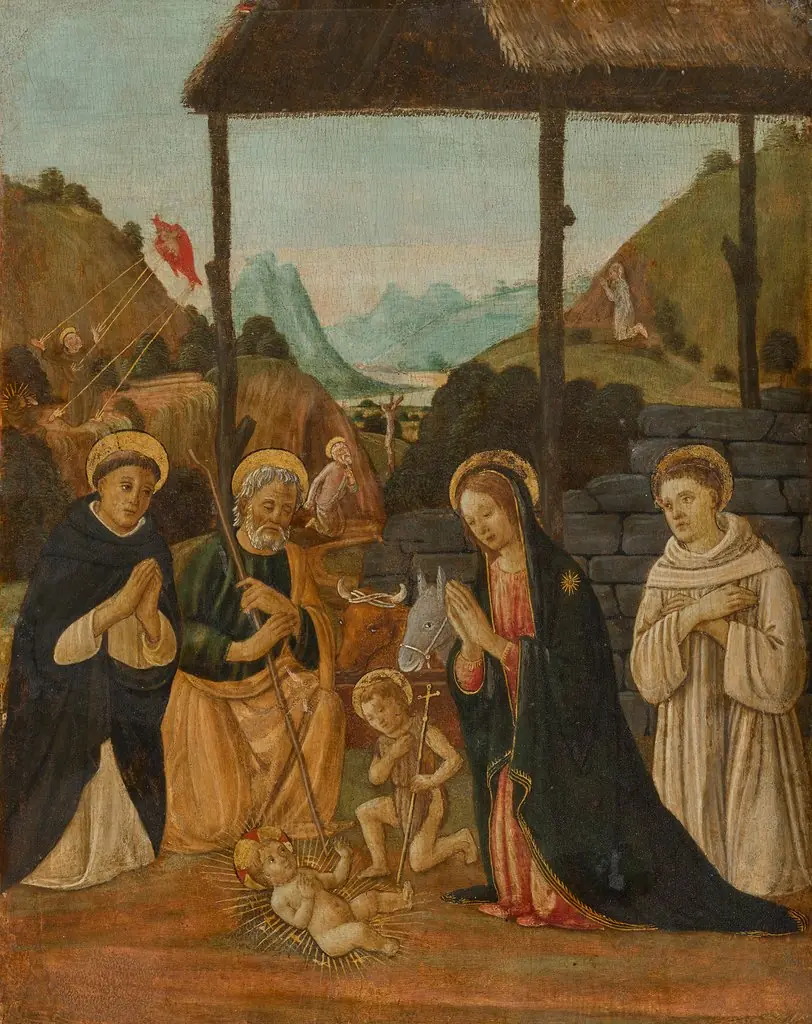 Adoration of the Child with Young St. John and St. Dominic and Bernard of Clairvaux
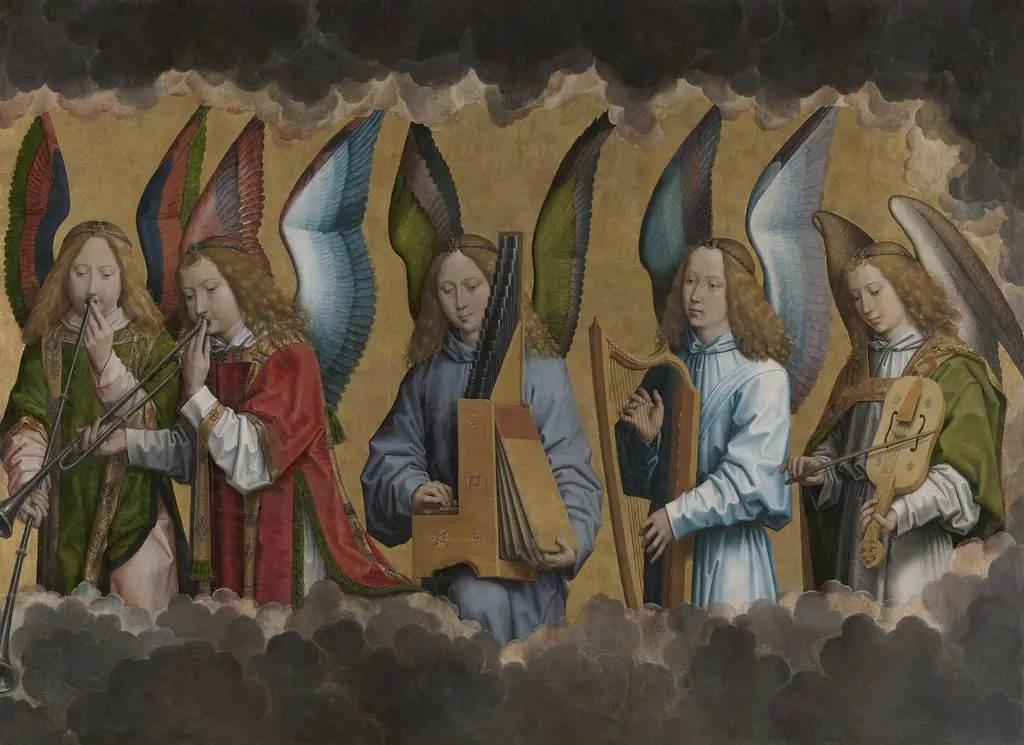 Music-making Angels
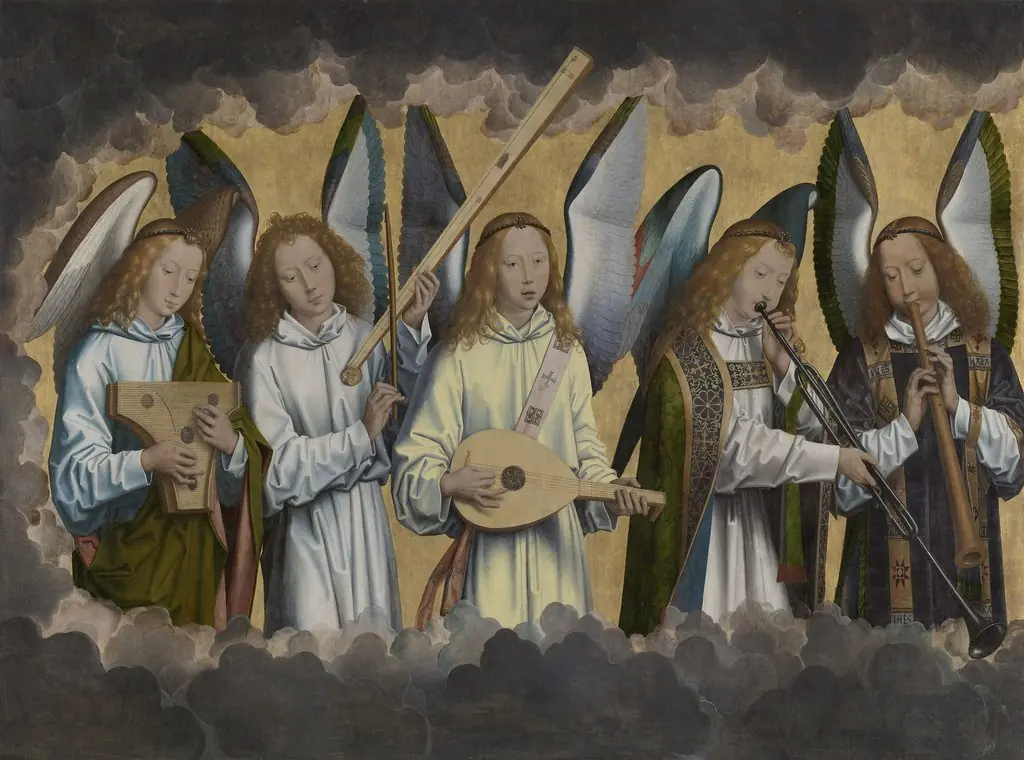 Music-making Angels
- Saint Anthony of Padua