Artwork
Madonna and Child Enthroned
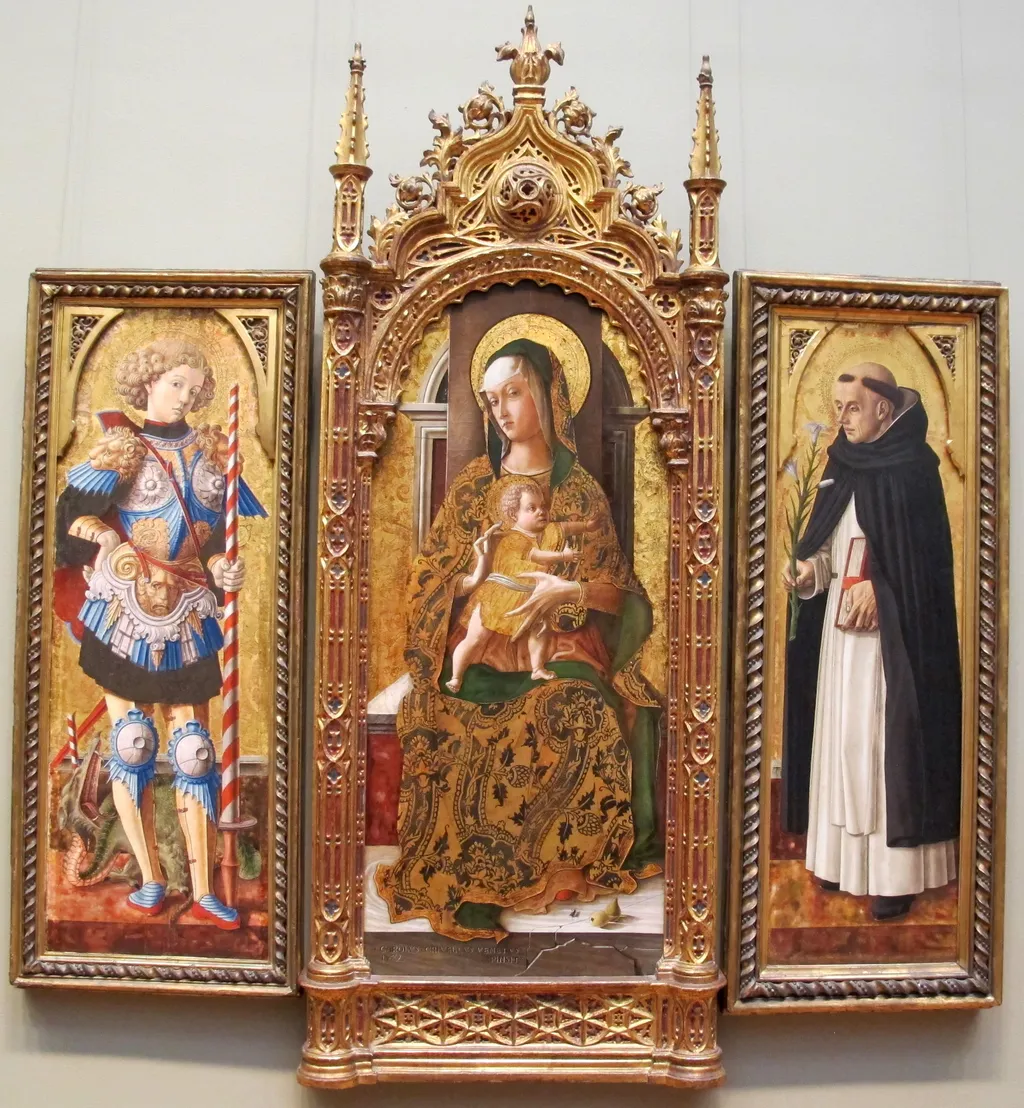
Madonna and Child Enthroned is a tempera painting by the Early Renaissance artist Carlo Crivelli. It dates from 1472 and is held in the collection of the Metropolitan Museum of Art.
About this work
Subject & Meaning
The composition places the two figures as the main focus, aligning with the genre's purpose of honoring the holy pair.
The work depicts the Madonna and Child as its central subject, consistent with its classification as religious art. Created by Carlo Crivelli in 1472 using tempera on panel, the painting presents the Virgin Mary and the infant Jesus, adhering to the traditional iconography of the enthroned mother and child. While the specific symbolic details of the throne or surrounding elements are not detailed in the provided sources, the piece functions as a devotional image representing the core figures of Christian theology.
The composition places the two figures as the main focus, aligning with the genre's purpose of honoring the holy pair.
History & Provenance
The altarpiece was created in 1472 by Carlo Crivelli as a religious panel painting for devotional use. It was commissioned for the Church of San Vito e Modesto in Ascoli Piceno, where it remained until transferred to the open market in the 19th century. The work entered the collection of the Metropolitan Museum of Art in New York, where it has been on permanent display since acquisition.
The painting is executed in tempera on panel and features the Virgin and Child enthroned within a sacred setting. Its creation reflects the late 15th-century Italian devotional tradition and the artist’s distinctive blend of realism and symbolism.
Overview
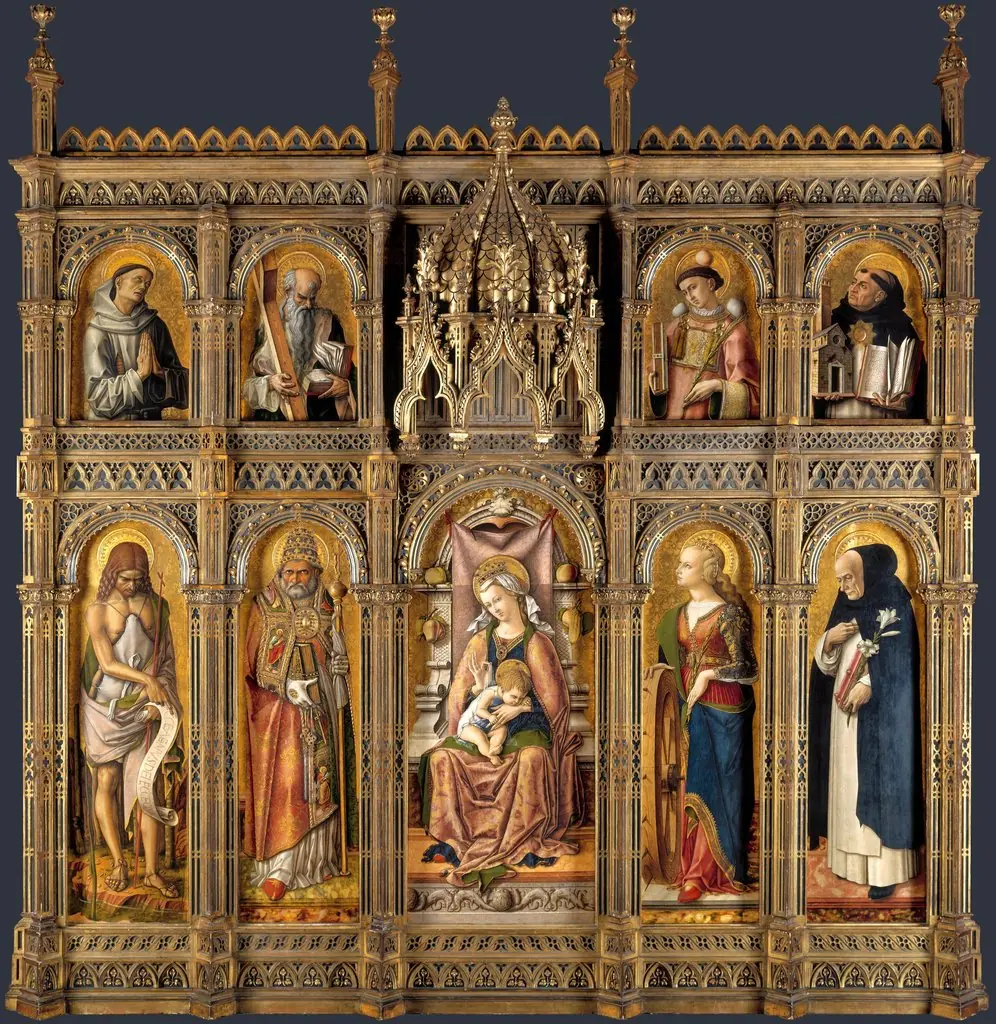
Created in 1472, the tempera panel titled Madonna and Child Enthroned presents a central Virgin seated on an elaborately carved throne, cradling the infant Christ. Flanking her are a armored figure bearing a red banner and a monk in a black habit holding a book, all set against a gold‑leaf background that emphasizes the work’s devotional purpose.
Technique & Style
Executed in egg tempera, the painting displays the crisp, linear detailing characteristic of late Gothic decorative traditions. The artist employs a vivid palette of reds, blues, and golds, though the colors have softened with age. Intricate carving motifs frame the throne, and the surface is enriched by the reflective quality of the gold leaf background.
Context
Crivelli’s approach diverges from the emerging naturalism of his Venetian contemporaries, notably Giovanni Bellini, retaining a decorative, ornamental aesthetic rooted in Gothic sensibilities. The painting exemplifies the transitional phase of the early Renaissance in Italy, where traditional medieval motifs coexisted with burgeoning interest in perspective and individualized expression.
Own this work as a print
Artist & collection
Artist
Carlo Crivelli (c. 1430 – c. 1495) was an Italian Renaissance painter of conservative Late Gothic decorative sensibility, who spent his early years in the Veneto, where he absorbed influences from the Vivarini,…

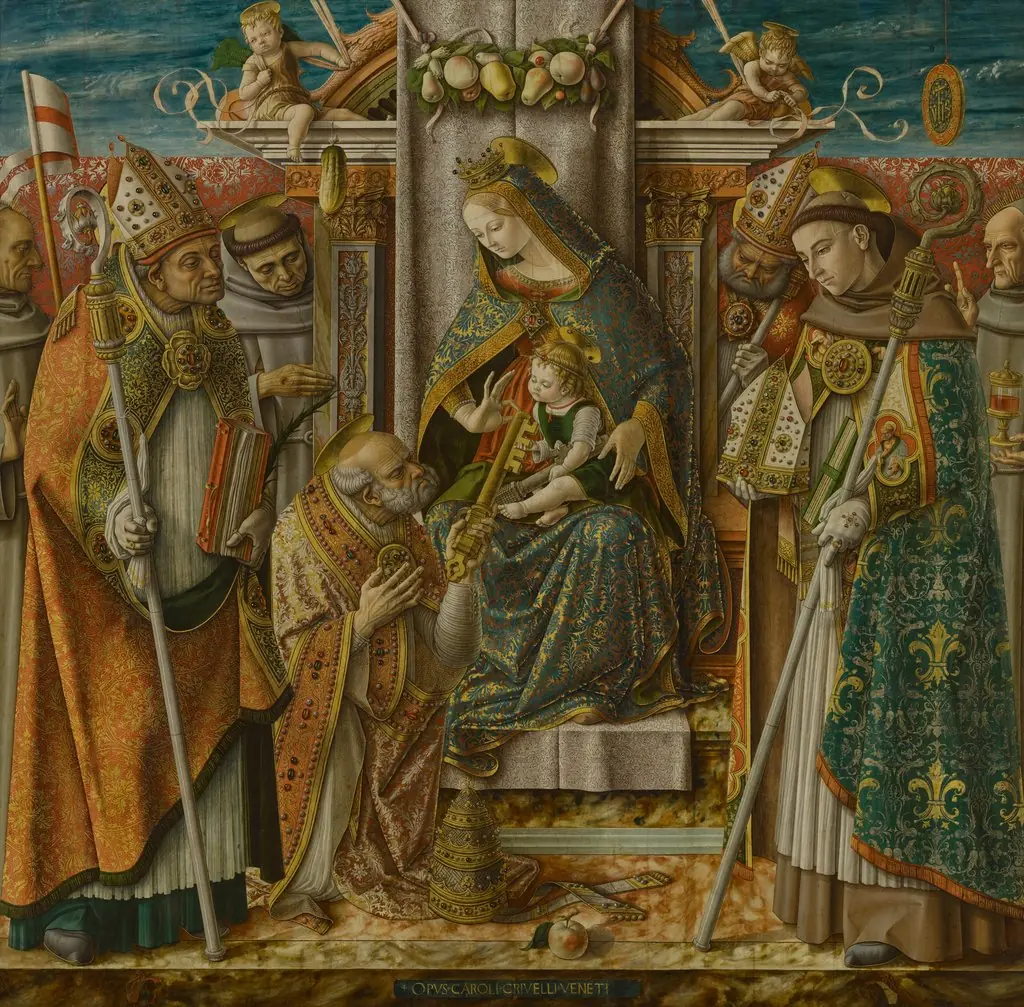
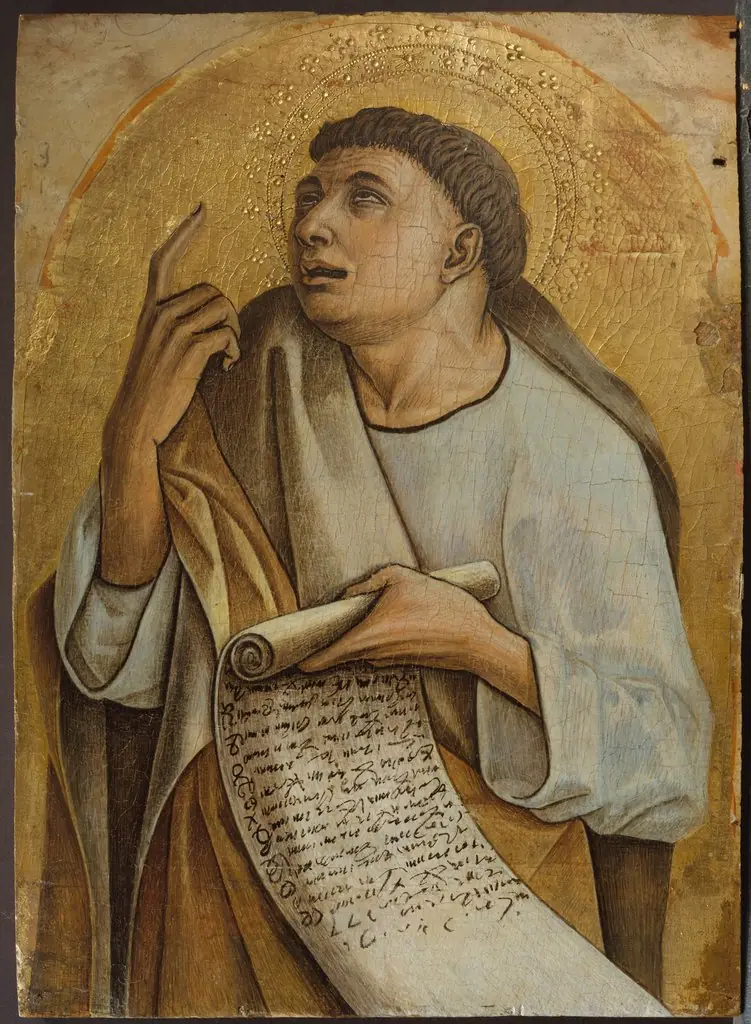
- Thronende Maria mit dem Kind und vier Heiligen
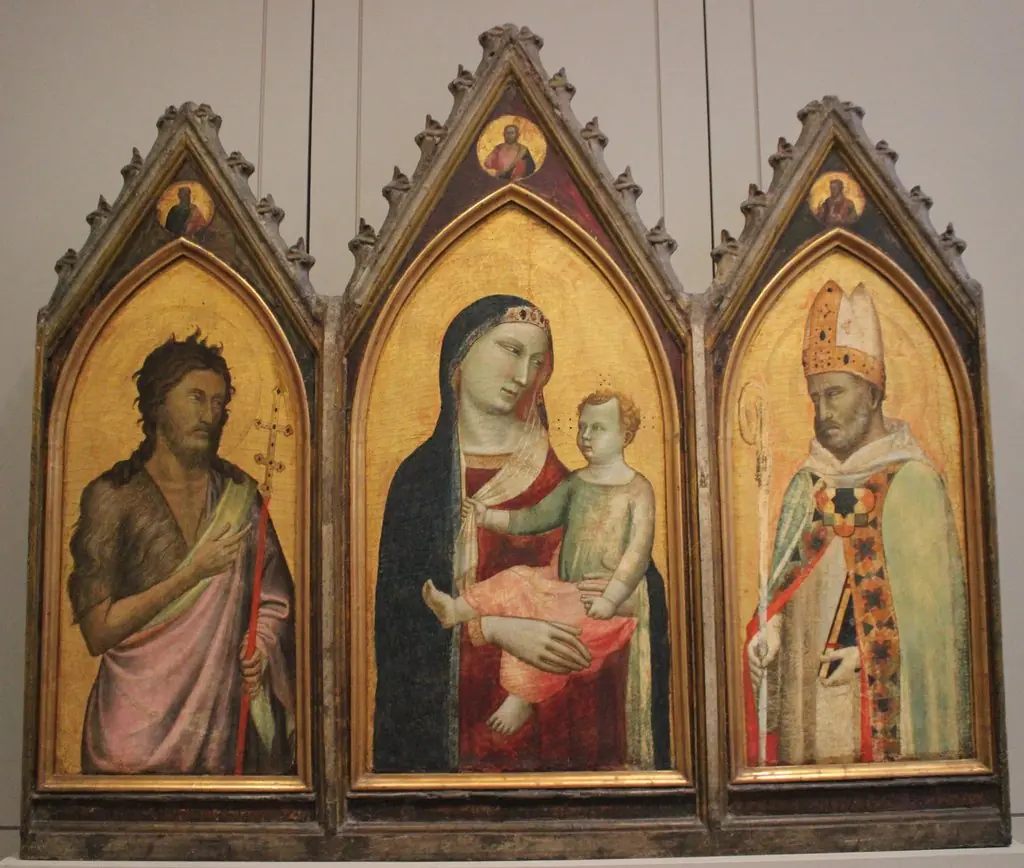 Virgin and Child with Saints John the Baptist and Giles, Two Prophets, and Christ the Redeemer
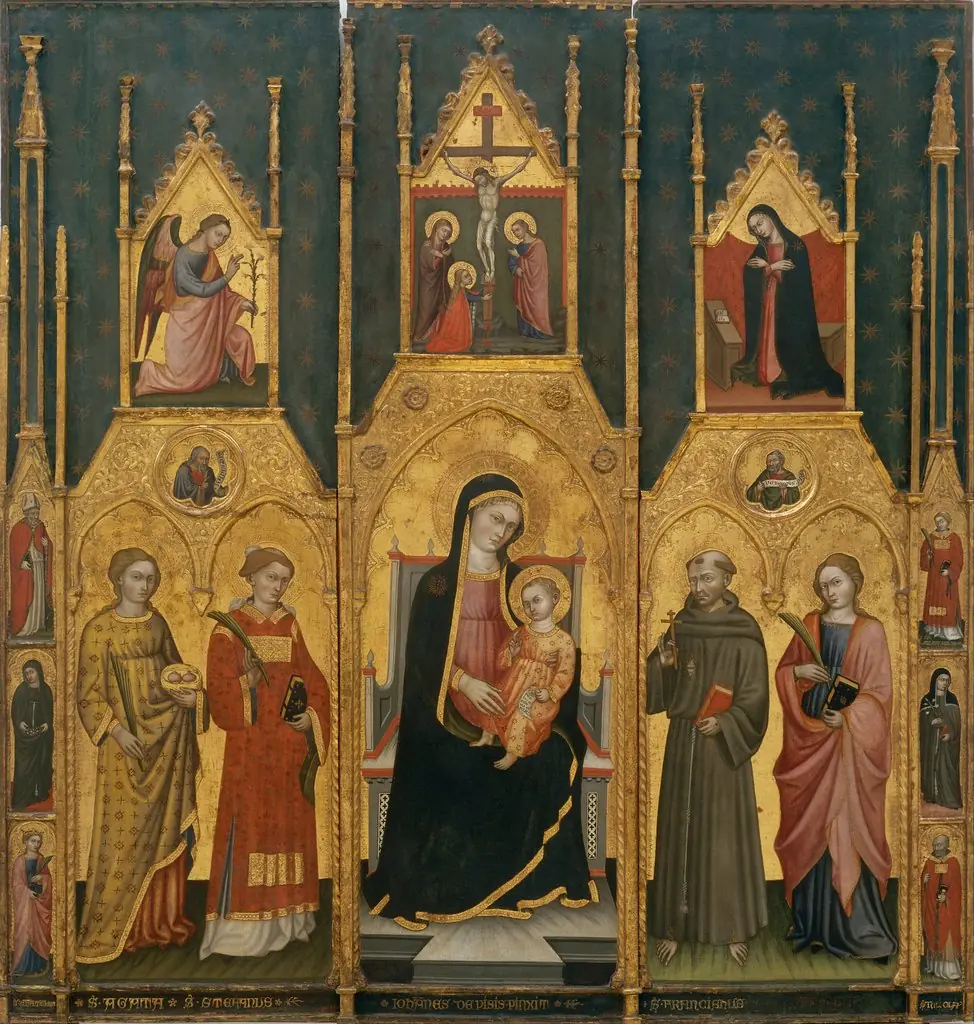 Altarpiece of the Virgin with Saints Agatha, Stephen, Francis and a Martyr Saint
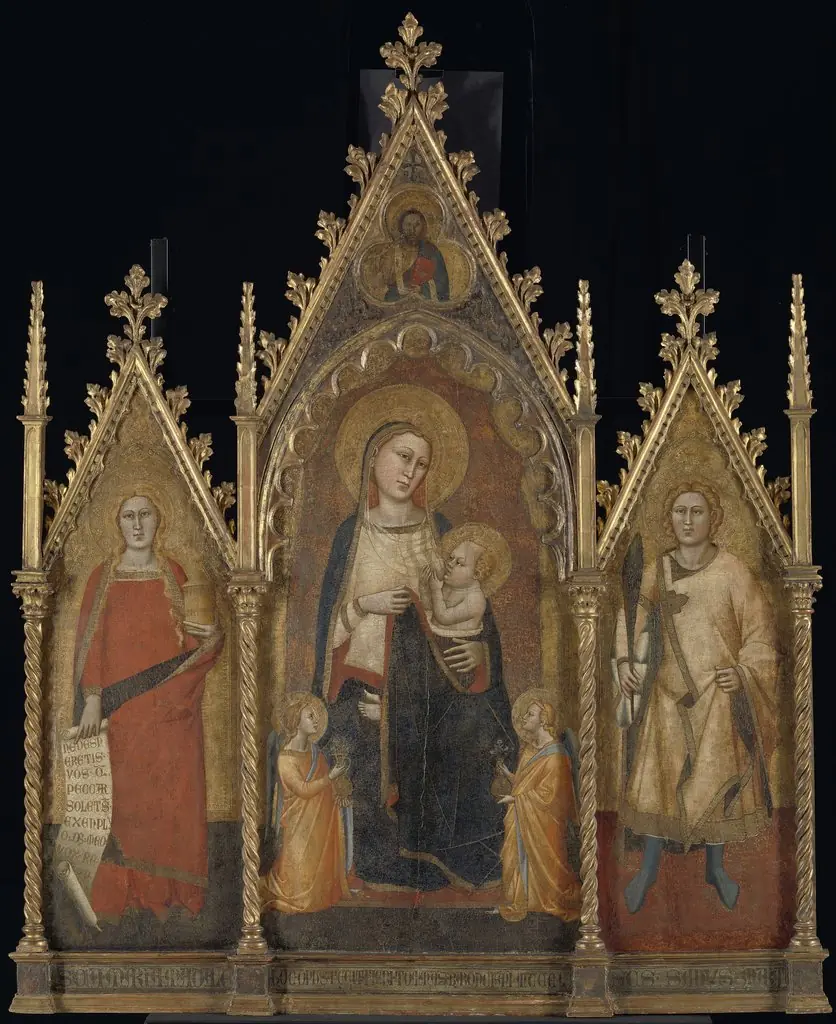 Triptych with the Virgin and Child, and Saints Mary Magdalene and Ansanus
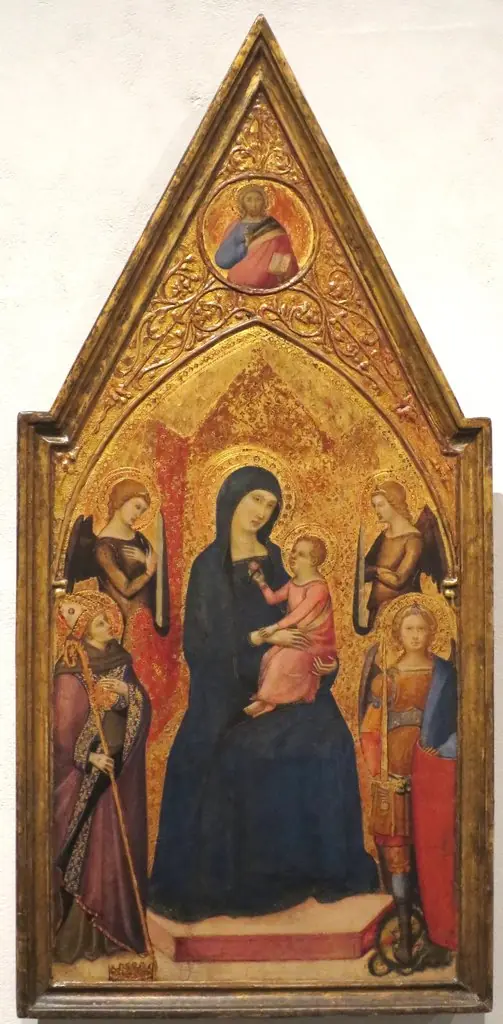 Virgin and Child with Sts. Louis of Toulouse and Michael
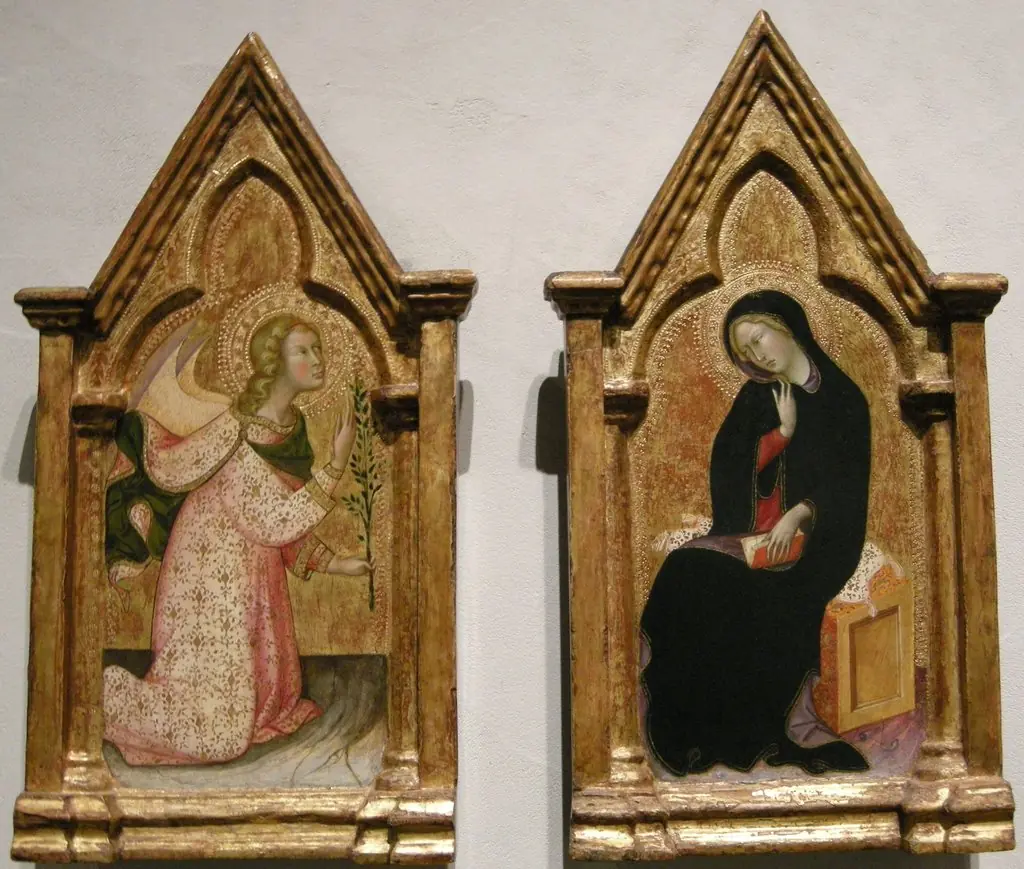 Untitled
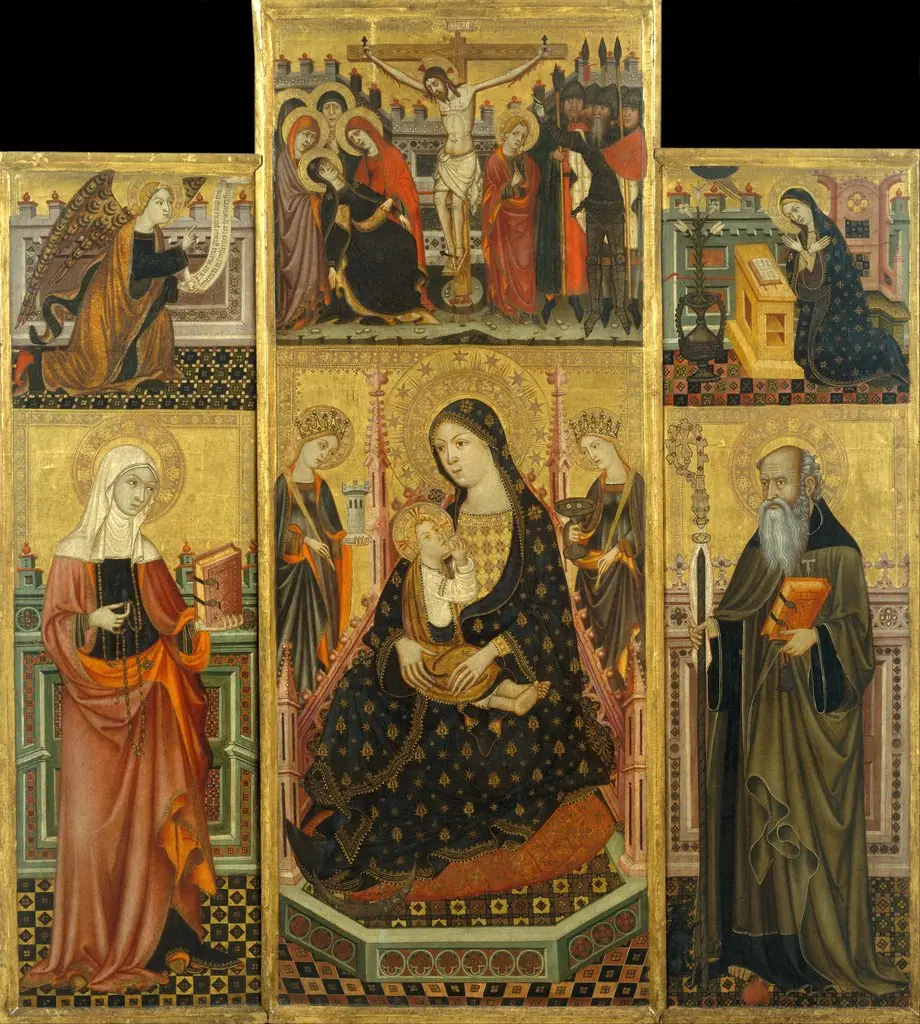 Altarpiece of the Virgin Suckling the Child, Saint Clare and Saint Anthony the Abbott
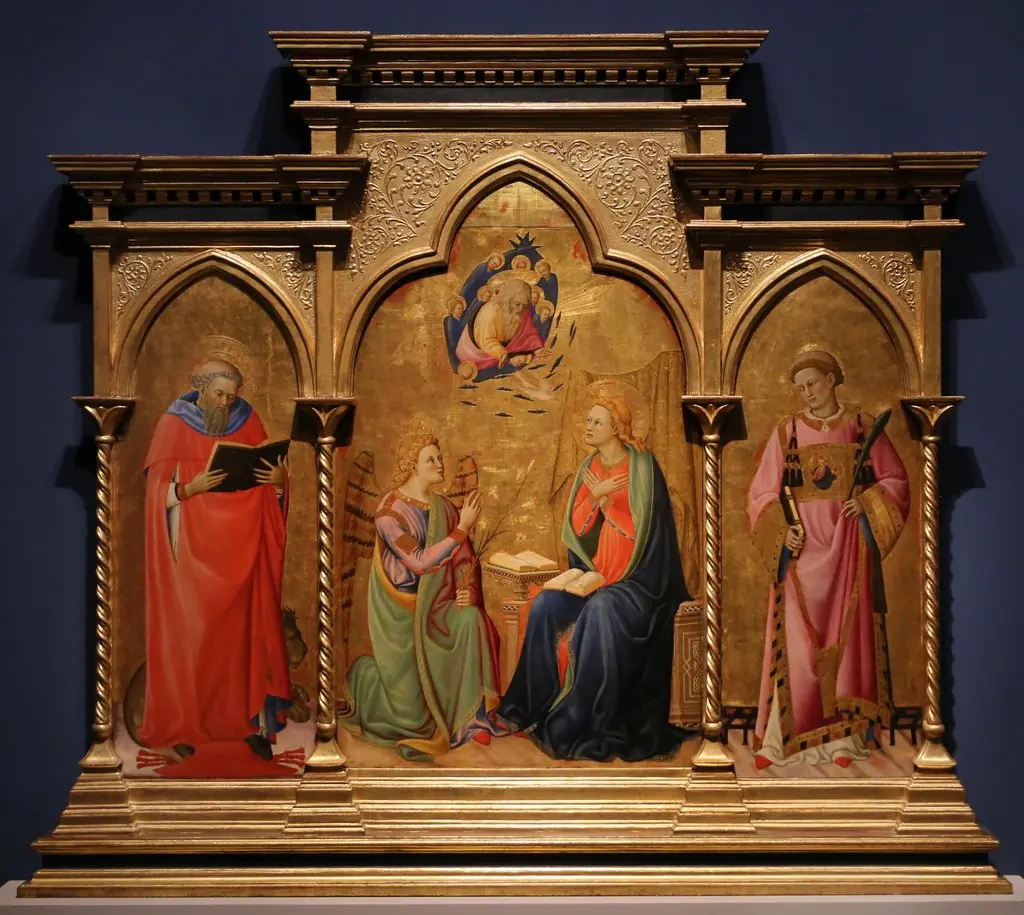 Parts of a triptych: Annunciation and saints Jerome and Lawrence
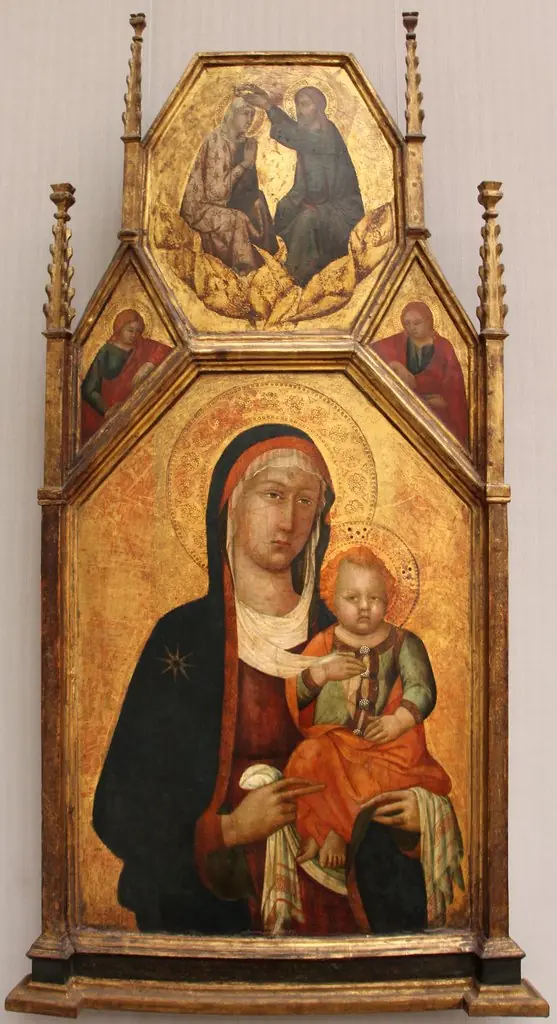 Maria mit dem Kind
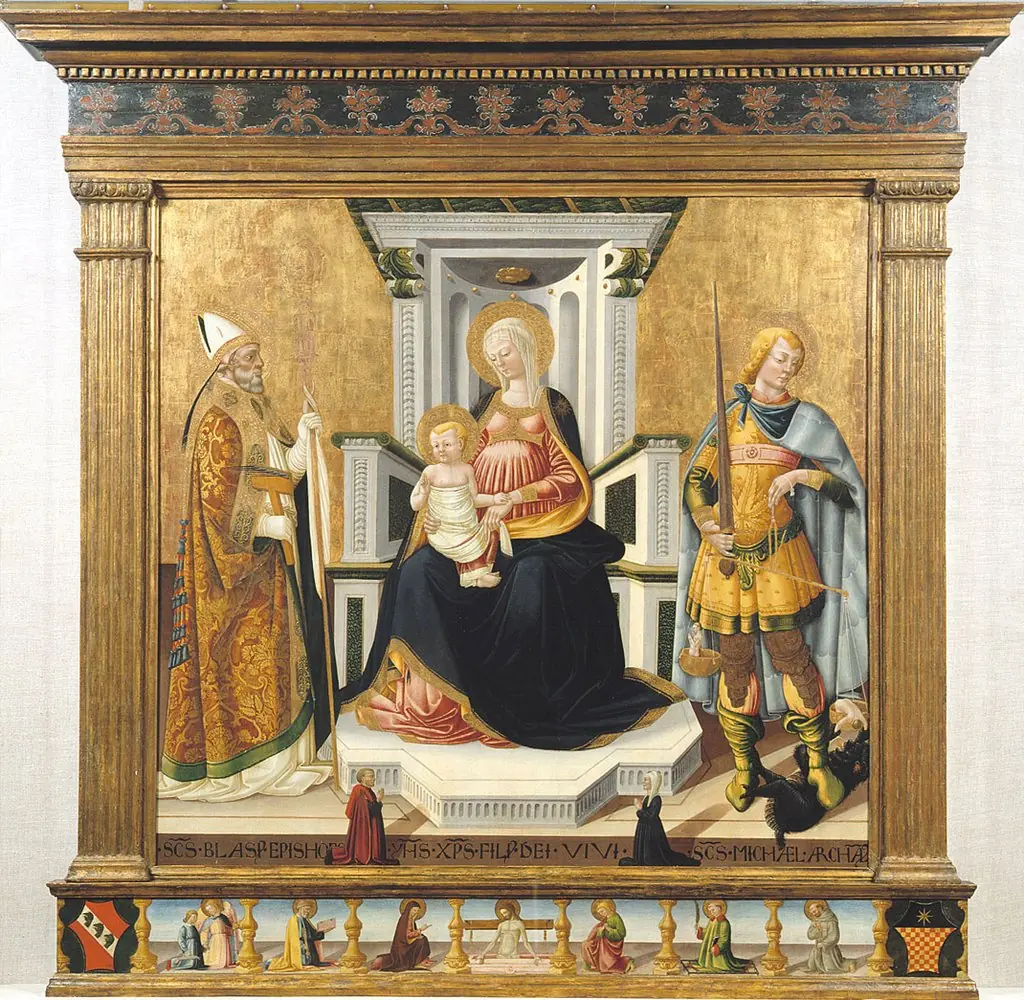 Madonna and Child with Two Saints (Bicci)
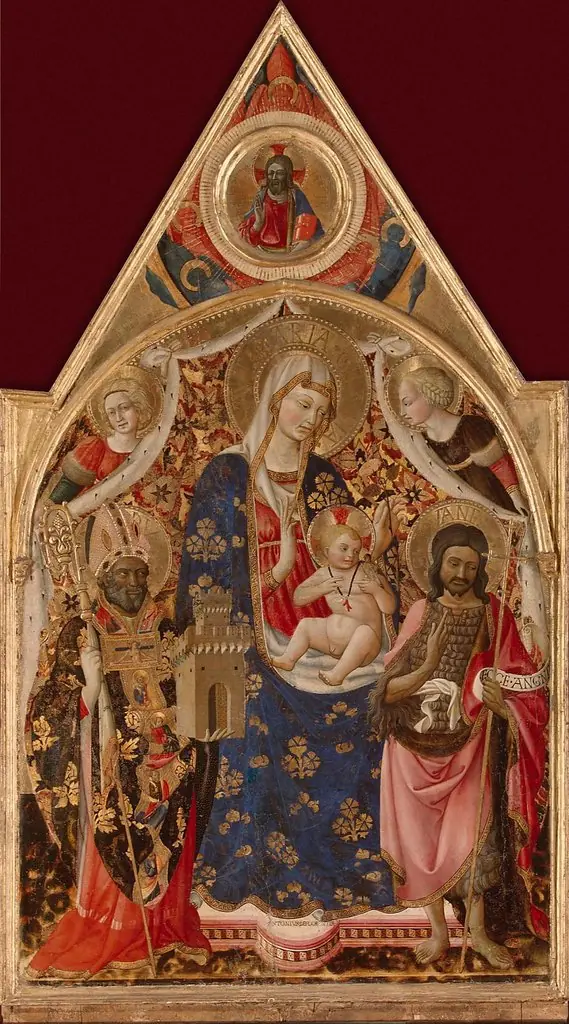 Madonna and Child, with a Bishop, St John The Baptist and Angels
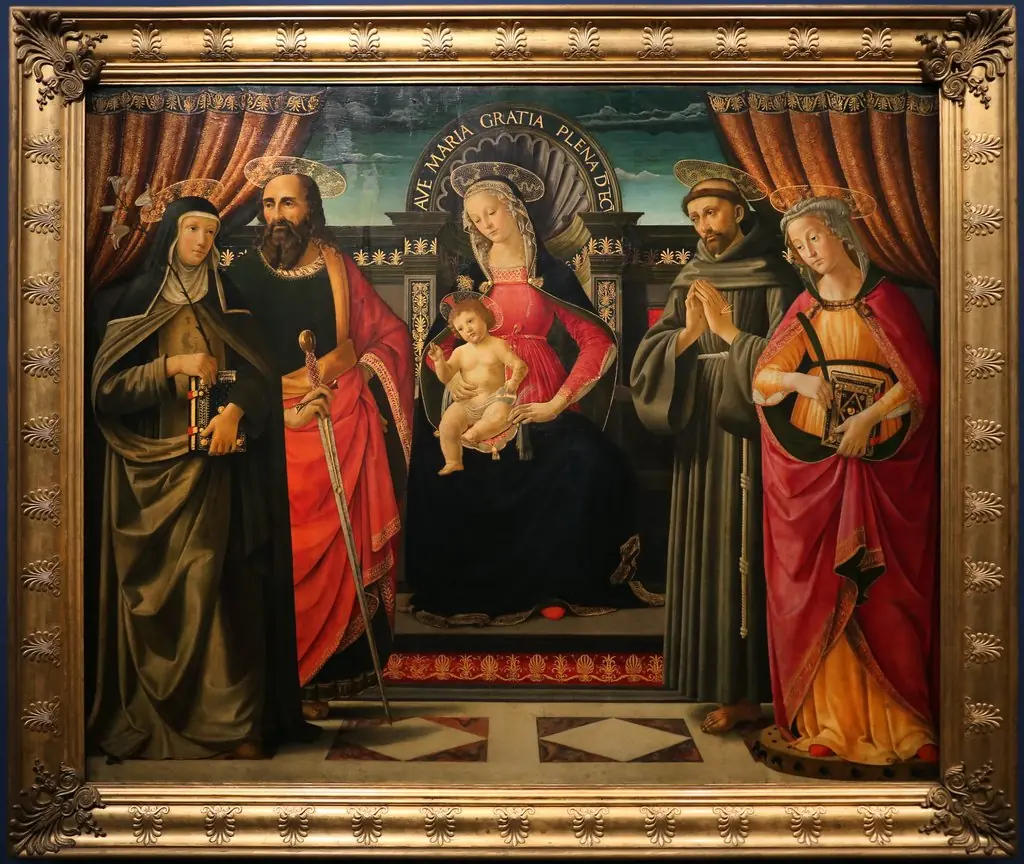 The Virgin with Blessing Child Enthroned and Saints