Artwork
Portrait of Cecilie Trier, née Melchior
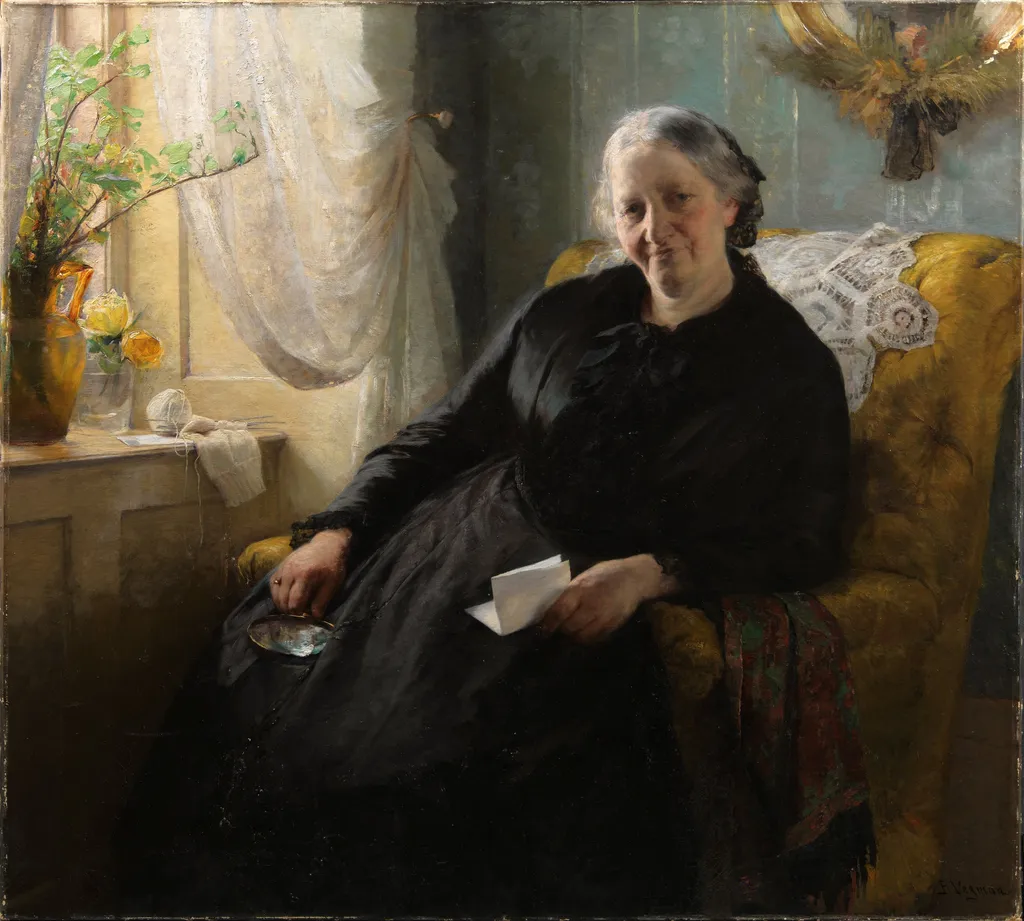
Portrait of Cecilie Trier, née Melchior is an oil painting by the Post-Impressionist artist Bertha Wegmann. It dates from 1893 and is held in the collection of the Statens Museum for Kunst. Created in 1893, this oil painting depicts Cecilie Trier, born Melchior, seated in a bright yellow armchair.
About this work
Overview
Portrait of Cecilie Trier, née Melchior is an oil on canvas painting by the Danish artist Bertha Wegmann, dated 1885.
Portrait of Cecilie Trier, née Melchior is an oil on canvas painting by the Danish artist Bertha Wegmann, dated 1885. Measuring 1259 by 1402 mm, the work is held in the collection of the Statens Museum for Kunst in Copenhagen. Wegmann, the first woman to hold a chair at the Royal Danish Academy of Fine Arts, produced this portrait during a period of established reputation in Danish art, following her receipt of the Thorvaldsen Medal in 1883 and prior to her historic academic appointment in 1887. The painting exemplifies the intimate, naturalistic portraiture that characterized her mature practice and contributed to her standing as one of Denmark's foremost portraitists of the late nineteenth century.
Subject & Meaning
The portrait depicts an elderly woman seated in a mustard-yellow upholstered armchair positioned slightly off-center to the right. Cecilie Trier wears a long black dress with a bow at the neck and holds a folded white letter in her left hand and a pair of spectacles in her right. Her gray hair is pulled back. The domestic setting carries symbolic weight: to her left, a window with sheer white curtains admits bright light onto a windowsill arranged with a green potted plant, a vase with yellow roses, a ball of yarn, and a piece of lace. A white lace cloth drapes over the back of her chair, while dried plants hang in the upper right corner. These objects suggest feminine domesticity, leisure, and the passage of time. The letter and spectacles imply literacy and intellectual engagement, complicating any simple reading of the sitter as merely a passive elderly subject. The palette of deep blacks, warm yellows, soft whites, and subdued greens reinforces the contemplative mood.
Technique & Style
Wegmann executed the portrait in oil on canvas, working with a naturalistic approach characteristic of late nineteenth-century European realism. Light enters strongly from the left, creating soft shadows and highlighting the sitter's face and hands, a handling that demonstrates Wegmann's attention to atmospheric effect. The brushwork varies across the composition: smooth and blended in the face and hands, where precision was essential to capturing likeness and character, and looser and more textured in the curtains, upholstery, and background elements. This differential handling creates a visual hierarchy that directs attention to the sitter's expression and gesture while maintaining overall pictorial coherence. The muted blue-green wall provides a restrained backdrop against which the warm yellows of the chair and the deep black of the dress achieve striking contrast.
History & Provenance
The painting was created in 1885, a period when Wegmann had already achieved considerable recognition in Denmark. She had returned to Copenhagen in 1882 after years of study in Munich and Paris, and had been exhibiting at the Charlottenborg Palace since 1873. The portrait entered the collection of the Statens Museum for Kunst, where it remains today. The work bears the artist's signature in the lower right corner.
Context
Bertha Wegmann was born into a family of German ancestry that moved to Copenhagen when she was five; her father was a merchant and amateur painter who fostered her early interest in art. She received no formal training until age nineteen, when she studied with Frederik Ferdinand Helsted, Heinrich Buntzen, and Frederik Christian Lund in Copenhagen. In 1878 she relocated to Munich, studying briefly with Wilhelm von Lindenschmit the Younger and Eduard Kurzbauer before rejecting studio instruction in favor of direct study from nature. She formed a significant professional and personal friendship with the Swedish painter Jeanna Bauck, with whom she traveled to Italy and later to Paris in 1881. There she exhibited at several salons and received an honorable mention. Her 1883 portrait of her sister won the Thorvaldsen Medal, and in 1887 she became the first woman to hold a chair at the Royal Danish Academy of Fine Arts. She served on the board of the Tegne- og Kunstindustriskolen for Kvinder from 1887 to 1907, represented Denmark at world's fairs including the World's Columbian Exhibition in Chicago, and received the royal Ingenio et Arti medal in 1892.
Legacy
Wegmann's achievement as the first female chair at the Royal Danish Academy of Fine Arts不顺opened institutional doors for women artists in Denmark, and her international exhibition record helped establish Danish women's visibility in European art circles. Portrait of Cecilie Trier, née Melchior stands as a representative example of her mature portraiture, combining technical accomplishment with psychological sensitivity. The painting's place in the Statens Museum for Kunst ensures its continued accessibility for scholarly study and public engagement. Wegmann died suddenly in her studio, actively working until the end of her career.
Own this work as a print
Artist & collection
Artist
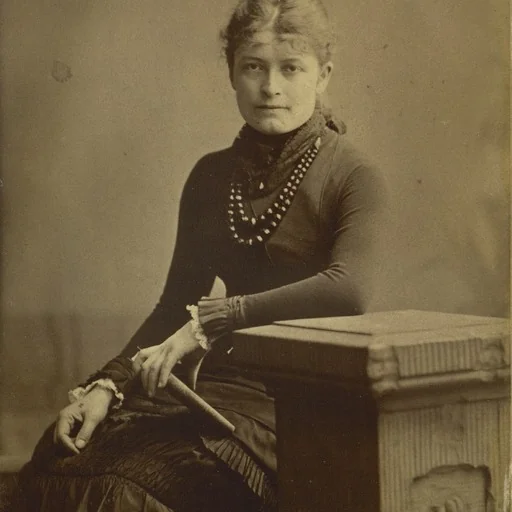
Bertha Wegmann (1847–1926) was a Danish portrait painter of Swiss ancestry. She was the first woman to hold a chair at the Royal Danish Academy of Fine Arts.

 My Mother
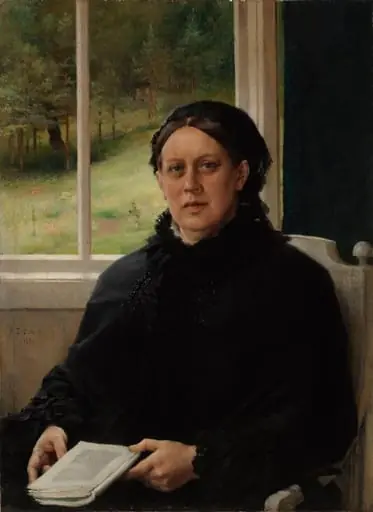 Taiteilijan äidin, Alexandra Edelfeltin muotokuva
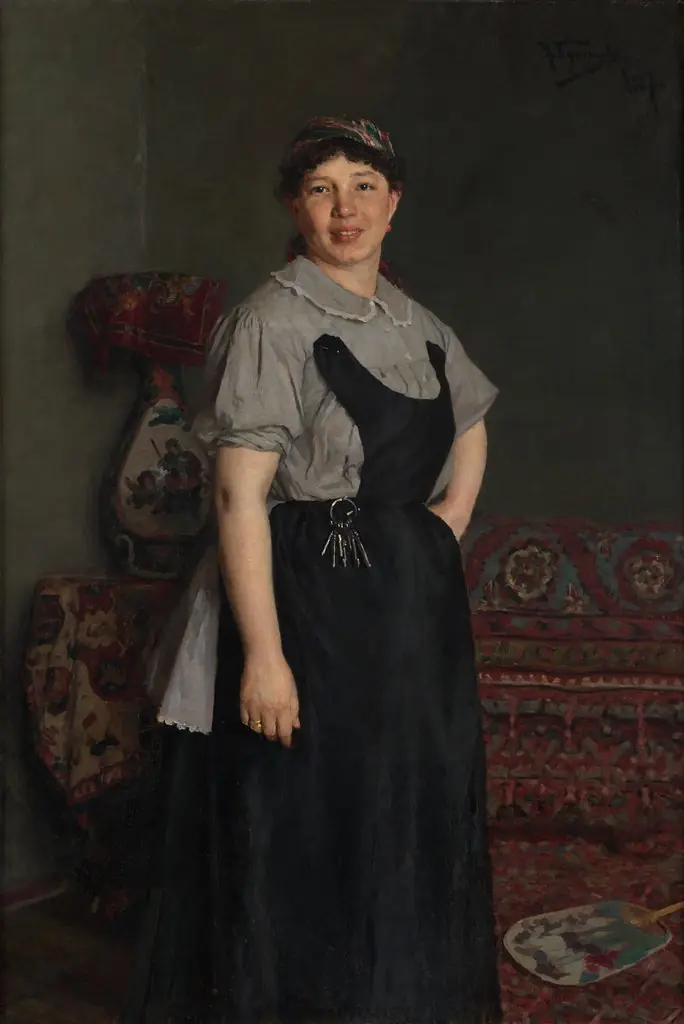 The Keyholder
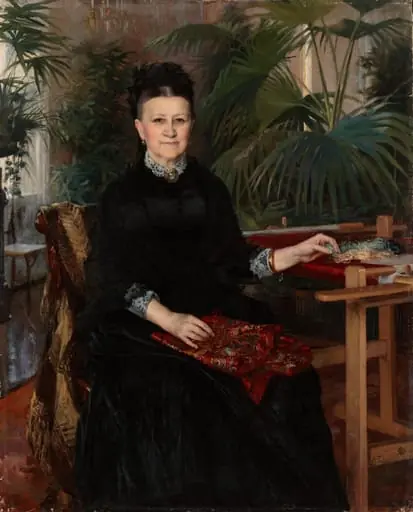 Kauppaneuvoksetar Anna Sinebrychoffin muotokuva
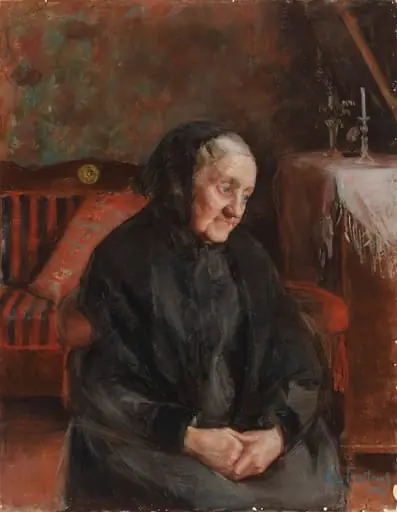 Isoäiti, tohtorinna Augusta Frosteruksen (os. Norling) muotokuva
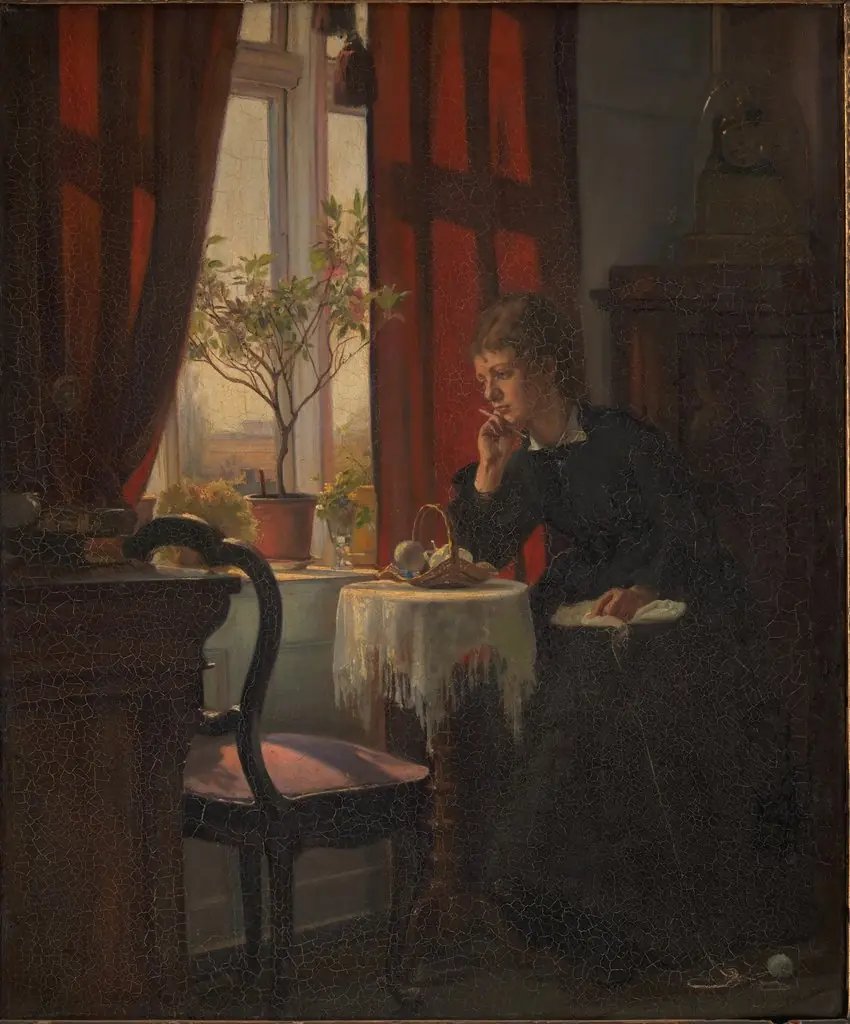 Helga Johansen, kunstnerens søster
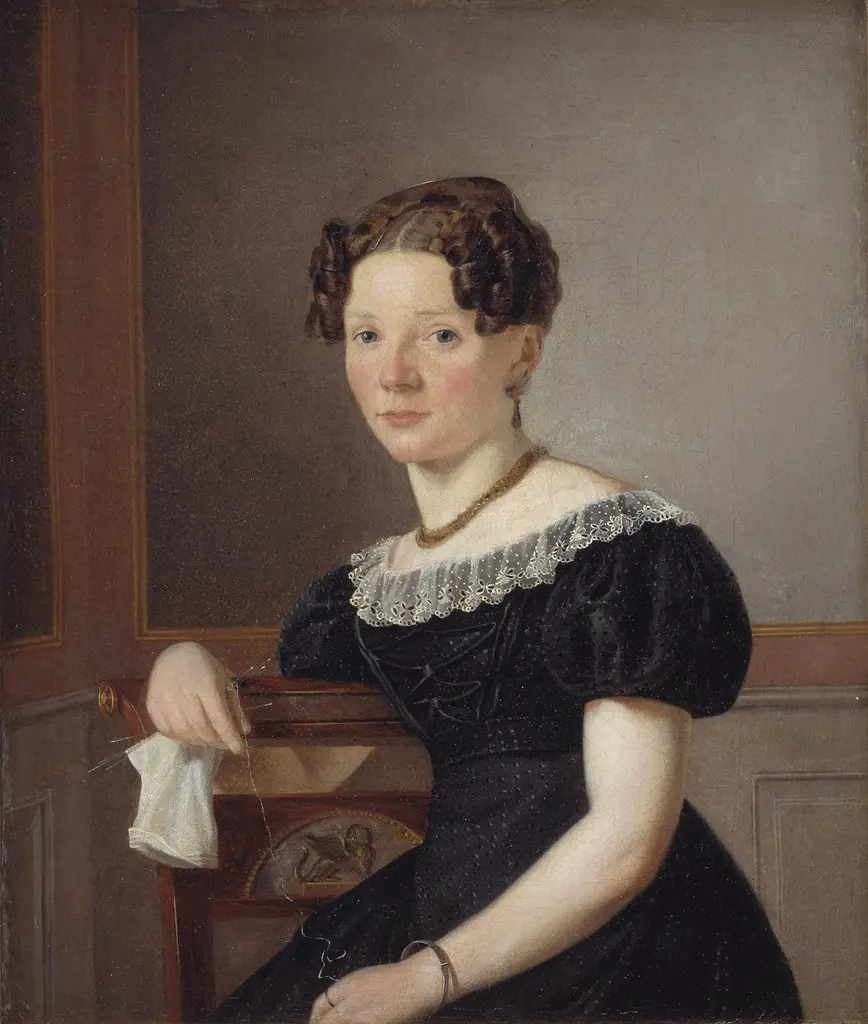 Dame med strikketøj. En af kunstnerens søstre (?)
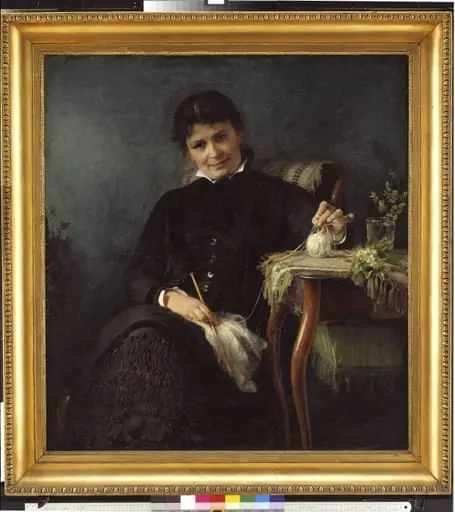 Madam Anna Seekamp, the Artist's Sister
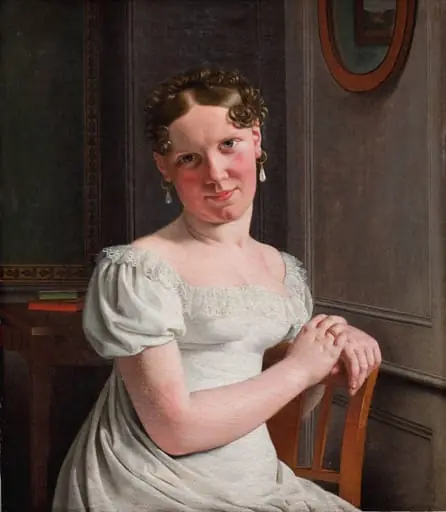 Julie Eckersberg, née Juel, the Artist's Second Wife
 The Artist's Wife Reading