Artwork
Samson and Delilah
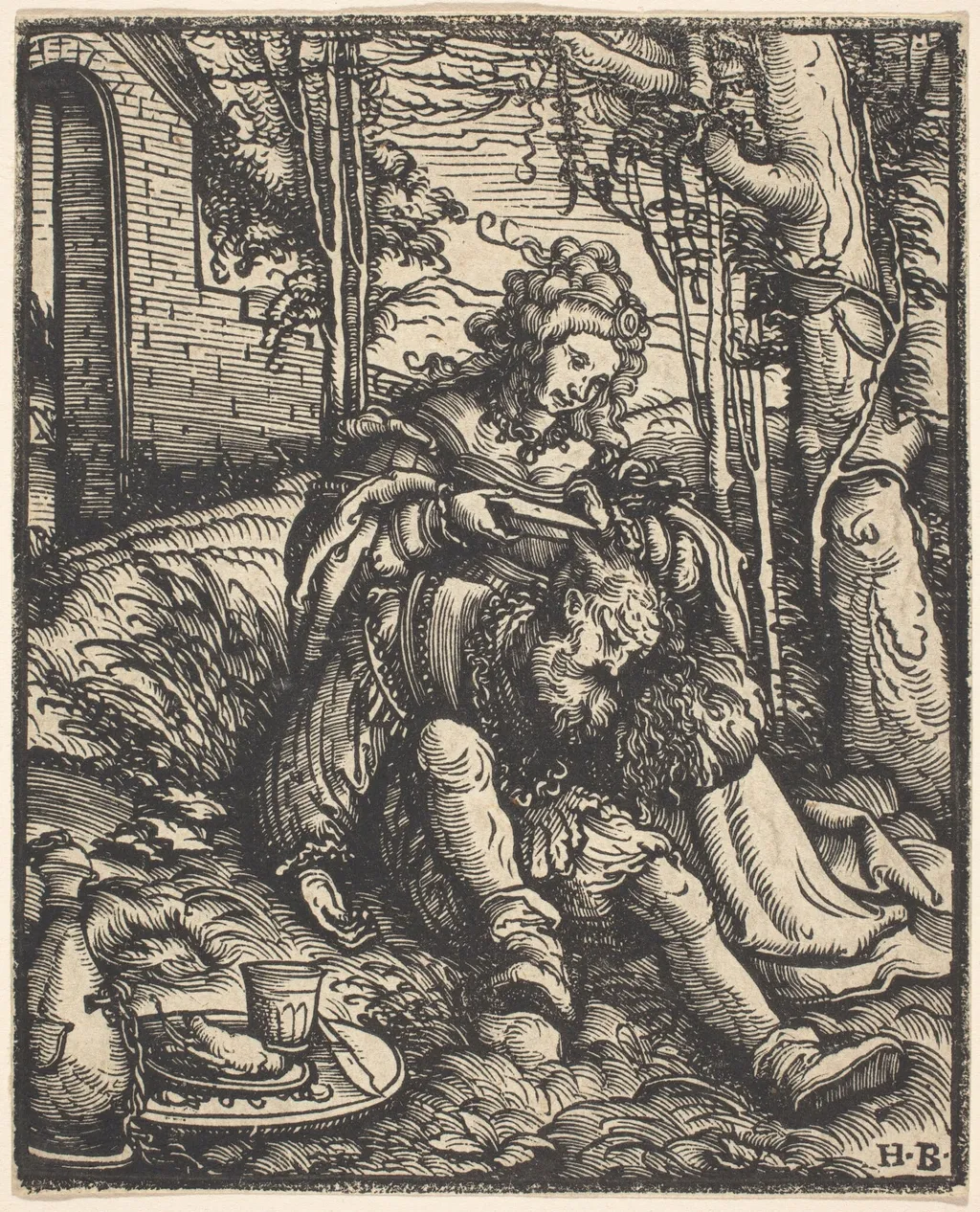
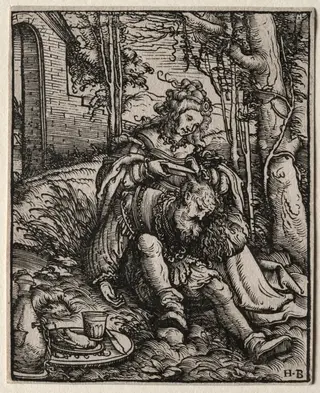
Samson and Delilah is an ink print by the Renaissance artist Hans Burgkmair I. It dates from 1519 and is held in the collection of the National Gallery of Art.
About this work
Overview
The surrounding environment is rendered in a state of collapse, featuring crumbling walls and broken furniture that mirror the destruction of the hero's power.
Hans Burgkmair I's 1519 woodcut, Samson and Delilah, depicts the biblical moment of betrayal where Delilah cuts the hair of the blinded Samson. The composition is tightly framed within a dark, claustrophobic interior, emphasizing the intimacy and violence of the act. Delilah stands dominantly over the slumping figure of Samson, her wild hair contrasting with the stark lines of the woodcut technique.
She grips his long locks while he leans forward, his eyes covered, signifying his loss of strength. The surrounding environment is rendered in a state of collapse, featuring crumbling walls and broken furniture that mirror the destruction of the hero's power. A small dog appears in the lower foreground, a common motif in Northern Renaissance art often symbolizing fidelity or, in this context, the domestic setting turned hostile.
Executed during the height of the German Renaissance, this work demonstrates Burgkmair's mastery of the woodcut medium, utilizing bold contrasts and intricate line work to convey dramatic tension and psychological depth. The piece stands as a significant example of the artist's engagement with Old Testament narratives, reflecting the era's interest in human emotion and moral complexity within religious storytelling.
Subject & Meaning
The composition places Delilah above a fallen Samson, whose hair, his source of strength, is seized in her grasp while a blindfold obscures his eyes. The surrounding chaos, with crumbling walls, shattered furniture and a crouching dog, amplifies the sense of moral collapse and the destructive power of deceit.
Technique & Style
Burgkmair employed the woodcut process, carving the design into a wooden block, inking the raised surfaces, and pressing the block onto paper. The medium yields bold, linear contours and dense cross‑hatching, allowing the artist to model dramatic lighting and convey kinetic tension through sharp, scratchy lines.
History & Provenance
Created in the early Renaissance period, the print reflects the flourishing of German print culture in the 1500s. While specific ownership records are scarce, the work is catalogued among Burgkmair’s surviving prints and is held in several major European collections that specialize in early modern graphic art.
Own this work as a print
Artist & collection

 Samson and Delilah
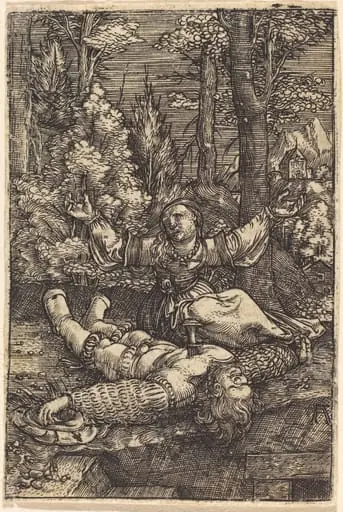 Pyramus and Thisbe
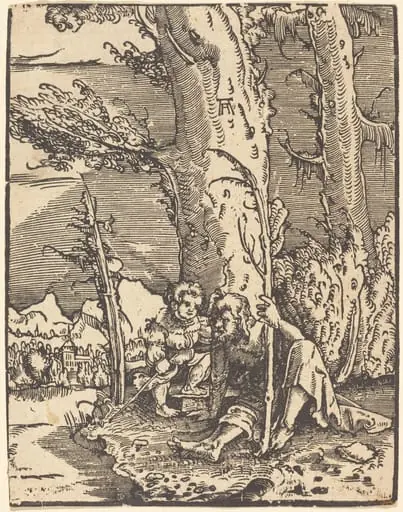 Saint Christopher Seated by a River Bank
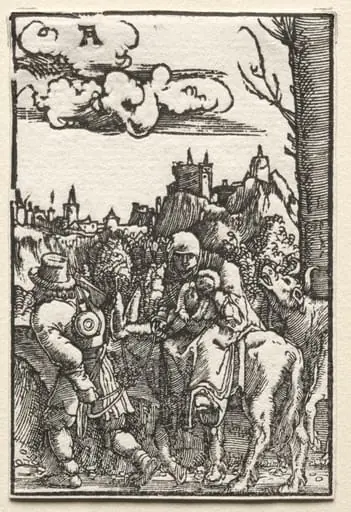 The Fall and Redemption of Man: The Flight into Egypt
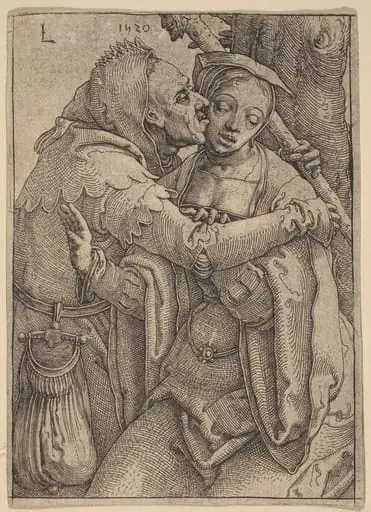 The Fool and the Woman
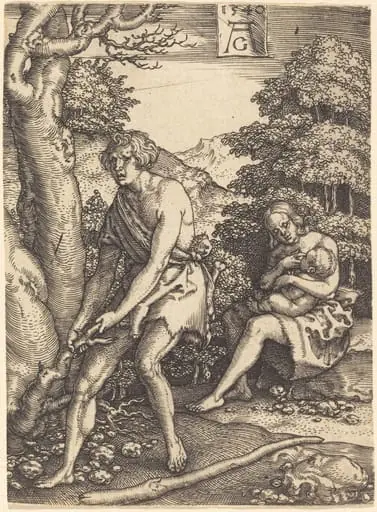 Adam and Eve at Work
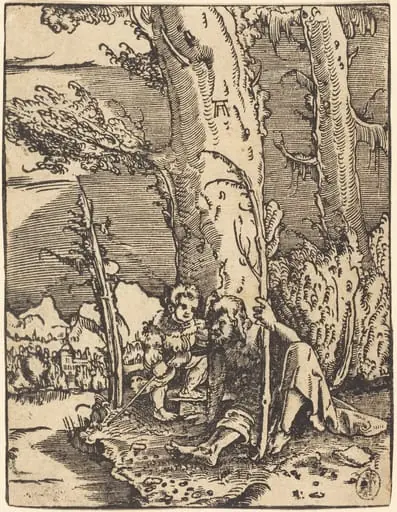 Saint Christopher Seated by a River Bank
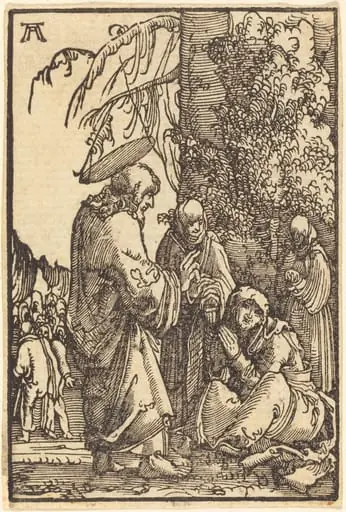 Christ Taking Leave of his Mother
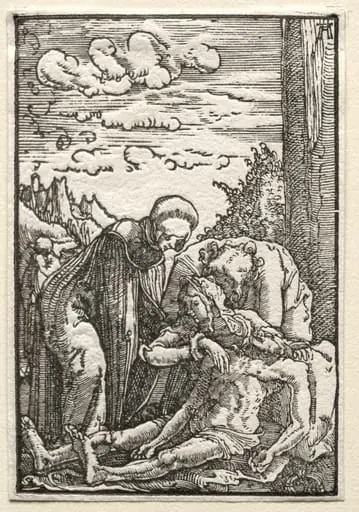 The Fall and Redemption of Man: The Lamentation beneath the Cross