Artwork
Sacrifice of Isaac
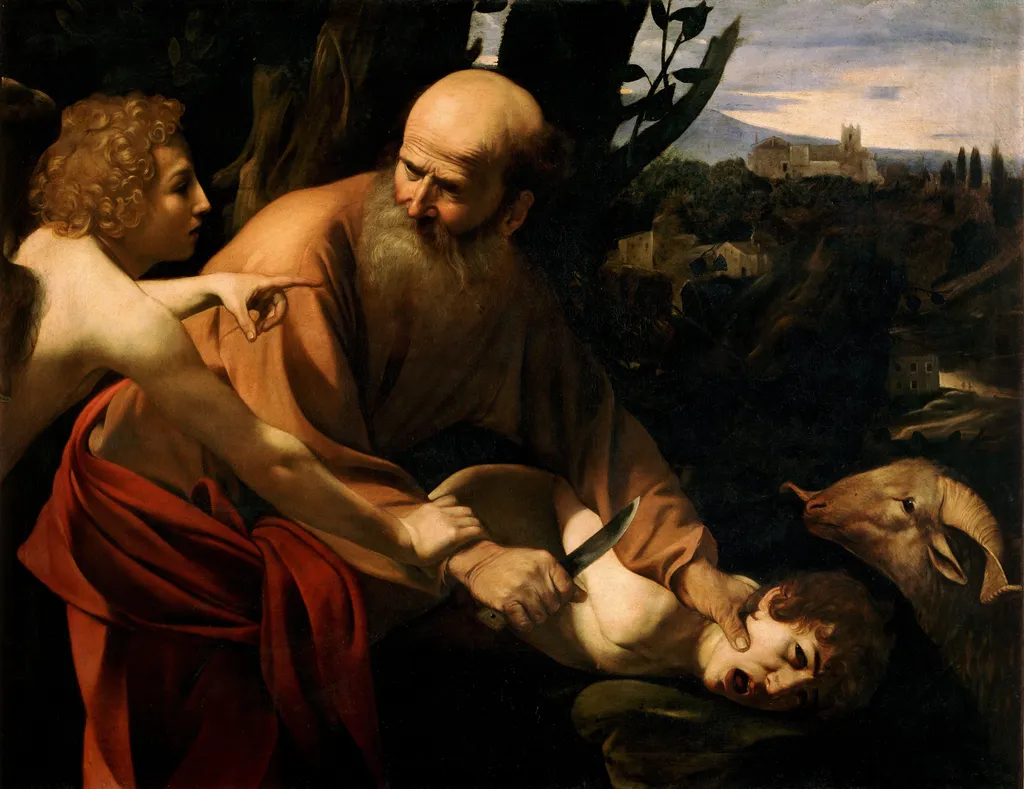
Sacrifice of Isaac is an oil painting by the Baroque artist Caravaggio. It dates from 1603 and is held in the collection of the Uffizi Gallery.
About this work
Subject & Meaning
The scene includes a lamb and is set outdoors on Mount Moriah, featuring a rare landscape for the artist with a church and a laurel tree in the background.
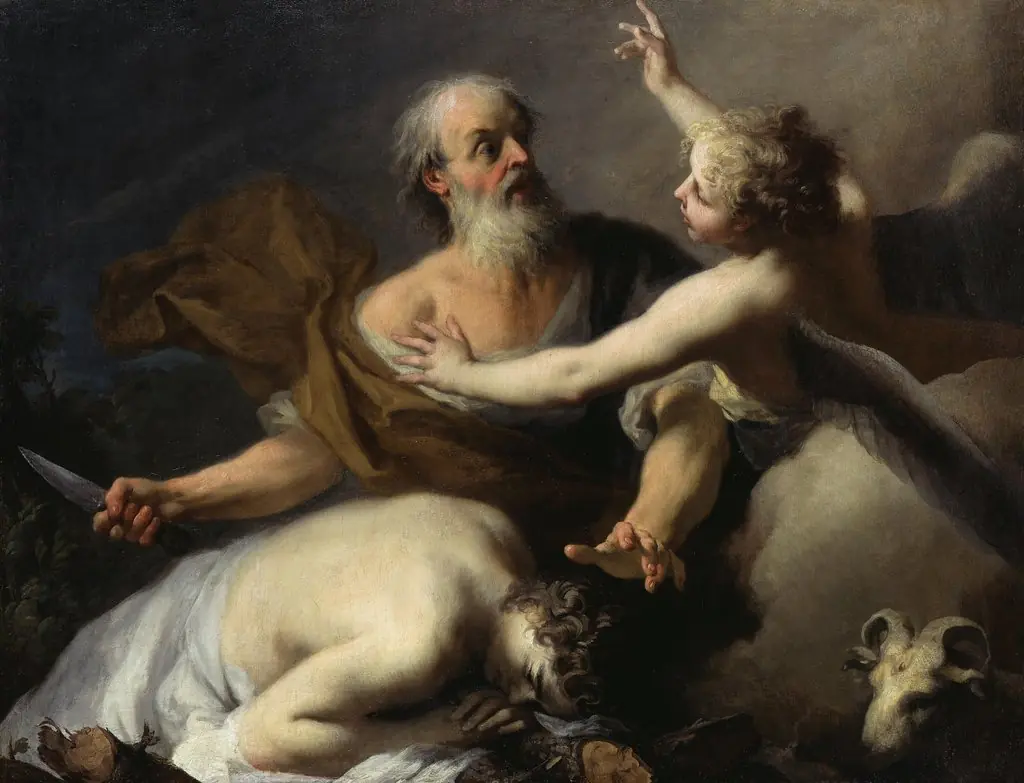
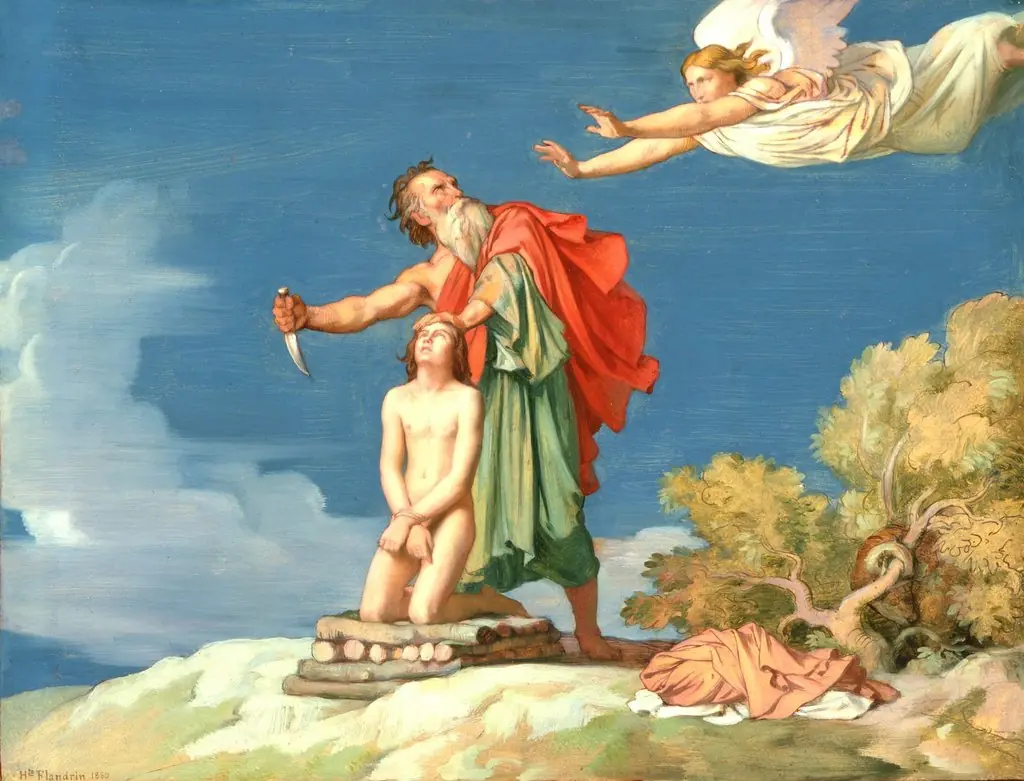
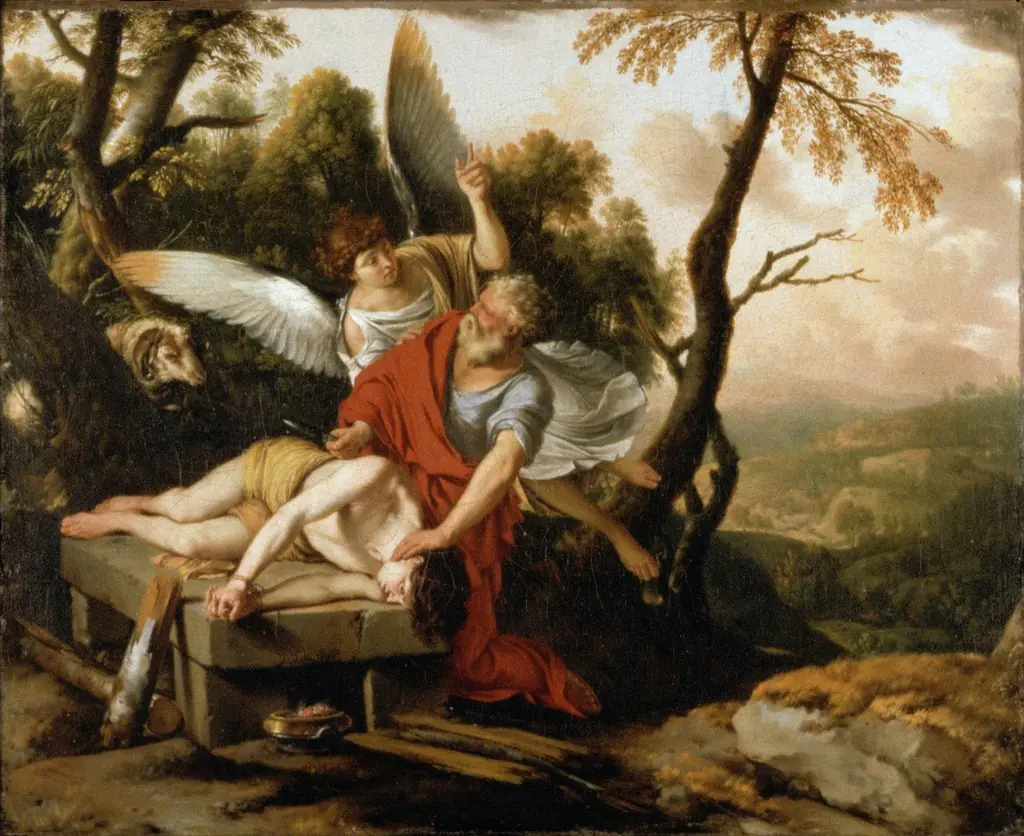
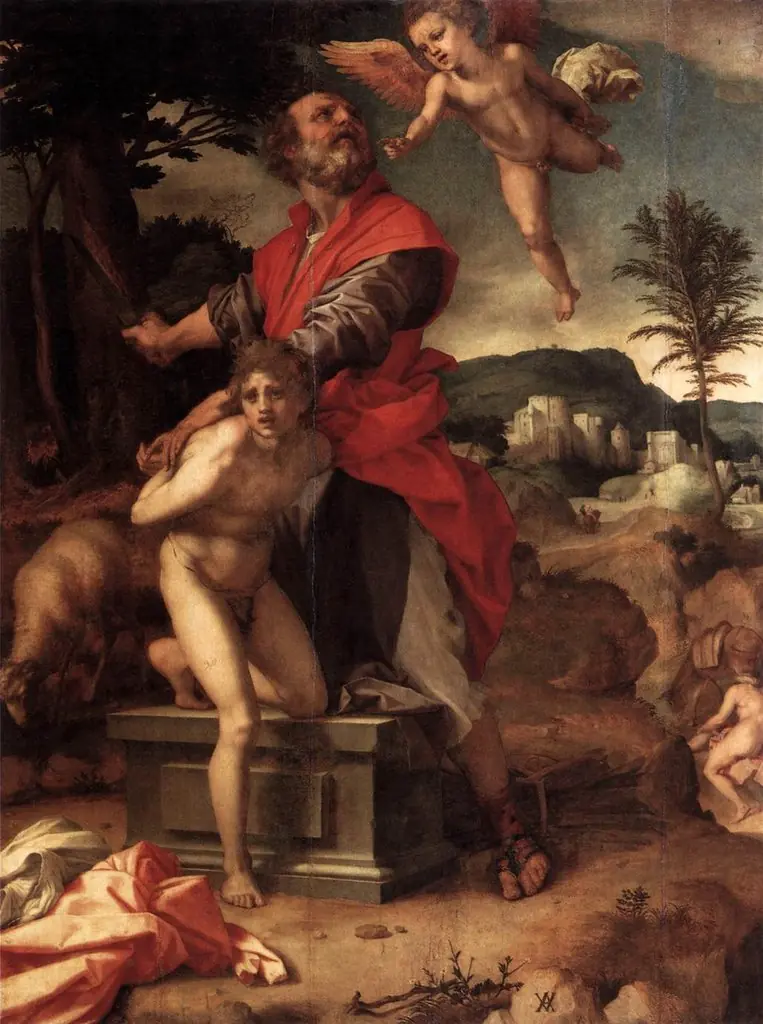
The painting depicts the biblical Binding of Isaac from Genesis, showing the patriarch Abraham preparing to sacrifice his son Isaac in obedience to God, only to be stopped at the last moment by an angel. The scene includes a lamb and is set outdoors on Mount Moriah, featuring a rare landscape for the artist with a church and a laurel tree in the background. Unlike traditional iconography where Isaac appears docile as a prefiguration of Christ, this work portrays the boy resisting his father's force, screaming in terror. The laurel tree and the sun illuminating the scene likely serve as symbolic references to the Barberini family, the work's patrons. This dramatic treatment, emphasizing physical struggle and the victim's cry, marks a departure from conventional religious representations of the subject.
Technique & Style
Executed in oil paint on canvas, the work measures 104 cm in height and 135 cm in width. Stylistically, it represents one of the artist's rare landscape paintings, depicting an outdoor scene that precedes his later shift toward darker, more intimate treatments. The composition is distinguished by the unconventional and resistant posture of Isaac, who must be physically restrained by Abraham, a dramatic departure from the traditionally docile iconography of the era. The lighting focuses intensely on Isaac, whose expression of terror and scream recalls the visceral intensity found in other works such as Judith and Holofernes. The background features a laurel tree and a church, elements often interpreted as symbolic references to the Barberini family and the setting of the Mount Albain.
History & Provenance
The Sacrifice of Isaac was commissioned by Cardinal Maffeo Barberini, who later became Pope Urban VIII, as part of a series of religious commissions by prominent Roman patrons during Caravaggio's active period in Rome (SOURCE 3). The work was created circa 1603, supported by Barberini payments to the artist between May 1603 and July 1604 for a sum of 100 scudi (SOURCE 3). It remained in the Barberini family collection, passing through the Sciarra branch, before being sold by Prince Maffeo Barberini Colonna di Sciarra to collector Charles Fairfax Murray in the late 19th century (SOURCE 3). Murray's son later donated the painting to the Uffizi Gallery in Florence in 1917 (SOURCE 3). The painting's attribution to Caravaggio is now universally accepted, though its precise dating remains debated, with 1603 being the most commonly cited date despite some scholars suggesting earlier dates like 1597-1598 (SOURCE 3). A second version of the same biblical scene exists in Princeton, USA, but its Caravaggio attribution is contentious (SOURCE 3). The painting has long been part of the Barberini family's collections, passing through the cardinal's brother and descendants before transferring around 1812 to the Colonna Sciarra branch. By the late nineteenth century, Prince Maffeo Barberini Colonna di Sciarra ceded most of his paintings to creditors, and the work subsequently entered the possession of the painter and collector Charles Fairfax Murray, who acquired it under the misattribution to Gerrit van Honthorst. Murray's son donated it to the Uffizi Gallery in Florence in 1917, where it has remained since. The painting is recorded in the collection of the Uffizi Gallery. The work has been exhibited in "Bodies and Shadows: Caravaggio and his European followers."
Context
The Sacrifice of Isaac was commissioned by Cardinal Maffeo Barberini, later Pope Urban VIII, as part of a series of religious works by Caravaggio for prominent Roman patrons during the early 17th century. The painting reflects the Baroque era's dramatic religious themes and Caravaggio's role within Italian Baroque painting, as documented in scholarly sources. Its depiction of the biblical Binding of Isaac features atypical elements, such as the emotional intensity of Abraham and Isaac and a naturalistic landscape, which scholars note distinguish it from other works of the period. The artwork's stylistic characteristics and thematic focus on religious sacrifice align with the artist's broader context of Counter-Reformation-inspired religious art, though its precise dating remains debated, with most experts placing its creation around 1603 based on Barberini payment records. The painting's journey through private collections, including the Barberini family and later Charles Fairfax Murray, before its acquisition by the Uffizi Gallery in 1917, underscores its historical provenance and significance in art history.
Legacy
After remaining in the Barberini collections, the painting’s attribution was forgotten and it was mistaken for a work by Gerrit van Honthorst. It entered the Uffizi Gallery in 1917 after being acquired by a Murray collector. Its dramatic depiction of Isaac’s resistance scandalized contemporary Rome and influenced the interpretation of the Binding of Isaac motif, with lighting that anticipates Caravaggio’s later chiaroscuro dramas. Scholars continue to debate its date and compare it to a disputed Princeton version, keeping the work active in art‑historical discourse.
Own this work as a print
Artist & collection
Artist
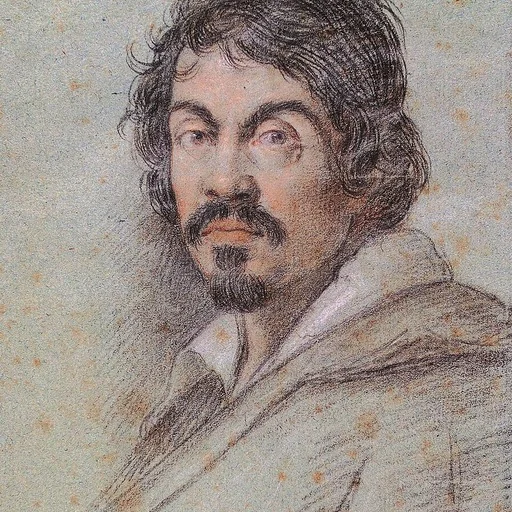
Michelangelo Merisi da Caravaggio (also Michele Angelo Merigi or Amerighi da Caravaggio; 29 September 1571 – 18 July 1610), known mononymously as Caravaggio, was an Italian painter active in Rome for most of his artistic life.