Artwork
Madonna of the Rosary
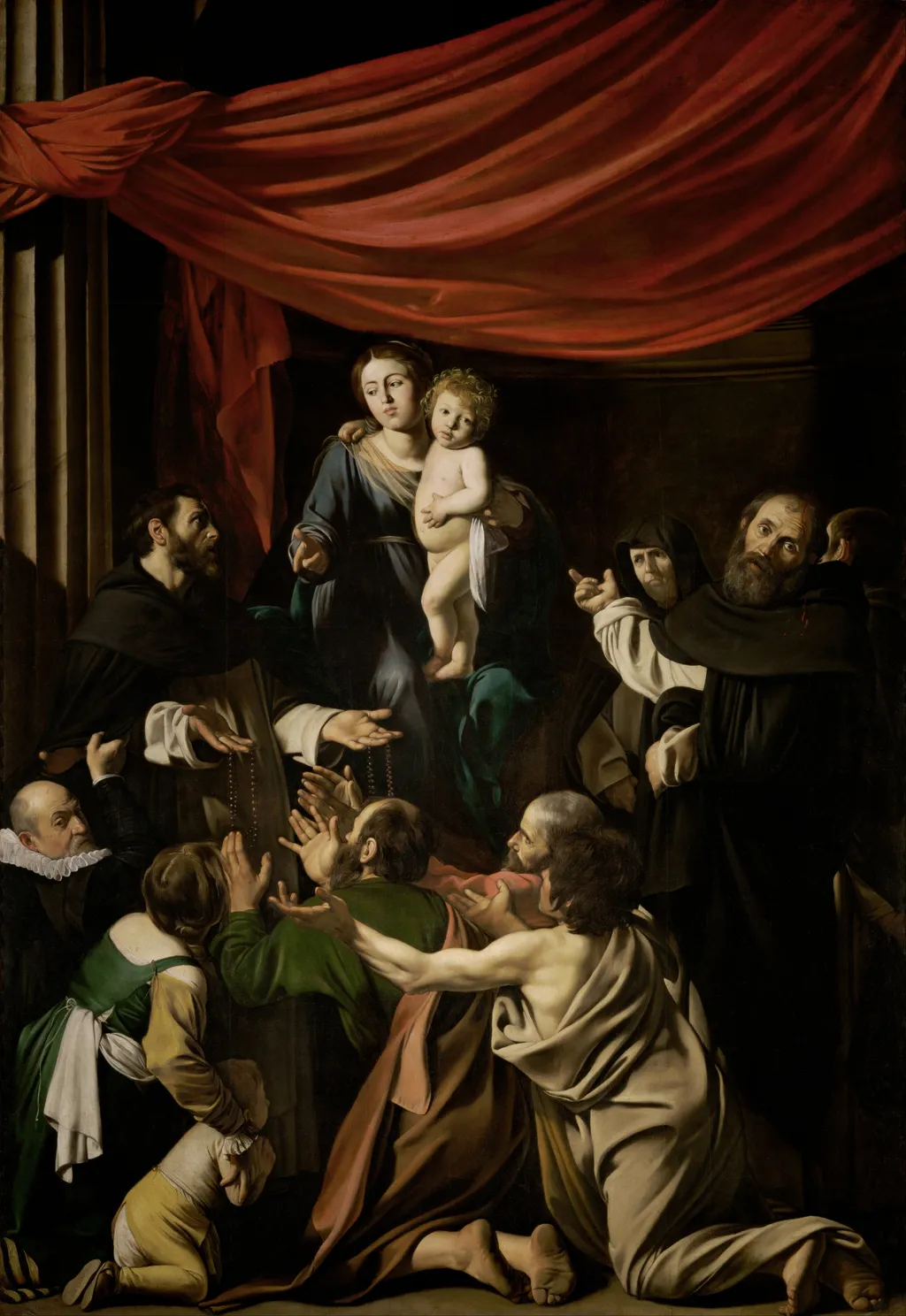
Madonna of the Rosary is an oil painting by the Baroque artist Caravaggio. It dates from 1607 and is held in the collection of the Kunsthistorisches Museum.
About this work
This is a large altar painting by Caravaggio from 1607. It shows Mary with the Christ Child and other figures. The work uses strong light and dark to focus attention.
Caravaggio painted it for a Dominican church in Naples. It’s the only altarpiece he made that fits the usual church style. The drama comes from how he lights the faces.
Next, look up Caravaggio.
Subject & Meaning
Saint Dominic, in his habit, holds rosaries on his fingers, while Saint Peter Martyr stands to the right, identifiable by the bleeding wound on his forehead.
The painting depicts the Virgin Mary enthroned with the Christ Child, accompanied by Dominican saints and kneeling faithful, illustrating the legend that Saint Dominic received the rosary from the Virgin during an apparition around 1208 as a weapon against the Cathars, a tradition popularized by Alanus de Rupe. Caravaggio adapts the iconography of the Madonna of Mercy (Schutzmantelmadonna), with Mary sheltering the devout beneath her cloak, but places the standing Christ Child on her lap while she gestures Dominic to distribute rosaries to the poor.
Saint Dominic, in his habit, holds rosaries on his fingers, while Saint Peter Martyr stands to the right, identifiable by the bleeding wound on his forehead. Three barefoot men in simple cloth, a woman with a small child, and a kneeling donor in black with a ruff press forward to receive the rosaries. A fluted column and a broad red drape frame the sacred group.
Within the Counter-Reformation context, the work affirms Marian devotion against Protestant critique, presenting the rosary as a sacramental gift channeled through the Dominican order.
Technique & Style
The work is an oil painting on canvas, measuring 364.5 × 249.5 cm, and belongs to Caravaggio's Baroque period. The composition functions as a sacra conversazione: the Virgin seated on a throne holds the Christ Child on her lap while Saint Dominic, robed in the order's habit and bearing a rosary, stands to the left; a donor figure in black with a ruff kneels at the edge, and Saint Peter Martyr appears with a distinctive forehead scar. A fluted column and a sweeping red drape frame the scene, creating a theatrical enclosure.
History & Provenance
The Madonna of the Rosary was painted by Caravaggio, with scholars dating its creation to between 1604 and 1607. While some attribute the commission to Luigi Carafa-Colonna for a Neapolitan church, the original patron and intended Dominican location remain uncertain. The work first appears in historical records in Naples, where painter Frans Pourbus noted in September 1607 that it was available for purchase for 400 ducats.
Upon leaving Naples in June 1607, Caravaggio left the painting in the studio shared by Flemish artists Louis Finson and Abraham Vinck. After Finson's death in Amsterdam in 1617, his share of the artwork passed to Vinck. Following Vinck's death, their heirs sold the piece around 1619 to a consortium of Flemish painters led by Peter Paul Rubens for 1,800 guilders.
The consortium acquired the work for the Dominican Church of Saint Paul in Antwerp, where it arrived circa 1623. It remained there until 1786, when Emperor Joseph II seized the painting for the imperial collection in Vienna following the suppression of religious orders in the Austrian Netherlands. The Madonna of the Rosary has been held by the Kunsthistorisches Museum in Vienna since 1786.
Context
Scholars identify the Madonna of the Rosary as Caravaggio's only standard Baroque altarpiece, though its original commission remains debated. While some attribute the work to a Neapolitan patron such as Luigi Carafa-Colonna, stylistic comparisons and archival evidence suggest it may have been begun in Rome circa 1604–1605 before being completed in Naples. Early biographer Giovanni Pietro Bellori noted the painting's presence in Antwerp, where it enhanced the artist's reputation.
The work's iconography, depicting Saint Dominic distributing rosaries to the faithful, reflects Counter-Reformation theology emphasizing Marian devotion against Protestant challenges.
Legacy
Immediately following its creation, the Madonna of the Rosary gained significant recognition, with early biographer Giovanni Pietro Bellori noting in 1672 that the work greatly enhanced the artist's reputation. The painting's legacy is marked by its unique status as the only confirmed altarpiece by Caravaggio, which secured its place on the high altar of the Dominican church of Saint Paul in Antwerp after being acquired by a Flemish consortium led by Peter Paul Rubens. This prestigious placement in a major Northern European church solidified its influence on Baroque religious art before it was transferred to the Kunsthistorisches Museum in Vienna in 1786.
Its enduring attribution and historical importance have been reinforced by modern scholarship confirming its creation during the artist's late Roman and Neapolitan period.
Overview
Caravaggio's "Madonna of the Rosary," completed in 1607, is an oil painting housed in the Kunsthistorisches Museum, Vienna. This large altarpiece stands out as the sole example among his oeuvre that aligns with the conventional format of Baroque church commissions. It depicts the Virgin and Child surrounded by various figures, characteristic of the artist's dramatic use of chiaroscuro to illuminate the scene and draw the viewer's eye.
Own this work as a print
Artist & collection
Artist
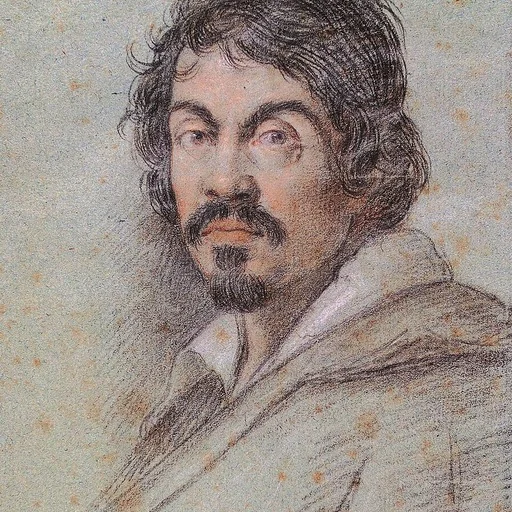
Michelangelo Merisi da Caravaggio (also Michele Angelo Merigi or Amerighi da Caravaggio; 29 September 1571 – 18 July 1610), known mononymously as Caravaggio, was an Italian painter active in Rome for most of his artistic life.

 The Virgin and Child between the Theological Virtues and Saints
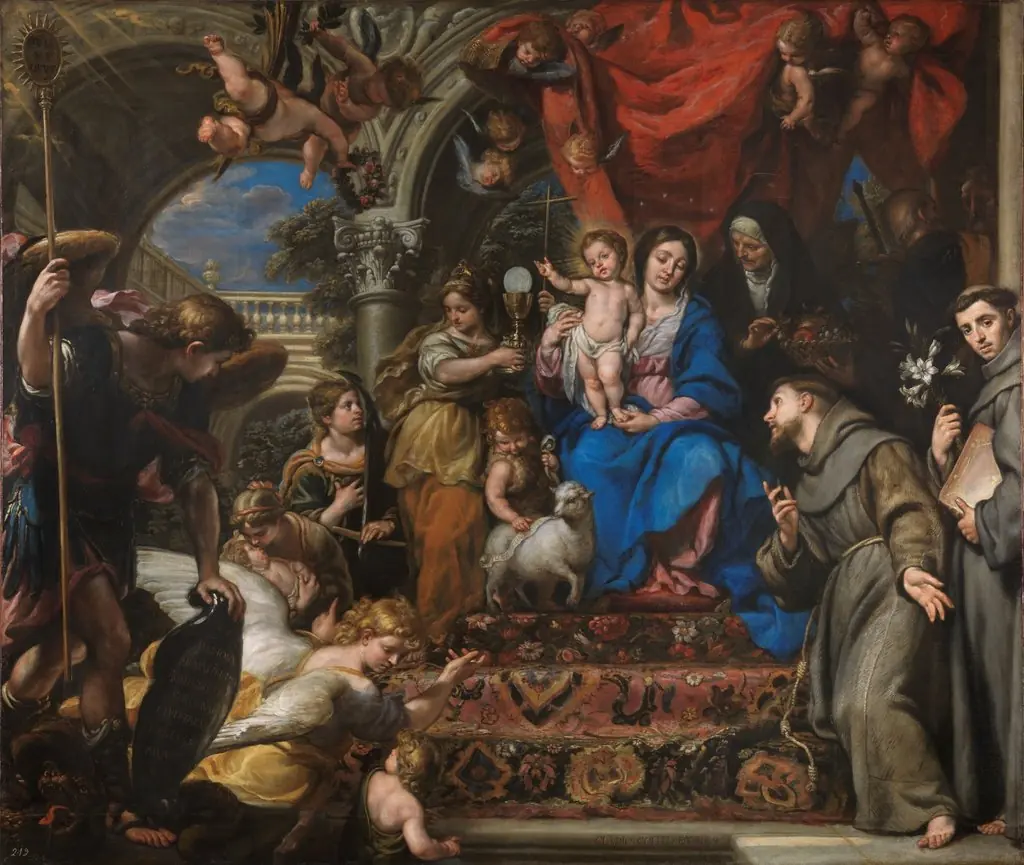
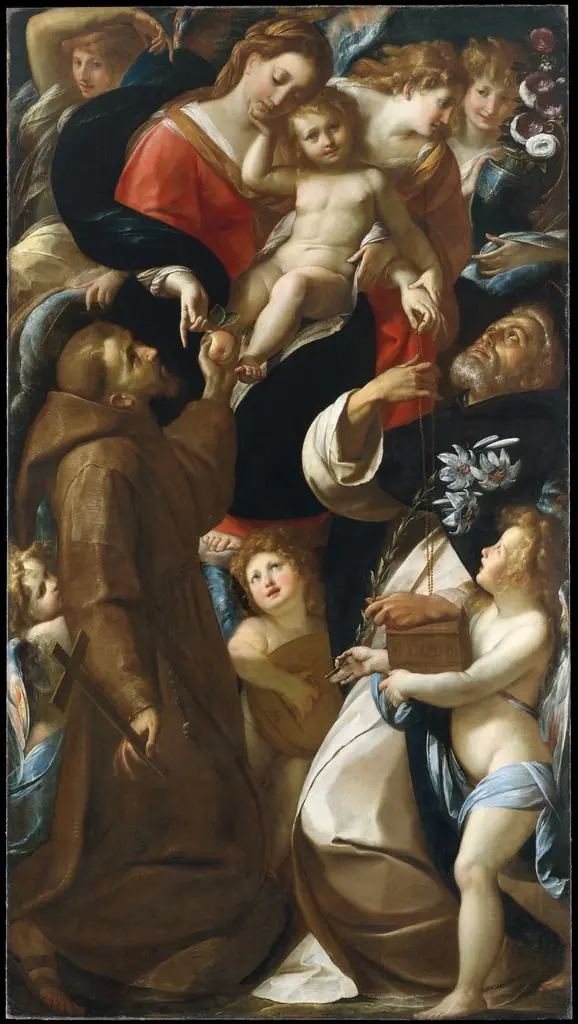 Madonna and Child with Saints Francis and Dominic and Angels
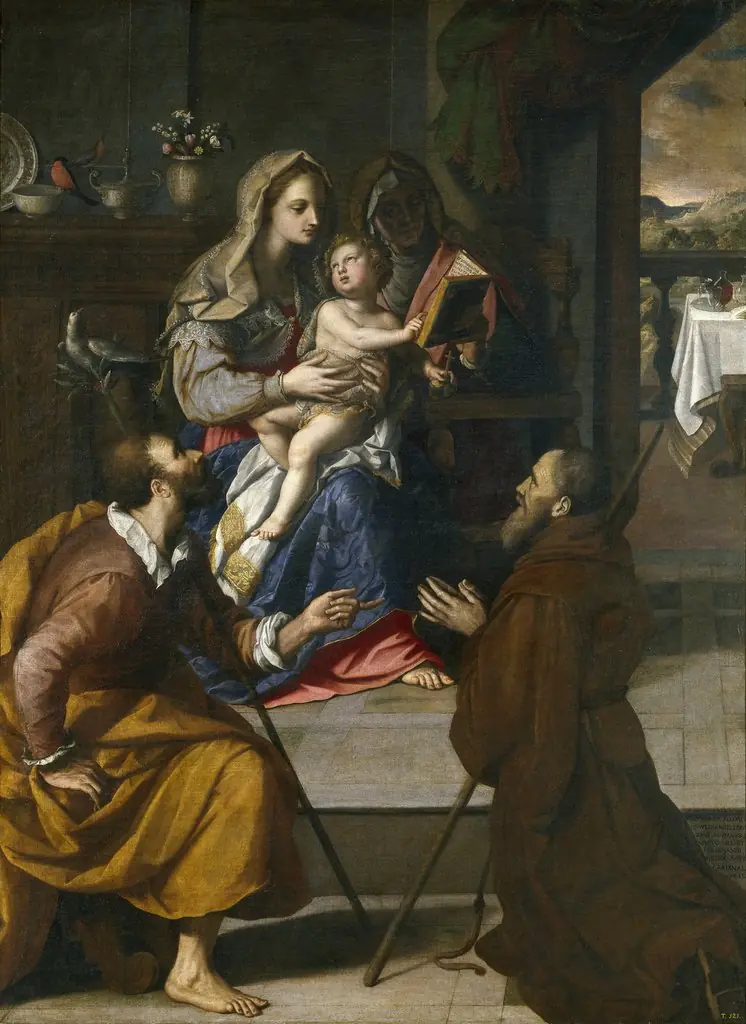 The Holy Family of Cardinal Fernando de’ Medici
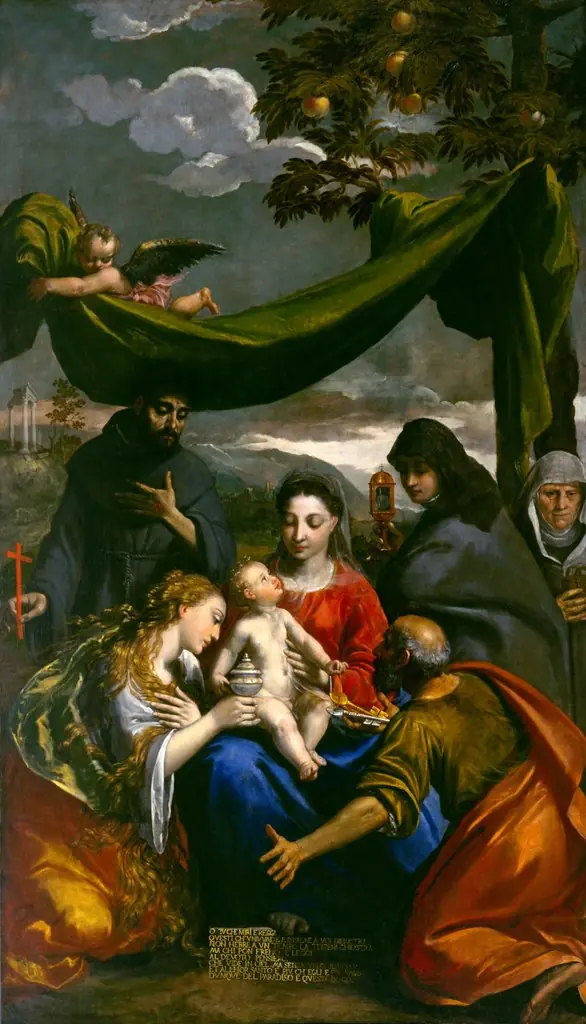 Virgin and Child with Saints Mary Magdalene, Peter, Clare, Francis, and an Abbess
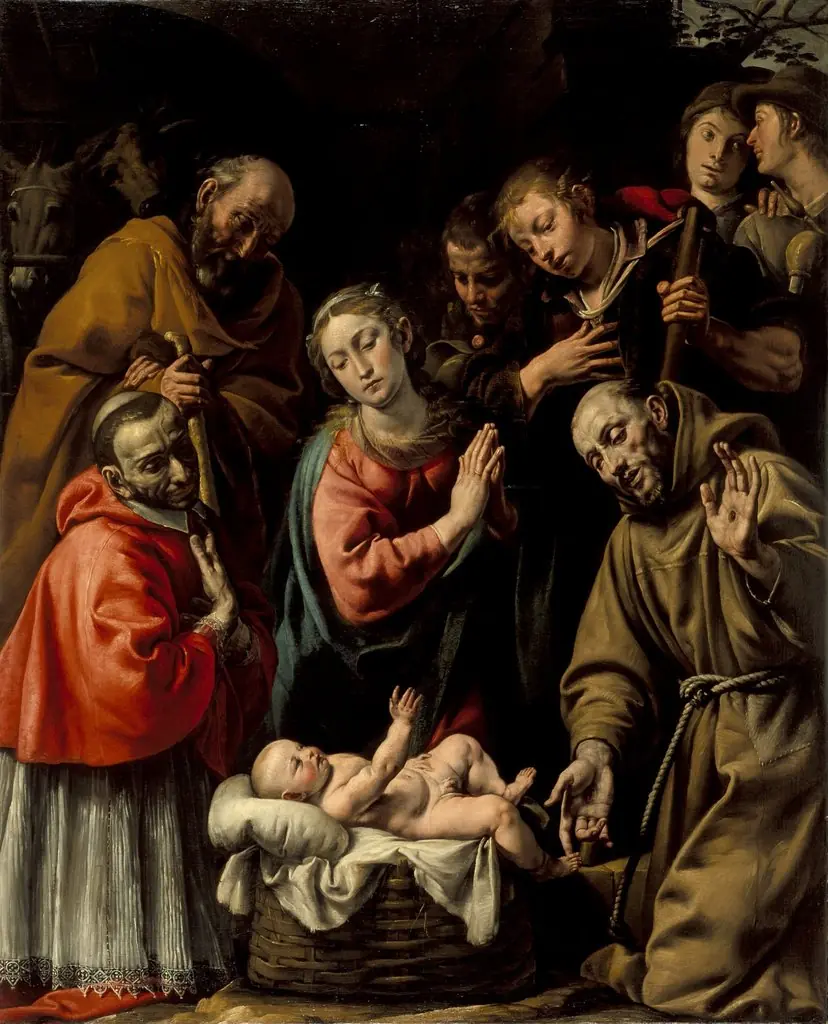 Adoration of the Shepherds with Saints Francis and Carlo Borromeo
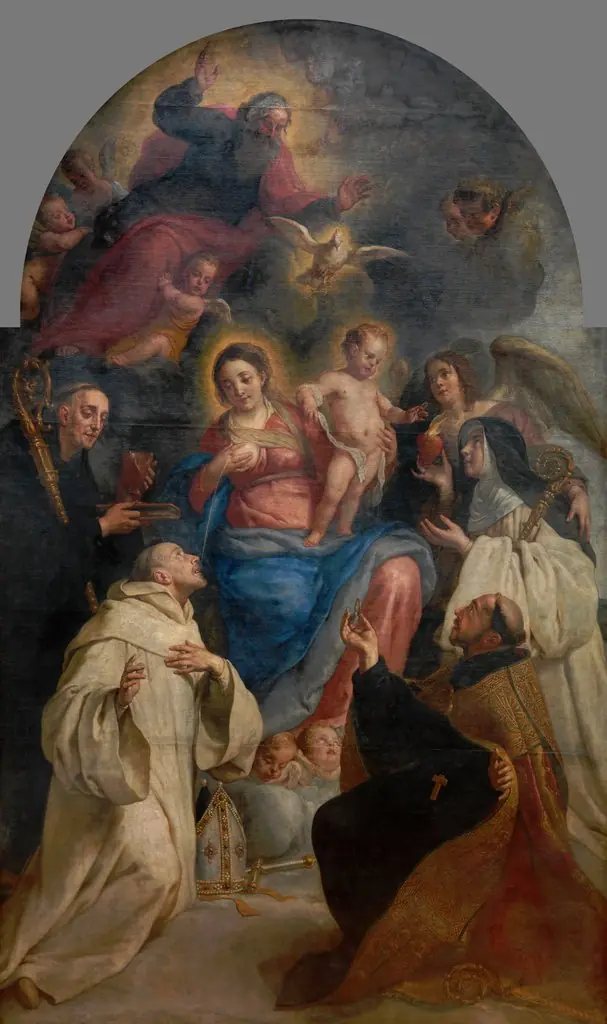 Lactatio of Saint Bernard of Clairvaux
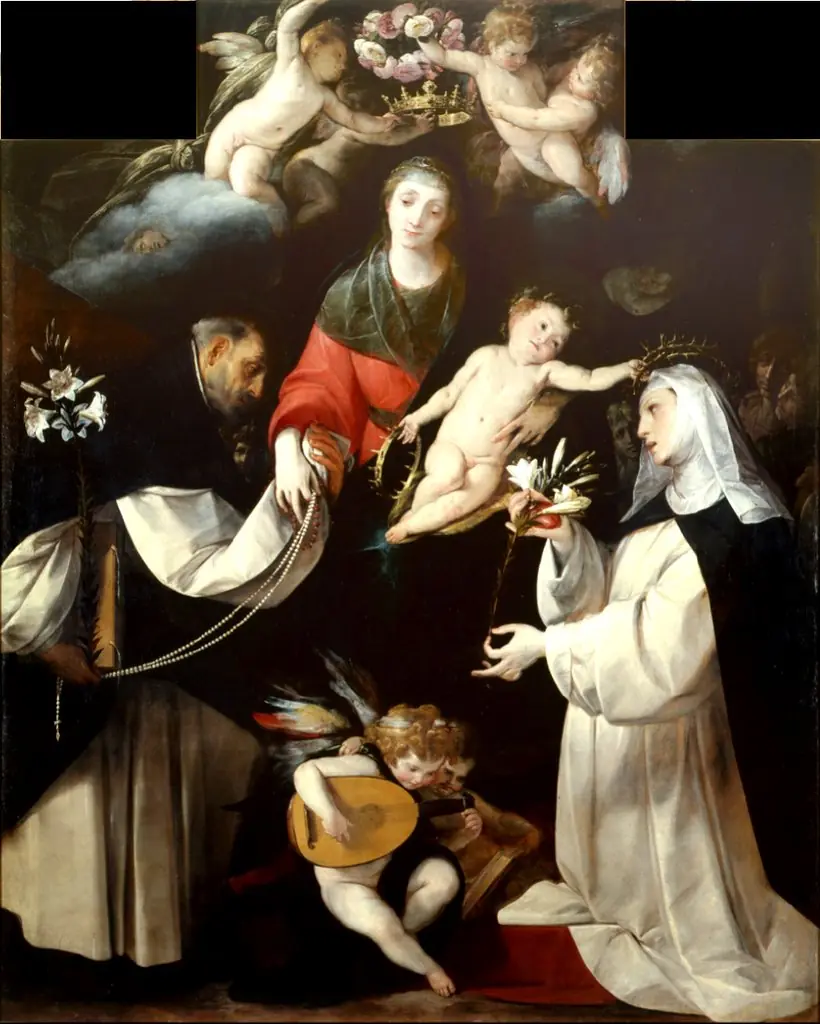
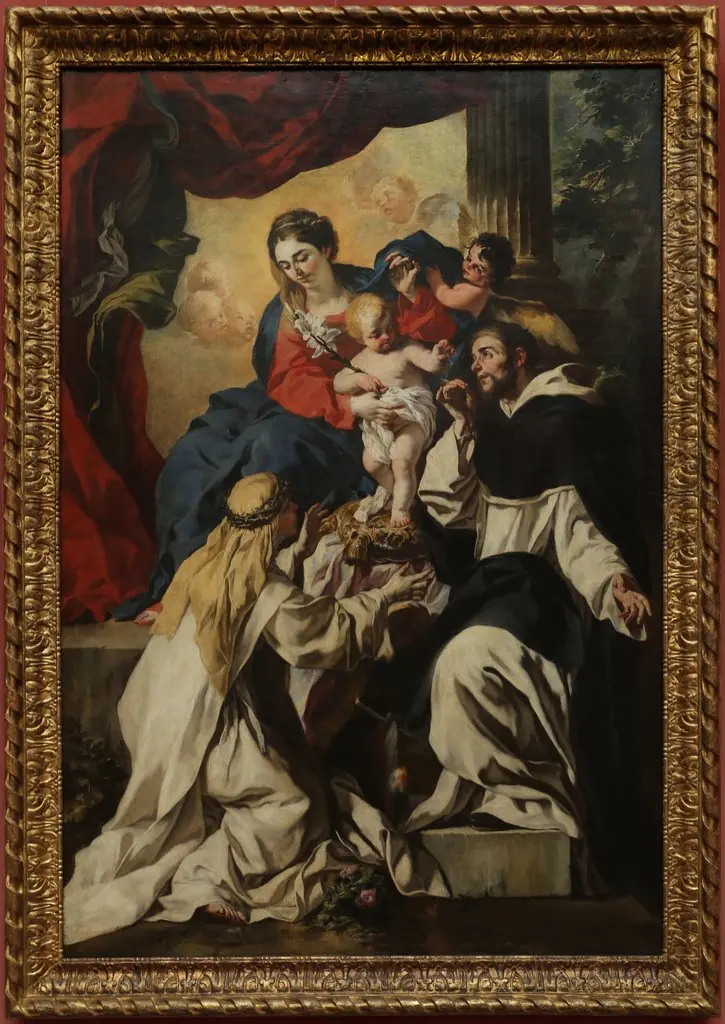 Die thronende Maria mit dem Kind, dem Heiligen Dominikus und der Heiligen Katharina von Siena (Rosenkranzmadonna)
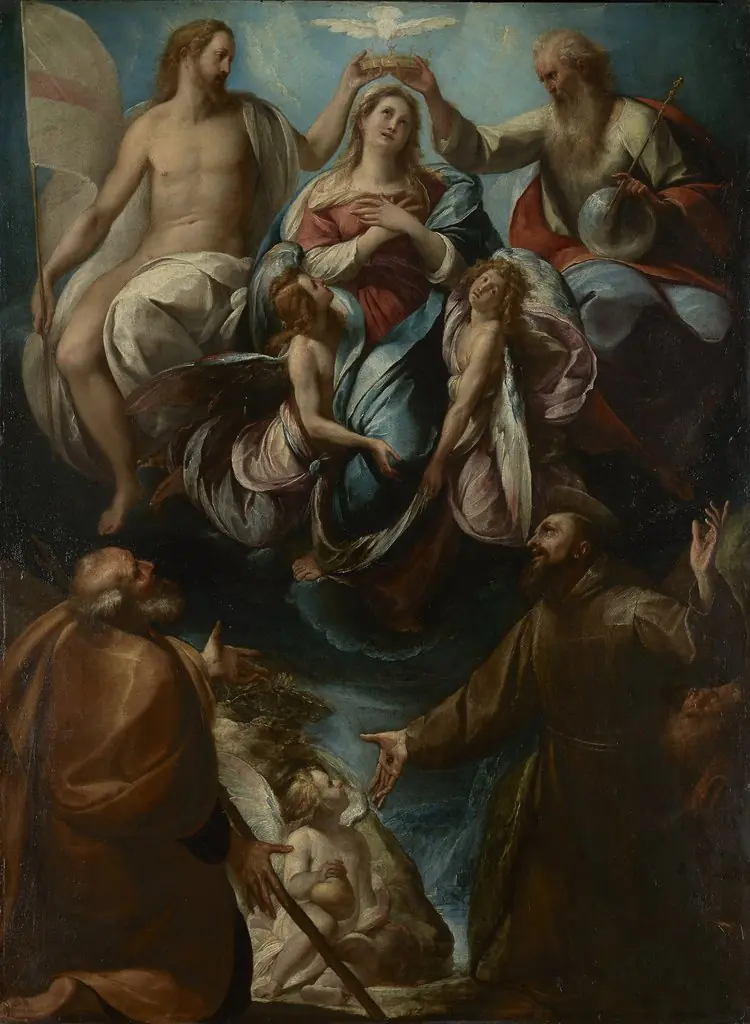 Coronation of the Virgin with Saints Joseph and Francis of Assisi
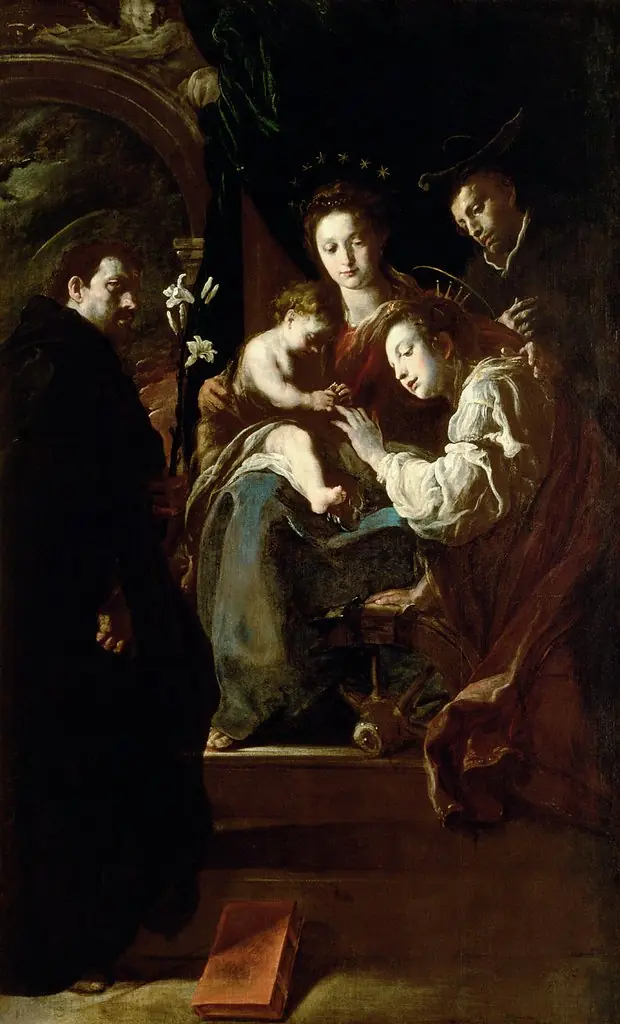 Virgin and Child with Mystical Betrothal of St. Catherine with Saints Dominic and Peter
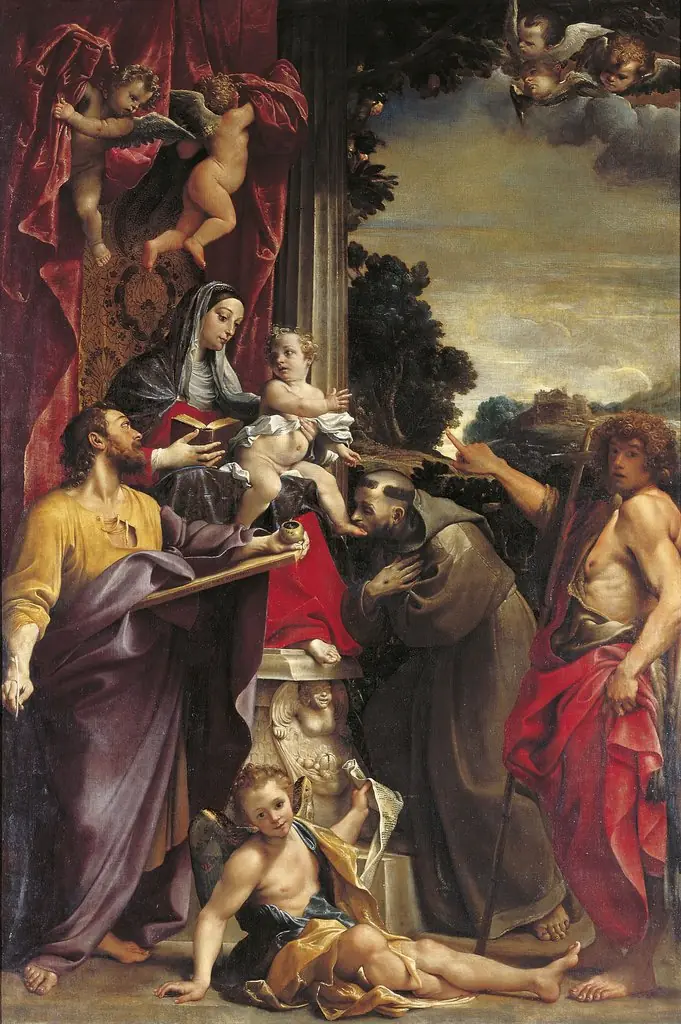 Madonna Enthroned with Saint Matthew
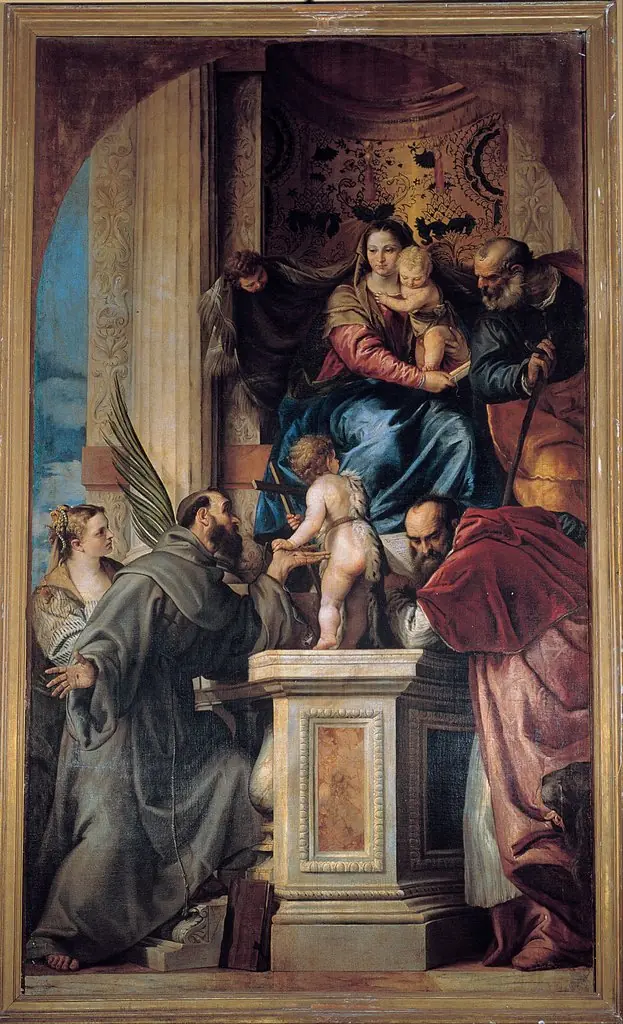 Madonna with the Child and the Holy Ones
- The Madonna of the Rosary