Artwork
David and Goliath
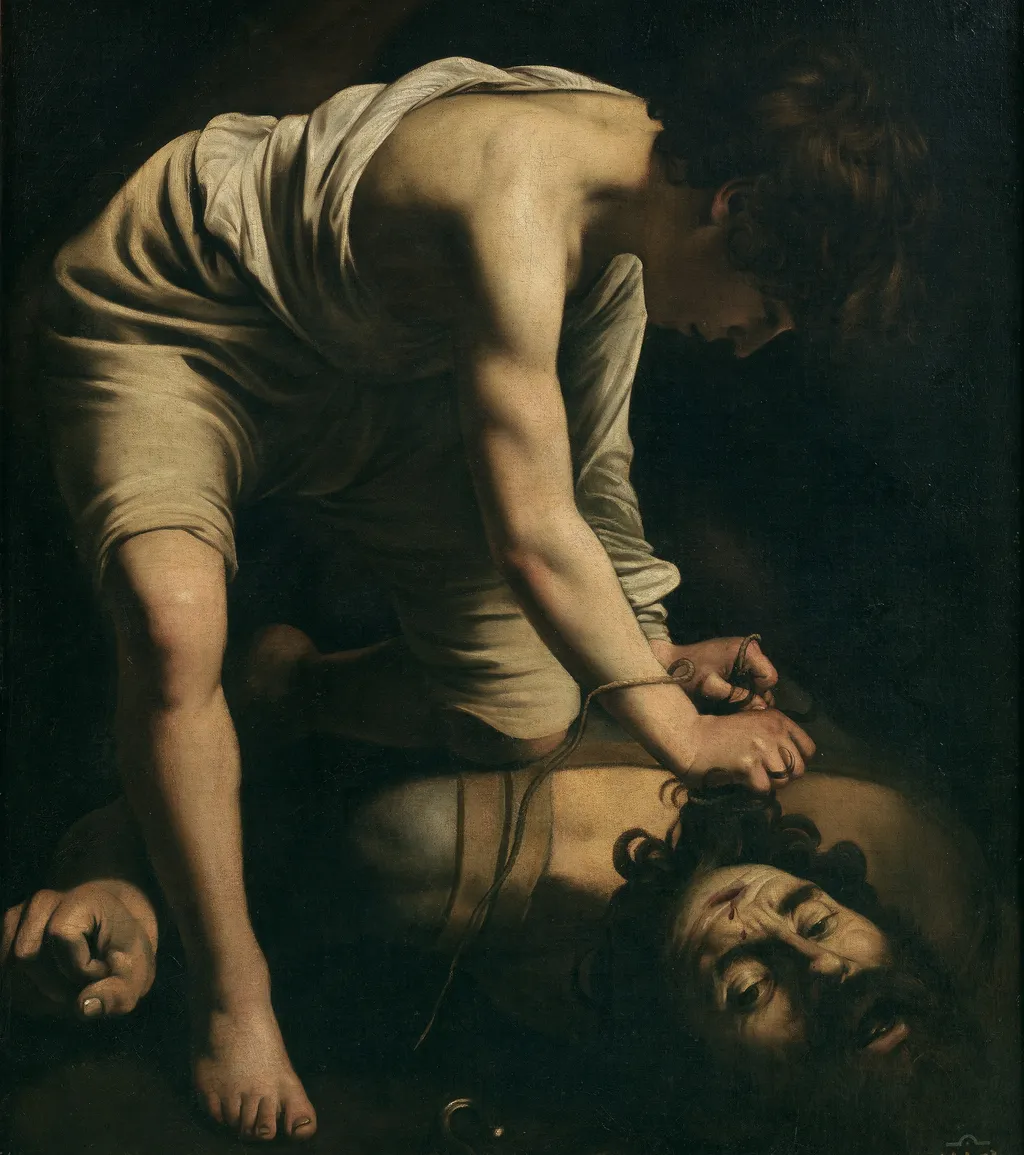
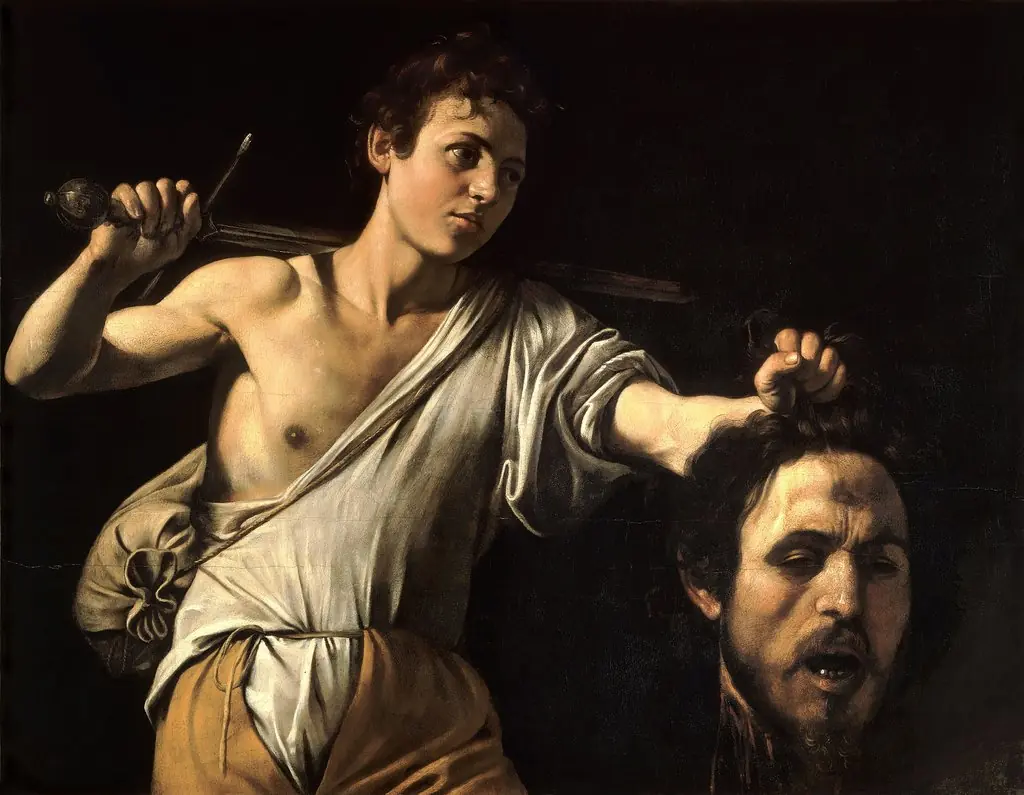
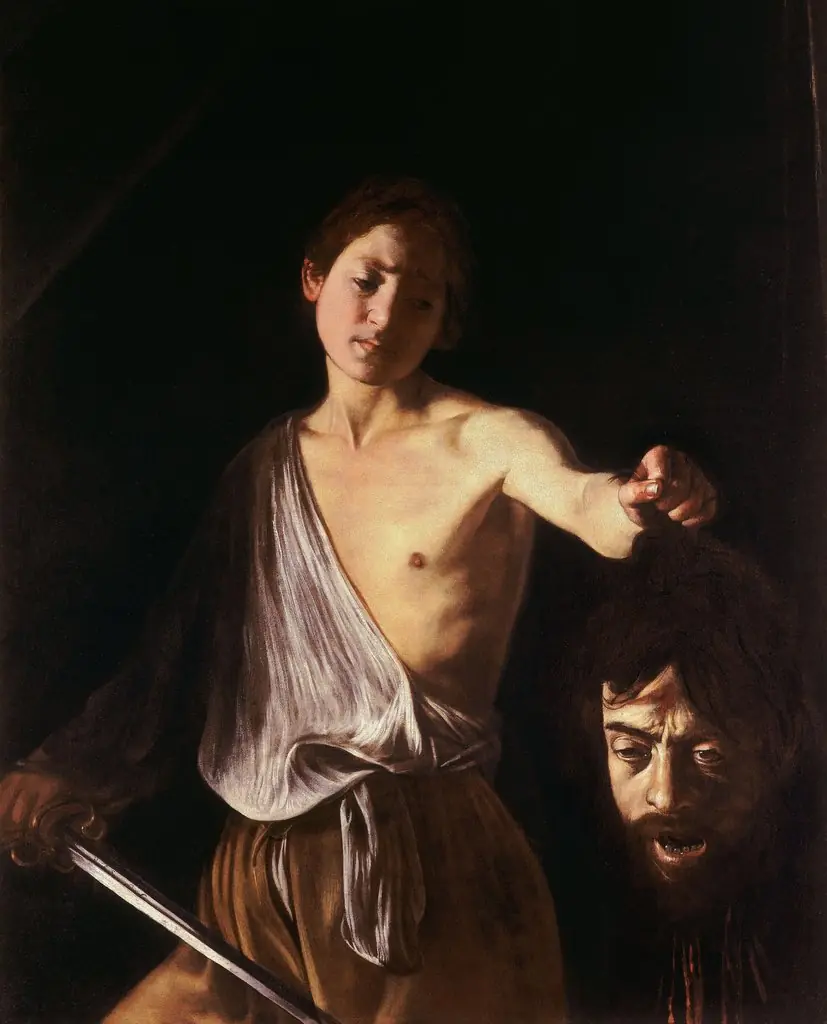
David and Goliath is an oil painting by the Baroque artist Caravaggio. It dates from 1600 and is held in the collection of the Museo del Prado.
About this work
Subject & Meaning
Scholars have also proposed that Goliath's features are a self-portrait of Caravaggio, identifying the artist with the defeated sinner burdened by guilt.
The painting depicts the biblical episode from the First Book of Samuel in which the young David, having felled the Philistine giant Goliath with a stone from his sling, decapitates him and grasps the severed head by the hair. Caravaggio shows David as a boy rather than as a heroic adult, kneeling almost casually on Goliath's torso, his face nearly hidden in shadow as his hands work in the giant's hair. A wound on Goliath's forehead marks where the sling stone struck him.
The scene is intensely private: there are no armies, no triumphal display, and no overt celebration of victory.
A defining feature is Caravaggio's use of chiaroscuro, which directs light onto David's leg, arm, and flank, onto Goliath's massive shoulders, and onto the severed head itself, while leaving the surroundings in darkness. X-ray analysis has revealed that Goliath's face was originally painted in wild-eyed, open-mouthed terror; this was later softened into a quieter, more agonized expression, possibly at the request of the patron. The moment chosen, David knotting the hair of the slain giant to display the trophy, has no direct biblical source and no known iconographic precedent, reinforcing the painting's originality.
Scholars have also proposed that Goliath's features are a self-portrait of Caravaggio, identifying the artist with the defeated sinner burdened by guilt.
Technique & Style
Caravaggio executed the work in oil paint on canvas, a support typical of his early Roman period. The painting measures approximately 110.4 cm high by 91.3 cm wide. He employed a strong chiaroscuro, illuminating David’s leg, arm and flank, the massive shoulders of Goliath and the severed head, while the remainder of the scene recedes into deep shadow, a hallmark of his Baroque tenebrism.
Initially, Goliath’s face was rendered with a wild‑eyed, open‑mouthed terror; Caravaggio later softened the expression to a more subdued, agonizing look. The paint layer is in good condition; a September 2023 cleaning of aged varnishes at the Prado restored the work’s clarity without major intervention. Stylistically, the piece emphasizes a private, intimate moment rather than a victorious tableau, focusing on David’s hands in the enemy’s hair and his concealed face.
History & Provenance
Painted circa 1600 during Caravaggio's residence in the household of Cardinal Francesco Maria del Monte, this work depicts David fastening Goliath's hair. X-ray analysis reveals the artist initially painted Goliath with a terrified, open-mouthed expression before altering it to a more subdued, agonizing visage, possibly at the patron's request. The painting's early history remains uncertain, with proposed patrons including Juan Bautista Crescenzi or the Count of Villamediana, though it is not documented in Spanish royal collections until 1781 under King Charles III at the Buen Retiro Palace.
It entered the Museo del Prado's holdings in 1819, transferred by Queen Maria Isabella of Braganza, wife of Ferdinand VII. While attribution was debated in the nineteenth century, technical studies conducted in 1991 confirmed Caravaggio's authorship.
The painting is held in the Museo del Prado in Madrid, where it has been part of the collection since the museum's inauguration in 1819. Prior to this, the work was documented in the Spanish royal collections at the Buen Retiro Palace in 1781 during the reign of Charles III, and earlier inventories place it there by 1794. It was transferred to the museum by Queen Maria Isabella of Braganza, wife of Ferdinand VII.
While its earlier trajectory remains uncertain, the work was present in Spain by the seventeenth century, evidenced by contemporary copies. The painting underwent restoration in September 2023 to remove aged varnishes and was reinstalled in a different gallery in December of that year.
Context
The early Baroque canvas David and Goliath, painted circa 1600 while Caravaggio served Cardinal Francesco Maria del Monte, entered the Spanish court collection and was installed in the Museo del Prado by the mid‑19th century‑3). Contemporary accounts record copies made in Spain and a 1794 inventory, but attribution was contested until Mina Gregori’s 1991 X‑ray study confirmed Caravaggio’s hand. Scholars note the work’s shift from melodramatic Goliath to a quietly focused David, the dramatic chiaroscuro that isolates the figures, and the possible self‑portrait of the artist in Goliath’s head.
Its stylistic traits place it among Caravaggio’s formative pieces, influencing later treatments of the biblical theme across Europe.
Legacy
The painting’s arrival in Spain shortly after its creation catalyzed a wave of local imitations and copies, embedding Caravaggio’s composition within the Spanish Baroque tradition. By the late eighteenth century the work was recorded in the royal collections at the Buen Retiro palace, later entering the Museo del Prado in 1849, where it has remained a focal point of the collection. Nineteenth‑century critics initially doubted its autograph status, but radiographic analysis in 1991 confirmed Caravaggio’s hand, stabilizing its reputation as an original masterpiece.
The Prado’s 2023 restoration, focused on aged varnish removal, renewed appreciation of its subtle chiaroscuro and psychological intensity, reinforcing the painting’s enduring status as a touchstone of Baroque narrative painting.
Overview
Caravaggio's oil painting, David and Goliath, created around 1600, depicts the biblical hero triumphant over his defeated adversary. This work, sometimes referred to by alternative titles such as David with the Head of Goliath, is a significant example of the Italian Baroque master's early career. It is currently housed in the collection of the Museo del Prado in Madrid.
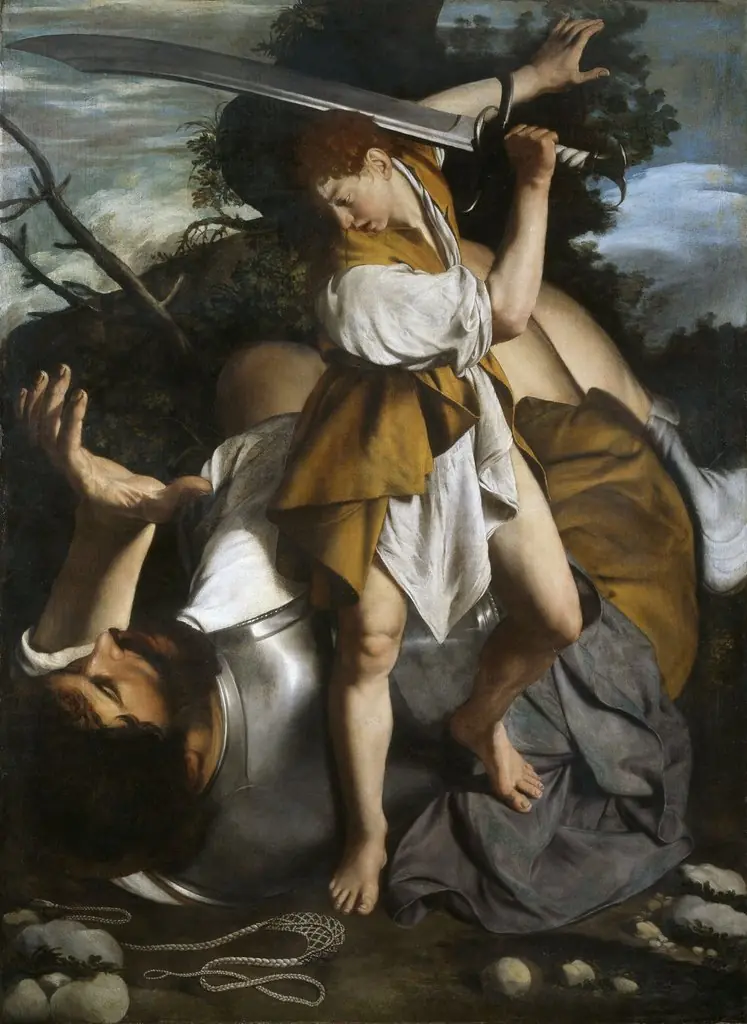
Own this work as a print
Artist & collection
Artist
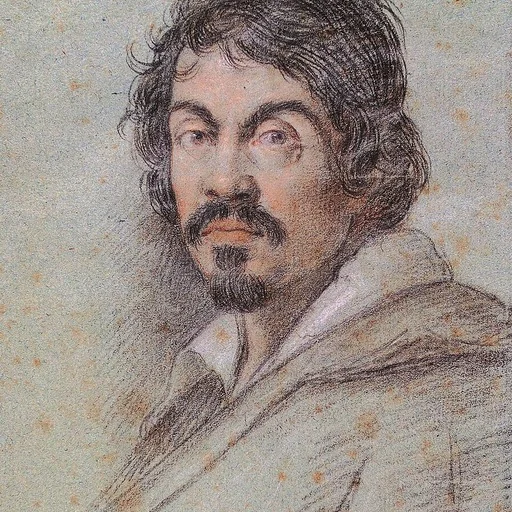
Michelangelo Merisi da Caravaggio (also Michele Angelo Merigi or Amerighi da Caravaggio; 29 September 1571 – 18 July 1610), known mononymously as Caravaggio, was an Italian painter active in Rome for most of his artistic life.

- David and Goliath
 David with the Head of Goliath
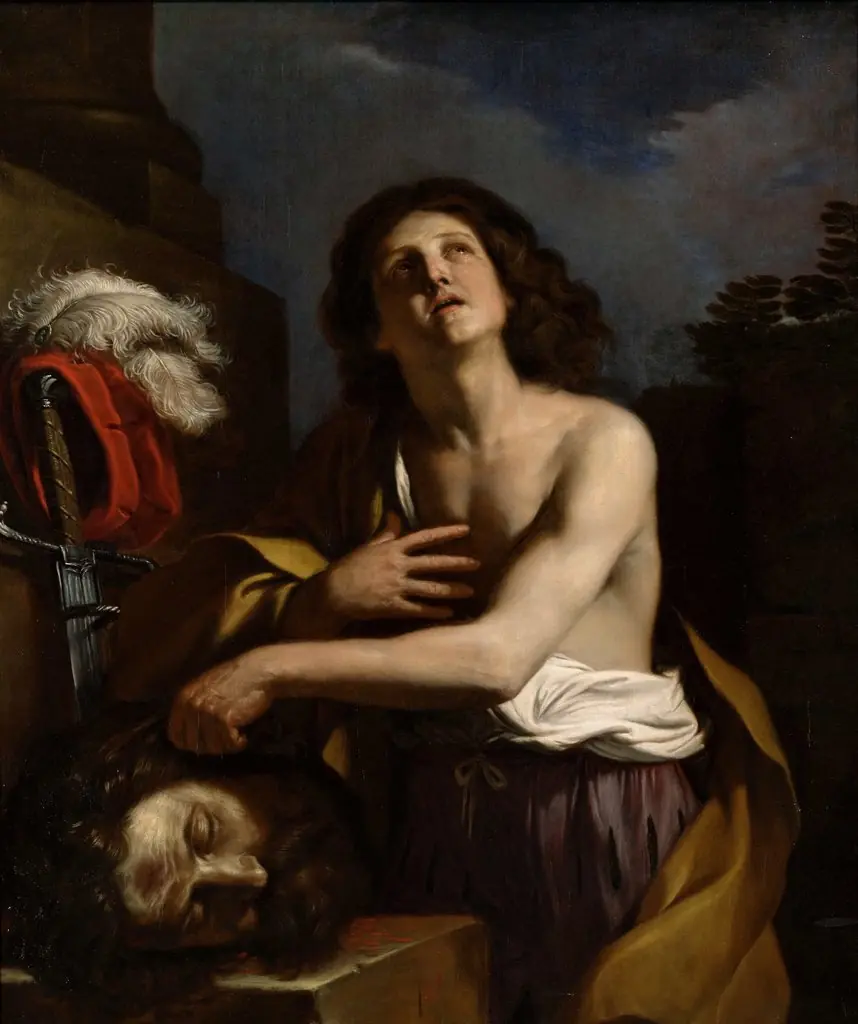 David with the Head of Goliath
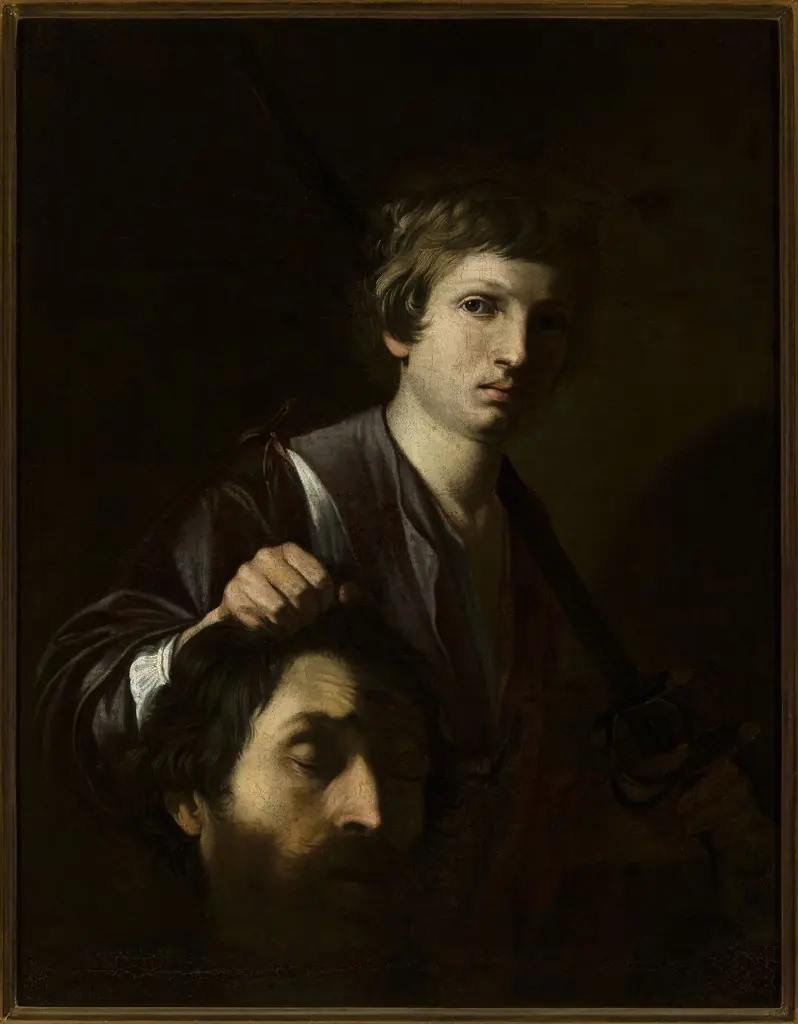 David with Goliath’s head
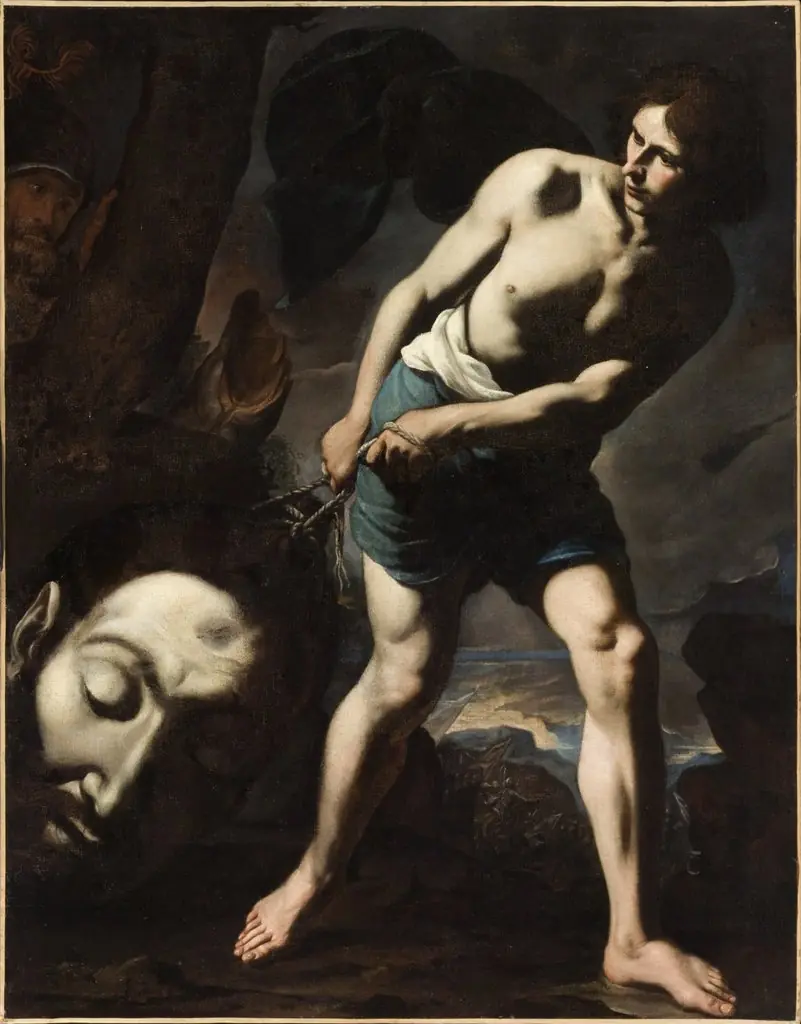 David with the Head of Goliath
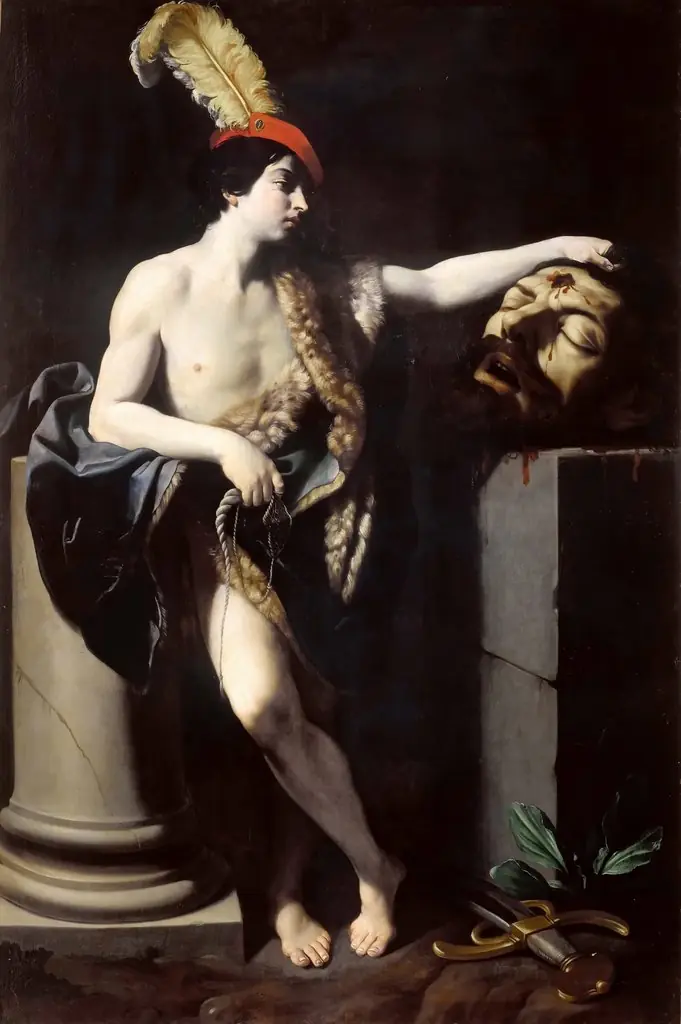 David with the Head of Goliath
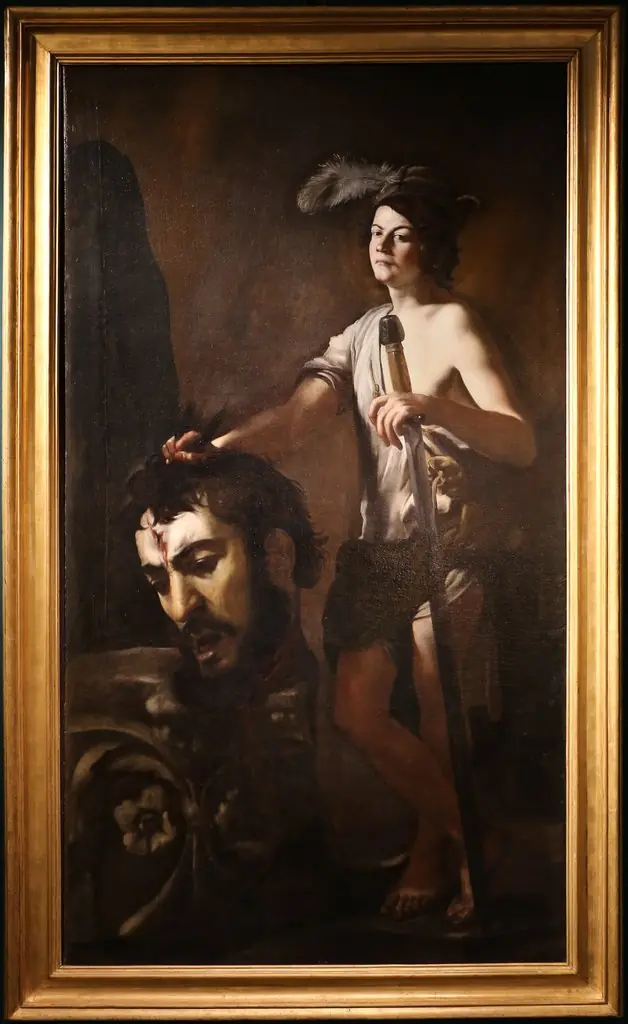 David with Goliath's head
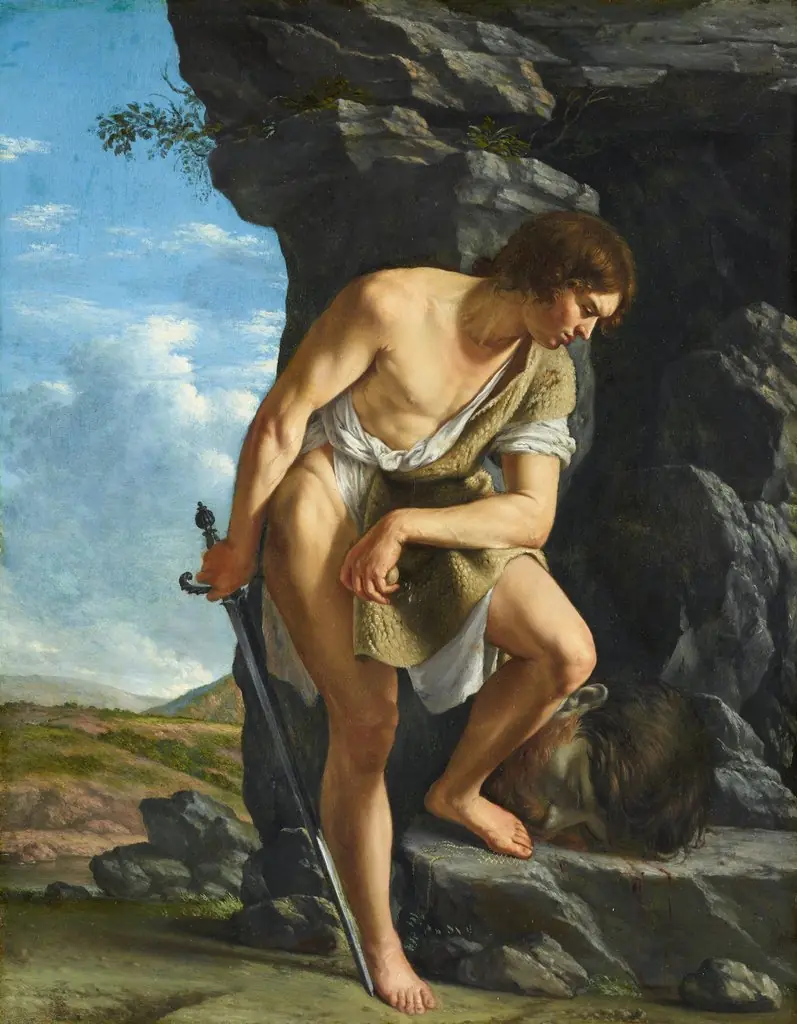 David Contemplating the Head of Goliath
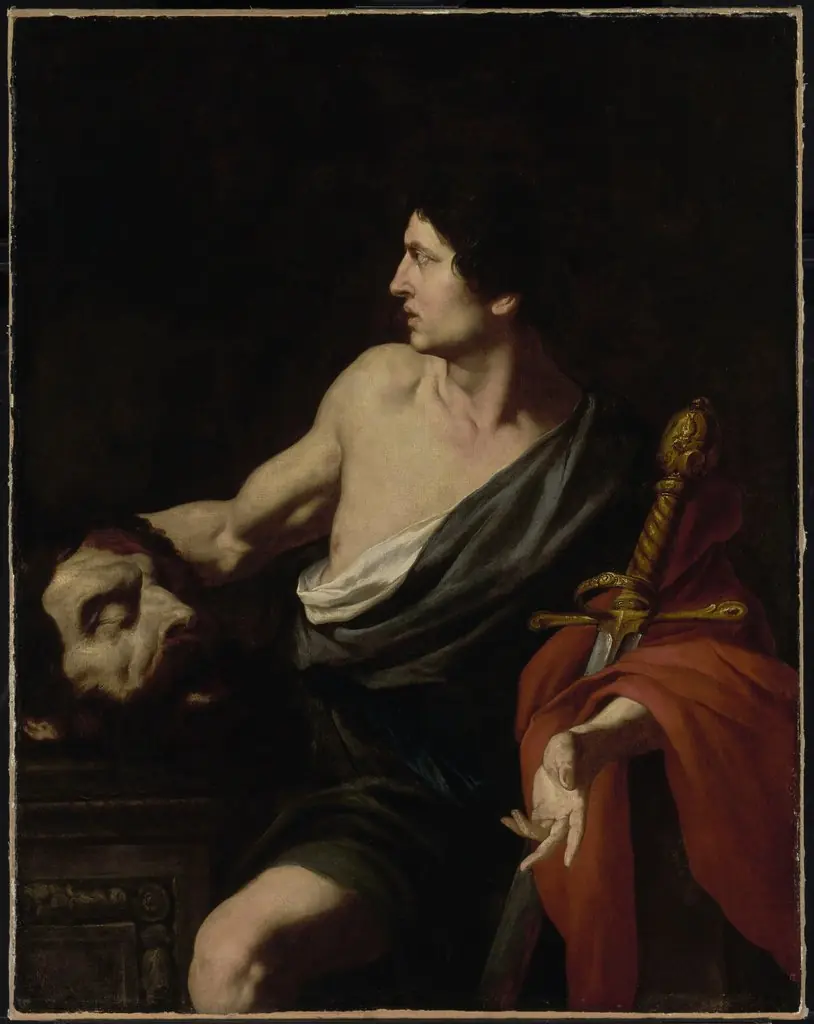 David with the Head of Goliath
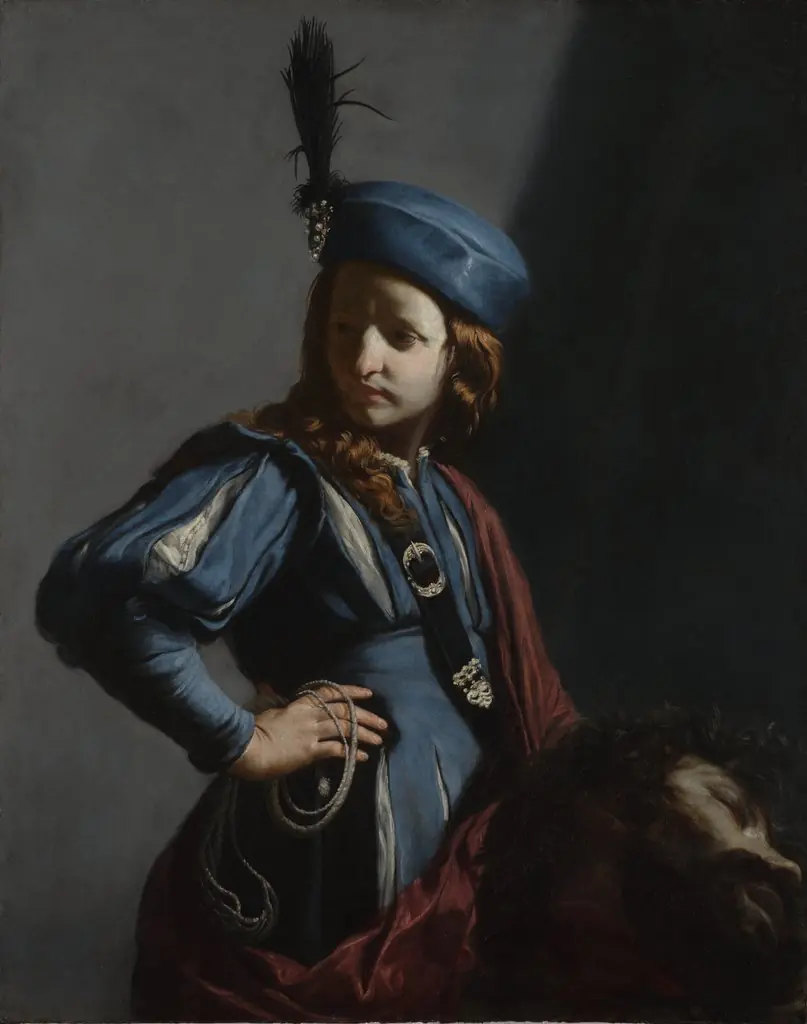 David with the Head of Goliath
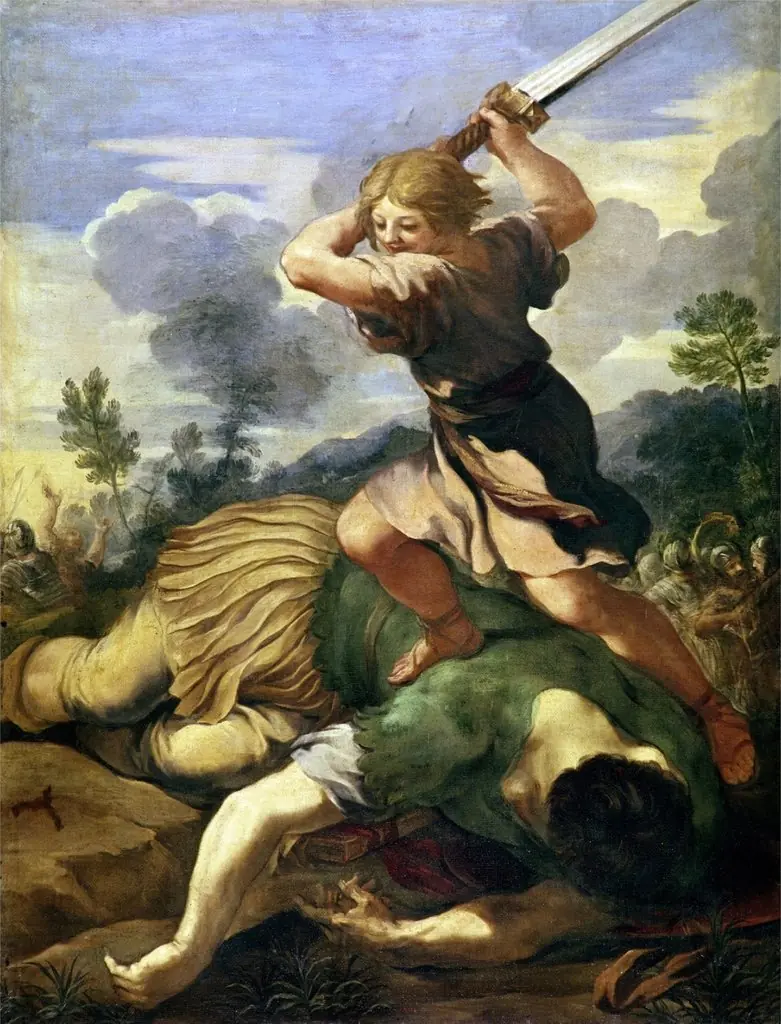 David killing Goliath