Artwork
The Denial of Saint Peter
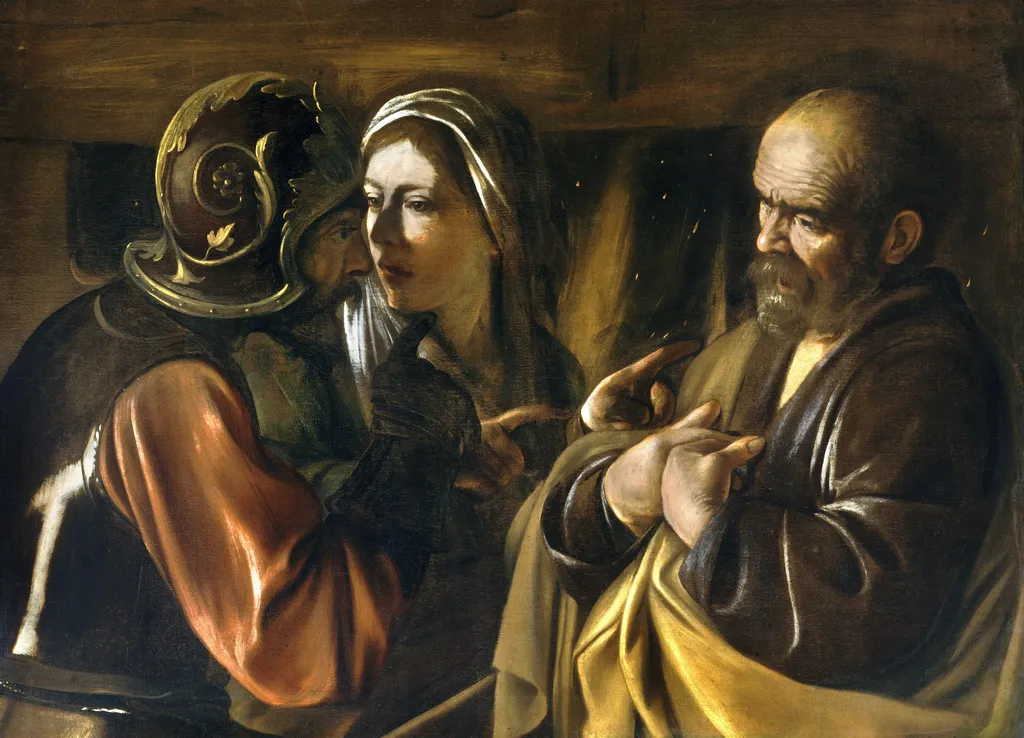
The Denial of Saint Peter is an oil painting by the Baroque artist Caravaggio. It dates from 1610 and is held in the collection of the Metropolitan Museum of Art.
About this work
Subject & Meaning
The painting depicts the biblical episode where the Apostle Peter denies knowing Jesus following Christ's arrest, a narrative found in all four Gospels.
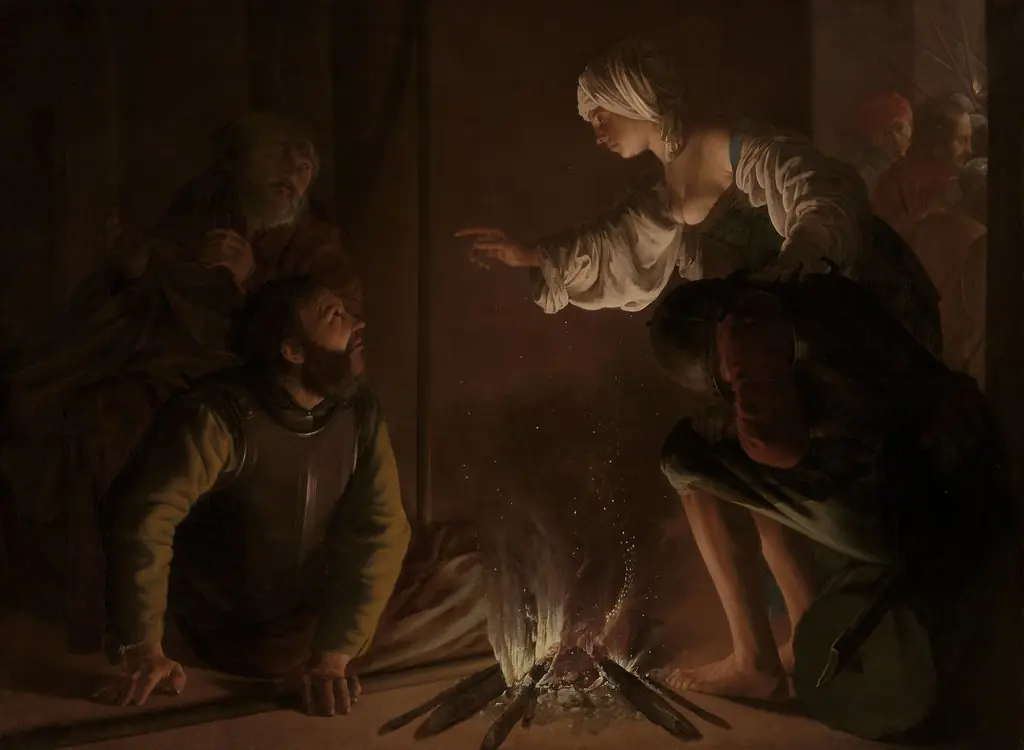
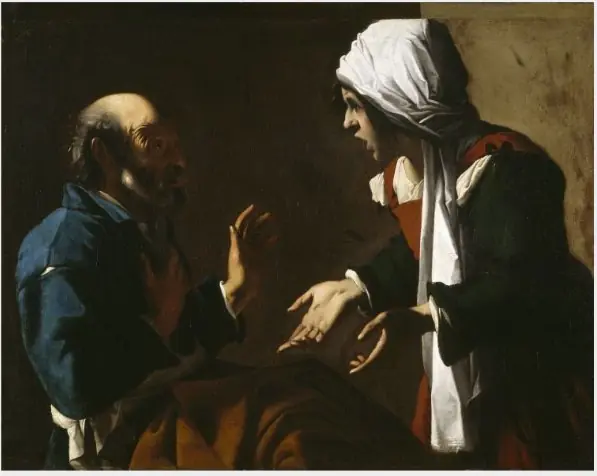
The painting depicts the biblical episode where the Apostle Peter denies knowing Jesus following Christ's arrest, a narrative found in all four Gospels. Caravaggio illustrates the moment of the third denial, focusing on three figures: a serving maid who accuses Peter, a soldier, and Peter himself. The composition symbolically condenses Peter's three separate denials into a single, intense interaction.
Peter is portrayed as an elderly man with open hands, gesturing to swear he is not a follower of the arrested Jesus. The scene is defined by dramatic nocturnal lighting, where a fire in the background illuminates the maid's face and hand while casting deep shadows. This use of light highlights the accusation and Peter's fearful reaction, emphasizing the psychological intensity of betrayal and the fulfillment of Christ's prophecy that Peter would deny him three times before the rooster crowed.
Technique & Style
Executed circa 1610, this work is an oil painting on canvas measuring approximately 94 by 125.4 centimeters. The composition features three figures cropped closely together and largely enveloped in shadow, a technique used to obscure awkward physical details while heightening psychological intensity. The handling of the paint is characterized by broad, rapid brushstrokes and an unfocused quality, attributes often linked to the artist's physical condition following a violent attack in late 1609.
Dramatic nocturnal illumination, likely emanating from a roughly rendered fireplace with visible sparks in the background, serves as the primary light source. This chiaroscuro effect highlights the accusing gesture of a female figure and the defensive posture of Saint Peter, whose hands are raised to his chest. The stylistic approach shares significant similarities with the artist's contemporary Martyrdom of Saint Ursula, particularly in its use of light and emotional gravity.
History & Provenance
Caravaggio likely painted The Denial of Saint Peter in Naples around the summer of 1610, making it one of his final works alongside The Martyrdom of Saint Ursula. No original commission is documented. The earliest record dates to May 3, 1613, when engraver Luca Ciamberlano offered the painting, valued at 240 scudi, to Alessandro Albini to settle debts owed to painter Guido Reni.
By 1624, the work appeared in Cardinal Paolo Savelli's inventory at his Ariccia palace. It passed to his brother Federico, then nephew Cardinal Fabrizio, and was likely sold around 1650. A possibly separate version was documented at Naples' Certosa di San Martino by 1655.
The present canvas was purchased on the Neapolitan market by Vincenzo Imparato Caracciello as an anonymous work after WWII. Following restoration (1959–1964), Roberto Longhi attributed it to Caravaggio. It passed to Caracciello's daughter Elena, was sold to Jan Dik in Switzerland between 1964 and 1970, then to Herman Shickman of New York, who sold it to the Metropolitan Museum of Art in 1997.
The Denial of Saint Peter is currently housed in the Metropolitan Museum of Art in New York City, having entered the collection in 1997. The work was acquired from the collection of Herman Shickman, who had previously purchased it from Jan Dik of Lausanne. Prior to this modern provenance, the painting was owned by Princess Elena Imparato Caracciolo of Naples until sometime between 1964 and 1970.
Historical records trace the artwork back to 1613, when it was used to partially settle a debt owed to Guido Reni, and subsequently to the inventory of Cardinal Paolo Savelli in 1624. The painting was exhibited in the show Bodies and Shadows: Caravaggio and his European followers. Although some sources describe the 1997 transfer as a donation, others specify it as a sale to the museum.
Legacy
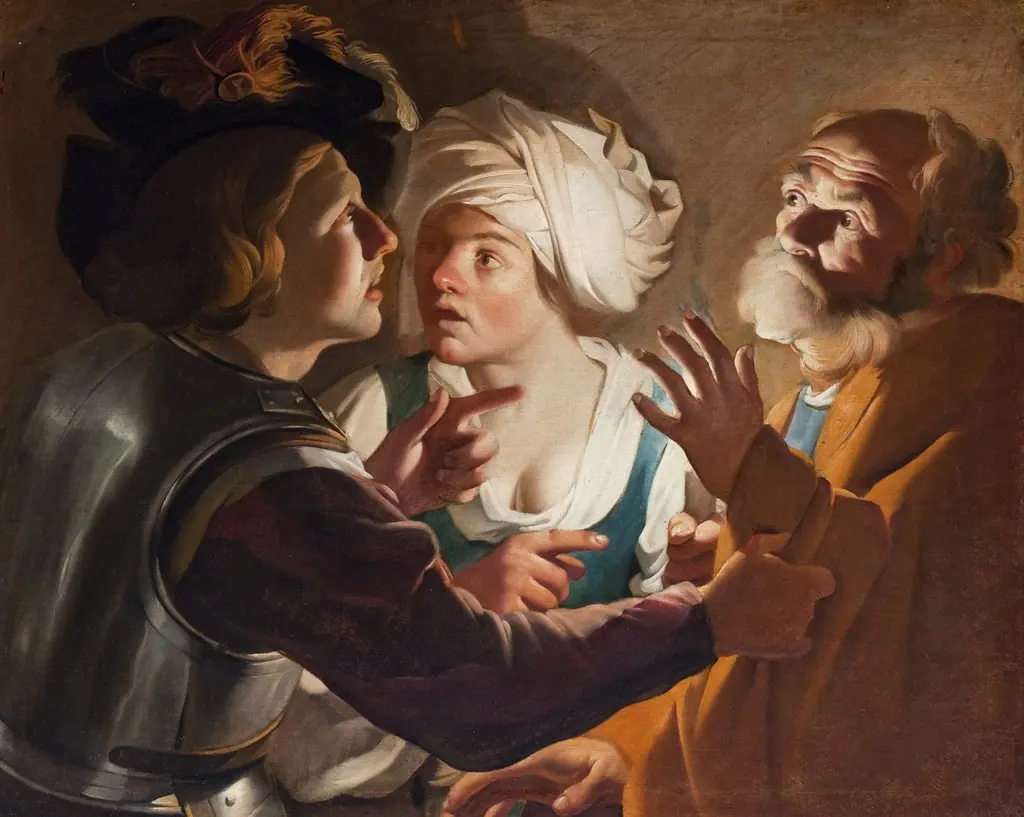
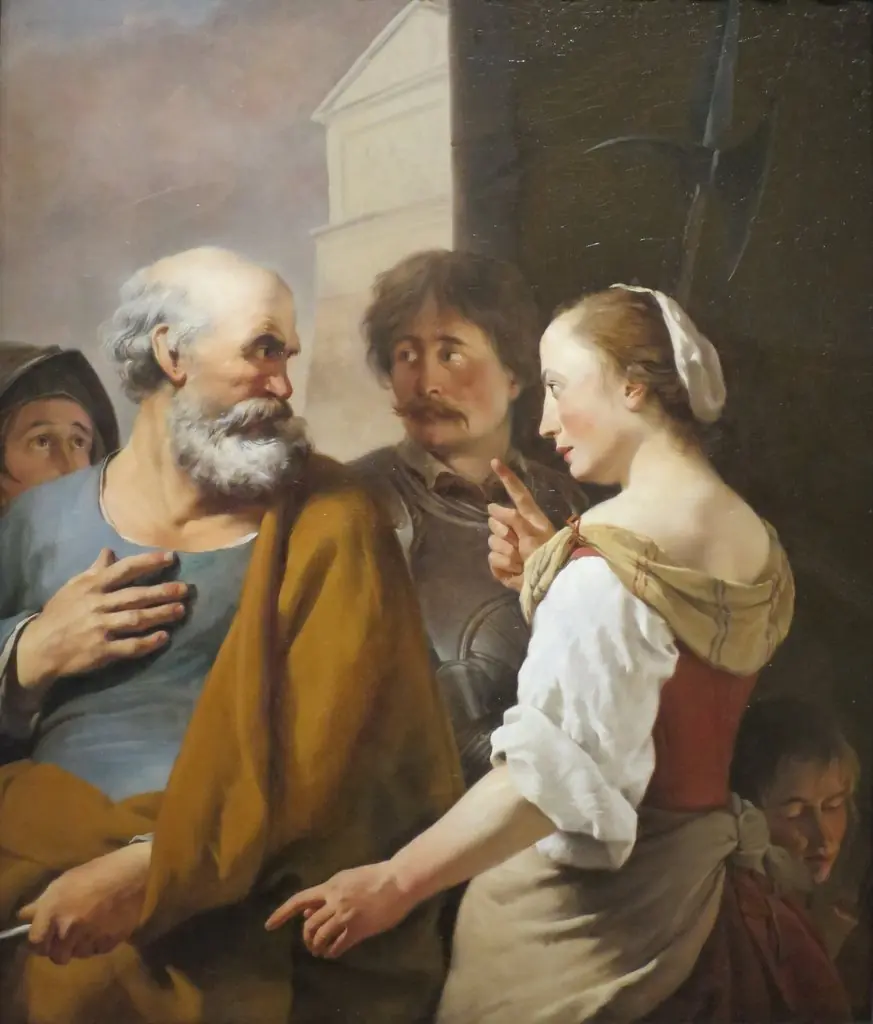
The Denial of Saint Peter exerted immediate influence on Roman and Neapolitan artists shortly after its completion. Its impact is evident in a work by José de Ribera dated circa 1613–15 and inspired at least two autograph paintings by Lionello Spada following his return to Bologna in 1614. Additionally, Battistello Caracciolo utilized a similar helmet motif from the composition in his 1615 Liberation of Saint Peter, while also creating a now-lost copy of the work.
Historically praised by Bernardo de' Dominici in 1742 as a miracle of art triumphing over nearby works, the painting's modern reputation was solidified when Roberto Longhi attributed it to Caravaggio following restoration between 1959 and 1964. In contemporary culture, the image gained renewed visibility through its appearance in a 2014 episode of The Walking Dead, although its presence in the show's setting generated confusion regarding its actual location versus a similar work in Atlanta.
Overview
Caravaggio's oil painting, The Denial of Saint Peter, completed around 1610, captures a pivotal moment from the New Testament. The work depicts the Apostle Peter's three-fold denial of Jesus following his arrest, a scene charged with human frailty and spiritual consequence. This significant Baroque canvas is presently housed in the collection of the Metropolitan Museum of Art in New York City.
Own this work as a print
Artist & collection
Artist
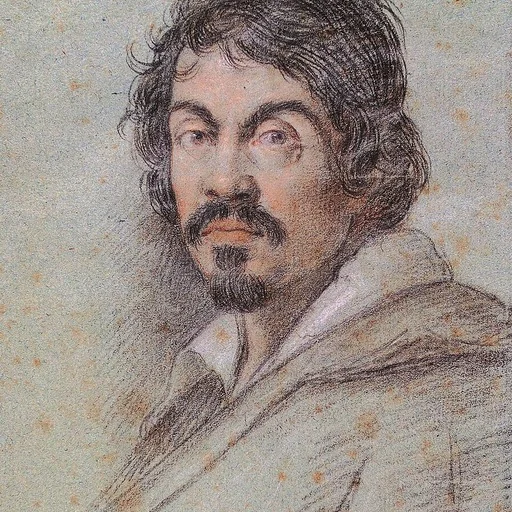
Michelangelo Merisi da Caravaggio (also Michele Angelo Merigi or Amerighi da Caravaggio; 29 September 1571 – 18 July 1610), known mononymously as Caravaggio, was an Italian painter active in Rome for most of his artistic life.

 Studied in the Caravaggio & Baroque course