Artwork
Rape of Europa
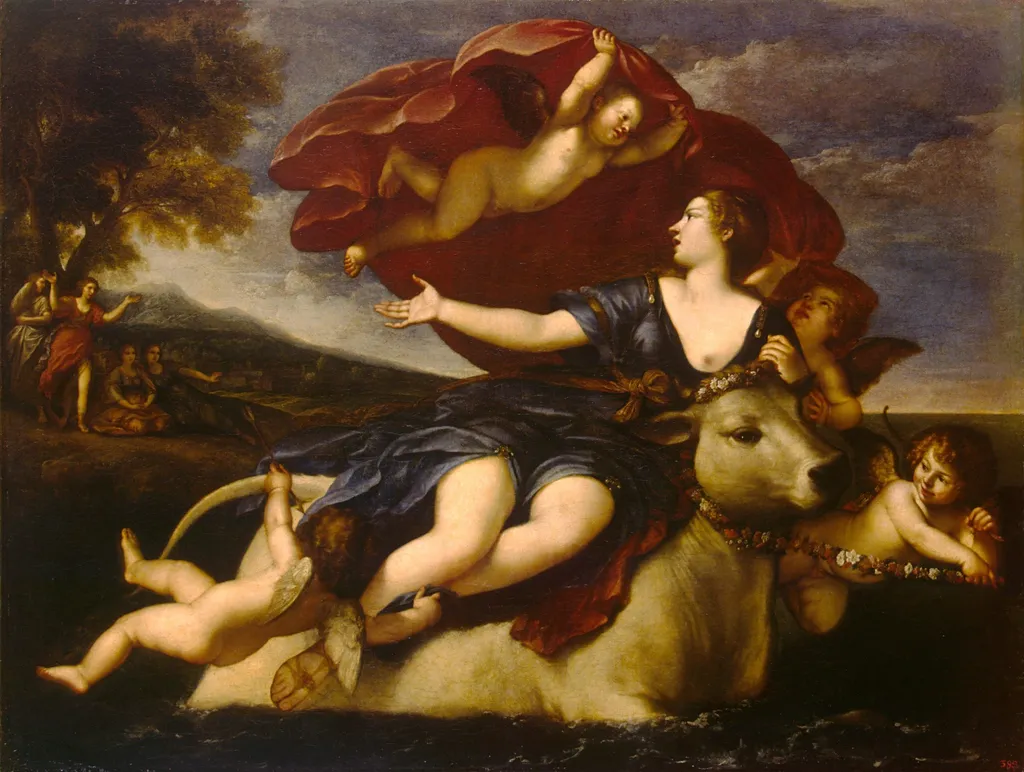
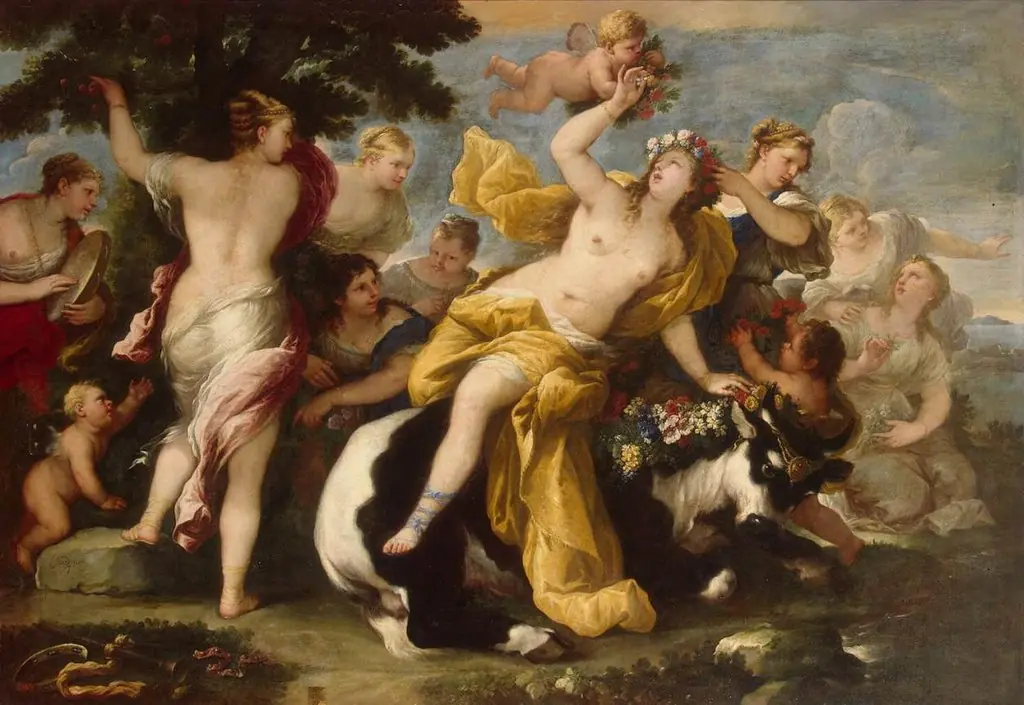
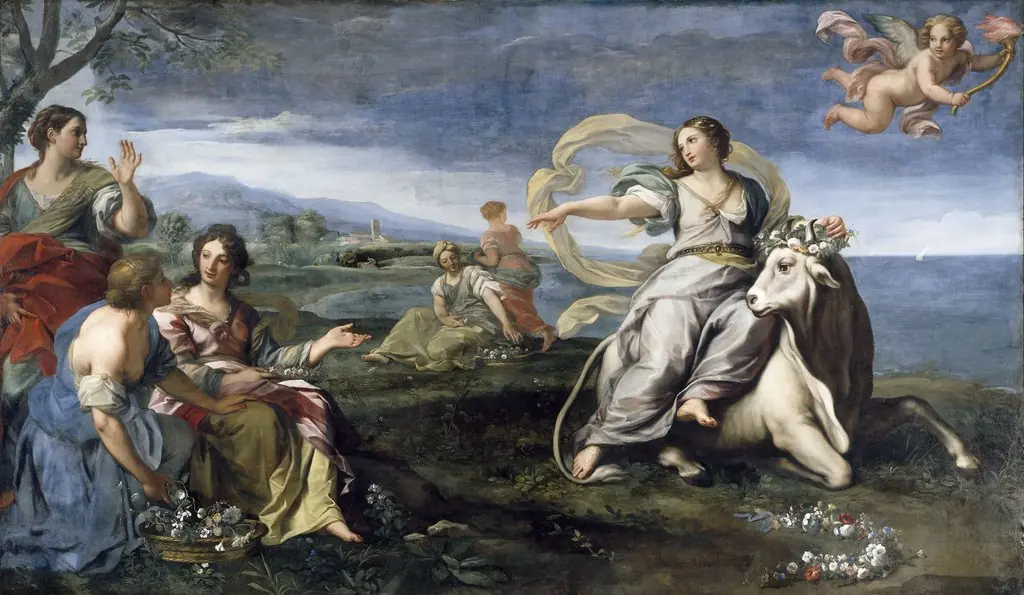
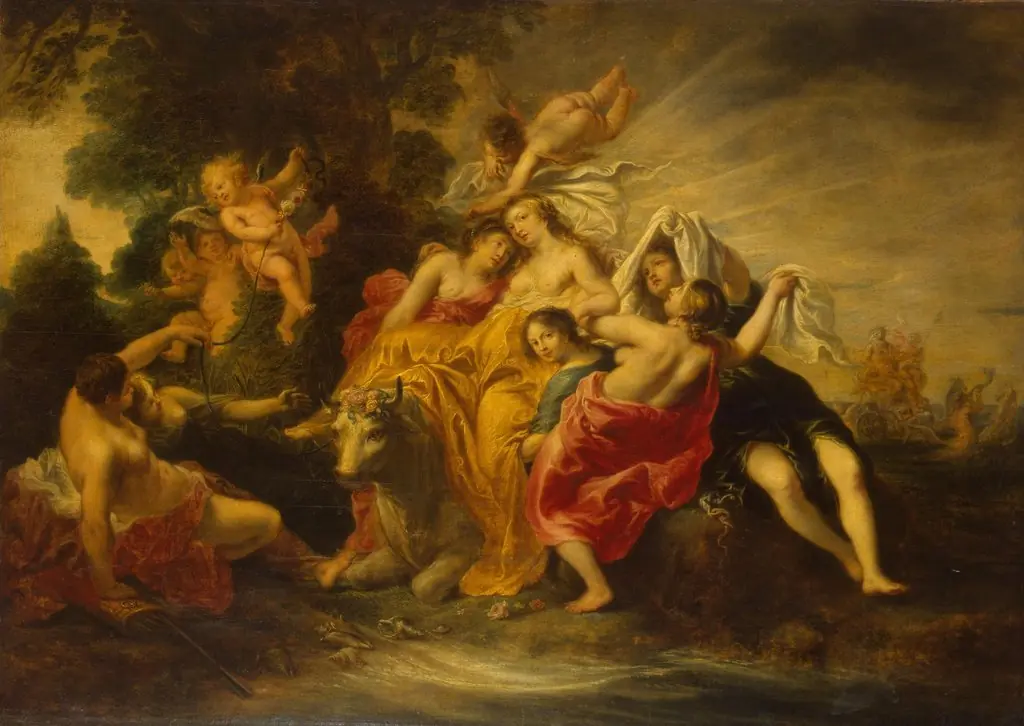
Rape of Europa is an oil painting by the Early Baroque Italian artist Francesco Albani. It dates from 1642 and is held in the collection of the Hermitage Museum.
About this work
Overview
Measuring 170 by 224 centimeters, the work depicts the mythological abduction of the Phoenician princess Europa by Jupiter in the form of a bull.
The Rape of Europa is an oil on canvas painting by the Italian Baroque artist Francesco Albani, dated to 1642. Measuring 170 by 224 centimeters, the work depicts the mythological abduction of the Phoenician princess Europa by Jupiter in the form of a bull. Currently held in the Hermitage Museum as part of the collection of Heinrich von Brühl, the painting exemplifies the idyllic and classicizing mythological style for which Albani became renowned. The composition reflects the broader Bolognese classicism movement and demonstrates the artist's successful adaptation of Annibale Carracci's idealizing principles into intimate, lyrical narratives that appealed greatly to European collectors.
Subject & Meaning
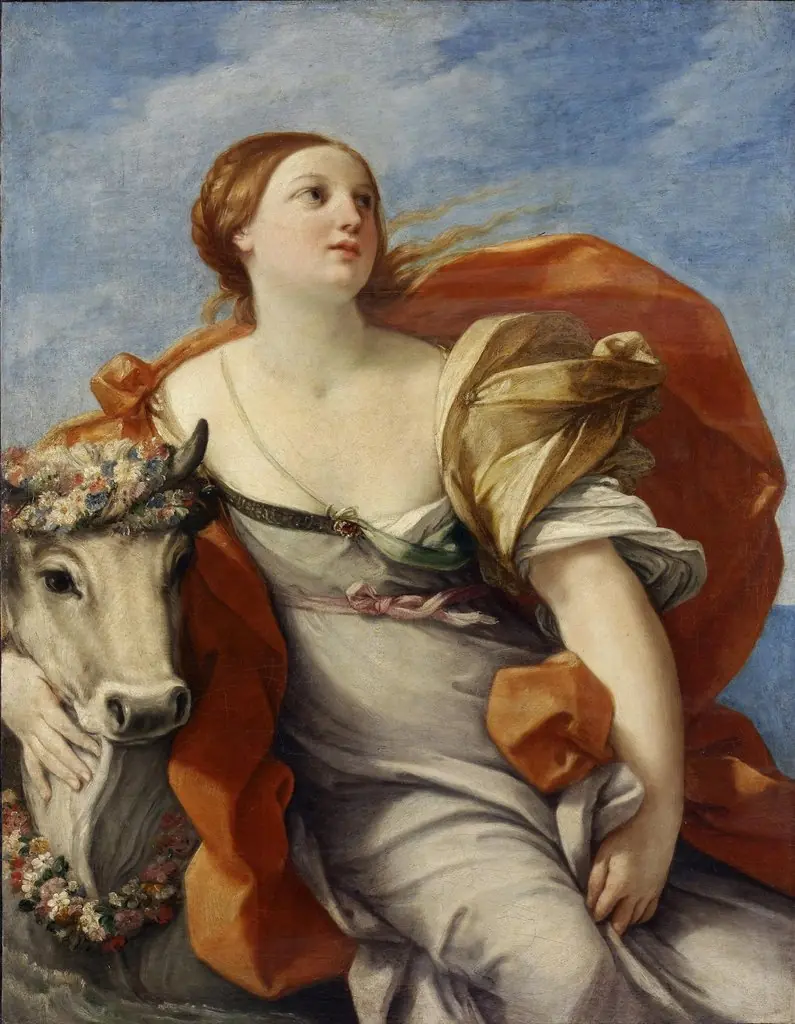
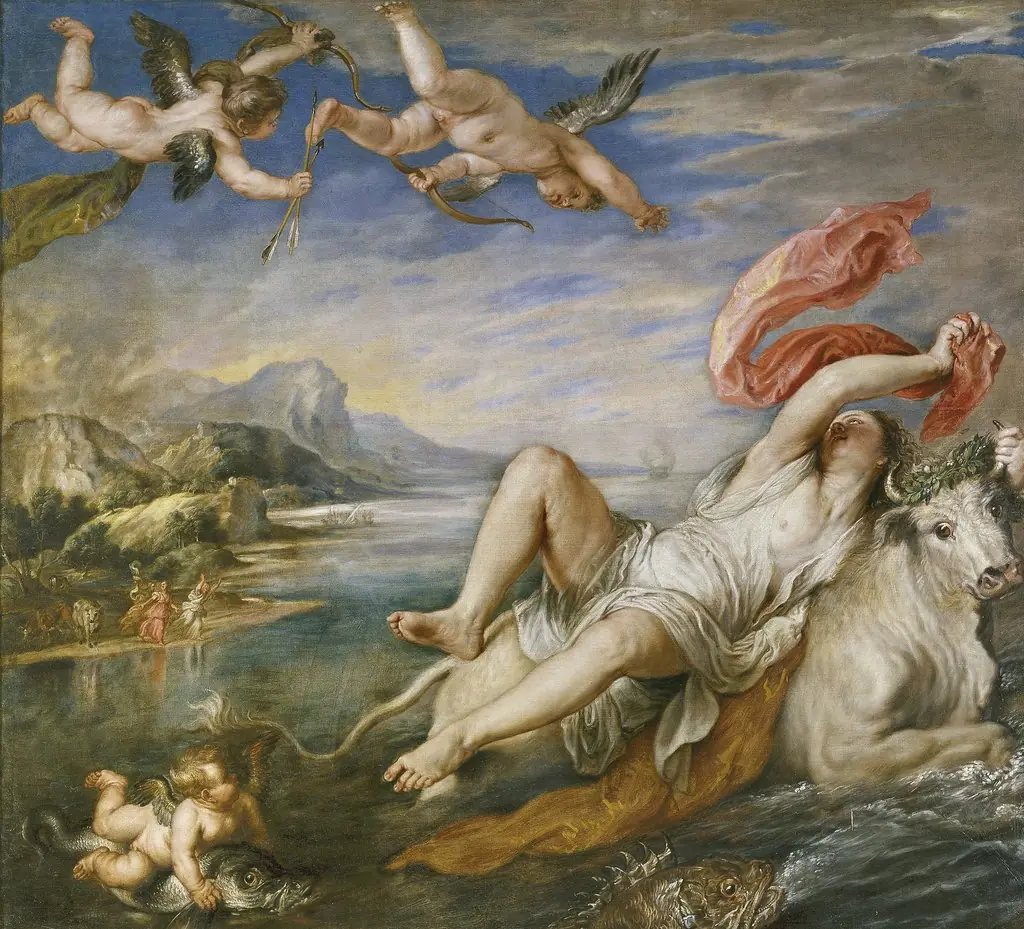
The painting illustrates an episode from Greek mythology, specifically the abduction of Europa, daughter of the king of Tyre, as recounted by the Latin poet Ovid in his Metamorphoses. Jupiter, having transformed himself into a beautiful white bull to seduce the princess, carries her across the sea to the island of Crete. Europa, dressed in a long deep blue robe, is overwhelmed by the event and turns her gaze back toward her maidservants, who remain gathered on the wooded shore in the background. Four fluttering putti surround the couple, actively assisting the disguised god in his endeavor. One putto supports the princess, another holds the floral reins of the bull, a third grips the bull's horn, and a fourth holds aloft a billowing crimson cloth, a compositional device Albani frequently employed to emphasize movement and drama.
Technique & Style
Executed in oil on canvas, the painting demonstrates Albani's polished technique and his debt to the classicizing aesthetic of the Carracci. The palette is dominated by deep blues, rich reds, and creamy flesh tones, set against a turbulent gray sky. Strong contrasts of light and shadow model the figures, with the scene lit from the upper left to cast dramatic shadows across the composition. Albani applied smooth, polished brushwork to render the skin of the figures, while employing more textured handling in the drapery and the landscape elements. This refined approach to mythological painting, characterized by graceful attitudes and sweet facial expressions, reflects Albani's study of Antonio da Correggio and his assimilation of Annibale Carracci's idealizing style, moving away from the dramatic manner of his earliest master, Ludovico Carracci.
History & Provenance
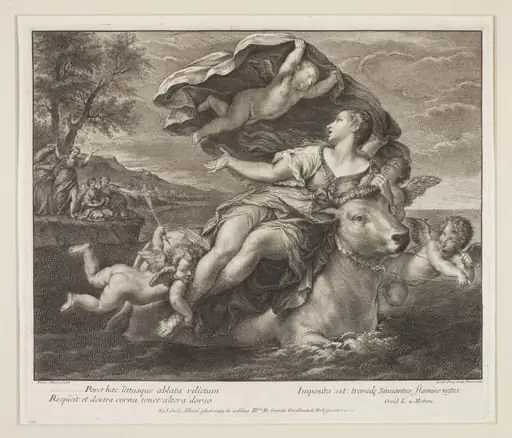
Created in Italy in 1642, the Hermitage canvas belongs to a broader series of versions Albani and his workshop produced of this popular subject. The most famous version, created in 1639 for Count Angelo Oddi of Perugia, is now in the Uffizi Gallery. Because that canvas remained in Albani's workshop for a long time, it served as the direct compositional model for numerous subsequent versions, including those in the Patrizi collection in Rome, the Colonna Gallery in Rome, and the Louvre. The 1642 Hermitage painting eventually entered the collection of Heinrich von Brühl before being accessioned into the Hermitage Museum. The enduring popularity of the composition led to later reproductions, including a mid-nineteenth-century print on paper by Johannes Jakob Frey after Albani's design, now in the Victoria and Albert Museum.
Context
Francesco Albani was a central exponent of Bolognese classicism, active alongside contemporaries like Domenichino and Guido Reni. After training under Denis Calvaert and Ludovico Carracci, Albani became one of Annibale Carracci's most prominent apprentices in Rome, where he worked on major fresco commissions such as the Palazzo Farnese gallery and the Palazzo Mattei di Giove. While his early works imitated Ludovico's dramatic and emotional manner, Albani increasingly adopted Annibale's idealizing classicism. His fame ultimately rested on his idyllic landscapes and small mythological pictures, whose lyrical qualities earned him the sobriquet the Anacreon of painters. These mythological compositions were in great demand among cultured patrons of the time, who appreciated their aesthetic and decorative value. Scholar Catherine Puglisi has studied the various versions of The Abduction of Europa, noting that in his later variations, Albani included additional deities in the sky, with studio participation becoming increasingly evident, though Albani's own hand can still be detected in specific figures.
Legacy
Albani's Rape of Europa compositions achieved significant critical and commercial success, becoming highly praised by European collectors for their aesthetic and decorative value. The Uffizi version spawned numerous derivations from Albani's followers active between the seventeenth and eighteenth centuries, who replicated the stylistic and compositional models established in his workshop. The enduring appeal of the design is evidenced by its continued reproduction in the nineteenth century, such as the print by Johannes Jakob Frey. The various versions of the subject, including those in the Patrizi and Colonna collections, as well as the Hermitage canvas, cemented the composition as a canonical representation of the myth within the Bolognese classical tradition.
Own this work as a print
Artist & collection

Artist
Francesco Albani or Albano was an Italian Baroque painter of Albanian descent who was active in Bologna, Rome, Viterbo (1609–1610), Mantua (1621–1622) and Florence (1633).