Artwork
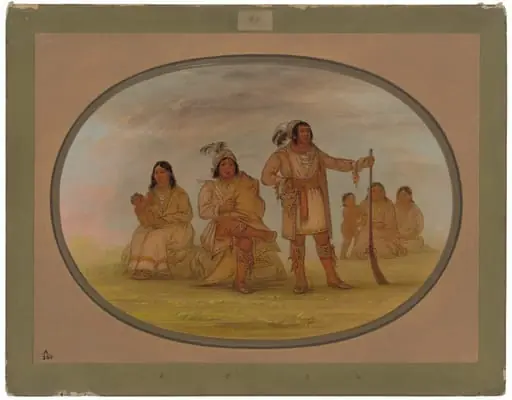
Black Hawk and Five Other Saukie Prisoners
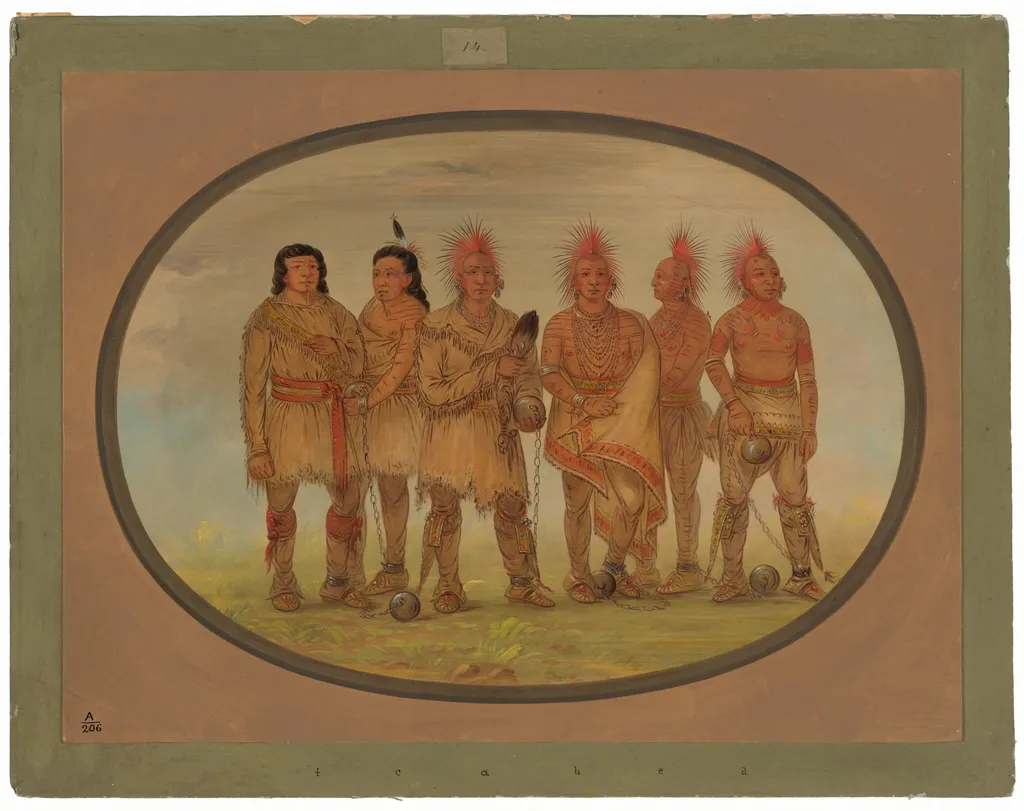
Black Hawk and Five Other Saukie Prisoners is an oil painting by the American Folk Art artist George Catlin. It dates from 1865 and is held in the collection of the National Gallery of Art. Created in 1865, this oil painting on card, later affixed to paperboard, portrays Black Hawk alongside five fellow Sauk captives.
About this work
Technique & Style
Executed in 1865, this portrait uses oil paint applied to a card support, subsequently mounted onto paperboard. It functions as a painting within the portrait genre. The physical dimensions are recorded as 47.3 cm in height and 63.3 cm in width.
The mounting of the card onto a stiffer paperboard backing suggests a handling approach intended to stabilize the relatively thin primary support.
History & Provenance
George Catlin painted Black Hawk and Five Other Saukie Prisoners in 1865 in oil on card mounted on paperboard.
George Catlin painted Black Hawk and Five Other Saukie Prisoners in 1865 in oil on card mounted on paperboard. The work descended through Catlin's daughters Clara Gregory Catlin, Louise Catlin Kinney, and Elizabeth Wing Catlin before being purchased in 1912 from Elizabeth Wing Catlin by the American Museum of Natural History. Kennedy Galleries of New York sold the painting in 1959 to Paul Mellon of Upperville, Virginia.
In 1965, Mellon gifted the artwork to the National Gallery of Art, Washington, D.C., where it remains. The source material does not record a specific exhibition history.
Legacy
The painting entered the National Gallery of Art collection in 1965 through the gift of Paul Mellon. Its presence in a major American institution has contributed to scholarly attention on Catlin's body of work, particularly his portraits of Native American subjects from the 1830s-1840s. The work remains part of the National Gallery of Art's permanent holdings in Washington, D.C.
Overview
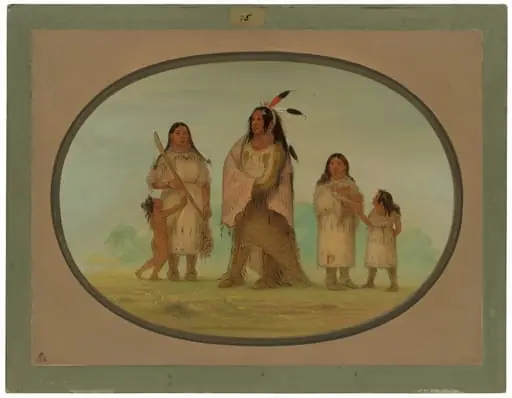
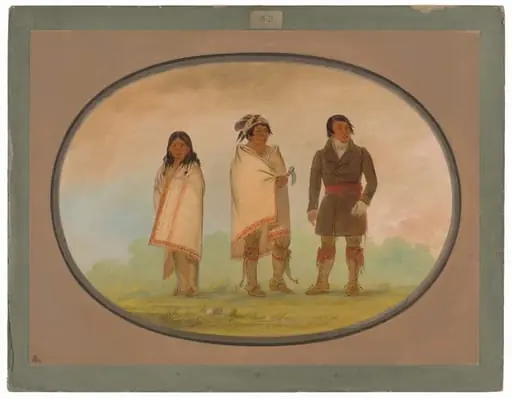
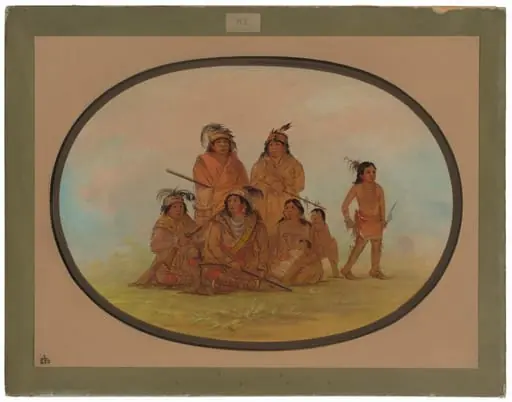
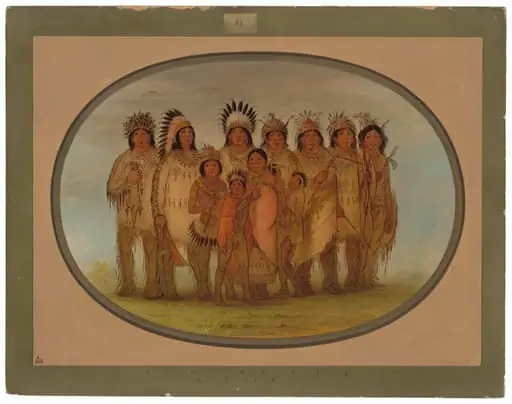
Created in 1865, this oil painting on card, later affixed to paperboard, portrays Black Hawk alongside five fellow Sauk captives. The six figures stand in a linear arrangement, their expressions solemn, bound together by metal chains and weighted restraints. A muted landscape with a cloud‑filled sky forms the backdrop, emphasizing the figures without elaborate scenery.
Subject & Meaning
The work records a moment of confinement for the Sauk leader Black Hawk and his companions during their imprisonment after the 1832 conflict. By presenting them in traditional attire, feathered headdresses, ornamental jewelry, the artist underscores their cultural identity even as they are reduced to prisoners, inviting reflection on the clash between native sovereignty and U.S. expansion.
Context
Catlin’s career was shaped by his travels across the western frontier in the 1830s, during which he recorded numerous Native American subjects. By the 1860s, his focus shifted toward depicting the consequences of U.S. policies toward Indigenous nations, and this composition reflects that later, more somber perspective within his broader oeuvre.
Own this work as a print
Artist & collection

Artist
George Catlin ( KAT-lin; July 26, 1796 – December 23, 1872) was an American lawyer, painter, author, and traveler, who specialized in portraits of Native Americans in the American frontier.

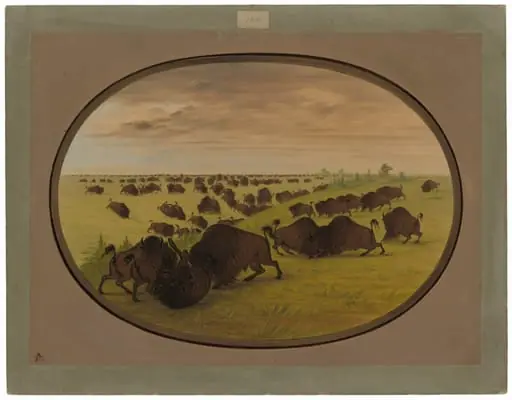 Bulls Fighting
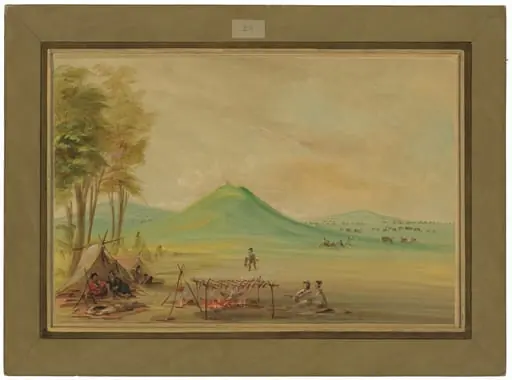 Expedition Encamped on a Texas Prairie. April 1686
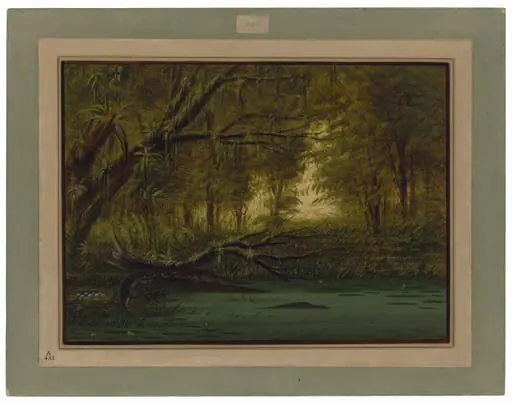 An Alligator's Nest
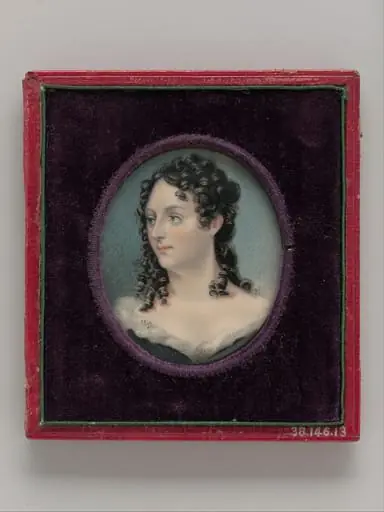 Mrs. George Catlin (Clara Bartlet Gregory)
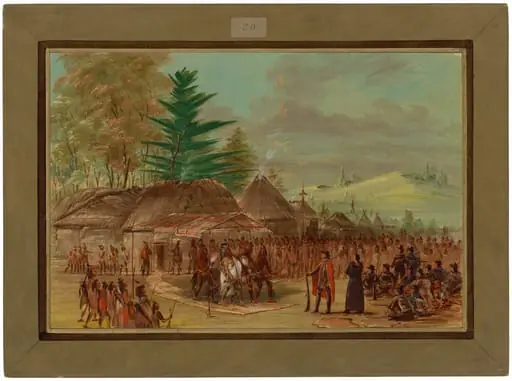 Chief of the Taensa Indians Receiving La Salle. March 20, 1682
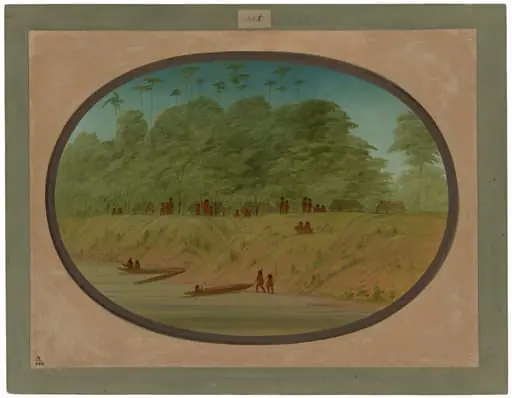 A Small Village - Payaguas Indians
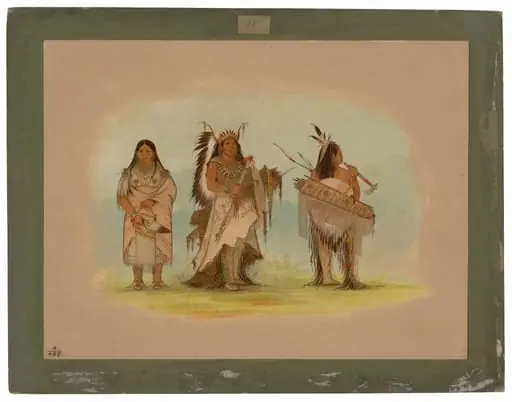 Omaha Chief, His Wife, and a Warrior
 Father Hennepin Leaving the Mississippi to Join La Salle. May 8, 1680