Artwork
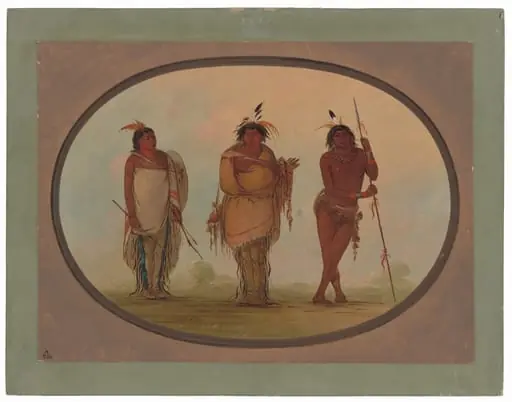
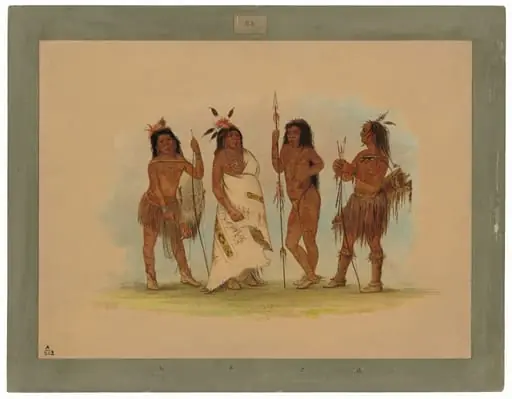
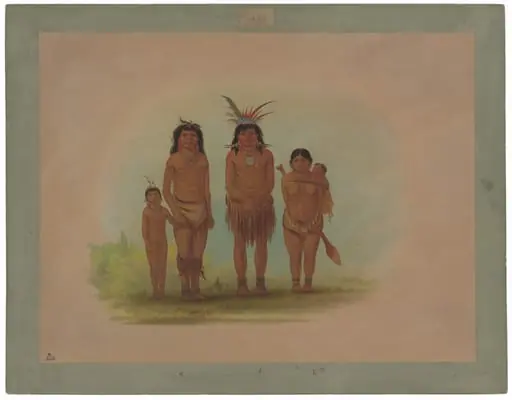
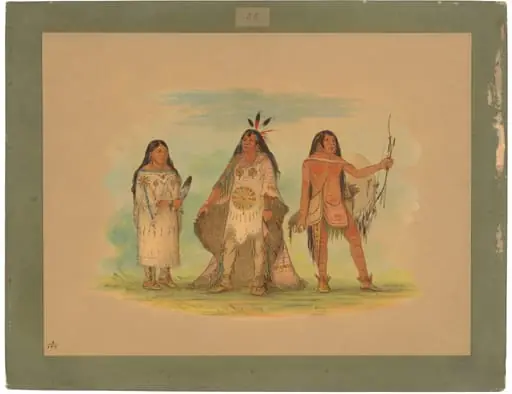
Three Woyaway Indians
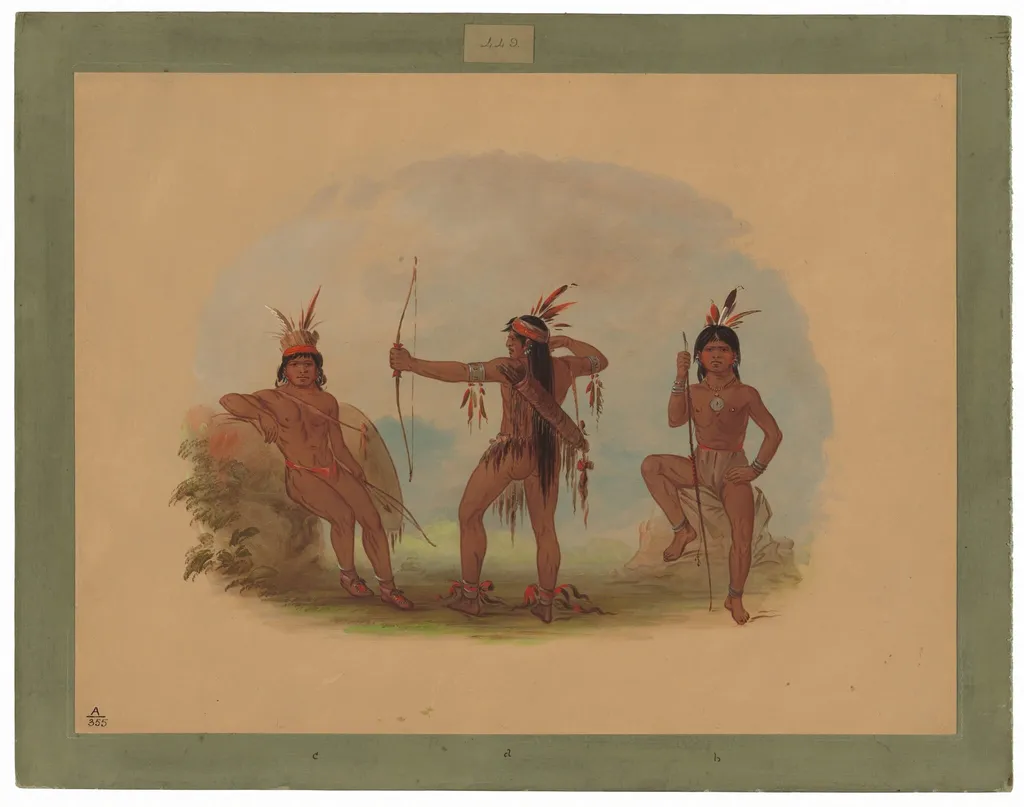
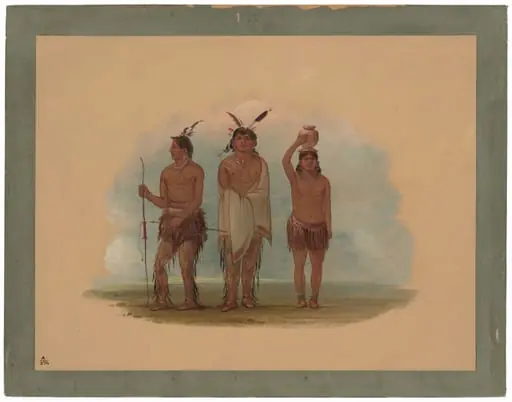
Three Woyaway Indians is an oil painting by the American Folk Art artist George Catlin. It dates from 1862 and is held in the collection of the National Gallery of Art.
About this work
Technique & Style
Created in 1862, this portrait utilizes oil paint applied to a card support, which is subsequently mounted on paperboard. The work measures 46.7 cm in height and 62.4 cm in width. As a painted portrait, the piece focuses on the depiction of three individuals from the Woyaway group, executed within the traditions of 19th-century American portraiture.
History & Provenance
Following the artist's death in 1872, the work passed by descent to his daughters: Clara Gregory Catlin, Louise Catlin Kinney, and Elizabeth Wing Catlin.
Executed in 1862, this oil on card portrait by George Catlin depicts three Woyaway Indians. Following the artist's death in 1872, the work passed by descent to his daughters: Clara Gregory Catlin, Louise Catlin Kinney, and Elizabeth Wing Catlin. In 1912, the American Museum of Natural History purchased the painting directly from Elizabeth Wing Catlin.
The museum retained the piece until 1959, when it was sold through Kennedy Galleries of New York to Paul Mellon of Upperville, Virginia. Mellon subsequently donated the artwork to the National Gallery of Art in Washington, D.C., in 1965.
Three Woyaway Indians (1862) is an oil on card mounted on paperboard portrait held in the National Gallery of Art's collection in Washington, D.C. Its accession or inventory number is not specified in the provided sources. The work entered the collection through a gift in 1965 from Paul Mellon, following its purchase in 1959 from Kennedy Galleries by Paul Mellon and its earlier provenance by descent from George Catlin's daughters and sale to the American Museum of Natural History in 1912.
Overview
Created in 1862, Three Woyaway Indians is an oil painting executed on card that has been mounted on a paperboard support. The work depicts three Native American men standing outdoors beneath a lightly clouded sky, each dressed in traditional regalia that includes feathered headdresses, woven garments, and ornamental bracelets.
Subject & Meaning
The three figures are presented with distinct attributes: one holds a bow and a quiver of arrows, another rests a spear against his body, and the third crouches slightly while grasping a knife. Their poses and accoutrements suggest a focus on martial readiness and cultural identity within a Plains tribal context.
Context
Catlin, originally trained as a lawyer, turned to art as a means of preserving the customs of Plains tribes he encountered. His work was intended as a visual record at a time when many Native communities faced displacement and cultural disruption.
Own this work as a print
Artist & collection

Artist
George Catlin ( KAT-lin; July 26, 1796 – December 23, 1872) was an American lawyer, painter, author, and traveler, who specialized in portraits of Native Americans in the American frontier.

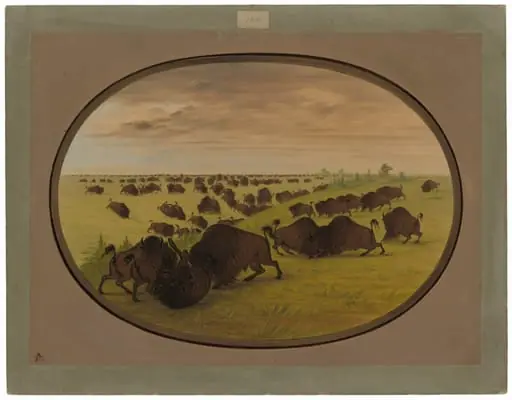 Bulls Fighting
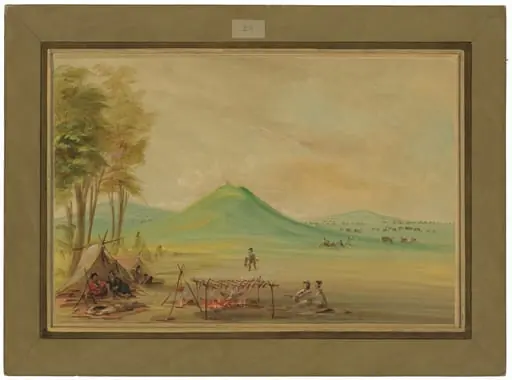 Expedition Encamped on a Texas Prairie. April 1686
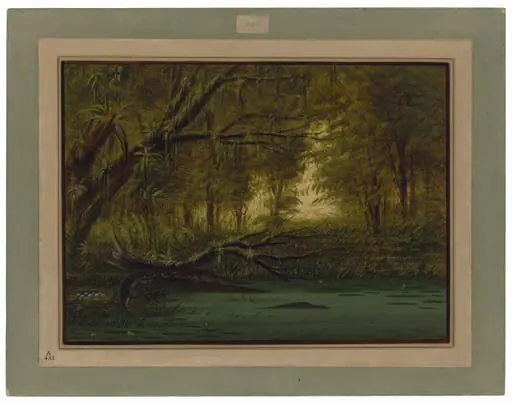 An Alligator's Nest
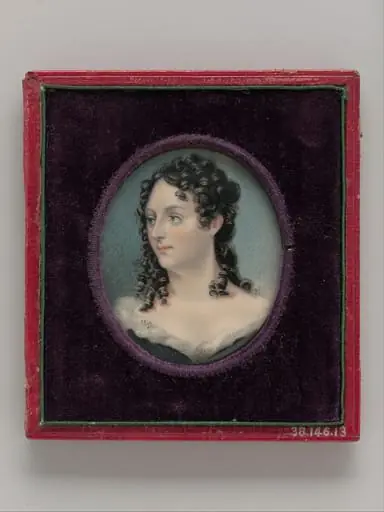 Mrs. George Catlin (Clara Bartlet Gregory)
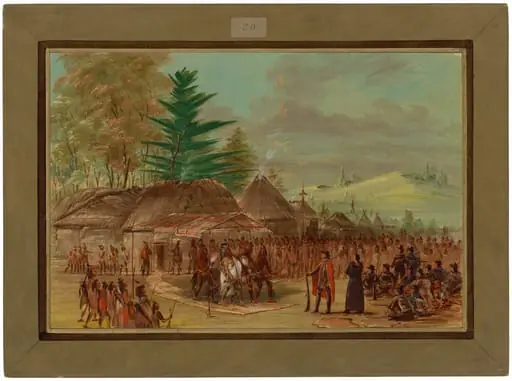 Chief of the Taensa Indians Receiving La Salle. March 20, 1682
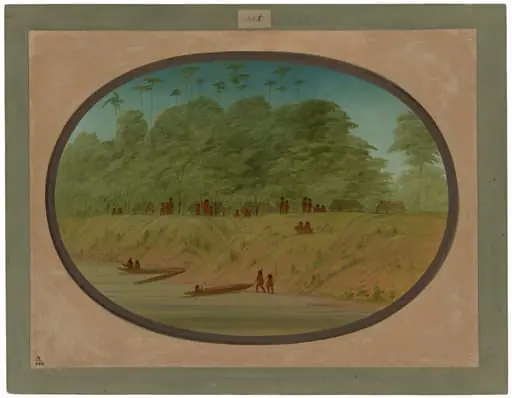 A Small Village - Payaguas Indians
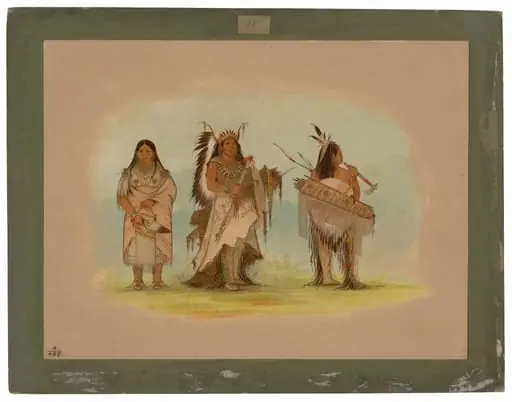 Omaha Chief, His Wife, and a Warrior
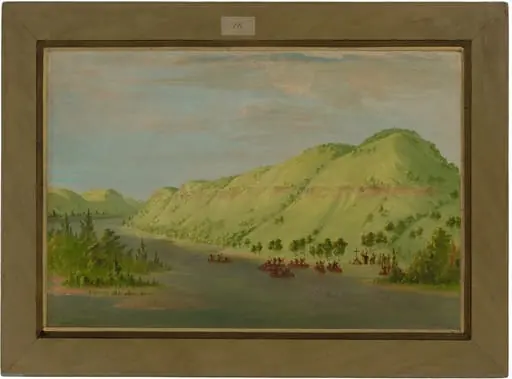 Father Hennepin Leaving the Mississippi to Join La Salle. May 8, 1680