Artwork
View of Chicago in 1837
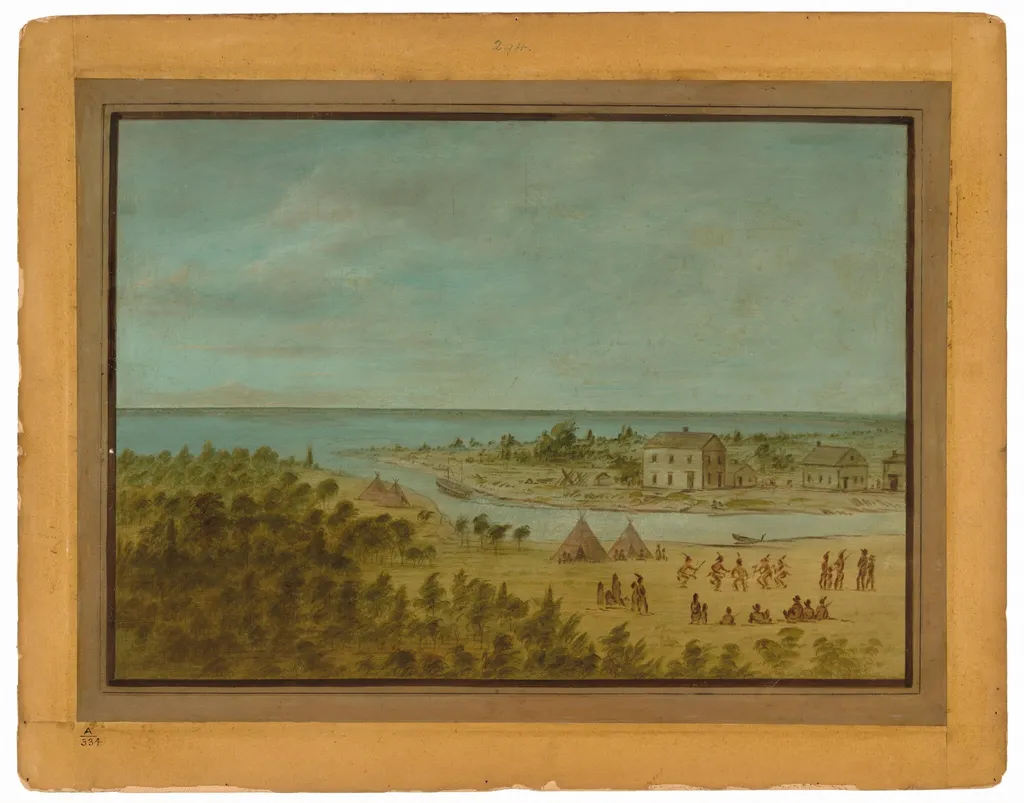
View of Chicago in 1837 is an oil painting by the Impressionist artist George Catlin. It dates from 1865 and is held in the collection of the National Gallery of Art.
About this work
The trees and river take up most of the space, with a few small buildings near the shore.
This painting shows a quiet view of Chicago in 1837. It’s a tiny oil on card, but the scene feels big and open. The trees and river take up most of the space, with a few small buildings near the shore.
The artist painted this years after the fact, in 1861. Chicago grew fast, so this view looks almost wild compared to the city today. Notice how the colors stay soft and pale, like an old memory.
Check out the trees next time you visit the National Gallery of Art, Washington.
Technique & Style
Executed in 1865, this cityscape is an oil painting applied on card that has been mounted onto a paperboard support. The work measures 45.9 cm in height and 61.4 cm in width. Stylistically, the composition functions as a depiction of the early urban landscape, incorporating natural elements such as trees within the scene. The piece is classified as a painting within the genre of cityscapes.
History & Provenance
View of Chicago in 1837 is an oil on card painting by George Catlin, created in 1865. It descended from the artist to his daughters Clara Gregory Catlin, Louise Catlin Kinney, and Elizabeth Wing Catlin; was purchased in 1912 from Elizabeth Wing Catlin by the American Museum of Natural History; sold in 1959 through Kennedy Galleries, New York, to Paul Mellon; and gifted to the National Gallery of Art, Washington, D.C., in 1965, where it remains.
Exhibition history is limited to institutional display at the National Gallery of Art following its acquisition. The painting measures 45.9 cm by 61.4 cm.
Overview
George Catlin’s View of Chicago in 1837 is a modestly sized oil painting executed on card that has been mounted on paperboard. The composition presents a tranquil riverside scene dominated by foliage and the early shoreline, with only a handful of low structures hinting at settlement. The work captures a moment before Chicago’s rapid expansion, offering a glimpse of the city’s nascent landscape.
Subject & Meaning
The image focuses on the natural environment surrounding the young settlement, emphasizing trees and the waterway that would become the Chicago River. By foregrounding the landscape rather than bustling streets, Catlin suggests a transitional space where wilderness and emerging urbanity intersect, reflecting the frontier’s gradual conversion into a metropolitan hub.
Context
Catlin, better known for his portraits of Native American peoples during five western expeditions in the 1830s, turned to urban subjects later in his career. This piece illustrates his broader interest in documenting the transformation of the American landscape, bridging his earlier frontier studies with the burgeoning urban environment of the Midwest.
Own this work as a print
Artist & collection

Artist
George Catlin ( KAT-lin; July 26, 1796 – December 23, 1872) was an American lawyer, painter, author, and traveler, who specialized in portraits of Native Americans in the American frontier.

 Bulls Fighting
 Expedition Encamped on a Texas Prairie. April 1686
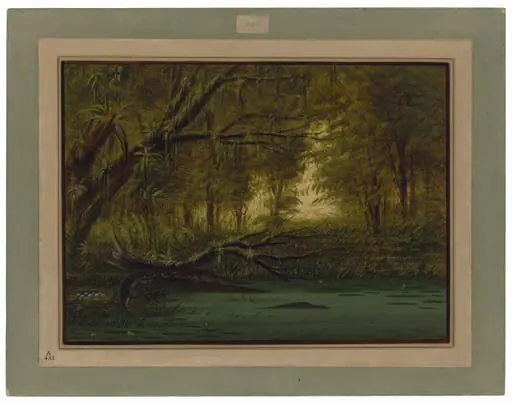 An Alligator's Nest
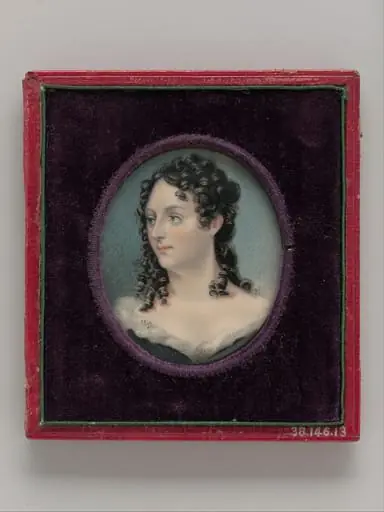 Mrs. George Catlin (Clara Bartlet Gregory)
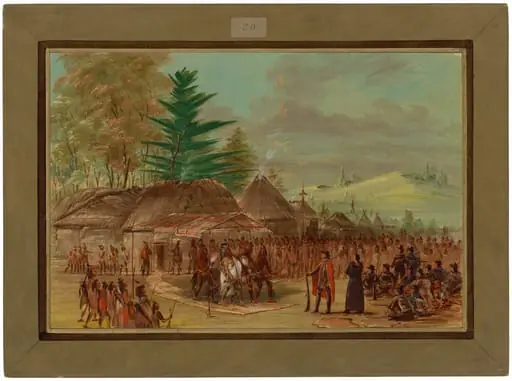 Chief of the Taensa Indians Receiving La Salle. March 20, 1682
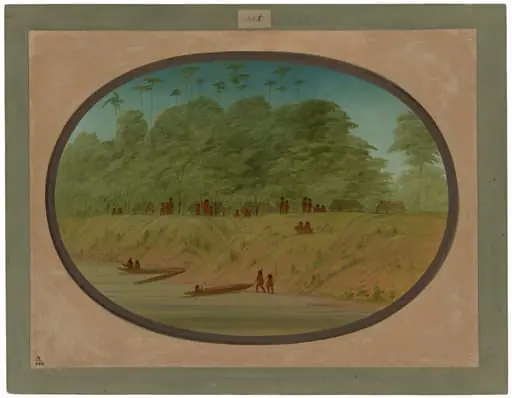 A Small Village - Payaguas Indians
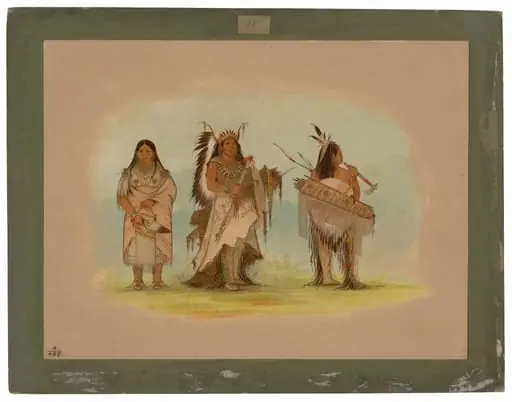 Omaha Chief, His Wife, and a Warrior
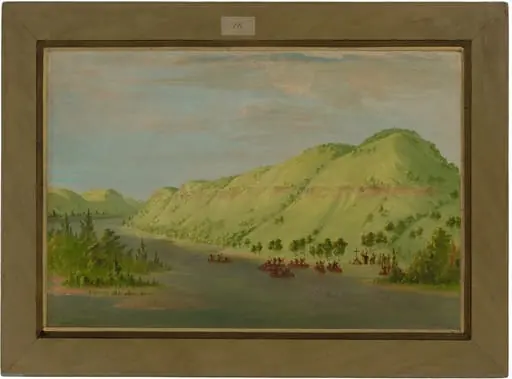 Father Hennepin Leaving the Mississippi to Join La Salle. May 8, 1680
- First Sailing of the Griffin on Lake Erie. August 7, 1679
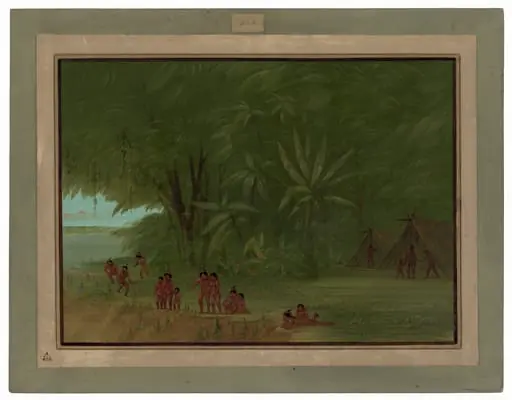 Mauhees Encampment
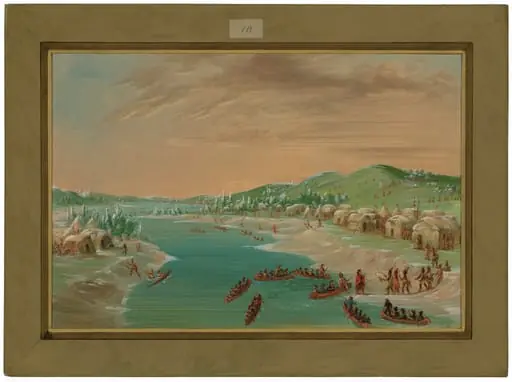 La Salle and Party Arrive at the Village of the Illinois. January 1, 1680
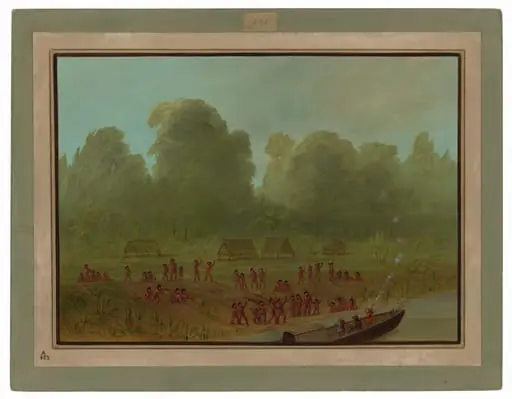 A Mayoruna Village
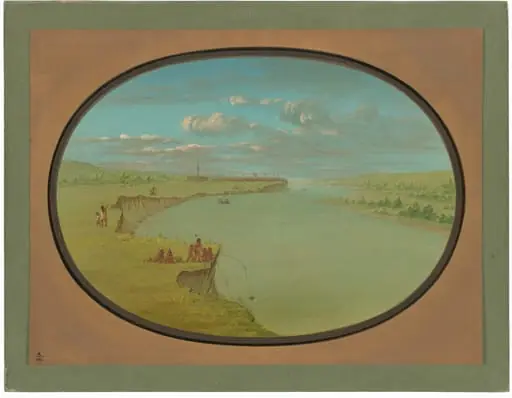 Mandan Village - A Distant View
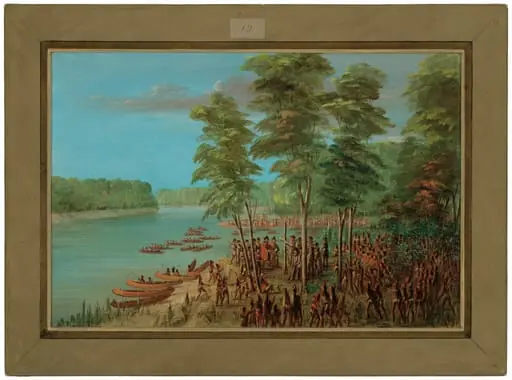 La Salle Taking Possession of the Land at the Mouth of the Arkansas. March 10, 1682
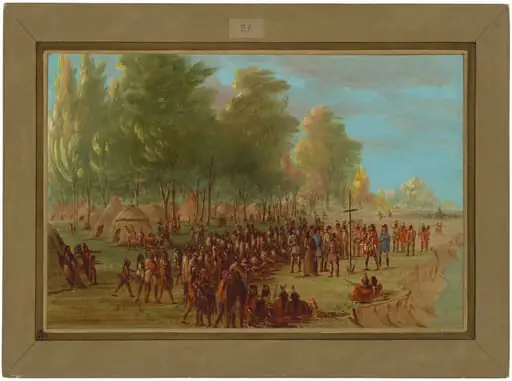 La Salle Erecting a Cross and Taking Possession of the Land. March 25, 1682
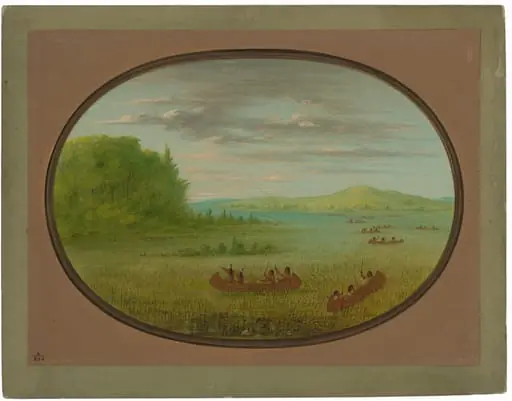 Gathering Wild Rice - Winnebago
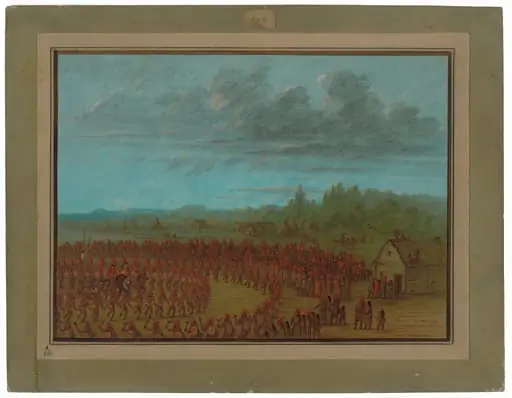 War Dance of the Saukies
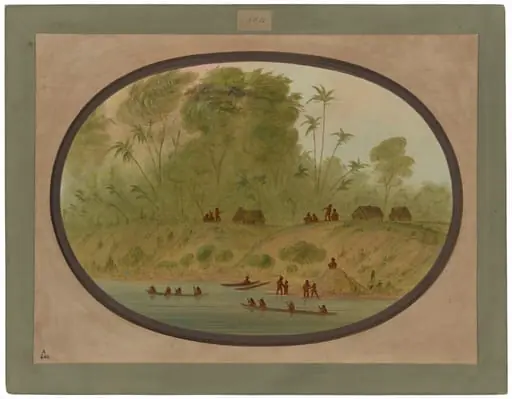 A Small Lengua Village, Uruguay
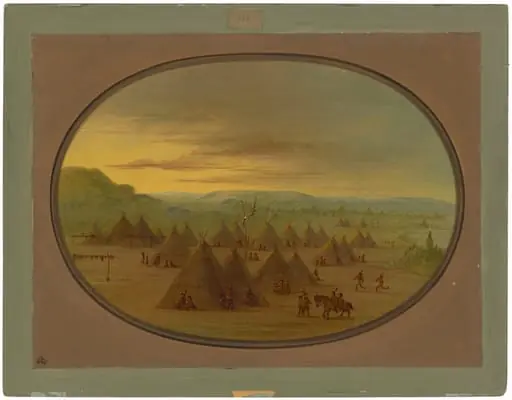 A Crow Village of Skin Tents on the Salmon River