Artwork
Along the Banks of the Marne
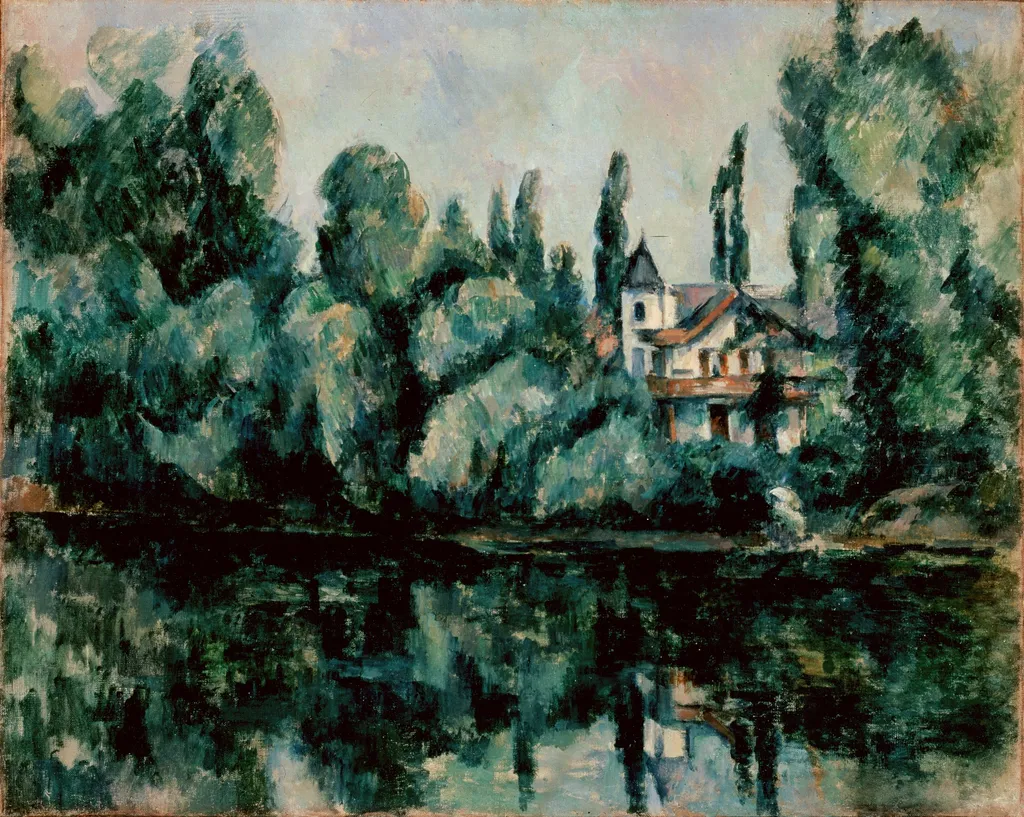
Along the Banks of the Marne is an oil painting by the Post-Impressionist artist Paul Cézanne. It dates from 1894 and is held in the collection of the Hermitage Museum.
About this work
Subject & Meaning
The work depicts a specific landscape along the Marne River at Saint-Maur-des-Fossés in the Île-de-France region of France.
The work depicts a specific landscape along the Marne River at Saint-Maur-des-Fossés in the Île-de-France region of France. The scene features a country house situated on the riverbank, accompanied by willow and poplar trees whose reflections are visible in the water during the summer season. Cézanne created this image by painting directly outdoors to capture the subject from nature. The composition focuses on the interplay between the built environment and the natural surroundings, emphasizing the river as a central element of the French countryside. This view was one of several the artist explored at this location during the period between 1888 and 1890.
Technique & Style
Along the Banks of the Marne is an oil painting on canvas executed by Paul Cézanne between 1888 and 1890, measuring 65.5 by 81.3 cm. The work belongs to the Post-Impressionist movement and was produced in France. Cézanne worked en plein air, traveling to the countryside along the Marne at Saint-Maur-des-Fossés to find inspiration directly from the motif.
The composition depicts a country house set among greenery on the banks of the Marne, with willows and poplars reflected in the river's surface during summer. The painting is classified as a landscape and is held in the Hermitage Museum in Saint Petersburg.
History & Provenance
The painting was created between 1888 and 1890, likely during Cézanne’s plein-air sessions along the Marne near Saint-Maur-des-Fossés, where he produced multiple canvases of the same riverside motif. By 1918 it had entered the collection of Ivan Morozov in Moscow. Morozov’s holdings were nationalized in 1918-1919, and the work was transferred to the State Museum of New Western Art in Moscow. In 1930 it was among the Morozov works transferred to the Hermitage Museum in Saint Petersburg, where it remains. Paul Cézanne's *Along the Banks of the Marne* is held in the collection of the Hermitage Museum in Saint Petersburg. The work is an oil on canvas painting measuring 65.5 cm by 81.3 cm, created between 1888 and 1890. Historical records indicate the piece was previously owned by the collector Ivan Morozov before entering the museum's holdings. While the painting depicts a landscape near Saint-Maur-des-Fossés, the provided sources do not list specific inventory numbers or a detailed chronology of public exhibitions for this specific work.
Legacy
The painting's legacy is anchored in its role as a representative of Cézanne's plein air practice and his exploration of natural motifs along the Marne River. It exemplifies the synthesis of observation and structural simplification that defined his later landscapes, influencing subsequent post-impressionist approaches to spatial composition. The work's technical and thematic concerns resonated with contemporaries and later artists, reinforcing Cézanne's reputation as a bridge between impressionist spontaneity and modernist abstraction. Its presence in major collections, including the Hermitage Museum, has ensured continued scholarly attention to Cézanne's impact on 20th-century art movements.
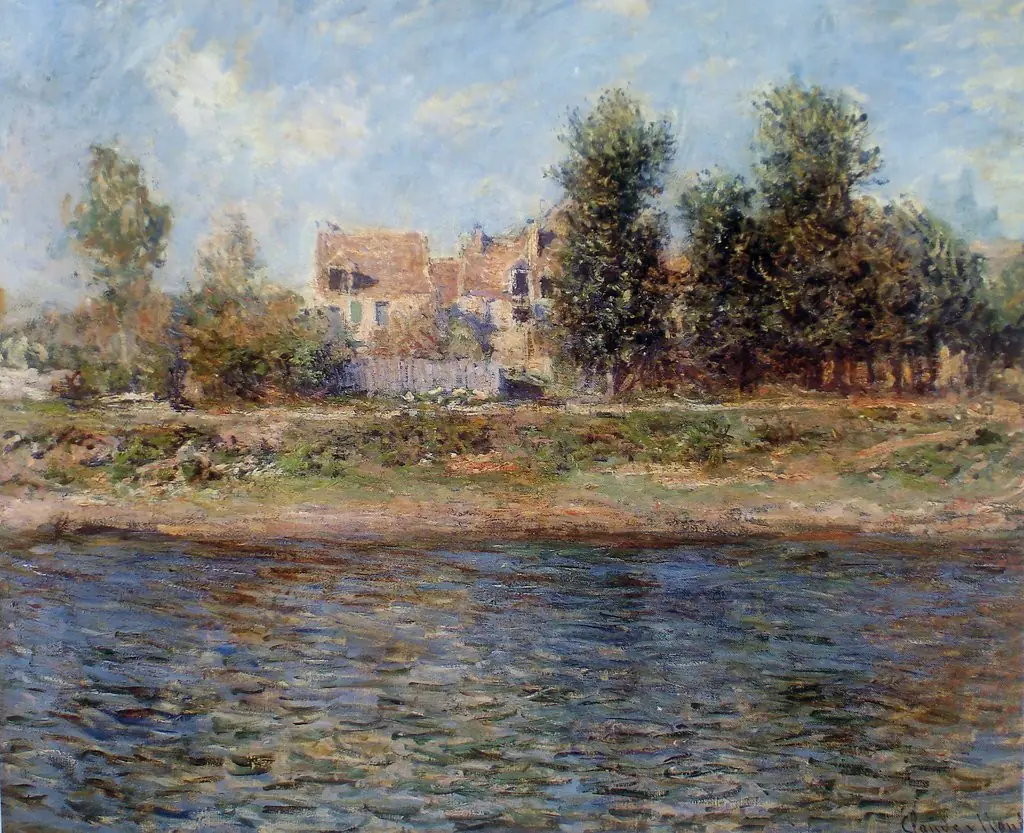
Own this work as a print
Artist & collection

Artist
Paul Cézanne ( say-ZAN, UK also siz-AN, US also say-ZAHN; French: ; Occitan: Pau Cesana; 19 January 1839 – 22 October 1906) was a French Post-Impressionist painter whose work introduced new modes of representation,…

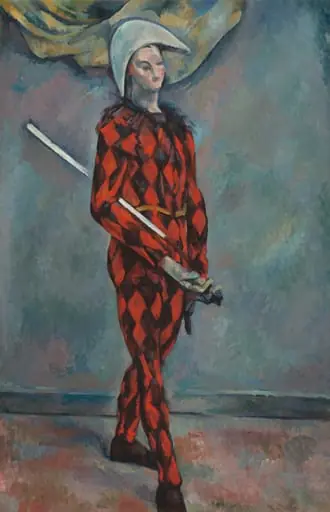 Harlequin
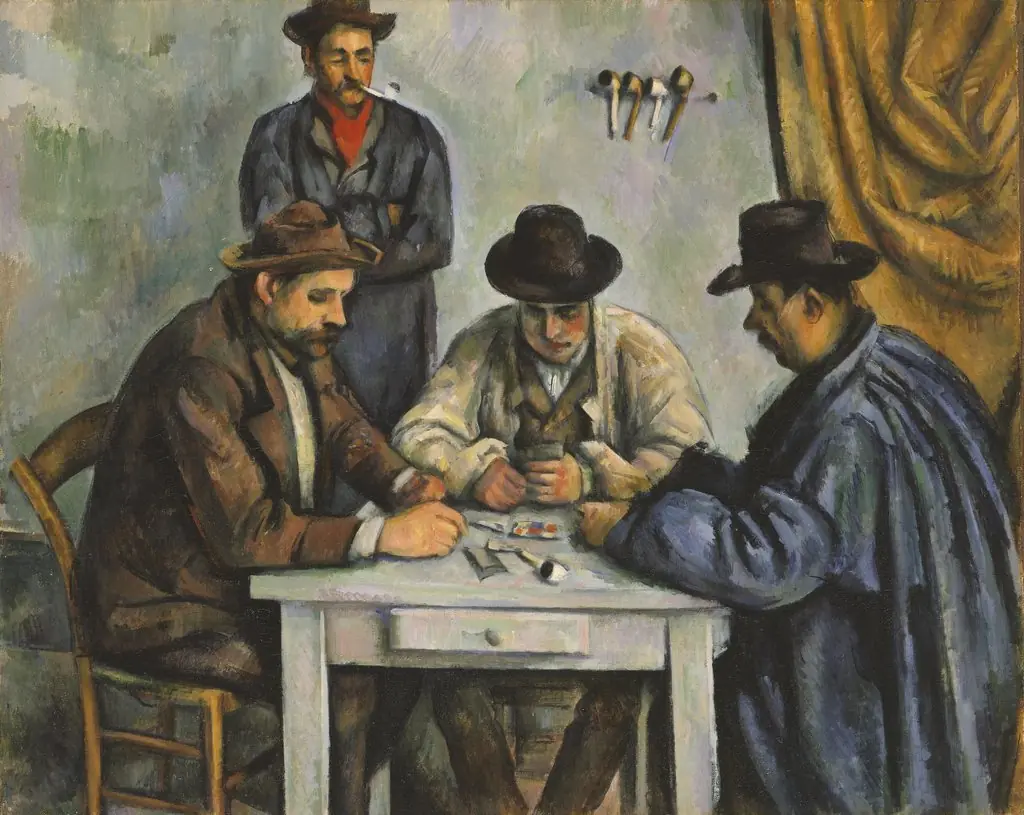 The Card Players
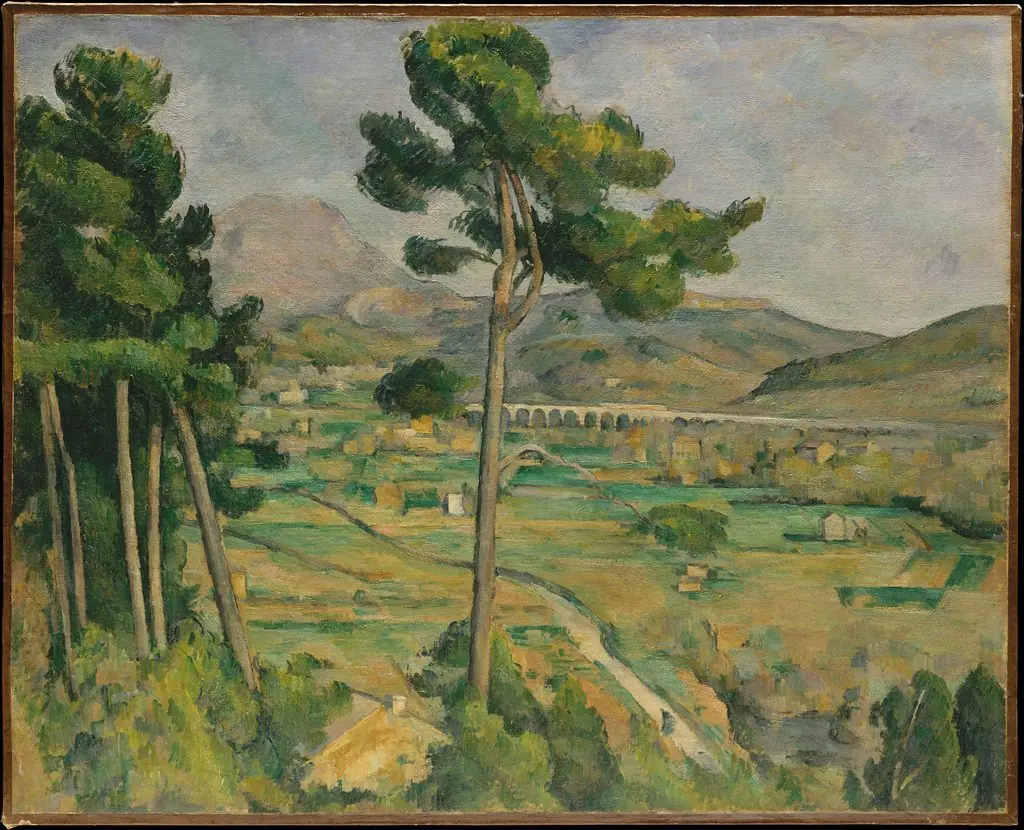 Mont Sainte-Victoire and the Viaduct of the Arc River Valley
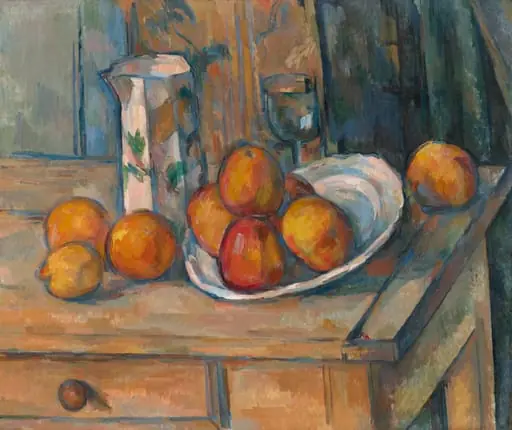 Still Life with Milk Jug and Fruit
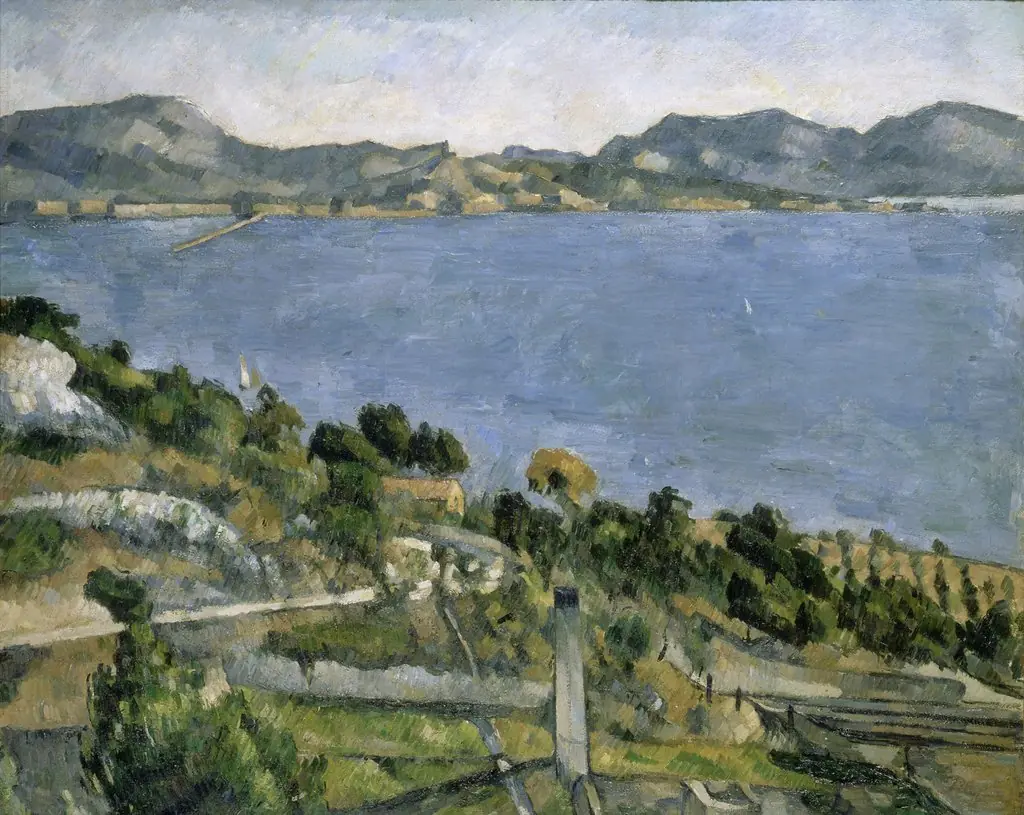 Le Golfe de Marseille vu de l'Estaque (The Gulf of Marseille Seen from L'Estaque)
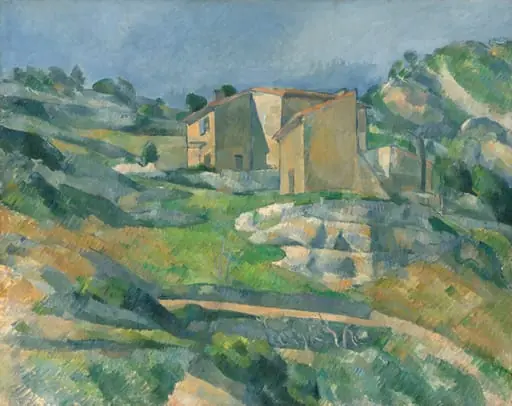 Houses in Provence: The Riaux Valley near L'Estaque
 Louis Guillaume
 Still Life with Jar, Cup, and Apples
 Village on the Banks of the Seine
 At the Water's Edge
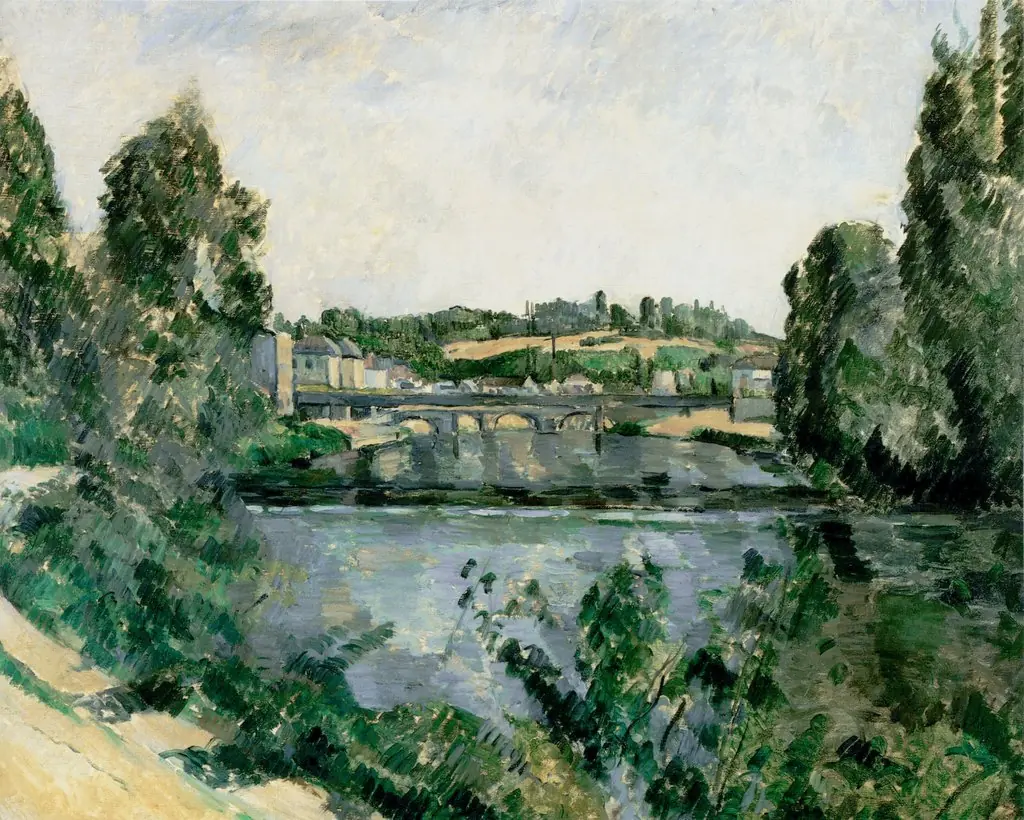 The Bridge and Dam at Pontoise (Le Pont et le déversoir à Pontoise)
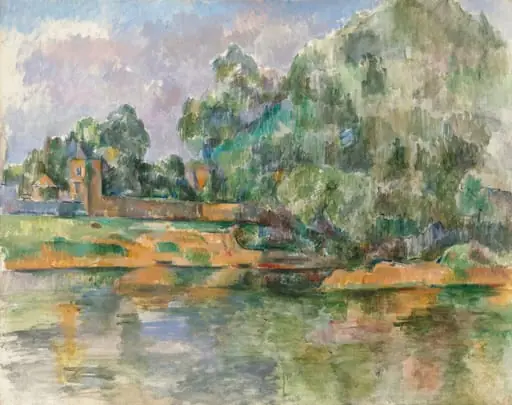 Banks of the Seine at Médan
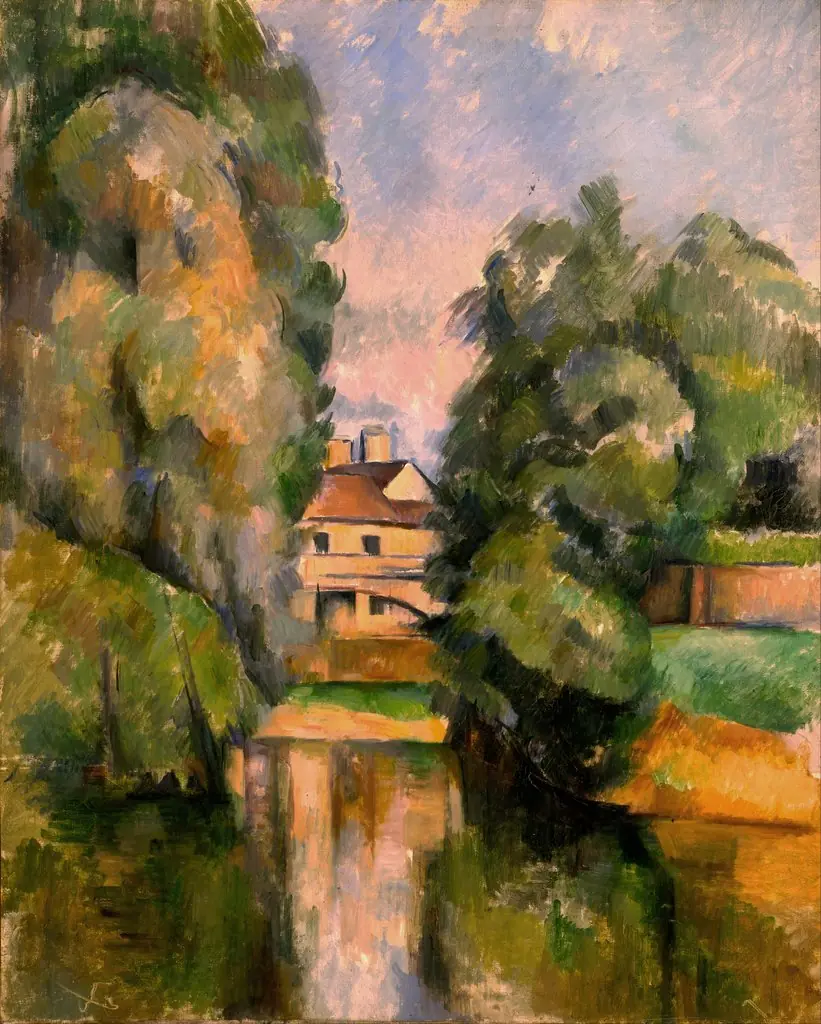 Country House by a River
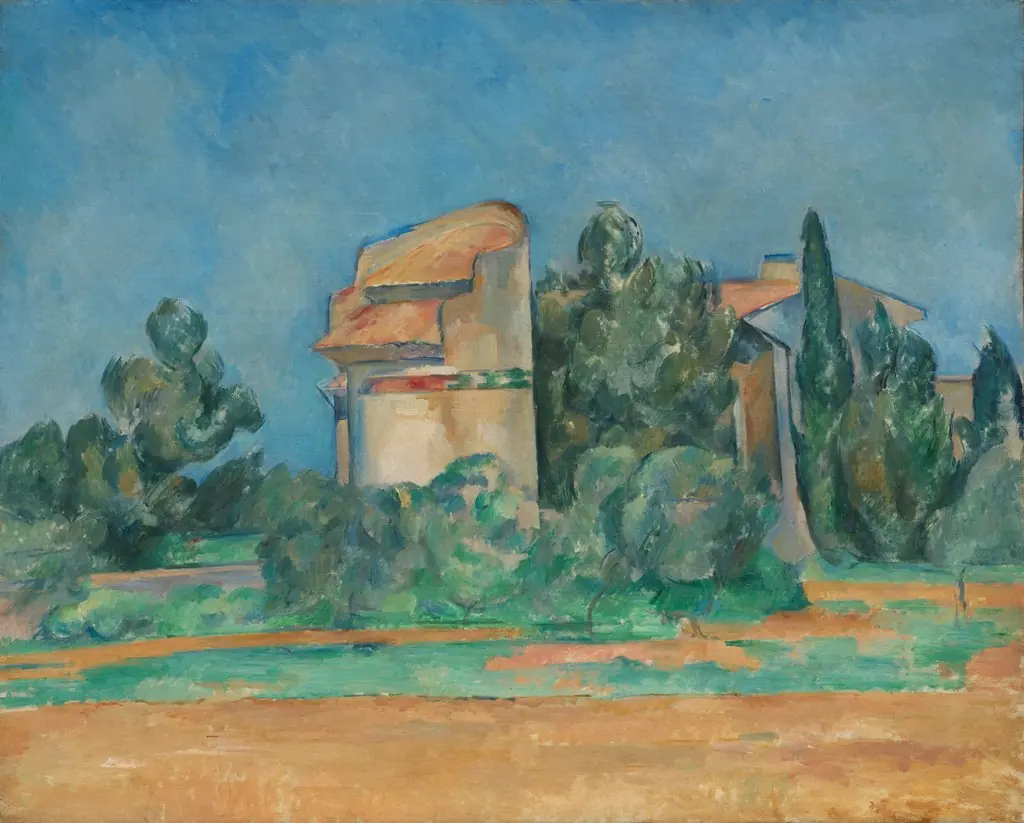 The Pigeon Tower at Bellevue
 Turning Road at Montgeroult
 The uphill road
 House of Père Lacroix
 Farmhouse and Chestnut Trees at Jas de Bouffan
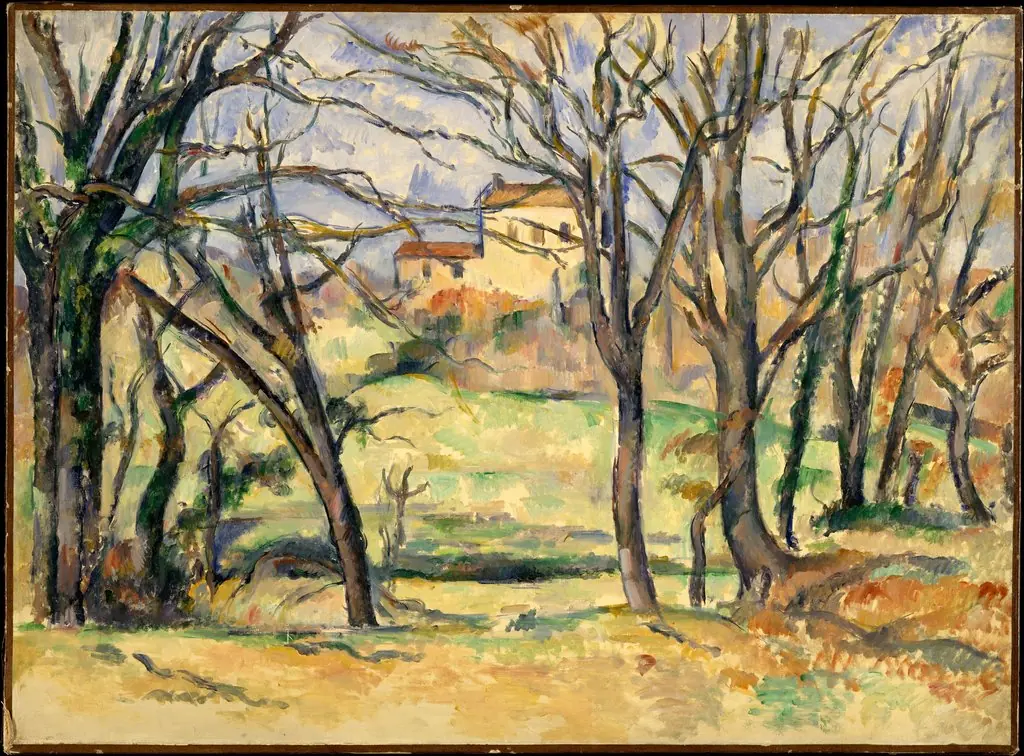 Trees and Houses Near the Jas de Bouffan
- The Bank of the Seine