Artwork
The Gardener Vallier
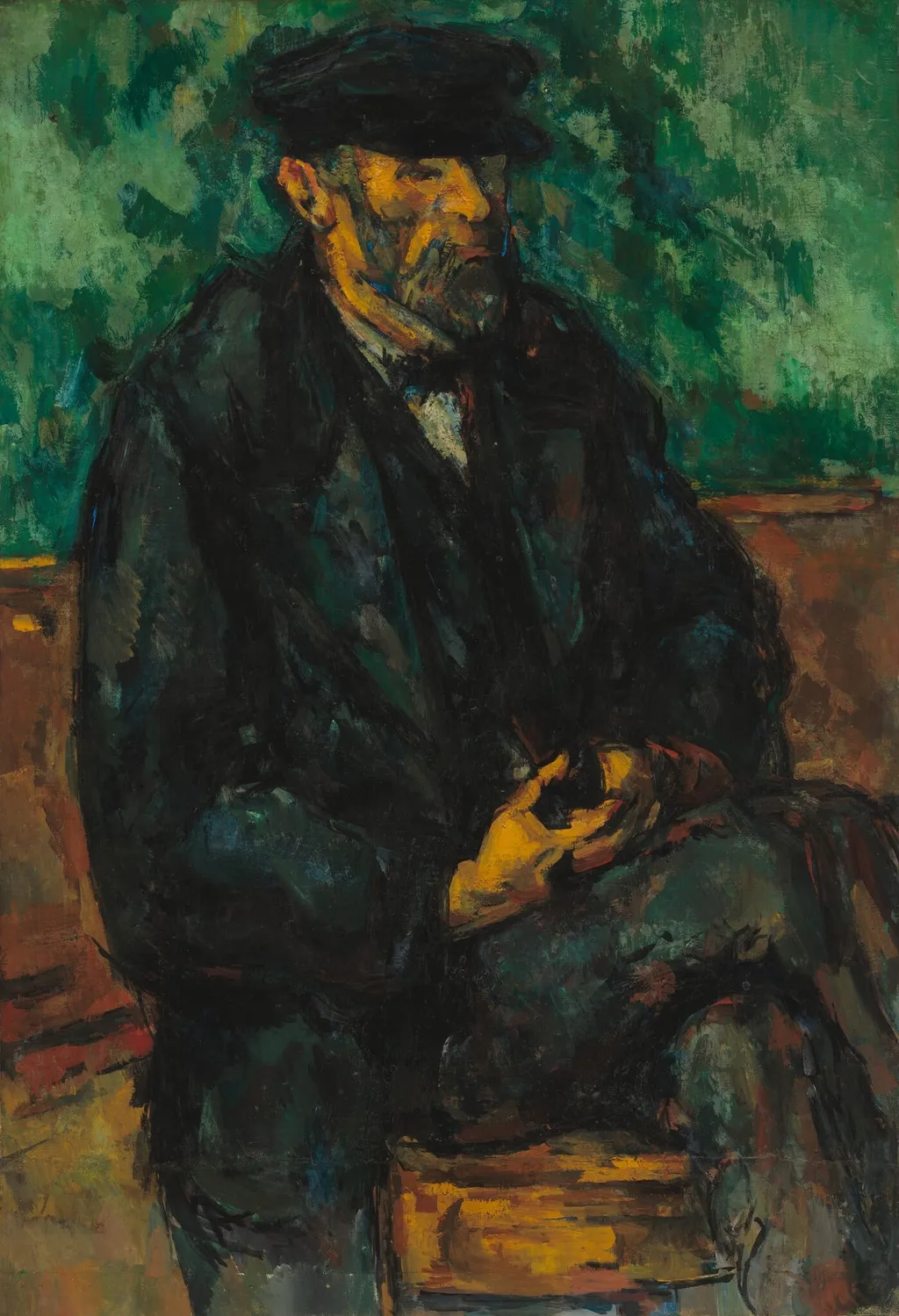
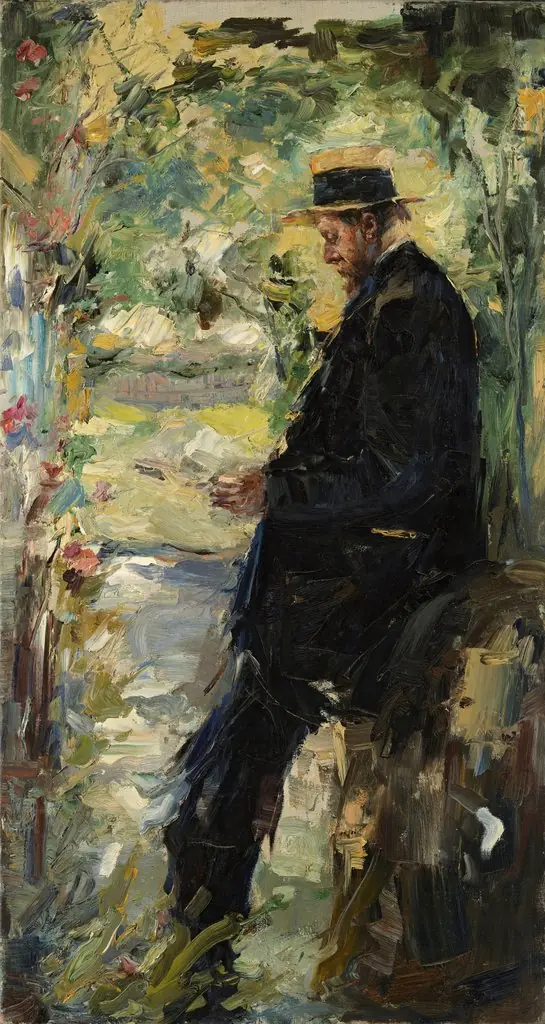
The Gardener Vallier is an oil painting by the Post-Impressionist artist Paul Cézanne. It dates from 1906 and is held in the collection of the National Gallery of Art.
About this work
Technique & Style
Created in 1906, The Gardener Vallier is an oil painting executed on canvas. The work measures 107.4 cm in height and 74.5 cm in width. As a portrait, it adheres to the medium of oil paint applied to a woven fabric support, characteristic of Paul Cézanne's late career output. The painting is currently held within the collection of the National Gallery of Art in Washington, D.C.
History & Provenance
The Meyers lent the portrait to a 1921 exhibition at the Metropolitan Museum of Art before gifting it to the National Gallery of Art, Washington, D.
Paul Cézanne painted The Gardener Vallier in 1906. The work was likely acquired from the artist's estate by the Paris dealer Ambroise Vollard. In 1916, Vollard sold the painting through the photographer and curator Edward Steichen to Eugene and Agnes Ernst Meyer of Mount Kisco, New York, and Washington, D.C. The Meyers lent the portrait to a 1921 exhibition at the Metropolitan Museum of Art before gifting it to the National Gallery of Art, Washington, D.C., in 1959. The sources do not record an inventory or accession number for the painting.
Overview
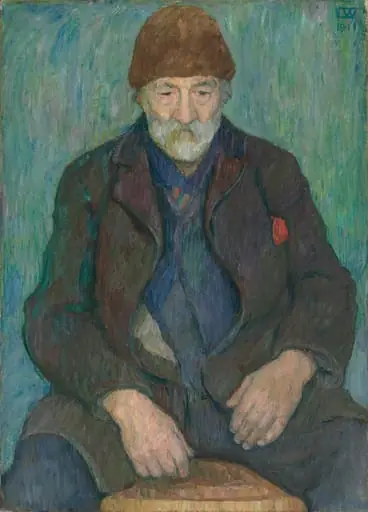
The Gardener Vallier, painted by Paul Cézanne in 1906, is a late portrait of the artist's domestic servant, Vallier. Executed in oil on canvas shortly before Cézanne's death, the work depicts the sitter seated in a wooden chair, wearing a dark coat and cap while holding a pipe. The composition is defined by the artist's mature synthetic style, where form is constructed through distinct, rhythmic brushstrokes known as 'constructive strokes.'
The figure's face and hands are rendered with a rough, textured application of paint that emphasizes the solidity of the subject rather than idealized likeness. The background dissolves into a mosaic of green and blue hues, suggesting an outdoor garden setting, while the chair introduces warm yellow and brown tones that anchor the figure. This painting represents the culmination of Cézanne's lifelong exploration of structure and color, bridging the gap between observation and abstraction.
It stands as a significant example of his final period, demonstrating his ability to imbue a simple genre scene with monumental weight and psychological depth through the rigorous organization of the canvas surface.
Subject & Meaning
The painting focuses on the figure of Vallier, a gardener who served as one of Cézanne's last models. He is shown seated, clad in a dark coat and cap, with a pipe held in his hand. His face, rendered with a textured quality and a beard, bears a serious and contemplative expression, suggesting a profound engagement with the sitter's inner state rather than a mere physical likeness.
Own this work as a print
Artist & collection

Artist
Paul Cézanne ( say-ZAN, UK also siz-AN, US also say-ZAHN; French: ; Occitan: Pau Cesana; 19 January 1839 – 22 October 1906) was a French Post-Impressionist painter whose work introduced new modes of representation,…

 Harlequin
 The Card Players
 Mont Sainte-Victoire and the Viaduct of the Arc River Valley
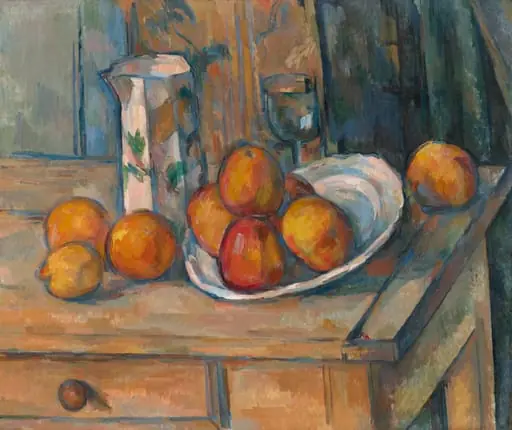 Still Life with Milk Jug and Fruit
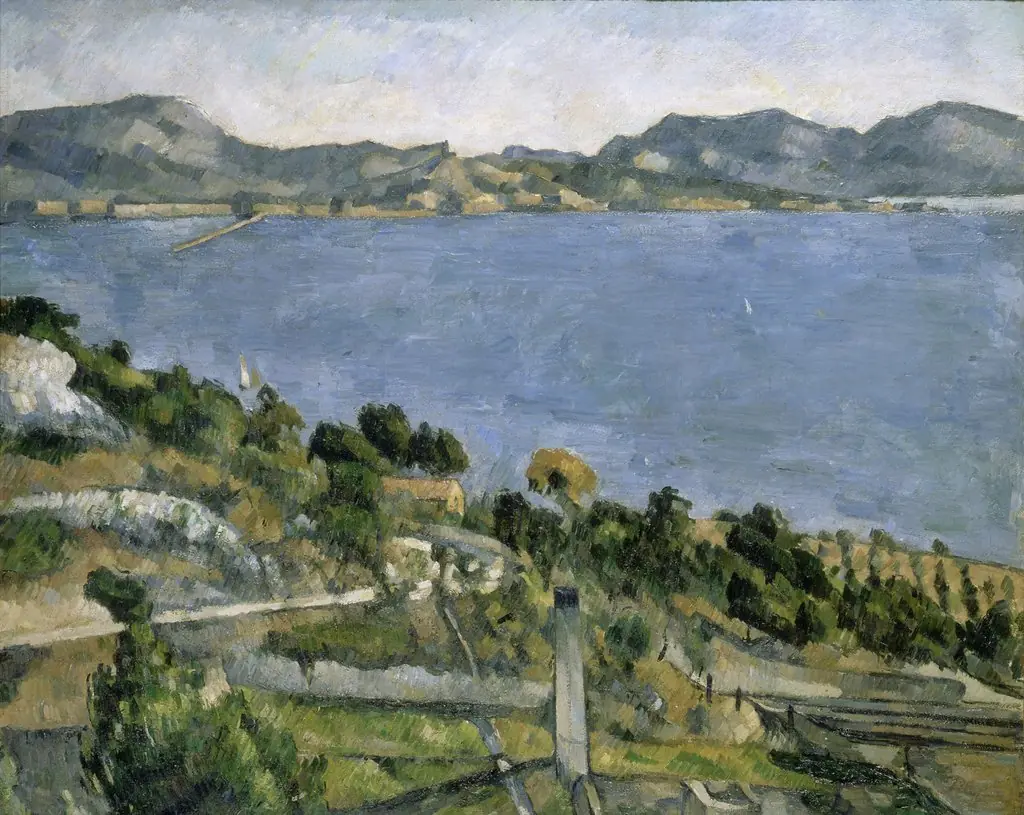 Le Golfe de Marseille vu de l'Estaque (The Gulf of Marseille Seen from L'Estaque)
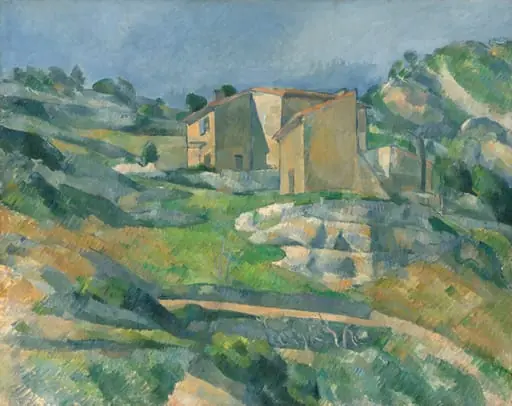 Houses in Provence: The Riaux Valley near L'Estaque
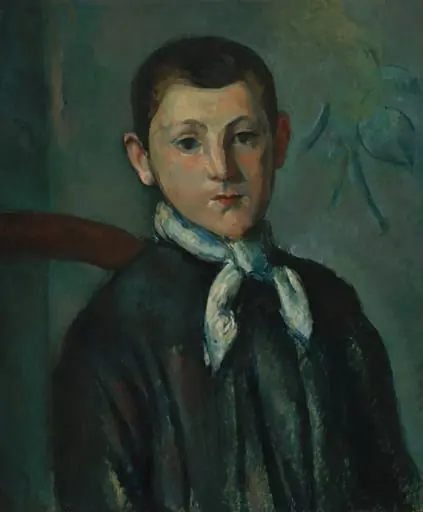 Louis Guillaume
 Still Life with Jar, Cup, and Apples