Artwork
Landscape with the rest on the Flight into Egypt (Noon)
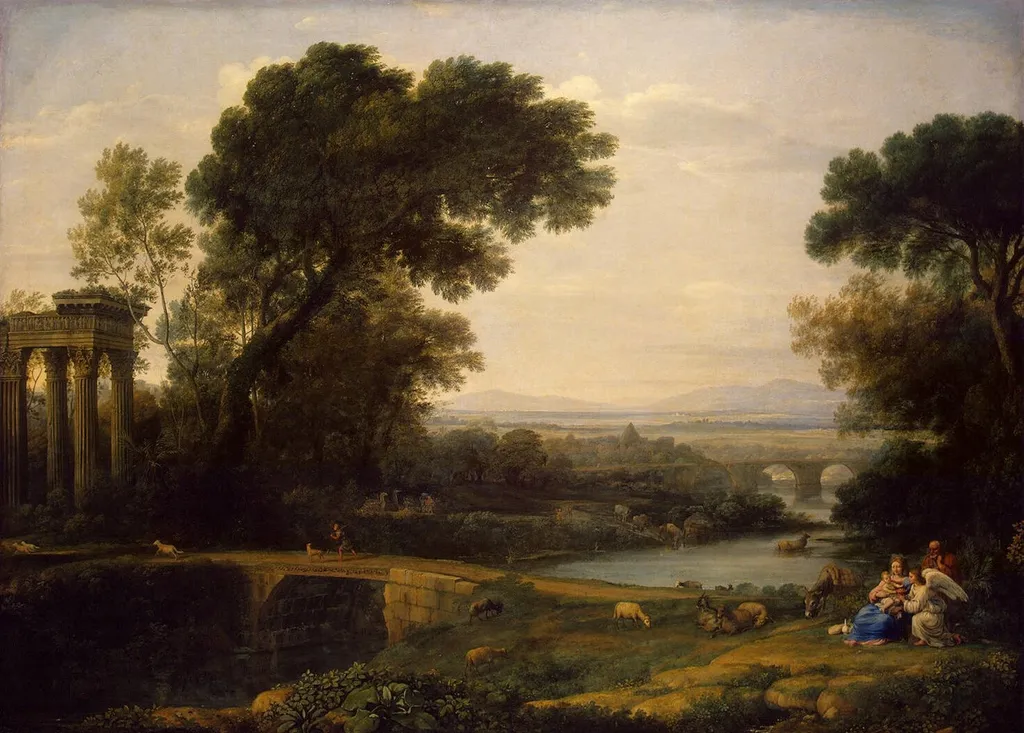
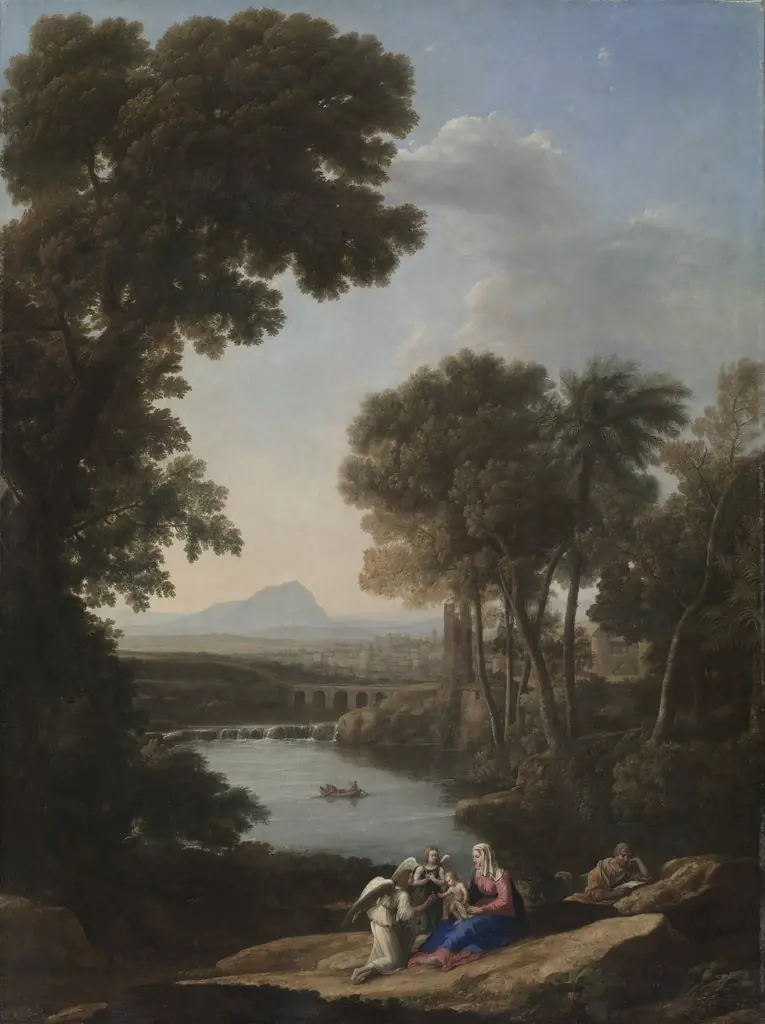
Landscape with the rest on the Flight into Egypt (Noon) is an oil painting by Claude Lorrain. It dates from 1661 and is held in the collection of the Hermitage Museum.
About this work
Overview
Landscape with the Rest on the Flight into Egypt (Noon) is an oil on canvas painting by the French Baroque artist Claude Lorrain, dated 1661.
Landscape with the Rest on the Flight into Egypt (Noon) is an oil on canvas painting by the French Baroque artist Claude Lorrain, dated 1661. Measuring 116 cm in height and 159.6 cm in width, the work depicts a biblical episode set within an expansive, idealized natural world. It is currently held in the State Hermitage Museum in Saint Petersburg, Russia, where it is catalogued as number 1235. The painting is a significant example of Claude's mature period, demonstrating his ability to merge religious narrative with the classical landscape tradition, creating a vision of nature that is both intellectual and poetic.
Subject & Meaning
The painting illustrates the Rest on the Flight into Egypt, a narrative drawn from the Gospel of Matthew (2:13-15). Following the birth of Jesus, an angel appeared to Joseph in a dream, warning him to flee to Egypt with the Virgin Mary and the Christ Child to escape King Herod's Massacre of the Innocents. In the foreground right, the Holy Family rests on a grassy bank, accompanied by an angel in white robes, while their donkey grazes nearby among sheep and goats. The landscape itself carries symbolic weight, reflecting the ideal landscape concept where nature serves as an expression of an ideal, perfect world and the artist's inner vision. Since the 18th century, the painting has been grouped with three other Hermitage works as The Four Hours of the Day, representing Noon. However, scholar Doretta Cecchi has argued this grouping is erroneous, noting the paintings are actually two separate pairs of pendants created years apart without a shared iconographic program, and that Claude left no indication of specific times of day.
Technique & Style
Executed in oil on canvas, the painting features a smooth surface with careful gradations in the sky and water, alongside detailed rendering of leaves and drapery. The composition is dominated by the landscape, which occupies nearly the entire canvas. The palette employs warm golds, muted greens, and soft blues, with light entering from the left to illuminate foliage and cast gentle shadows. The work belongs to Claude's mature period. During the 1660s, he moved away from strict classical severity toward a more personal and subjective approach, reflecting a concept of nature that some scholars describe as pre-romantic. Towering trees frame the scene, while spatial recession is carefully constructed through successive planes, connecting the foreground figures to a distant, mountainous horizon.
History & Provenance
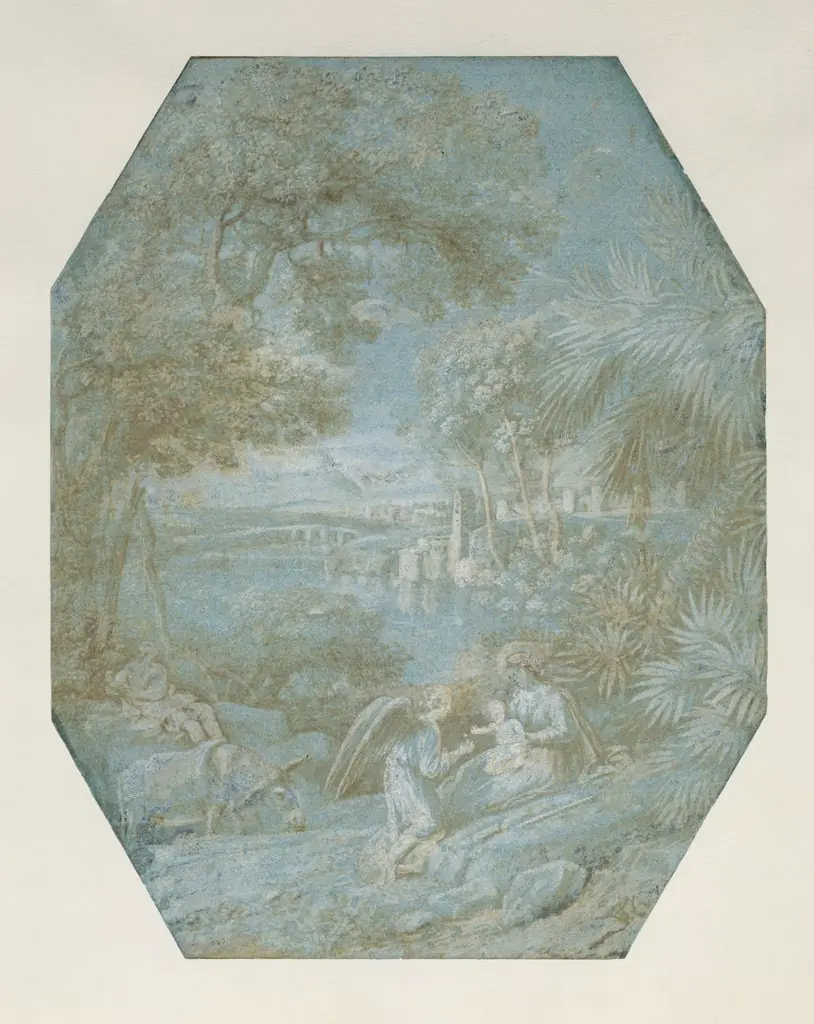
The painting was commissioned in 1661 by Henri van Halmale, a citizen of Antwerp. Claude signed the work beneath the figure of the Virgin as CLAVDIO. IVF. ROM[AE] 1661. He recorded the composition as number 154 in his Liber Veritatis, the record book he maintained to prevent forgeries. Beside the drawing, an inscription notes the Antwerp commission for Halmale, while a second inscription documents a smaller copy made in 1675 for the apostolic official Francesco Canseri, which is now lost. By 1738, the original canvas was owned by Landgrave William VIII of Hesse-Cassel. In 1806, French General Joseph Lagrange confiscated the painting and gifted it to Empress Josephine. It subsequently passed to Tsar Alexander I of Russia in 1814 before entering the Hermitage Museum. Three preparatory drawings for the composition survive in the Museum Boijmans Van Beuningen in Rotterdam, the British Museum in London, and the Albertina Library in Vienna. A copy of the painting made by Ranucci in 1812 is preserved in the regional museum of Mainz.
Context
Claude Lorrain was a French painter active in Italy who became a leading figure in Baroque landscape painting, specifically within the current of French classicism. He developed the concept of the ideal landscape, basing his compositions on classical references to present a more elaborate and intellectual vision of nature. This approach made landscape the primary subject, acting as a vehicle for the artist's worldview and poetic interpretation. The painting was conceived as a pendant to Landscape with Tobias and the Angel, dated 1663 and also held in the Hermitage. During this decade, Claude's style evolved toward a more subjective and atmospheric rendering of the natural world, a quality that made his expansive, idealized scenes highly sought after by wealthy collectors across Europe, who viewed them as tranquil retreats from urban life.
Legacy
Claude's approach to the ideal landscape, exemplified by this work, profoundly influenced the trajectory of European landscape painting. By subordinating religious narrative to the grandeur and atmosphere of the natural world, he established a model where nature itself became the primary vehicle for poetic and intellectual expression. His meticulous recording of the composition in the Liber Veritatis, alongside the survival of preparatory drawings, has allowed scholars to trace his creative process and authenticate his oeuvre, cementing his reputation and ensuring the scholarly distinction of his genuine works from the numerous copies and forgeries that circulated during and after his lifetime.
Artist & collection
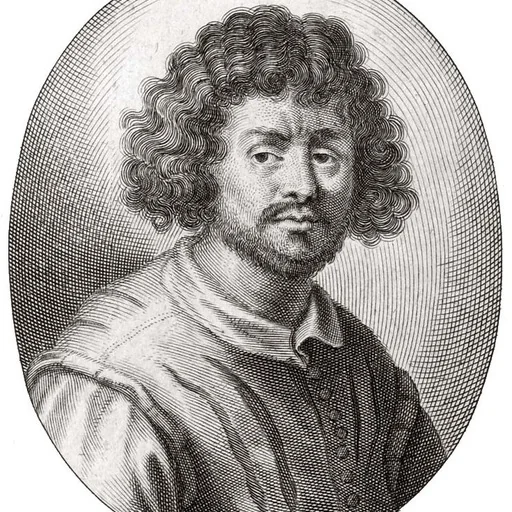
Artist
Claude Lorrain (French:; born Claude Gellée, called le Lorrain in French; traditionally just Claude in English; c.

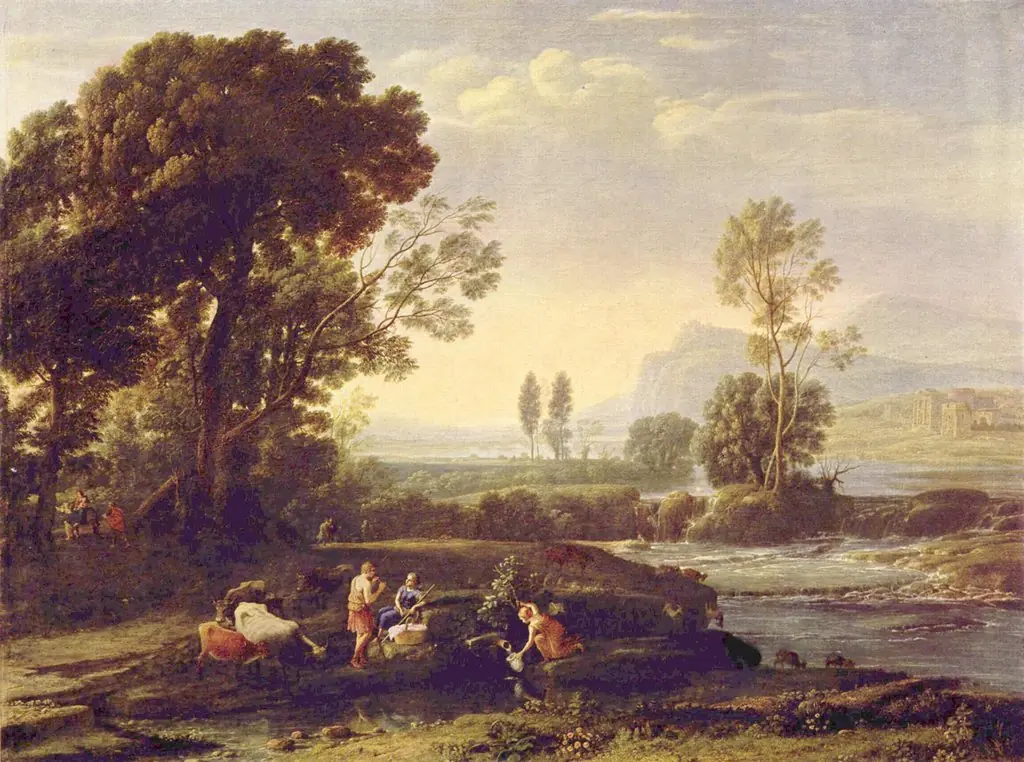
 River landscape with resting shepherds and herds
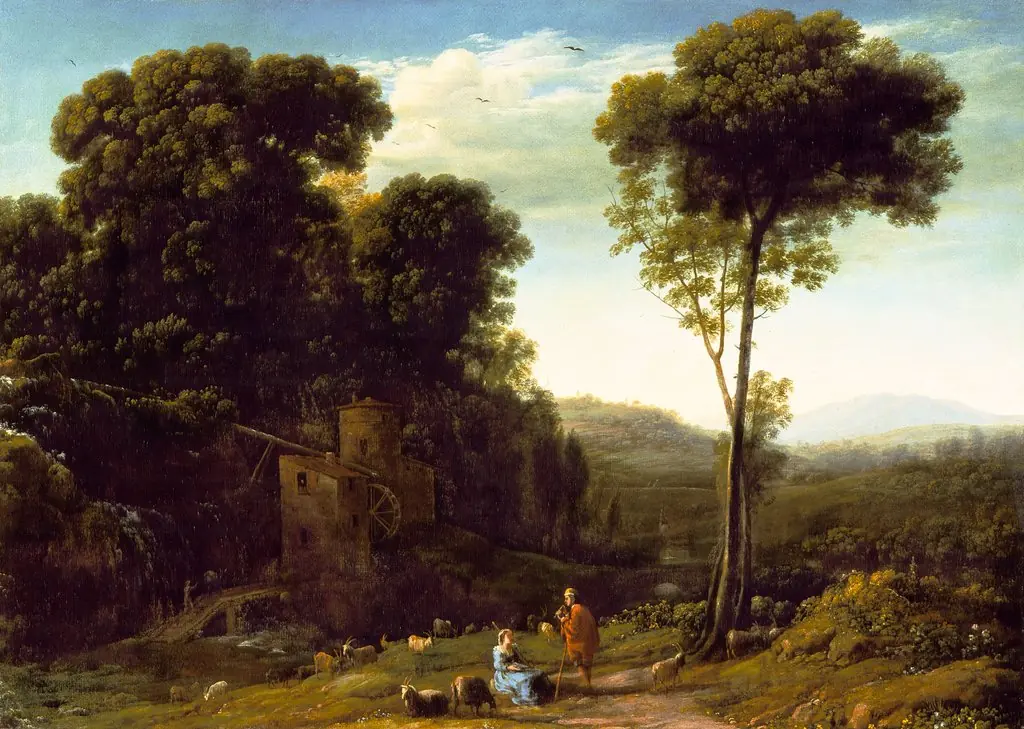 Pastoral Landscape with a Mill
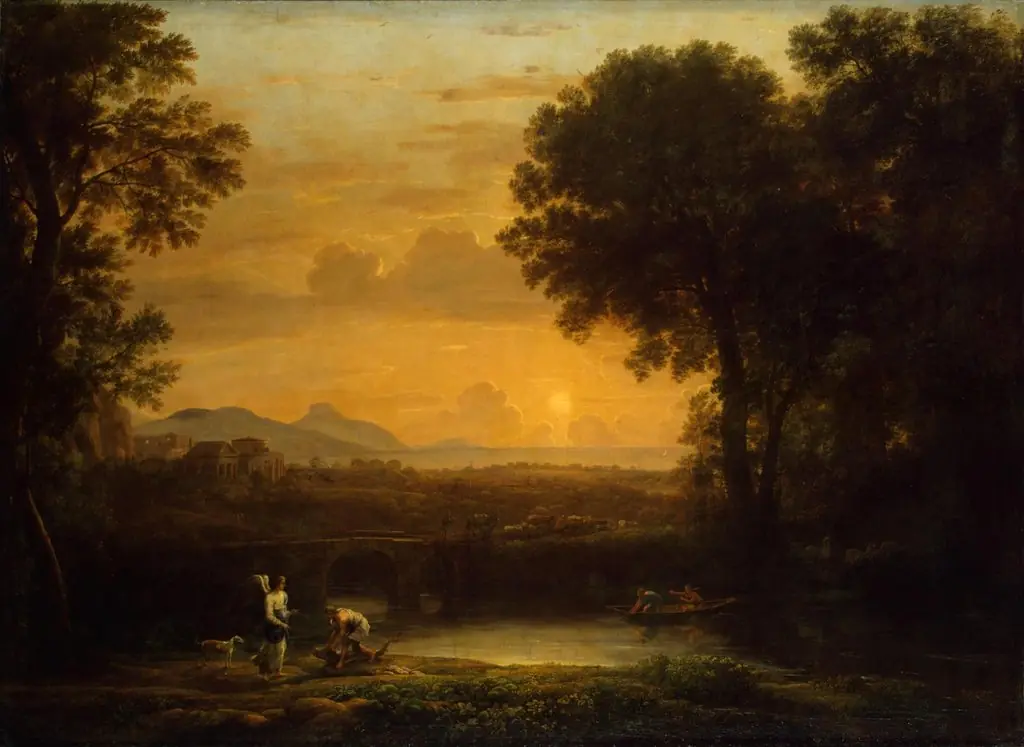 Landscape with Tobias and the Angel (Evening)
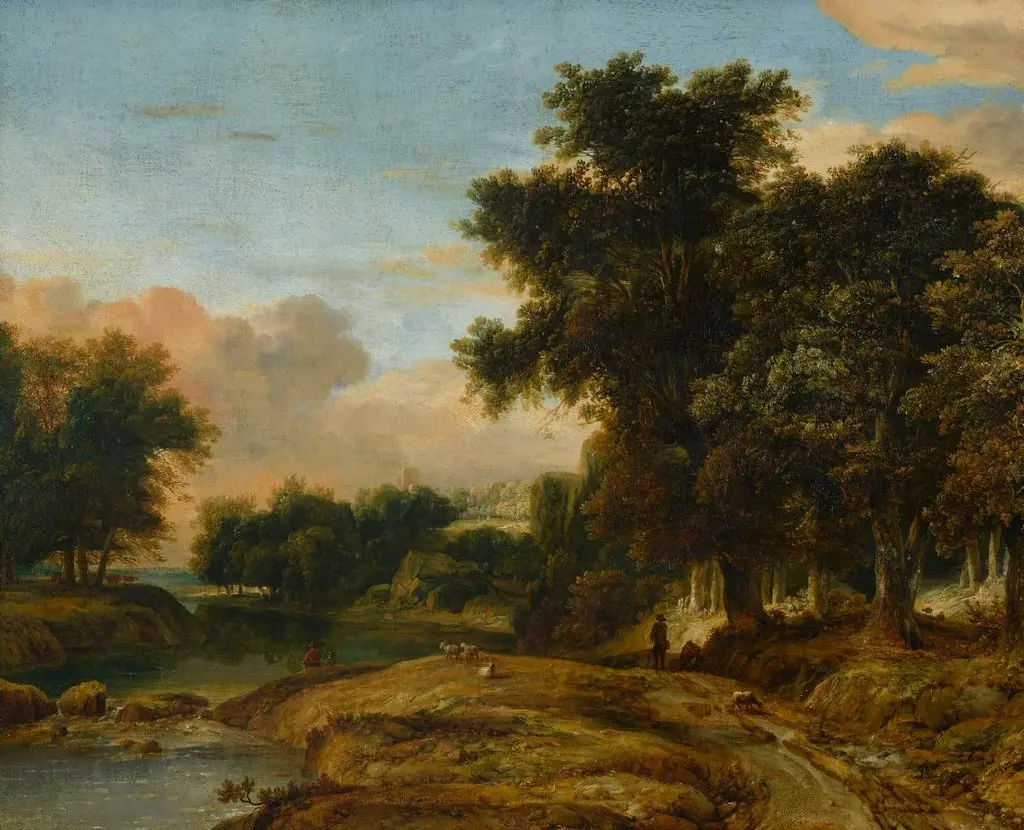 Waldiges Flusstal
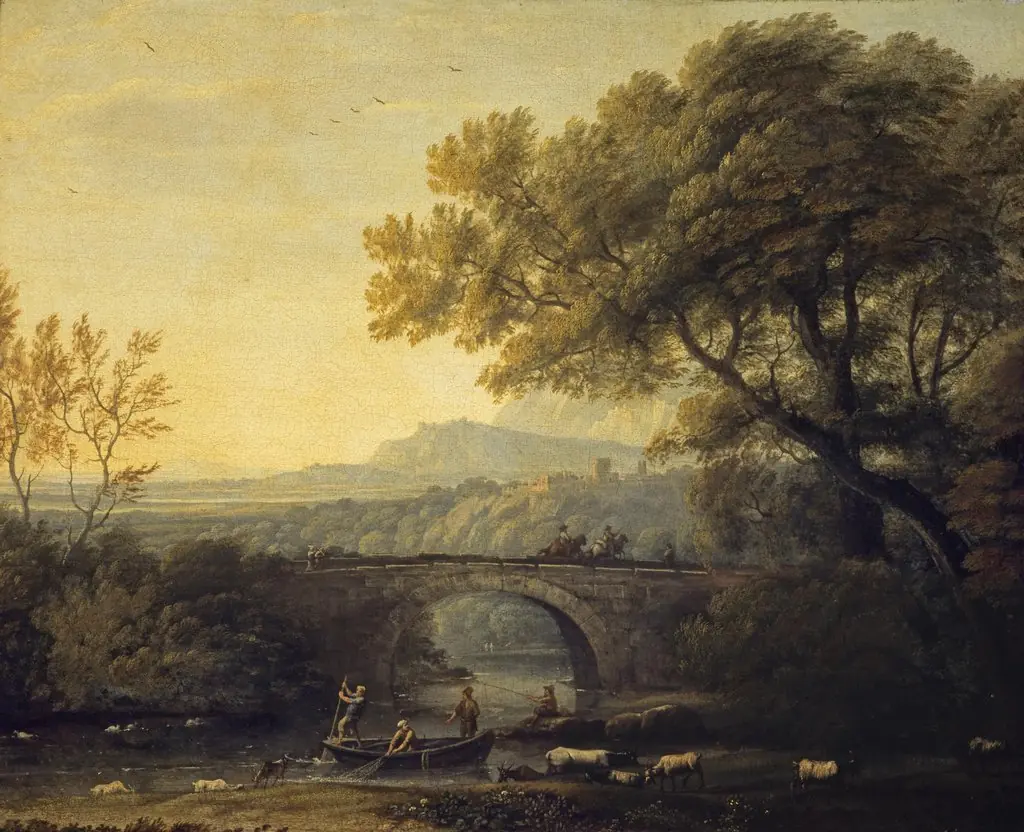 Landscape with a Bridge
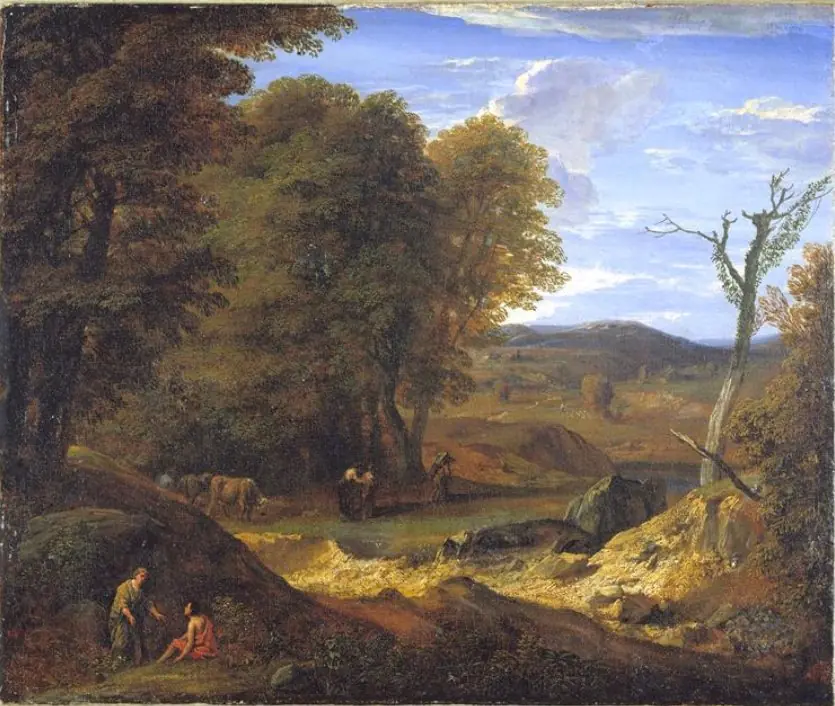 Forest landscape
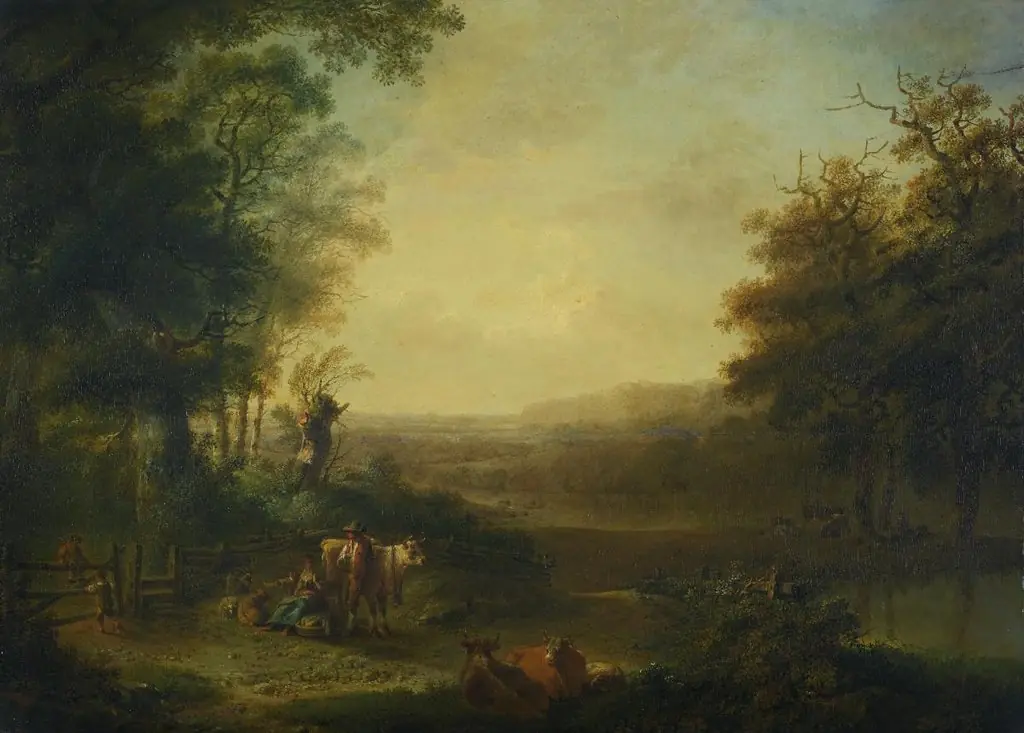 Abendlandschaft
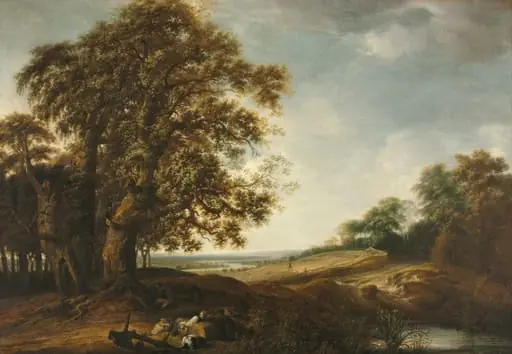 Sleeping Peasants near Fields (Parable of the Weeds)
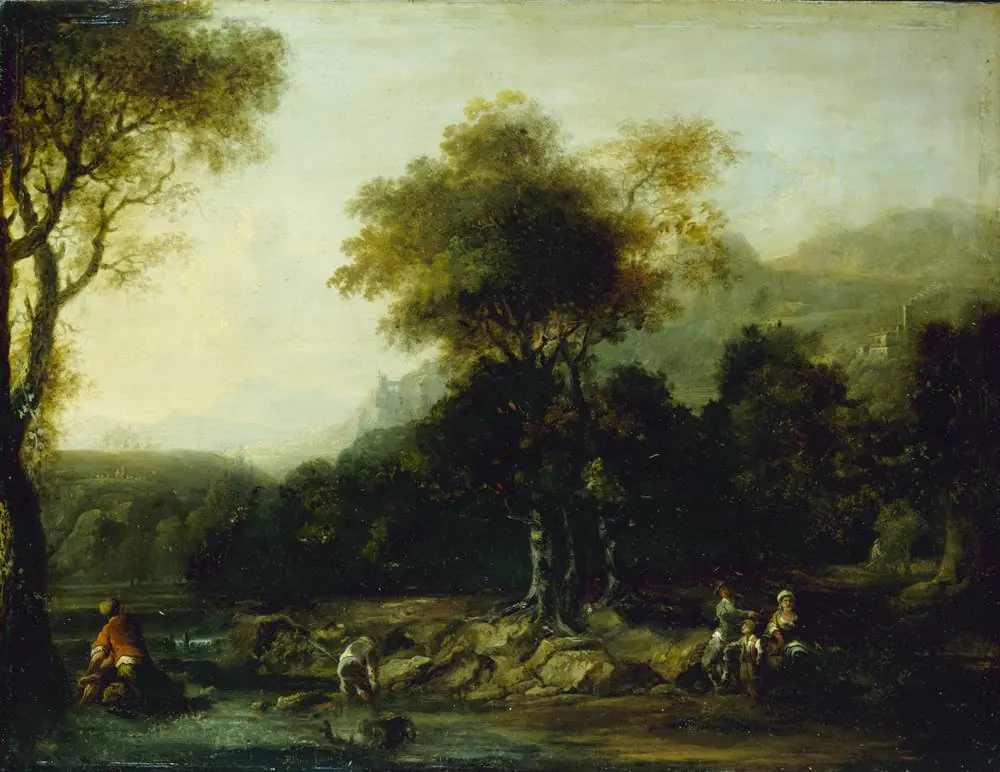 Flusslandschaft mit Fischern
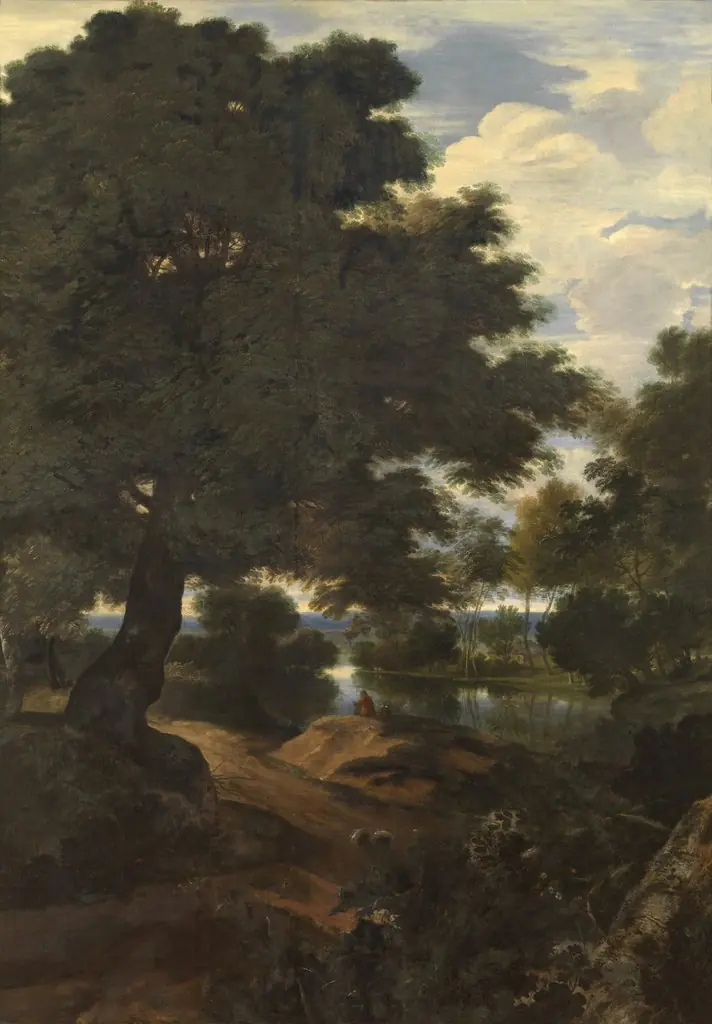 Landscape
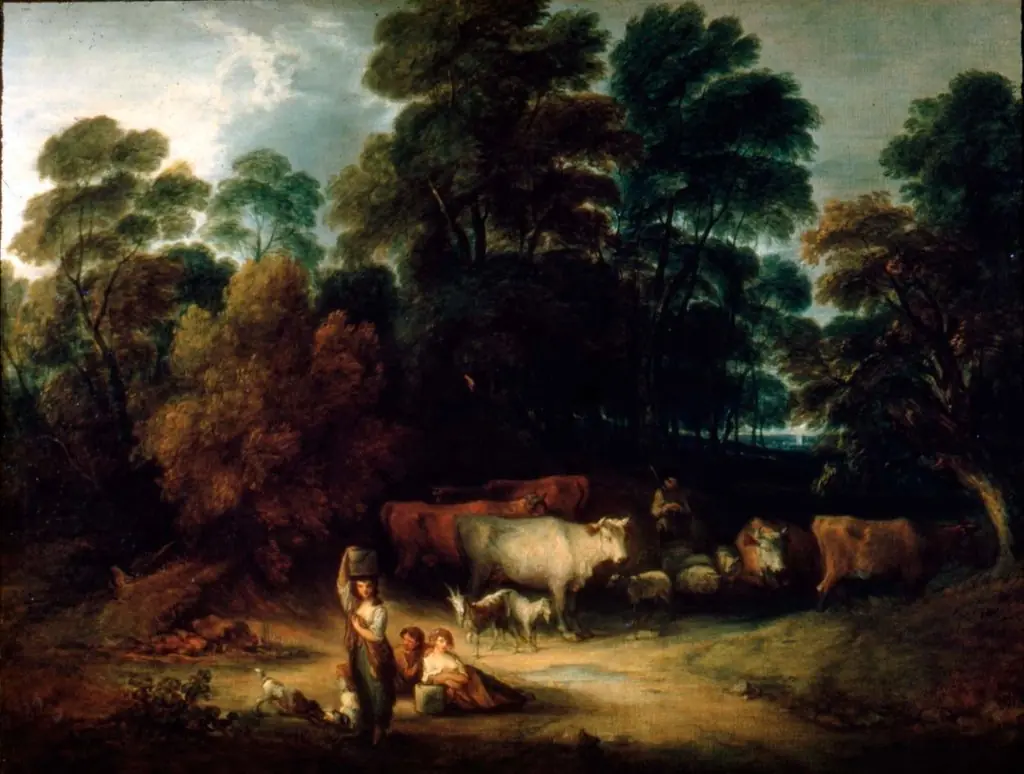 Landscape with Milkmaids and Cattle
- Landscape with Rest in Flight to Egypt