Artwork
River Landscape with Herdsmen
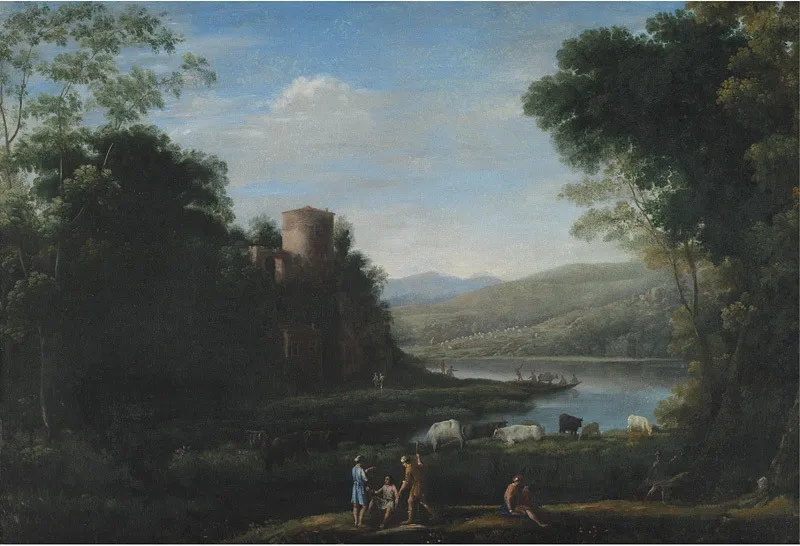
River Landscape with Herdsmen is an oil painting by the French Classical Baroque artist Claude Lorrain. It dates from 1630 and is held in the collection of the Statens Museum for Kunst.
About this work
Overview
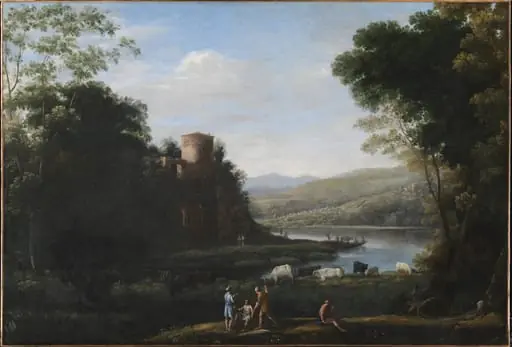
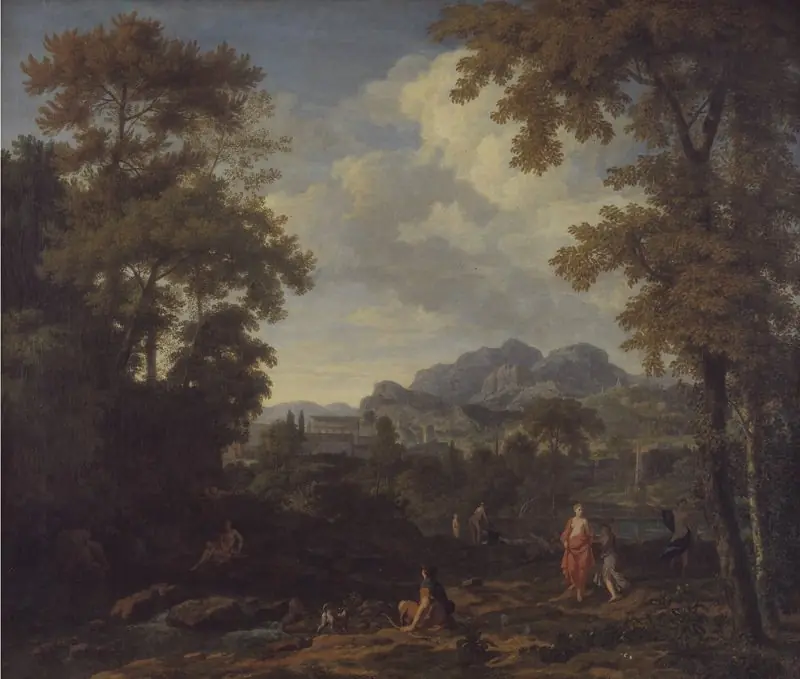
Claude Lorrain’s River Landscape with Herdsmen (1630) is an oil painting that presents a serene riverside vista. The composition balances a gently flowing river, distant rolling hills, and a modest architectural ruin, while small human and animal figures animate the scene without dominating it.
Subject & Meaning
The work portrays herdsmen guiding cattle along the riverbank, a solitary boat crossing the water, and three pedestrians strolling on a path, one bearing a staff. These modest figures suggest a timeless, pastoral narrative, inviting contemplation of humanity’s quiet relationship with the natural world.
Technique & Style
Lorrain employs smooth, blended brushwork to render the sky and water, creating a luminous atmosphere through subtle glazing. Light falls softly on the hills, imparting a warm, distant glow that enhances the painting’s tranquil mood and reinforces its classical compositional balance.
History & Provenance
Created during Lorrain’s early period in Italy, the painting reflects his development of the idealized landscape genre that would define his career. It entered the collection of Denmark’s Statens Museum for Kunst, where it remains on display as part of the museum’s Baroque holdings.
Context
The piece belongs to the French Classical Baroque tradition, wherein landscape was elevated to a subject of intellectual and aesthetic significance. Lorrain’s inclusion of small, narrative figures aligns with contemporary practices of embedding historical or biblical references within expansive natural settings.
Artist & collection
Artist
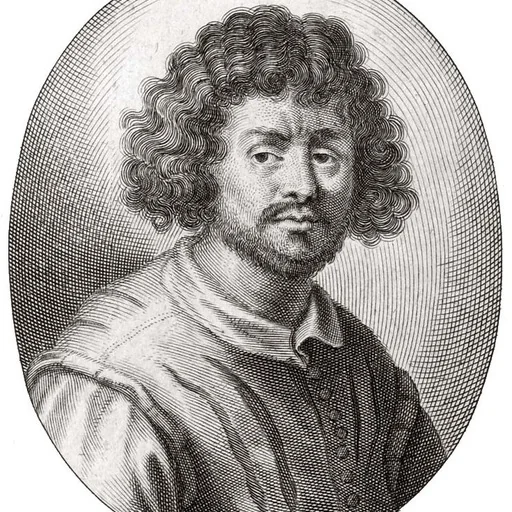
Claude Lorrain (French:; born Claude Gellée, called le Lorrain in French; traditionally just Claude in English; c.

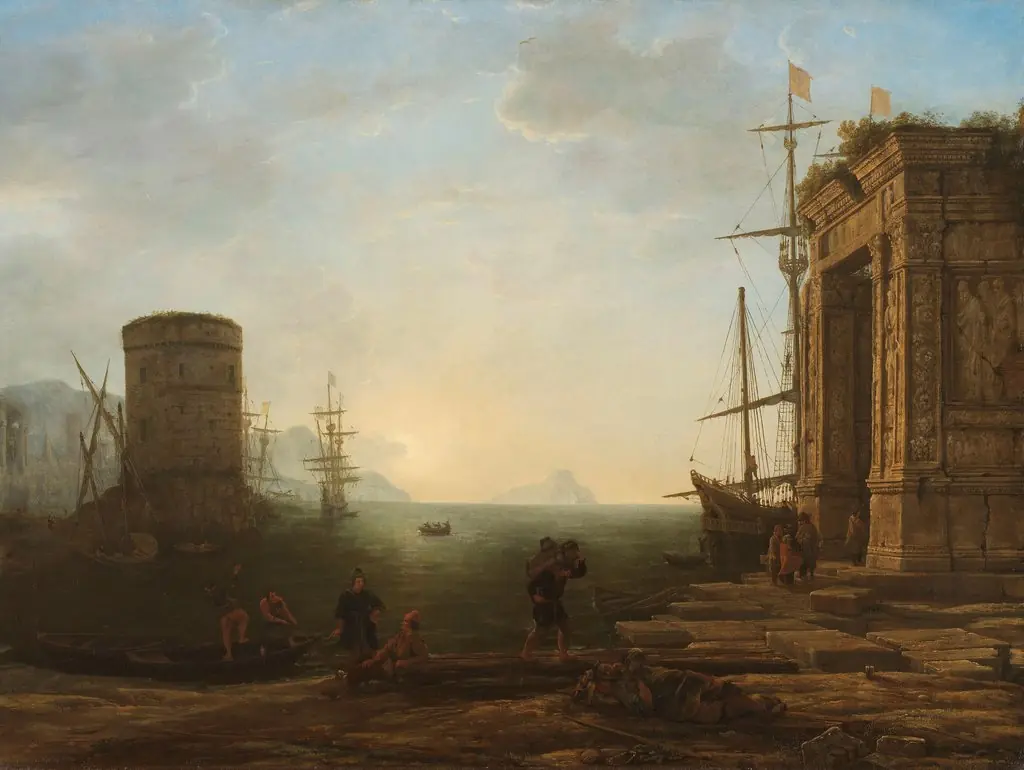
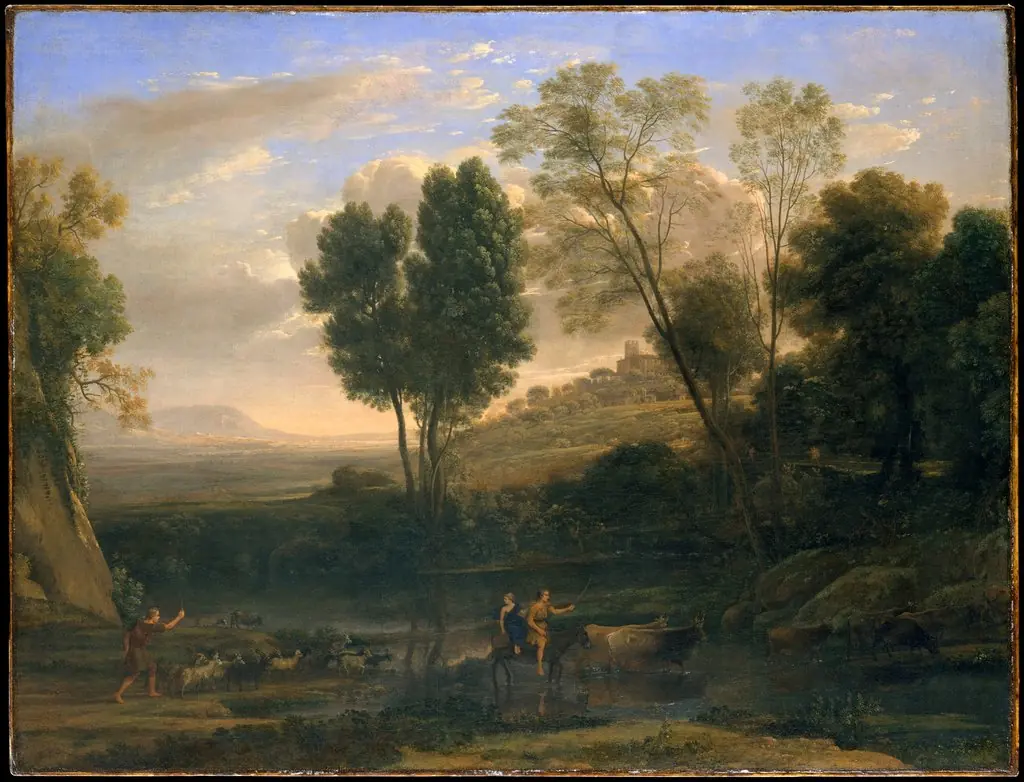
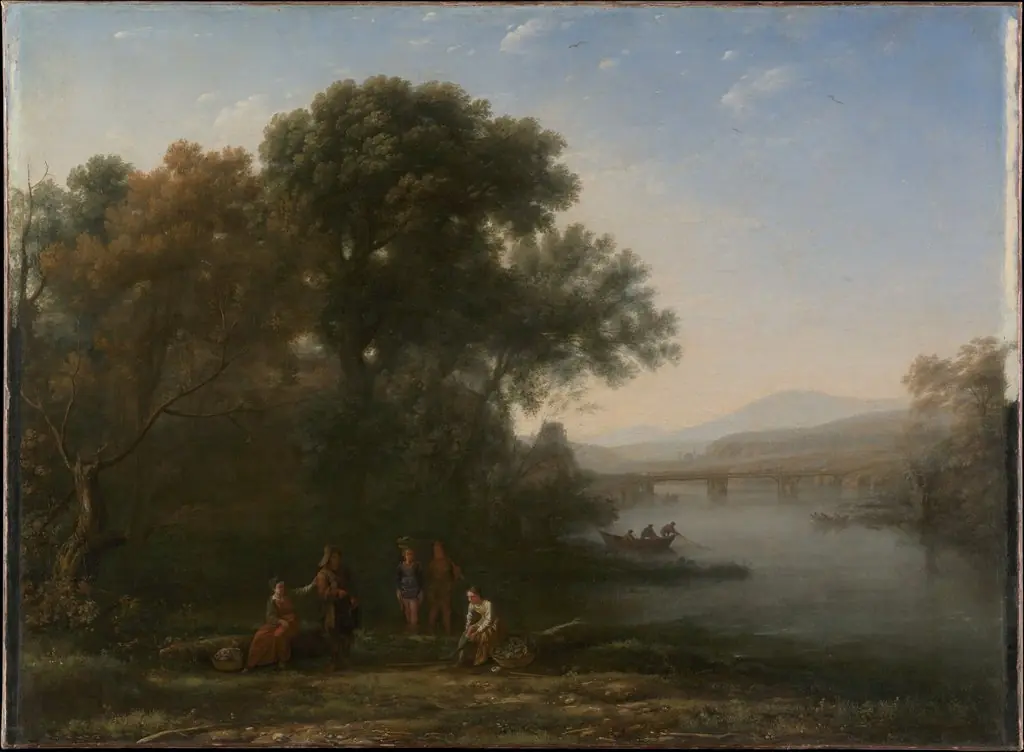
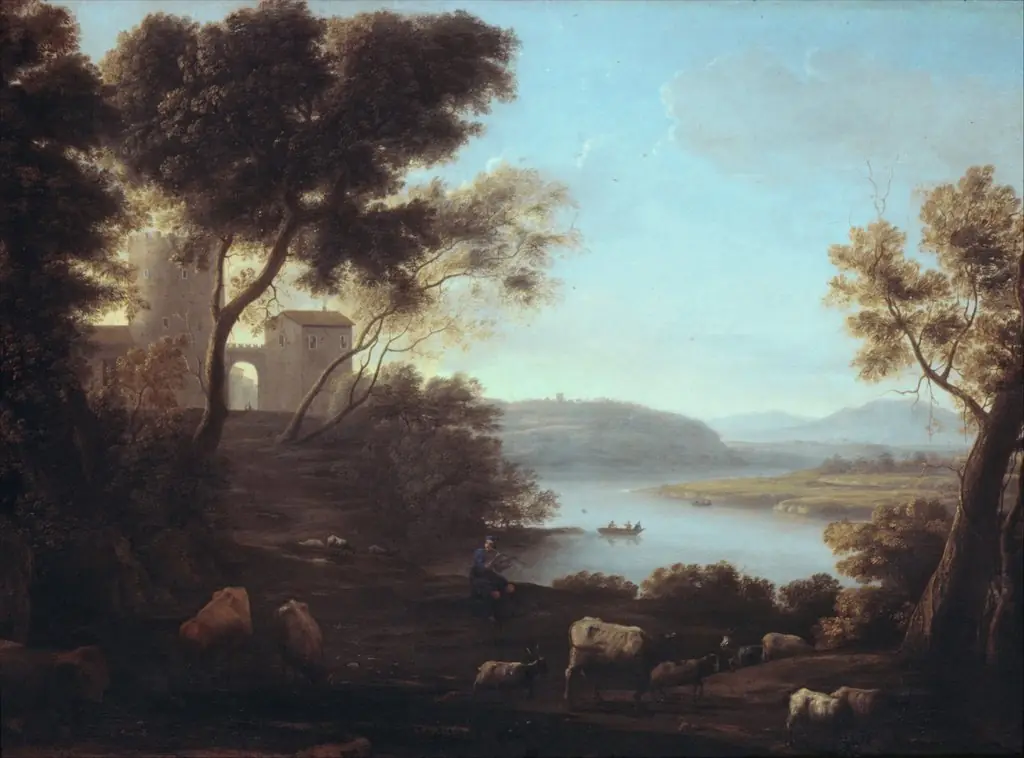
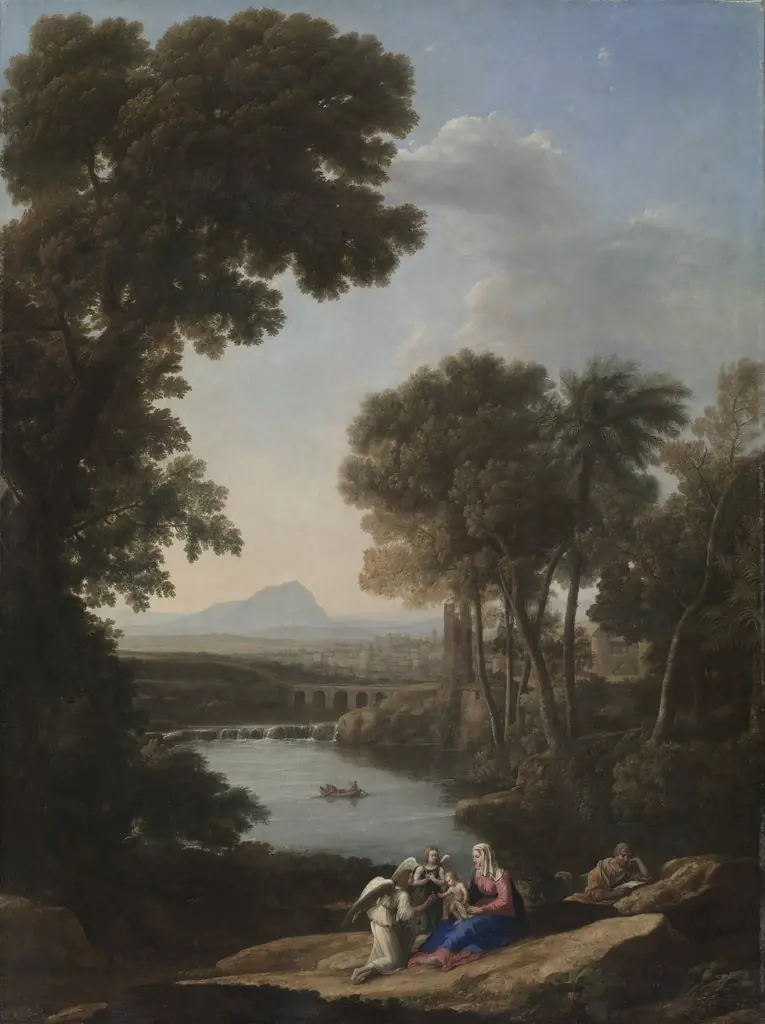
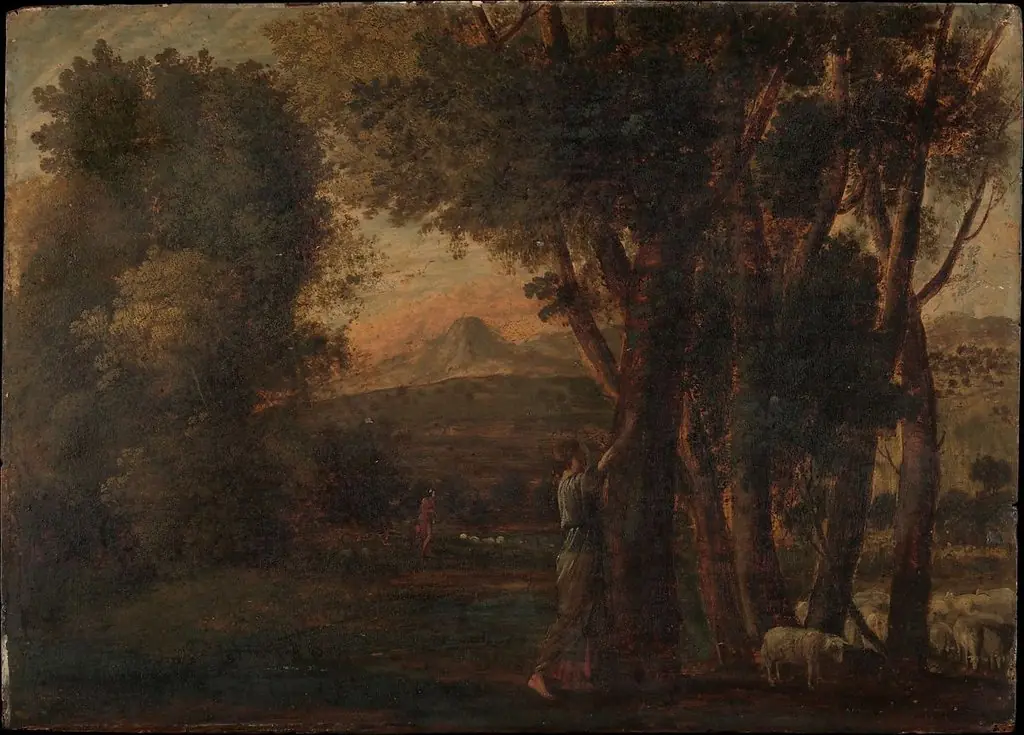
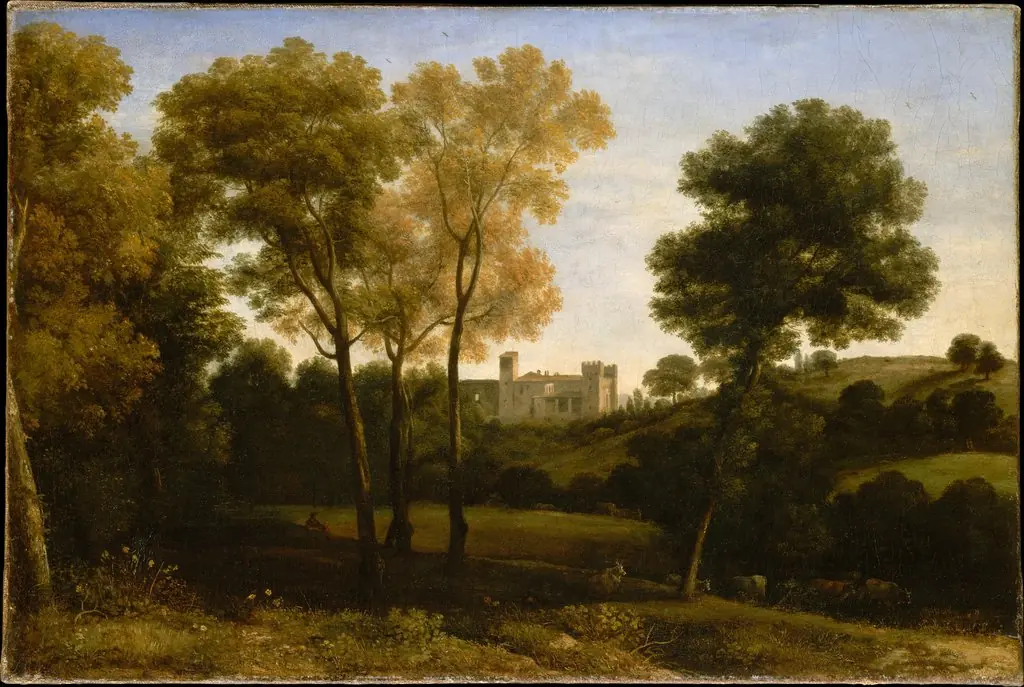
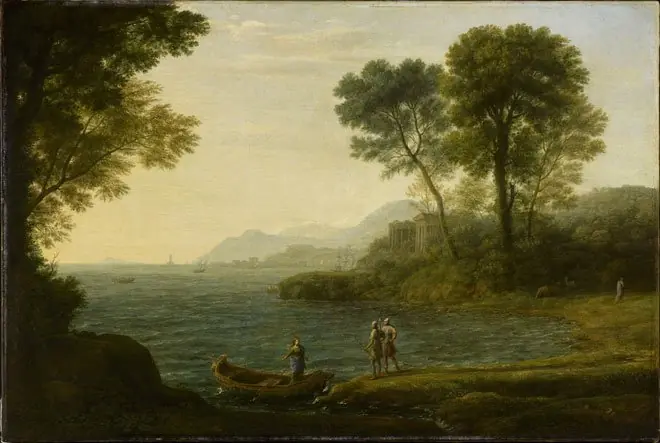 Marine avec l'embarquement de Carlo et Ubaldo
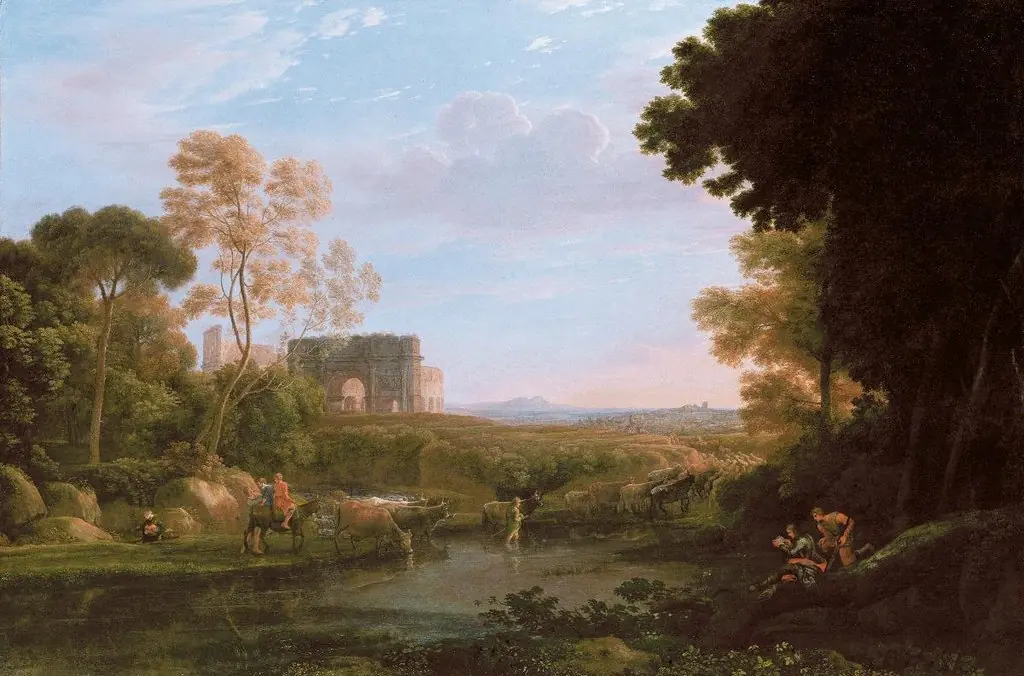 Pastorale avec l’Arc de Constantin
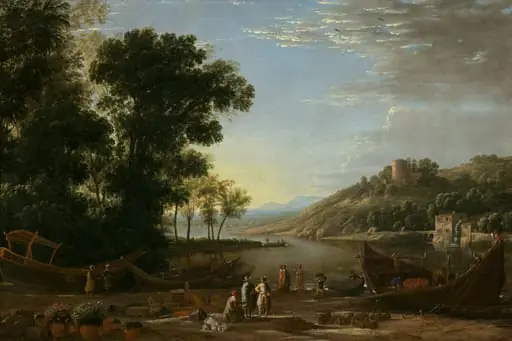 Landscape with Merchants
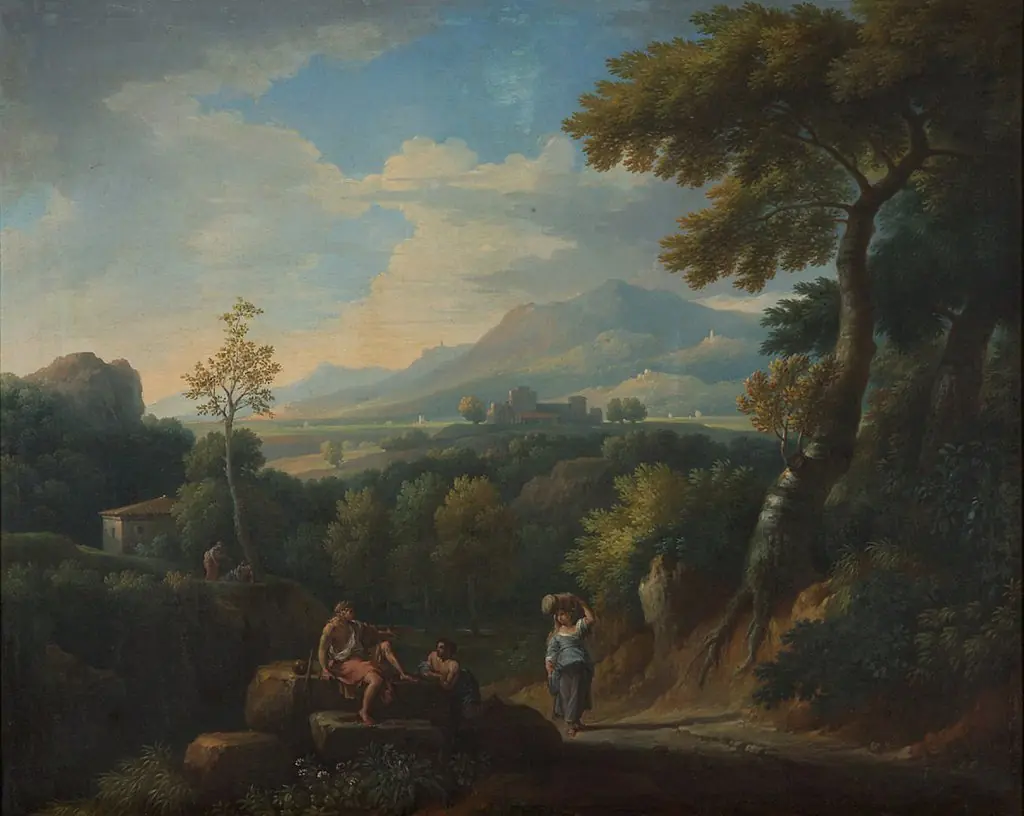 Italian Landscape
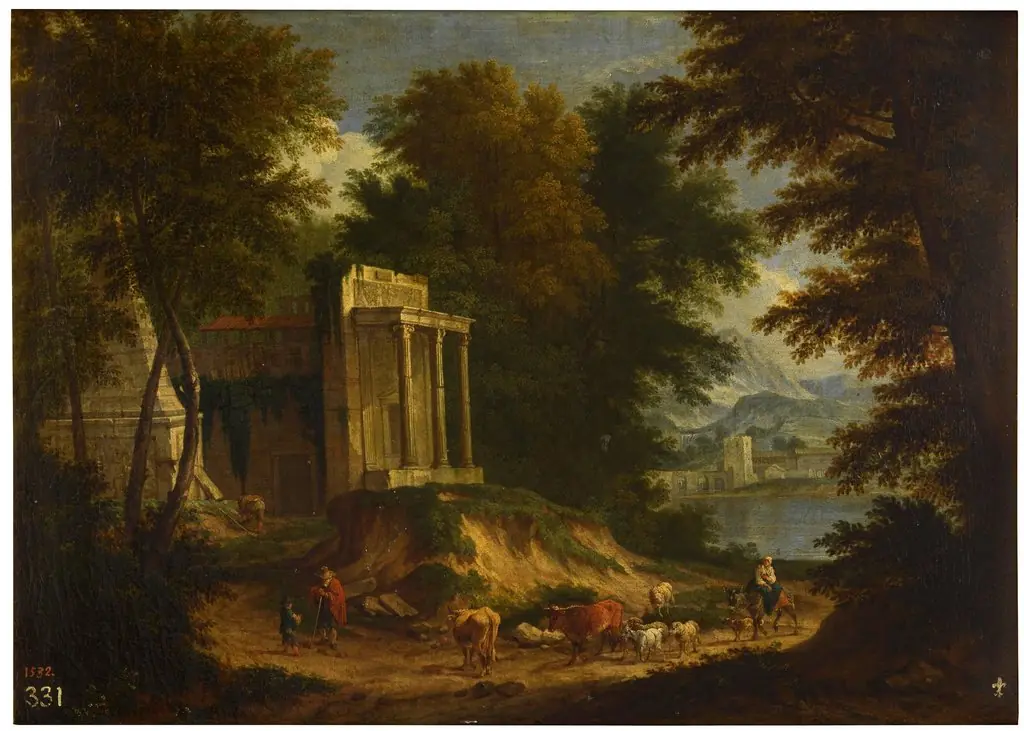 Paisaje con ruinas
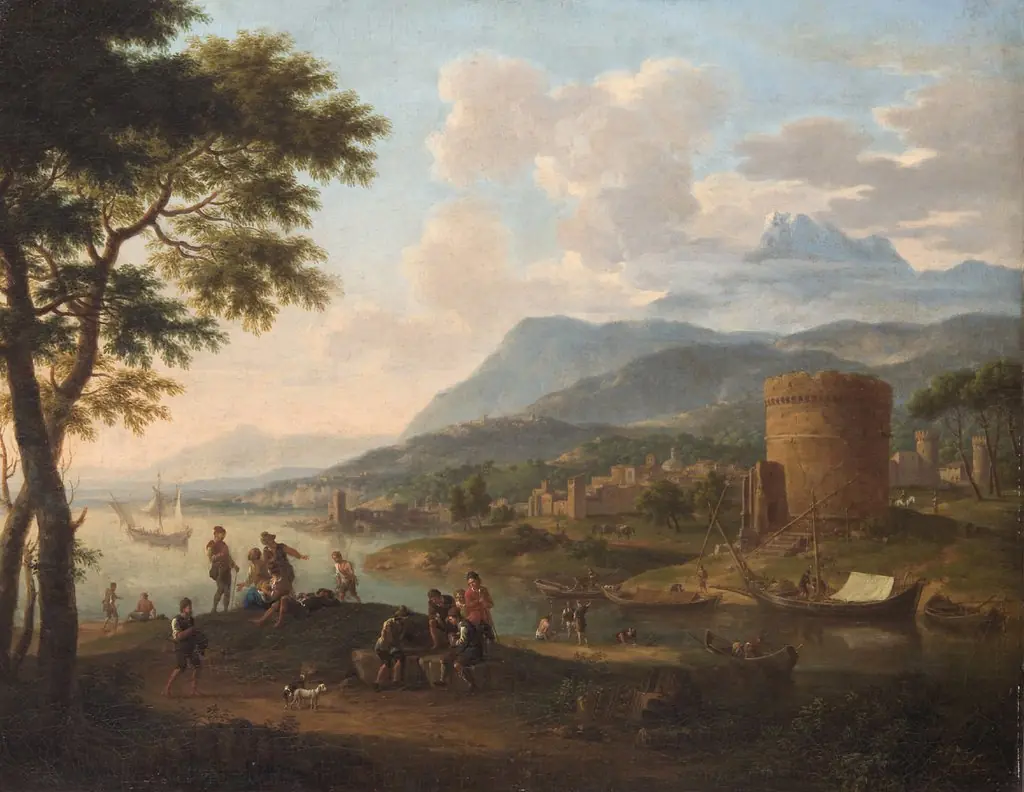 Italienische Abendlandschaft
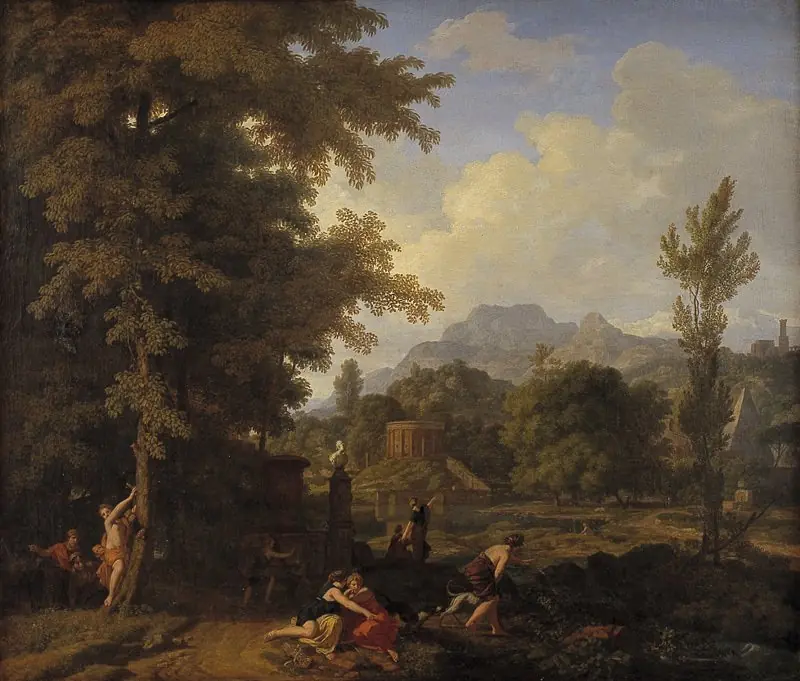 Classical Landscape with Diana (?) and her Nymphs
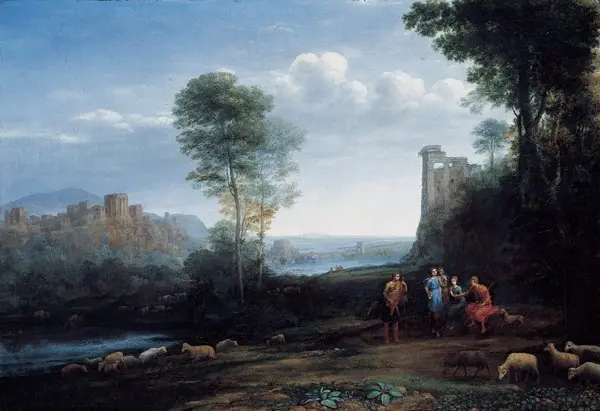 Pastoral Landscape
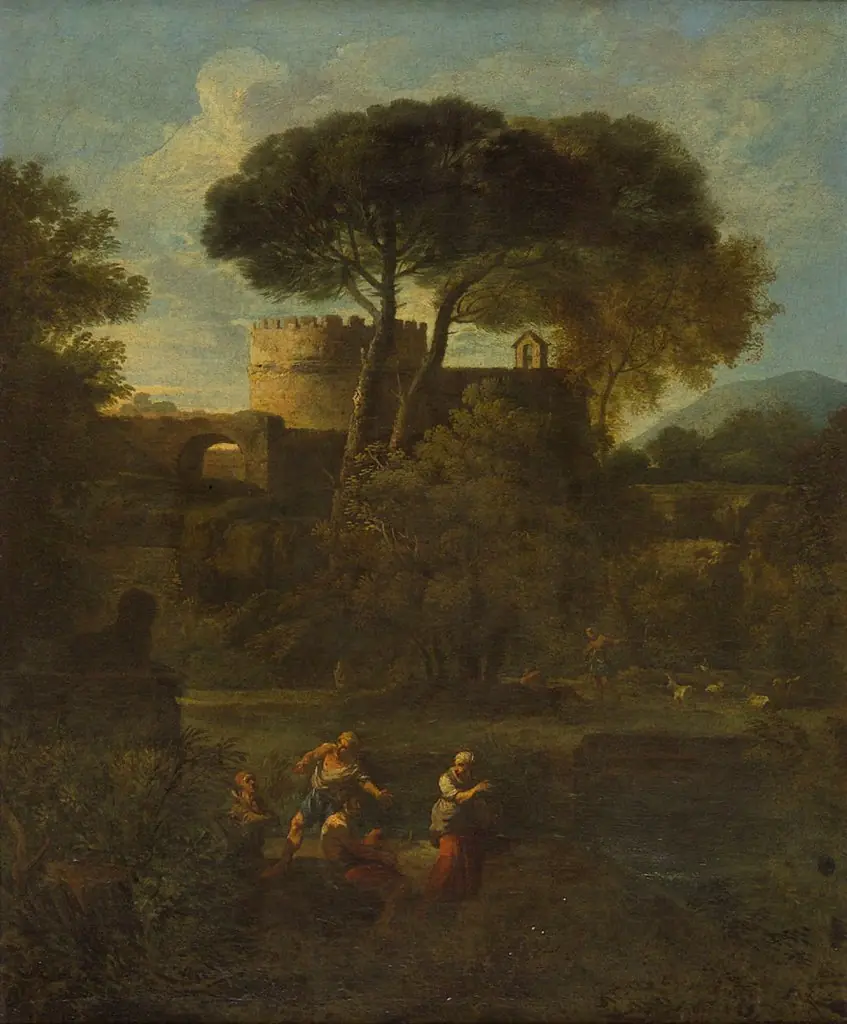 Grabmal der Cecilia Metella
 Classical Landscape with Diana (?) and her Nymphs
- River Landscape with Herdsmen