Artwork
Marine near Étretat
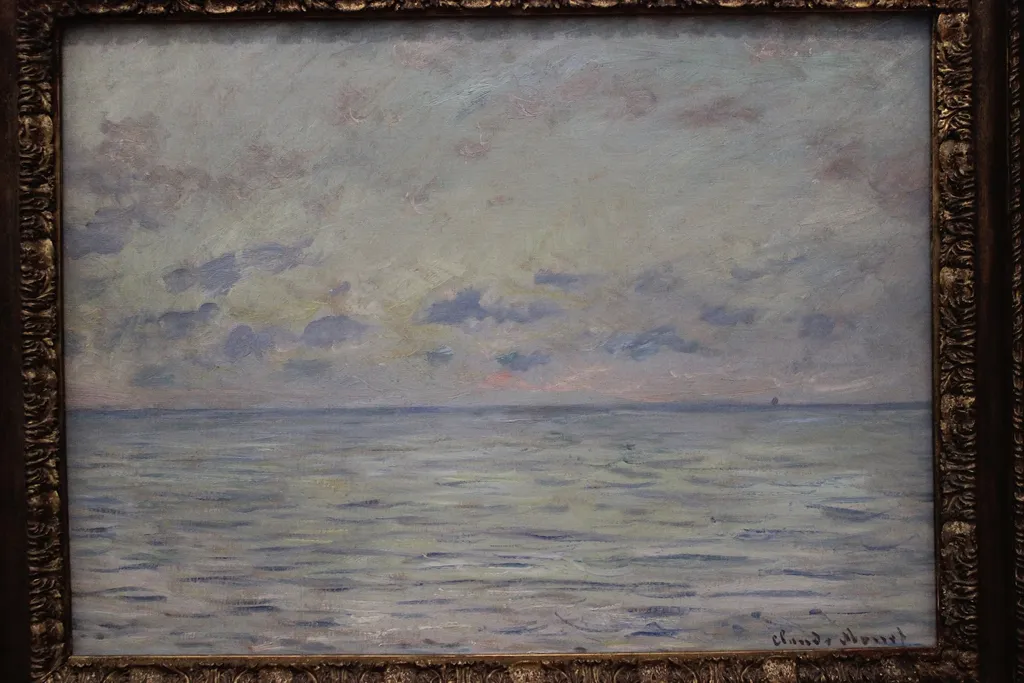
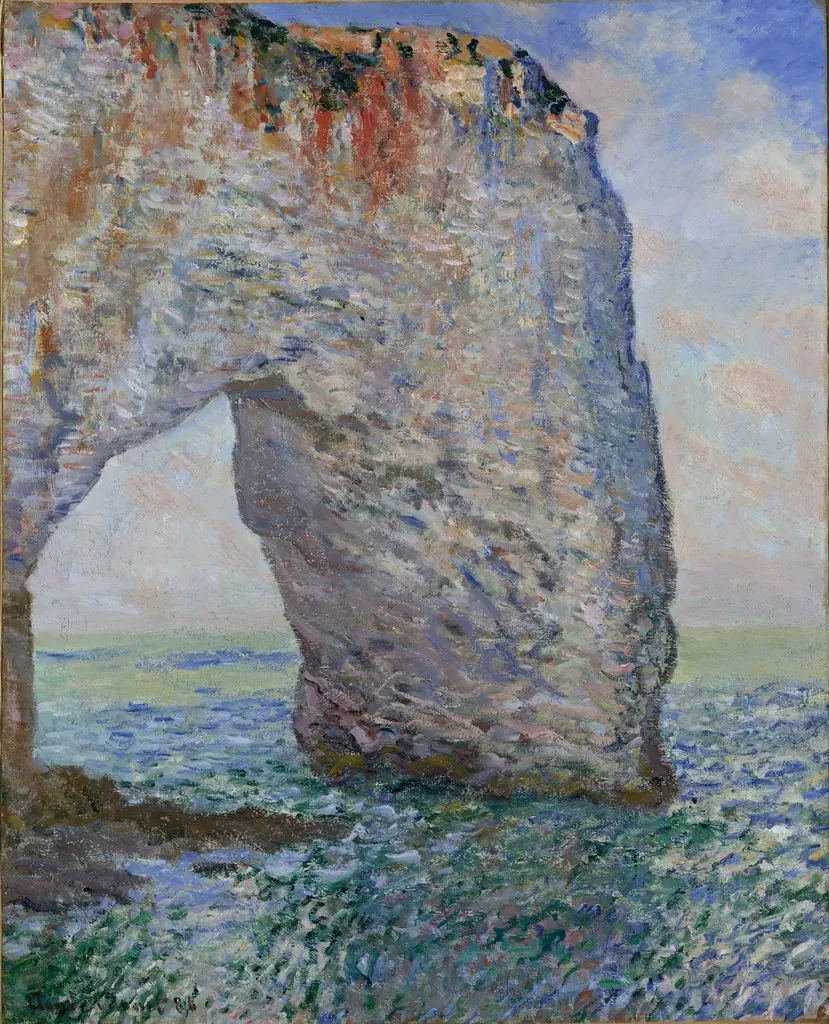
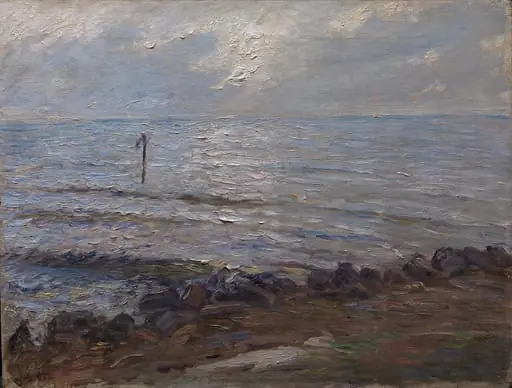
Marine near Étretat is an oil painting by the Impressionist artist Claude Monet. It dates from 1892 and is held in the collection of the Philadelphia Museum of Art.
About this work
Overview
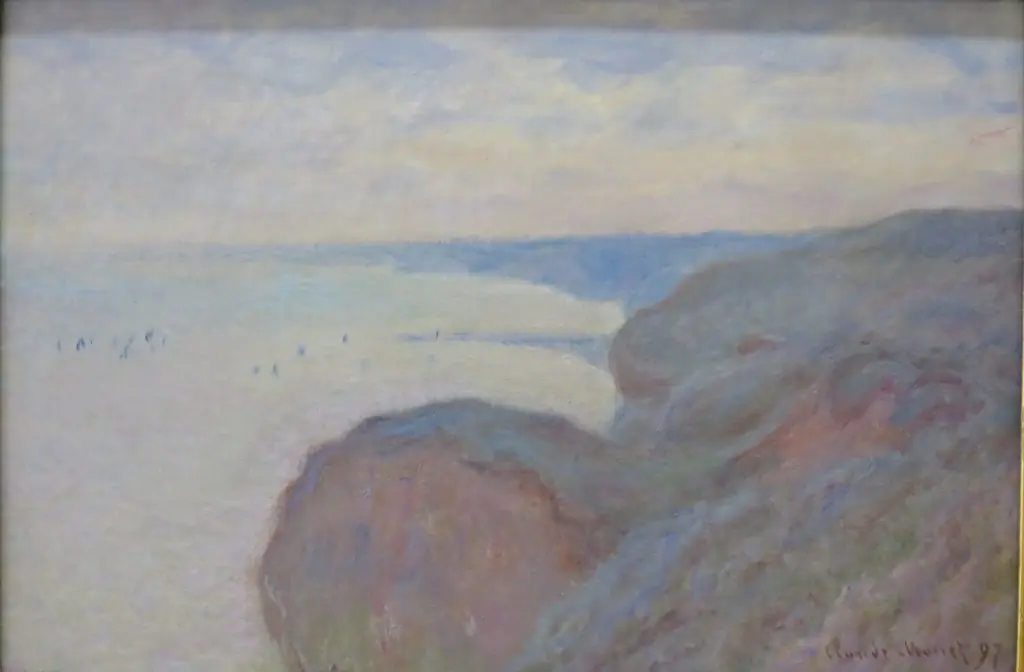
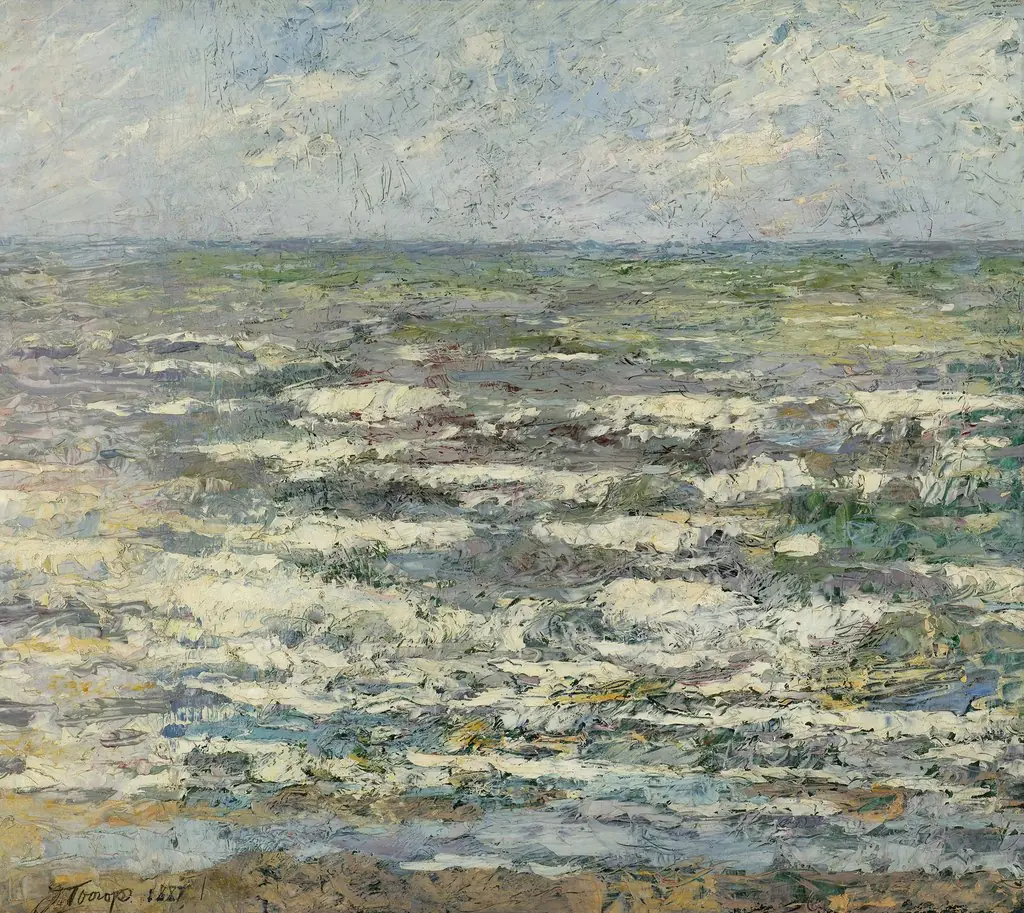
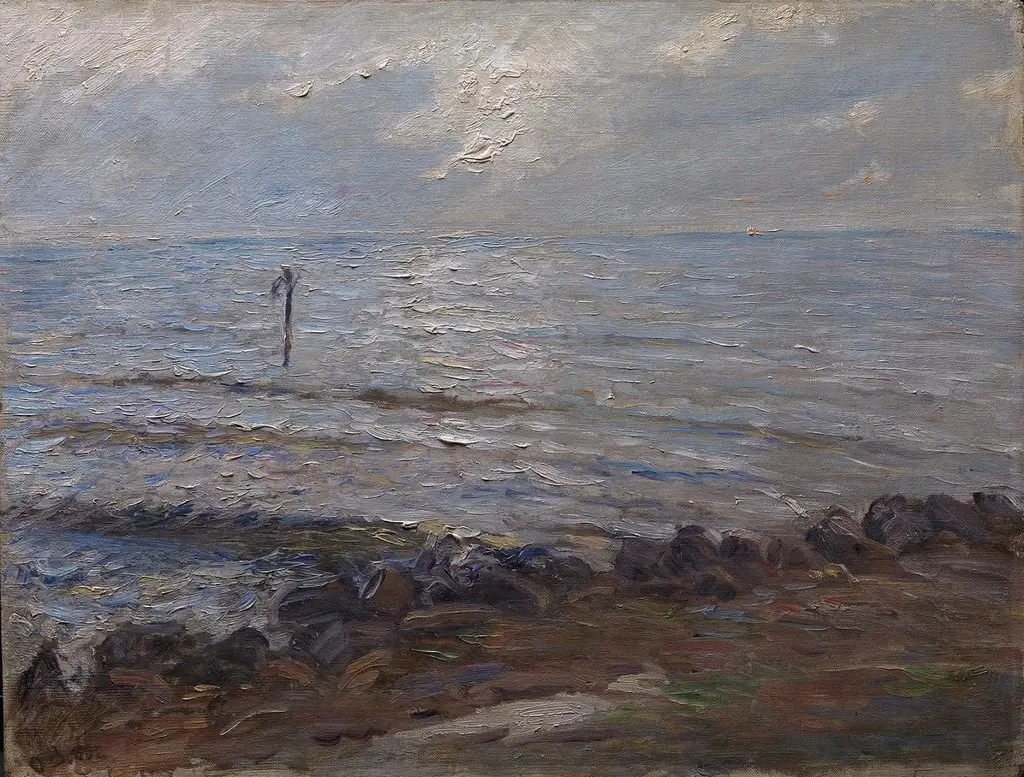
Rather than depicting specific architectural landmarks like the famous arches, the painting emphasizes the vast expanse of water stretching toward the horizon.
Marine near Étretat, painted by Claude Monet in 1892, is an oil on canvas work capturing the coastal landscape of Normandy. The composition focuses on the atmospheric interplay between the sea and sky, characteristic of Monet's mature Impressionist style. Rather than depicting specific architectural landmarks like the famous arches, the painting emphasizes the vast expanse of water stretching toward the horizon.
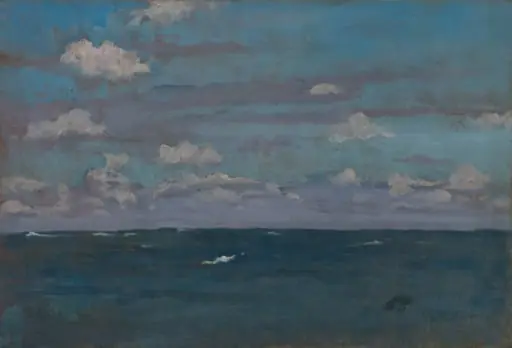
The sky is rendered in a soft palette of grays and blues, accented with subtle hints of pink and purple, indicating an overcast day. The water's surface mirrors these celestial tones, creating a unified visual harmony that dissolves the boundary between the elements. This work belongs to a series of seascapes Monet produced during his stays in Étretat, where he explored the changing effects of light and weather conditions.
The brushwork is fluid and rapid, prioritizing the immediate sensory experience of the scene over precise topographical detail. By 1892, Monet had fully developed his method of painting en plein air to capture transient moments, and this piece exemplifies his dedication to observing the subtle variations of the marine environment.
Subject & Meaning
The composition presents a broad stretch of sea meeting a muted sky, with the horizon marked by a faint, dark silhouette that may represent a vessel or a rock formation. The subdued palette of grays, blues, pinks, and purples conveys a calm, overcast atmosphere, inviting contemplation of the sea’s quiet expanse.
Technique & Style
Monet employs loose, expressive brushwork that captures the fleeting qualities of light and water. The surface of the canvas reflects the sky’s colors, creating a visual dialogue between sea and atmosphere typical of his late Impressionist approach.
History & Provenance
After its completion, the painting entered the art market and was eventually acquired by the Philadelphia Museum of Art. It has remained in the museum’s collection, serving as a representative example of Monet’s late seascapes.
Context
The work belongs to a series of coastal studies Monet made while visiting Étretat, a Normandy cliffside celebrated for its dramatic light. These studies explore the interaction of sky, sea, and land, reflecting the artist’s ongoing interest in atmospheric effects.
Own this work as a print
Artist & collection
Artist
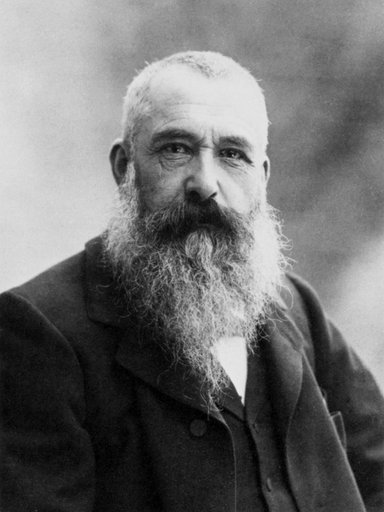
Oscar-Claude Monet was a French painter and founder of Impressionism who is seen as a key precursor to modernism, especially in his attempts to paint nature as he perceived it.