Artwork
Pond at Montgeron
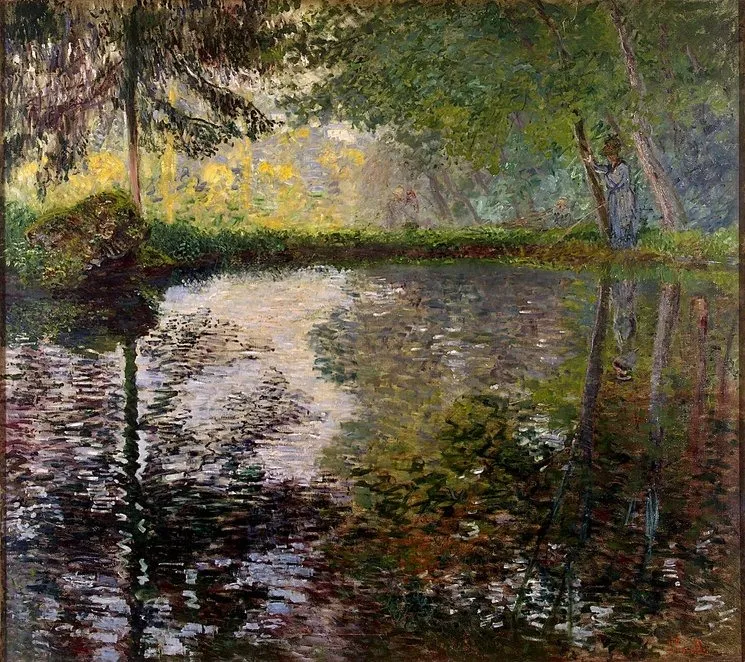
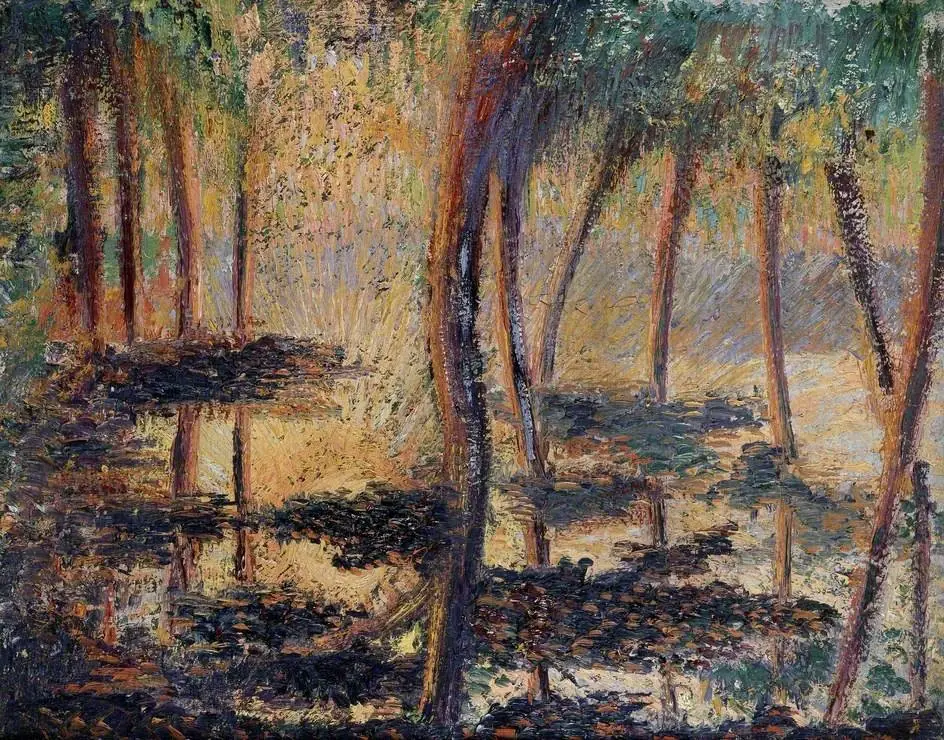
Pond at Montgeron is an oil painting by the Impressionist artist Claude Monet. It dates from 1889 and is held in the collection of the Hermitage Museum.
About this work
Overview
The painting is now held in the collection of the Hermitage Museum in Saint Petersburg, where it is catalogued under inventory number ГЭ-6562.
Pond at Montgeron is an oil on canvas painting by Claude Monet, executed in 1877 during a pivotal period of the artist's career. Measuring 173 by 194 cm, the work is one of four large decorative canvases Monet produced for the estate of his patron Ernest Hoschedé in Montgeron, Île-de-France. The painting is now held in the collection of the Hermitage Museum in Saint Petersburg, where it is catalogued under inventory number ГЭ-6562. As an early manifestation of Monet's ambition to create monumental decorative ensembles, the work anticipates the Grandes Décorations that would culminate decades later in his Water Lilies cycle at the Musée de l'Orangerie. The painting belongs to the Impressionist movement and was exhibited at the third Impressionist exhibition.
Subject & Meaning
The painting depicts a tranquil pond occupying the lower two-thirds of the composition, framed by trees with a weeping willow descending from the upper left corner. In the background to the right, a female figure in pale clothing leans against a tree trunk, partially obscured by foliage, as she contemplates the shaded water. Several vertical wooden posts emerge from the water on the right side. The figure has been identified as possibly Camille, Monet's first wife, or more probably Alice Hoschedé, who would later become the artist's companion and second wife. The scene captures a moment of quiet observation within a verdant setting, with no sky directly visible. The subject embodies the Impressionist interest in everyday natural scenes and the effects of light, while the figure's integration into the landscape suggests a harmonious relationship between the human presence and its surroundings.
Technique & Style
Monet employed oil paint on canvas with a loose, visible brushwork throughout the composition. Short, directional strokes build texture in the water, while dappled touches suggest leaves and vegetation. The surface of the pond is rendered with broken brushstrokes that capture shimmering reflections of green, brown, and white. Shadows pool in the lower portion of the pond, while brighter tones gather toward the center and left. The overall palette consists of greens, yellows, browns, and muted blues, with a background glow of yellow light filtering through distant trees. This handling demonstrates Monet's characteristic technique of building form through color and light rather than line, with the paint application itself becoming a subject of visual interest. The scale of the canvas, at nearly two meters in width, marks it as an ambitious work designed for architectural impact.
History & Provenance
The painting originated from an invitation extended by Ernest Hoschedé, a wealthy financier and collector who had acquired several works by Monet. In the summer of 1876 and into autumn, Hoschedé hosted the painter at his property in Montgeron, where the estate's pond became the subject. Hoschedé gave Monet carte blanche to execute a set of four large decorative paintings intended for the grand rotunda room of his Château de Rottembourg. However, Hoschedé declared bankruptcy several months later, and the canvases never reached the château, which he was forced to sell. The work was later acquired by Ivan Morozov, the wealthy Moscow patron whose collection was subsequently nationalized by the Bolsheviks. It has been part of the Hermitage Museum collection since 1930. While some sources indicate the painting was shown at the third Impressionist exhibition, the Wildenstein catalogue raisonné specifies that it was actually the related study, titled Coin d'étang à Montgeron, that appeared there.
Context
The Montgeron commission emerged during a period of financial difficulty for Monet, who welcomed the patronage of Hoschedé. The project represented a significant development in the artist's career, as it marked the first time Monet realized his long-held ambition to conceive a unified ensemble of large decorative paintings. This concept of Grandes Décorations would preoccupy him for decades and find ultimate expression in the Water Lilies installed at the Musée de l'Orangerie shortly after his death. The work sits within the broader context of Impressionist landscape painting of the 1870s, when Monet and his colleagues were exploring plein-air techniques and the representation of transient atmospheric conditions. The painting's residence in the Hermitage, alongside numerous other Monets from the Morozov collection, reflects the remarkable penetration of French Impressionism into Russian collections during the late nineteenth and early twentieth centuries.
Legacy
Pond at Montgeron occupies an important place in Monet's oeuvre as the inaugural statement of his decorative ambitions, a thread that would run through his career to its conclusion. The work demonstrates how Monet's engagement with serial, large-scale landscape painting developed not suddenly in his Giverny period but through earlier experiments rooted in specific commissions and patronage relationships. The painting's provenance through the Morozov collection and subsequent nationalization illustrates the complex afterlife of private art collections in revolutionary Russia, while its permanent place in the Hermitage ensures its continued visibility within one of the world's major museums. The four-canvas Montgeron project as a whole, though disrupted by Hoschedé's bankruptcy, established a model of patron-supported monumental landscape painting that would influence Monet's subsequent negotiations with collectors and institutions.
Artist & collection
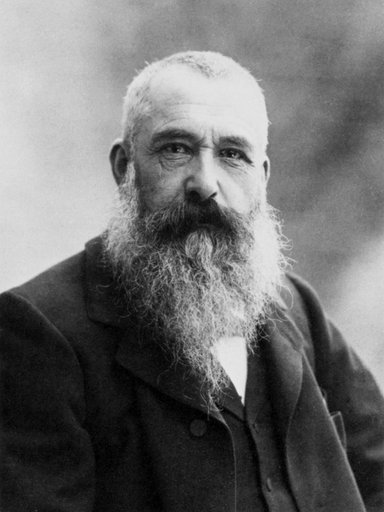
Artist
Oscar-Claude Monet was a French painter and founder of Impressionism who is seen as a key precursor to modernism, especially in his attempts to paint nature as he perceived it.