Artwork
The Break-Up of the Ice
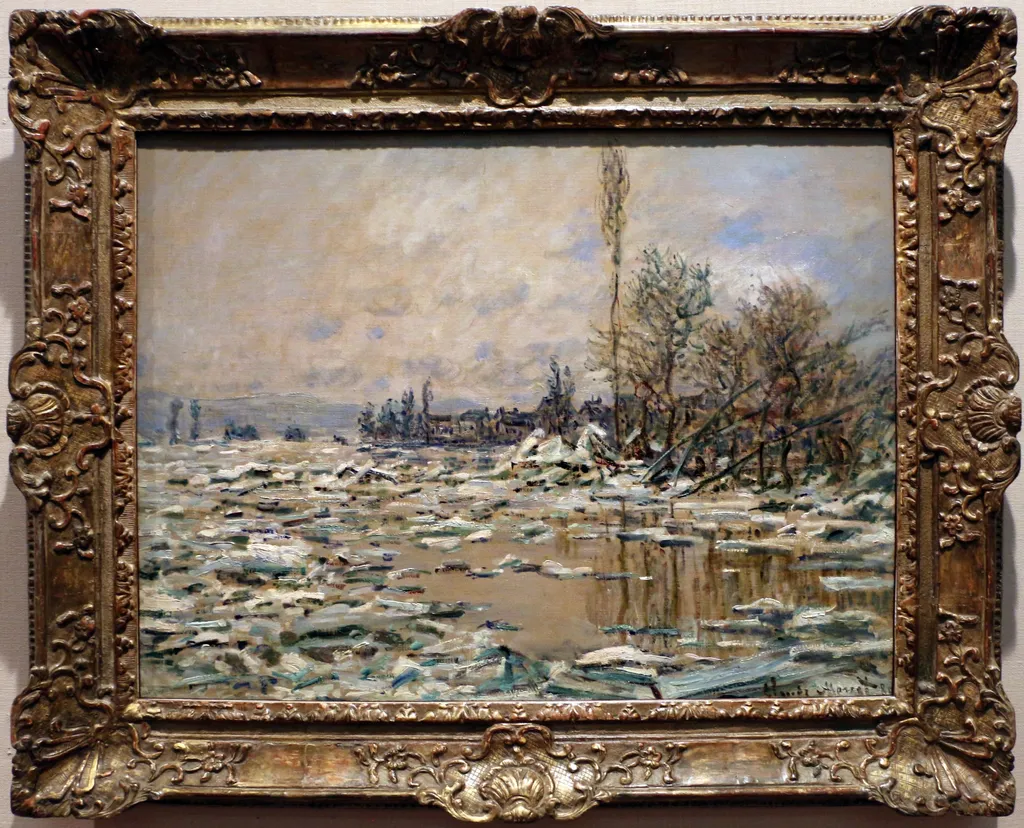
The Break-Up of the Ice is an oil painting by the Impressionist artist Claude Monet. It dates from 1890 and is held in the collection of the Calouste Gulbenkian Museum.
About this work
Overview
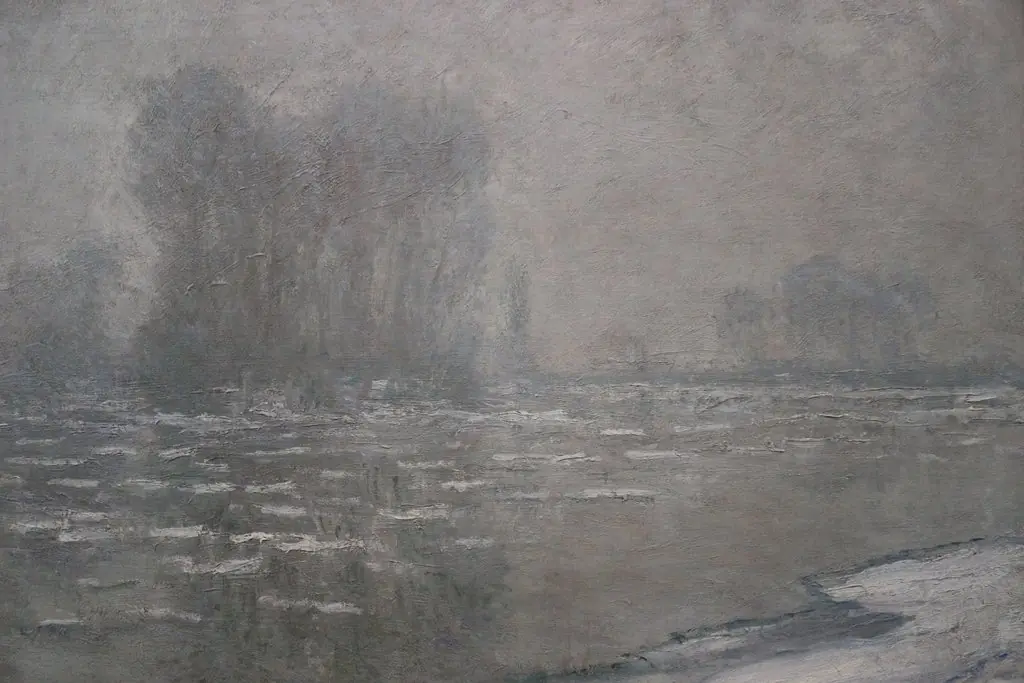
Painted in 1890, The Break-Up of the Ice is an oil-on-canvas work by Claude Monet depicting a winter scene in northern France.
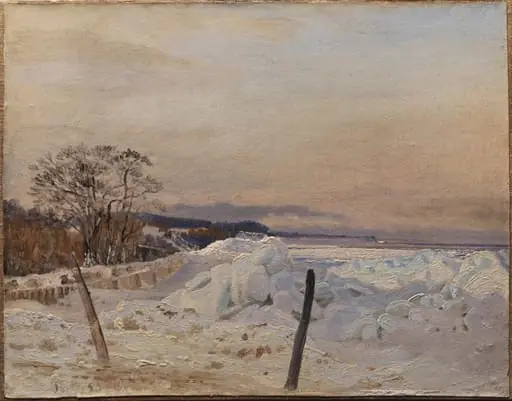
Painted in 1890, The Break-Up of the Ice is an oil-on-canvas work by Claude Monet depicting a winter scene in northern France. It captures the transitional moment when frozen water begins to thaw, with fragmented ice floes drifting on a still river. The composition emphasizes quiet stillness, with snow-laden trees and distant structures framing the icy expanse. The painting is part of the Calouste Gulbenkian Museum’s collection in Lisbon.
Subject & Meaning
The painting portrays the subtle shift from winter’s stillness to the early signs of spring. Ice shards, suspended in muted water, suggest movement without violence, a quiet dissolution rather than a violent thaw. Monet avoids human figures, focusing instead on nature’s quiet rhythms.
The absence of warmth or activity reinforces a sense of solitude, reflecting his interest in transient atmospheric conditions over narrative content.
Technique & Style
Monet applied oil paint with loose, broken brushwork, building texture through layered strokes that mimic the roughness of snow and the jagged edges of ice. A restrained palette of blues, grays, and whites dominates, with minimal contrast to evoke the diffuse light of a winter day. The impasto technique adds tactile depth, particularly in the snow-covered banks, enhancing the sense of cold and stillness without relying on sharp detail.
History & Provenance
Created during Monet’s series of winter landscapes painted near his home in Argenteuil and later in the north of France, this work was acquired by Calouste Gulbenkian in the early 20th century. It entered the museum’s collection upon its founding in 1969. The painting remained in private hands for decades before becoming part of the museum’s permanent display, where it continues to represent Monet’s late 19th-century exploration of seasonal change.
Context
This painting belongs to a broader series of winter scenes Monet produced between 1888 and 1895, responding to his fascination with light and weather under extreme conditions. Unlike traditional winter landscapes that emphasized human activity or dramatic contrasts, Monet’s approach was observational and atmospheric. He painted en plein air, often in freezing temperatures, to record the subtle shifts in tone and texture that defined the season’s fleeting moments.
Legacy
The Break-Up of the Ice exemplifies Monet’s commitment to capturing ephemeral natural phenomena through direct observation. Its restrained palette and emphasis on texture influenced later Impressionist and post-Impressionist artists interested in mood over narrative. Though less celebrated than his water lilies or haystacks, this work remains a quiet testament to his sustained engagement with the changing seasons and the emotional resonance of ordinary landscapes.
Own this work as a print
Artist & collection
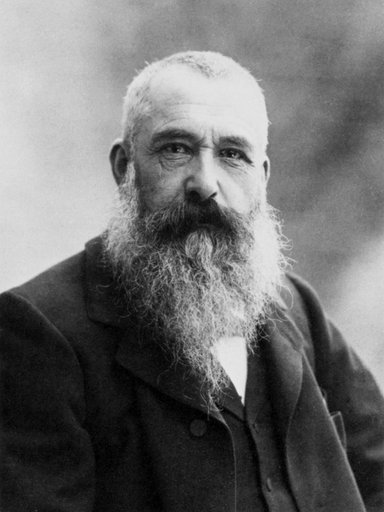
Artist
Oscar-Claude Monet was a French painter and founder of Impressionism who is seen as a key precursor to modernism, especially in his attempts to paint nature as he perceived it.