Artwork
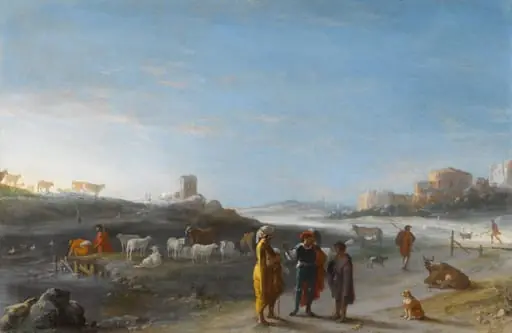
An Italianate landscape with an unidentified subject from the Old Testament
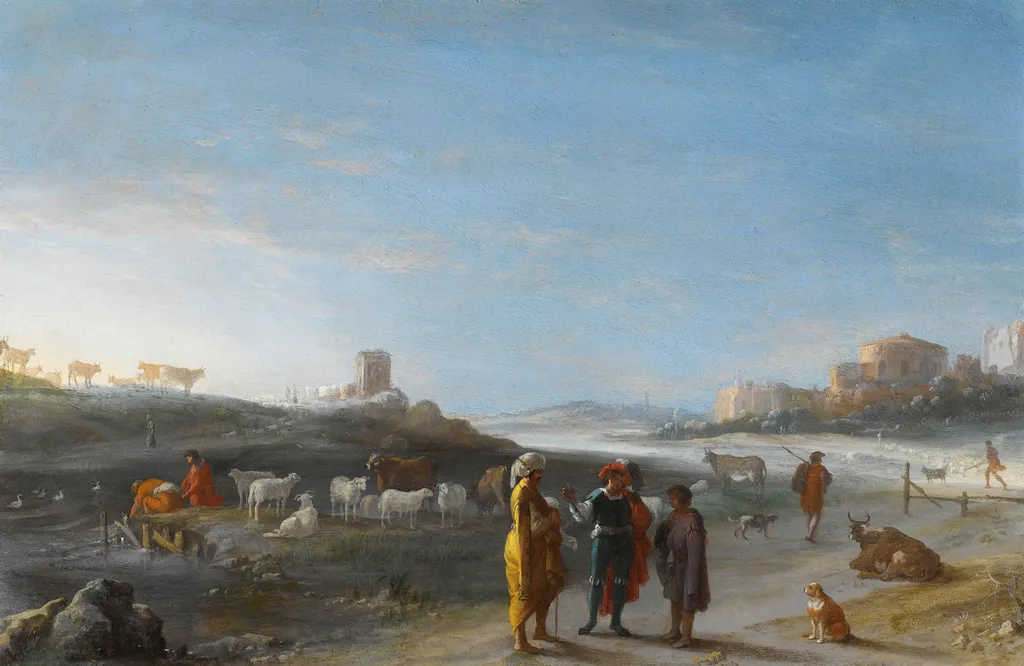
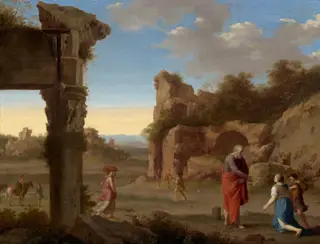
An Italianate landscape with an unidentified subject from the Old Testament is an oil painting by the Early Baroque Italian artist Cornelius van Poelenburgh. It dates from 1620 and is held in the collection of the Rijksmuseum.
About this work
Technique & Style
4 cm in width, dimensions characteristic of the small-scale cabinet paintings favored during the Dutch Golden Age.
Cornelius van Poelenburgh executed this Italianate landscape in 1620 using oil paint applied to a copper support. The work measures 22 cm in height and 33.4 cm in width, dimensions characteristic of the small-scale cabinet paintings favored during the Dutch Golden Age. As a landscape genre piece, the artist utilized the smooth, non-absorbent surface of the copper to achieve fine detail and a high degree of finish typical of his style. The painting is currently held in the collection of the Rijksmuseum.
History & Provenance
The painting is held by the Rijksmuseum. Executed in oil on copper, the work measures 22 cm in height and 33.4 cm in width. No further details regarding an inventory or accession number, nor any specific exhibition history, are provided by the available sources.
Context
Cornelius van Poelenburgh's 1620 oil painting on copper depicting an Italianate Old Testament landscape was housed in the Rijksmuseum collection. The work exemplifies early 17th-century Dutch landscape painting's classicalizing tendencies, though scholarly analysis of its reception during van Poelenburgh's lifetime remains sparse. Its attribution to the artist and Old Testament subject classification have been consistently documented in art historical records.
The painting's medium and dimensions align precisely with contemporary practices for cabinet paintings, reflecting the artist's engagement with Italianate scenery while maintaining Northern European technical conventions. Its placement within the Rijksmuseum's holdings since at least the 19th century underscores its significance as a representative example of Dutch Golden Age landscape innovation.
Overview
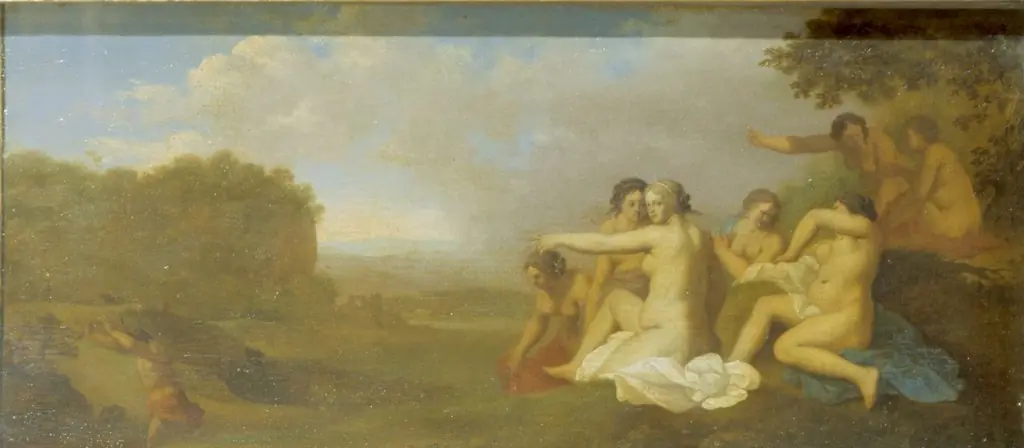
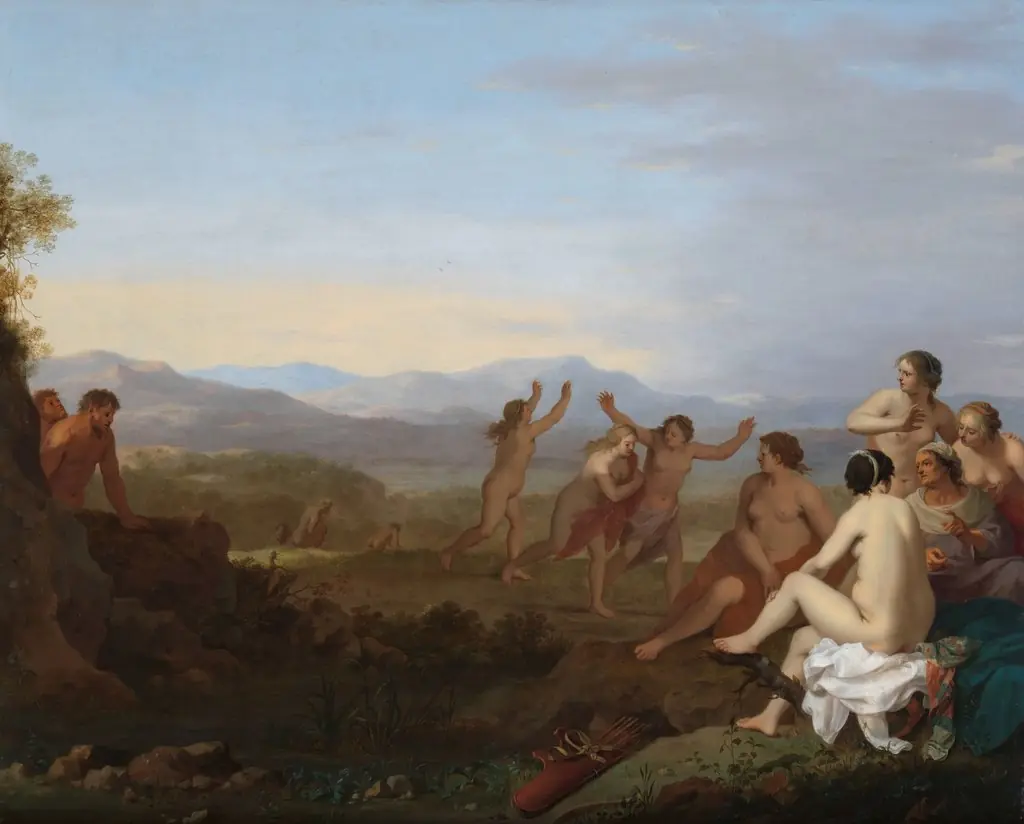
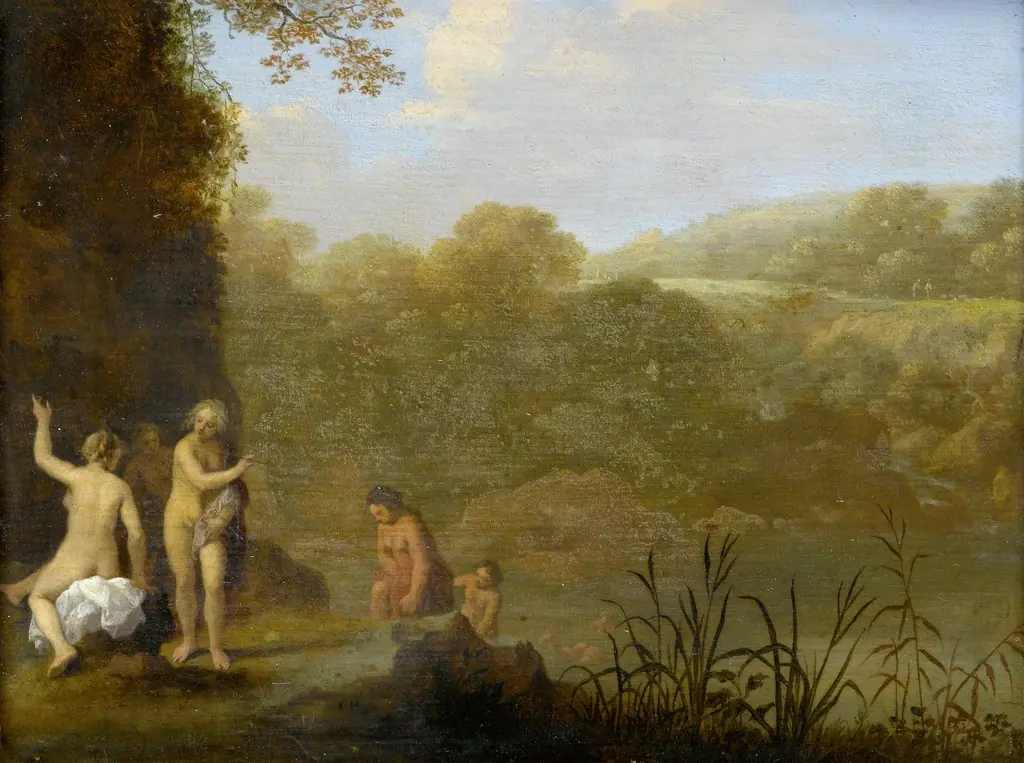
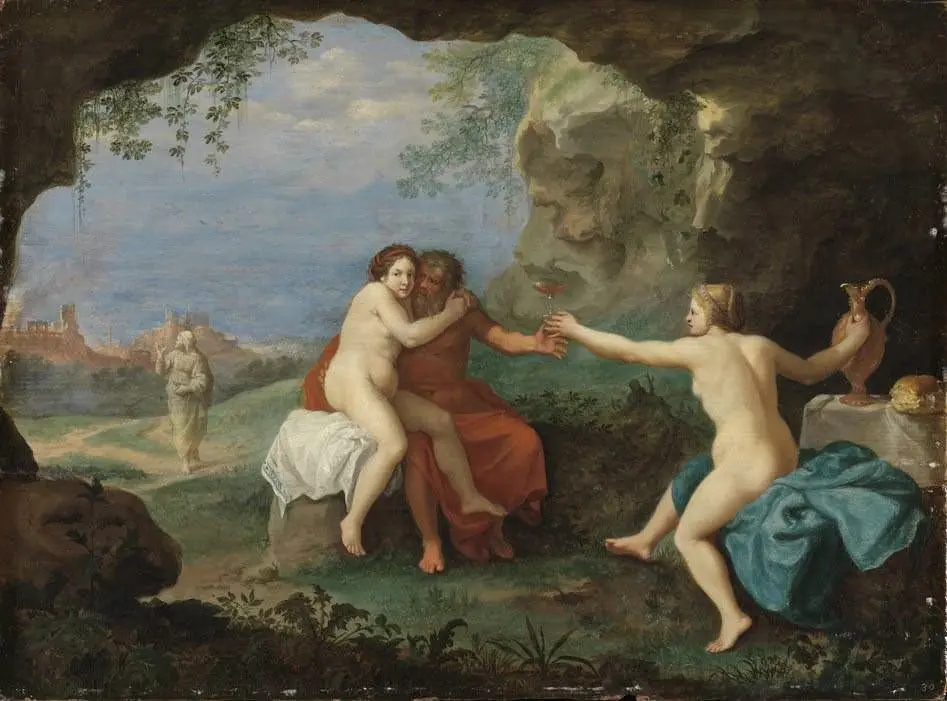
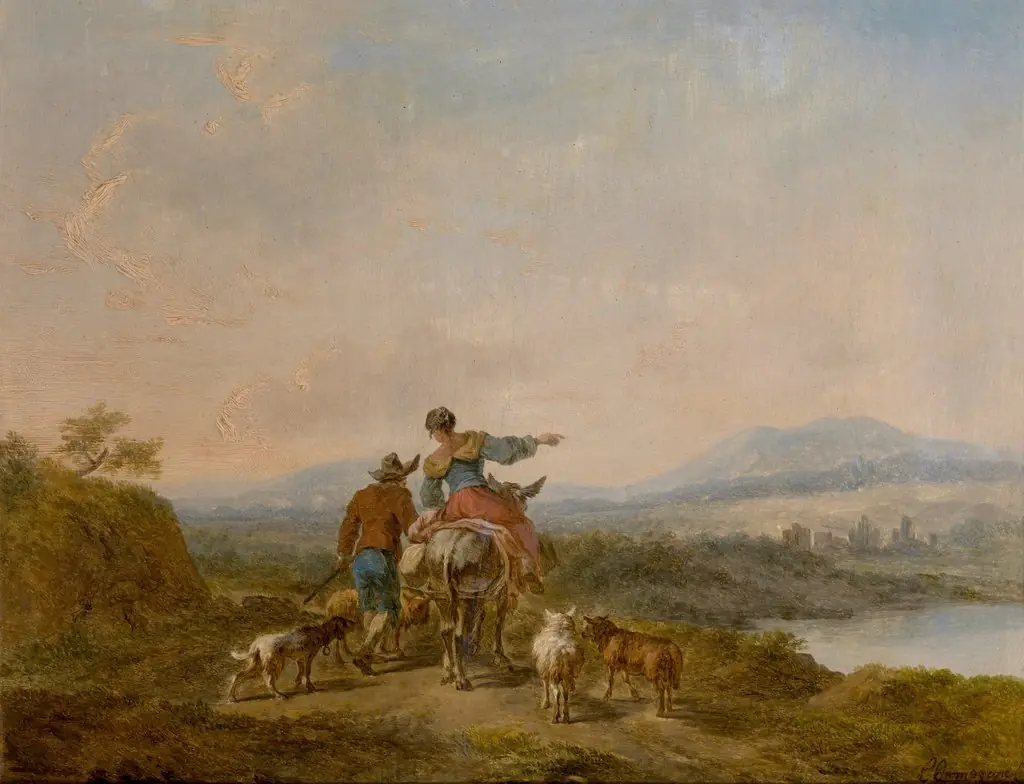
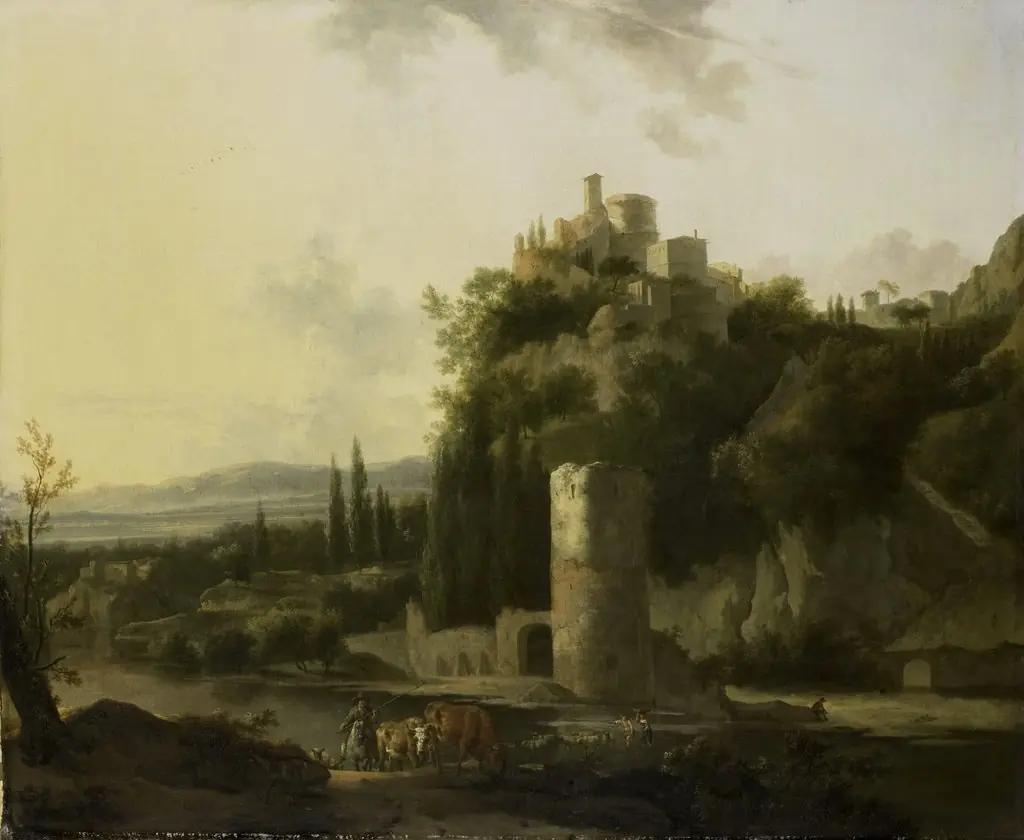
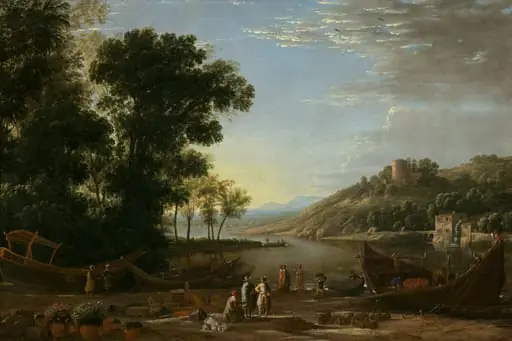
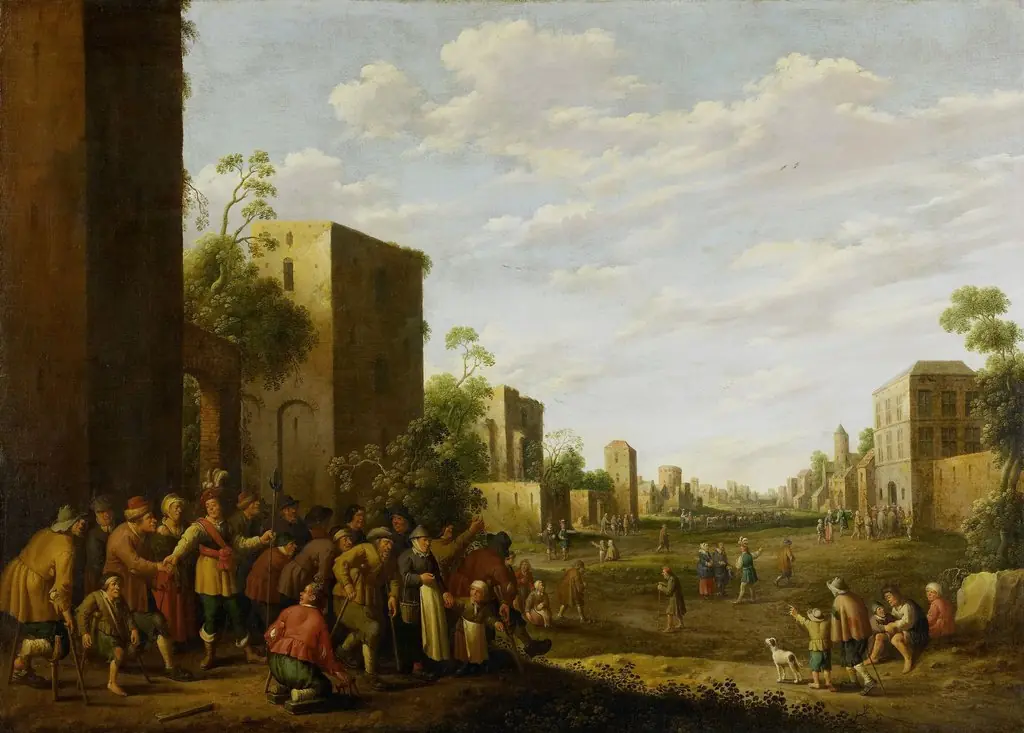
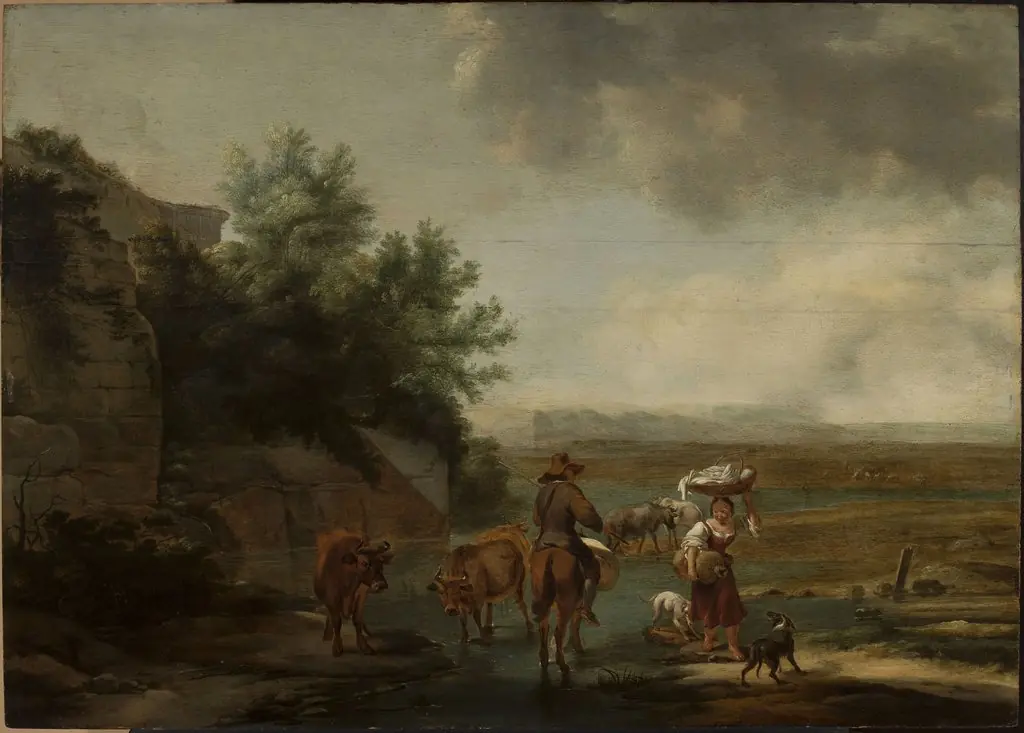
Cornelius van Poelenburgh’s 1620 work, executed on copper, presents a luminous countryside bathed in summer light. In the foreground three figures converse beside a low fence while shepherds tend to sheep and cattle. A dog rests in the grass, and additional livestock graze amid gentle hills dotted with distant buildings. The sky is clear, punctuated by soft, scattered clouds, creating a serene, open atmosphere.
Subject & Meaning
The scene is framed as an Old Testament episode, though the precise narrative remains unidentified. Van Poelenburgh frequently placed modest groups of figures within expansive landscapes to suggest biblical or mythological events without explicit storytelling, inviting viewers to contemplate the spiritual resonance of everyday rural life.
Own this work as a print
Artist & collection
Artist
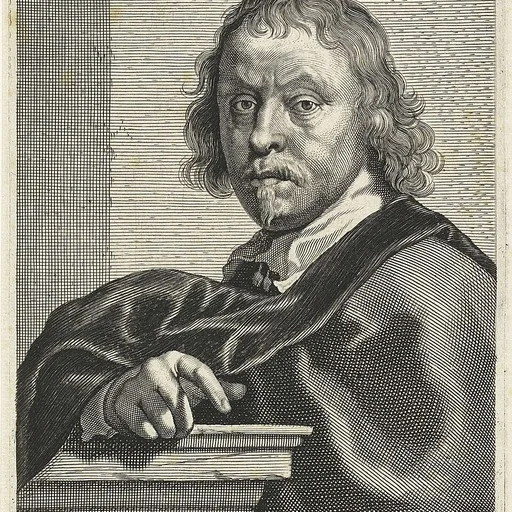
Cornelis van Poelenburgh or Cornelis van Poelenburch (1594 – 12 August 1667), was a Dutch landscape painter and draughtsman.