Artwork
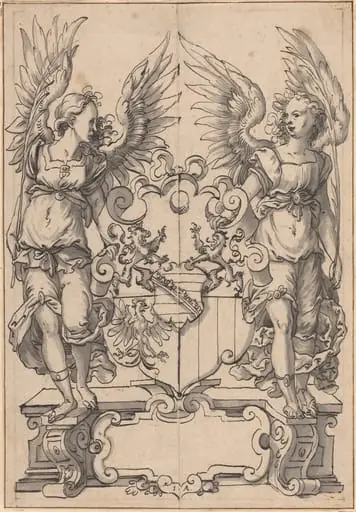
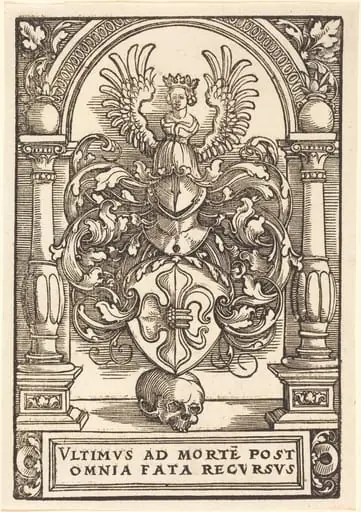
Coat of Arms of the German Empire and Nuremberg City
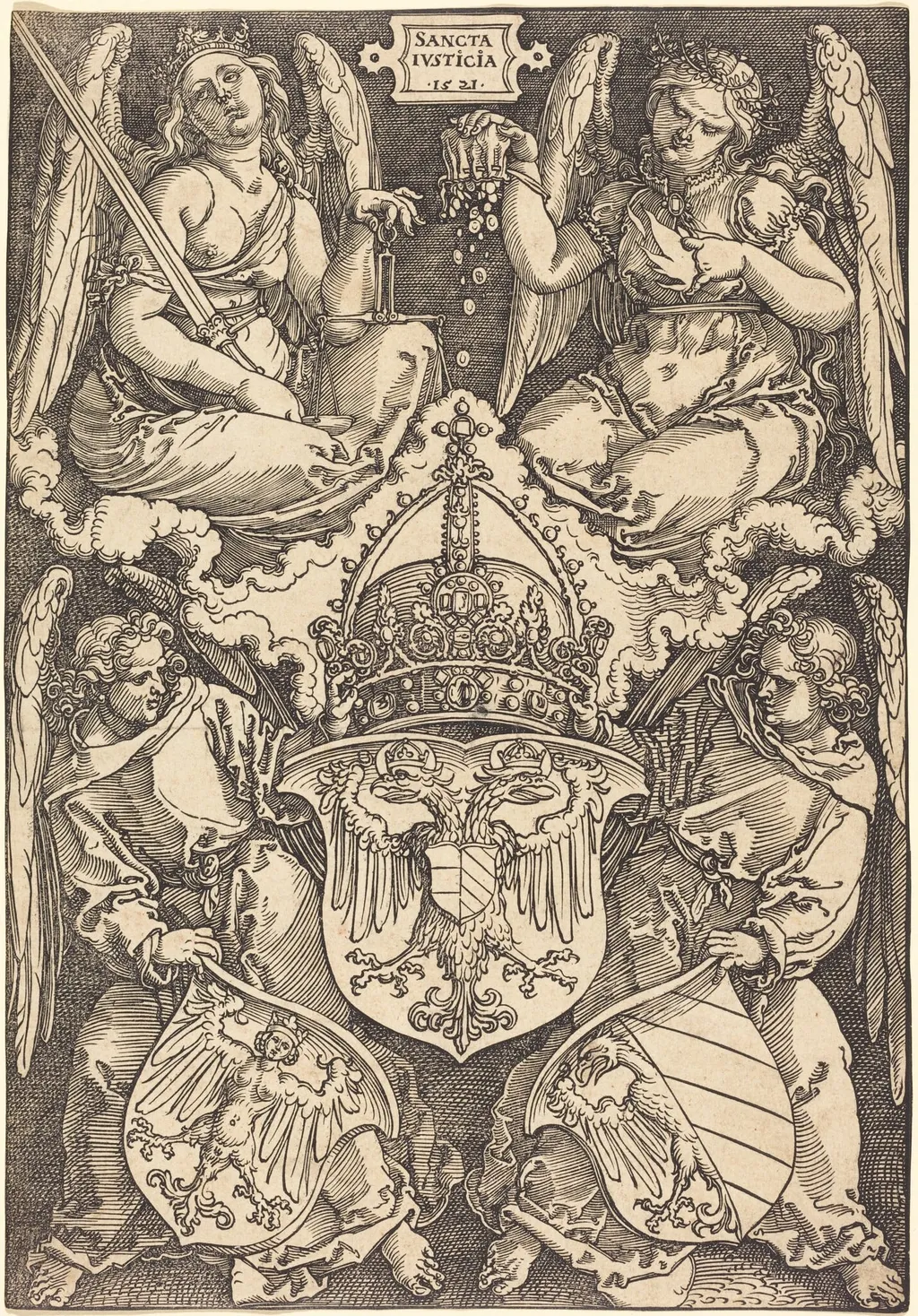
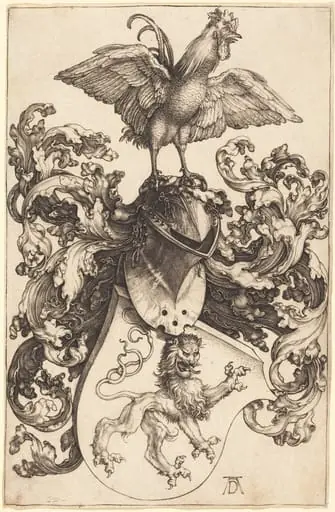
Coat of Arms of the German Empire and Nuremberg City is an ink print by the Northern Renaissance artist Albrecht Dürer. It dates from 1521 and is held in the collection of the Metropolitan Museum of Art.
- Inscription
- Inscribed:in block, top center: SANCTA / IVSTICIA / 1521; verso, upper right above collector's mark, in graphite by a later hand: 7688; verso, lower center, in graphite by a later hand: auction R. von Retberg; verso, lower center, in graphite by a later hand: B [illegible] 4/III 86 [erased]; verso, lower center, in graphite by a later hand: W [illegible] [erased]; verso, lower left, in graphite by a later hand: C 15691; verso, lower left, in graphite by a later hand: UR [?]; verso, lower left, in graphite by a later hand: C 14958 [crossed out]; verso, lower left, in graphite by a later hand: A 20; verso, lower center, in graphite by a later hand: B 162; verso, lower right, in graphite by a later hand: B 162; verso, lower center, in graphite by a later hand: I; verso, bottom left, in graphite by a later hand: 3646
About this work
Subject & Meaning
The composition depicts the coat of arms of the Holy Roman Empire alongside the specific coat of arms of Nuremberg, the city where the print was produced.
Albrecht Dürer's 1521 woodcut presents a dual heraldic achievement that visually unites imperial authority with civic identity. The composition depicts the coat of arms of the Holy Roman Empire alongside the specific coat of arms of Nuremberg, the city where the print was produced. By placing these two distinct shields in a single frame, the work symbolizes the political relationship between the overarching German Empire and the autonomous status of the free imperial city.
This arrangement serves as a formal representation of loyalty and shared heritage within the German Renaissance context, merging the universal sovereignty of the Empire with the local prestige of Nuremberg.
Technique & Style
The work is a woodcut printed on laid paper, measuring 24.6 cm by 16.7 cm. It depicts the heraldic coat of arms of Nuremberg within the broader context of Holy Roman Empire symbolism, rendered in ink on paper. Dürer’s technique emphasizes precise line work and chiaroscuro to convey texture and depth, characteristic of German Renaissance printmaking. The composition balances formal symmetry with dynamic spatial treatment, reflecting both civic pride and imperial authority.
The print is housed in the National Gallery of Art, Washington, D.C., as part of the Rosenwald Collection.
History & Provenance
Albrecht Dürer created this woodcut in Nuremberg in 1521. The work depicts the heraldry of the Holy Roman Empire alongside the coat of arms of Nuremberg.
The print's documented ownership begins with Baron Adalbert von Lanna of Prague. In 1929, Lessing J. Rosenwald of Jenkintown, Pennsylvania, purchased the work from Lanna's collection. Rosenwald subsequently donated the piece to the National Gallery of Art in Washington, D.C., in 1943.
This woodcut is held in the collection of the National Gallery of Art in Washington, D.C., as part of the Rosenwald Collection. The work entered the museum's holdings in 1943 as a gift from Lessing J. Rosenwald, who had purchased it in 1929 from the estate of Baron Adalbert von Lanna in Prague. Prior to Rosenwald's acquisition, the print belonged to Lanna, a noted collector based in Bohemia.
While the work is associated with the Prints in the National Gallery of Art and the Rosenwald Collection, available records do not list specific public exhibitions or loan history for this impression. The Metropolitan Museum of Art is also linked to the work in broader collection contexts, though the primary documented location remains the National Gallery of Art.
Overview
This woodcut on laid paper, created by Albrecht Dürer in 1521, combines the heraldic symbols of the Holy Roman Empire and the city of Nuremberg.
Own this work as a print
Artist & collection
Artist
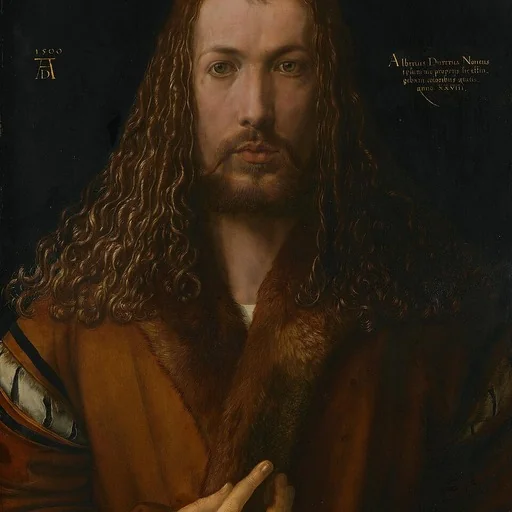
Albrecht Dürer spent his life in Nuremberg, a busy German city where artists traded prints like currency.

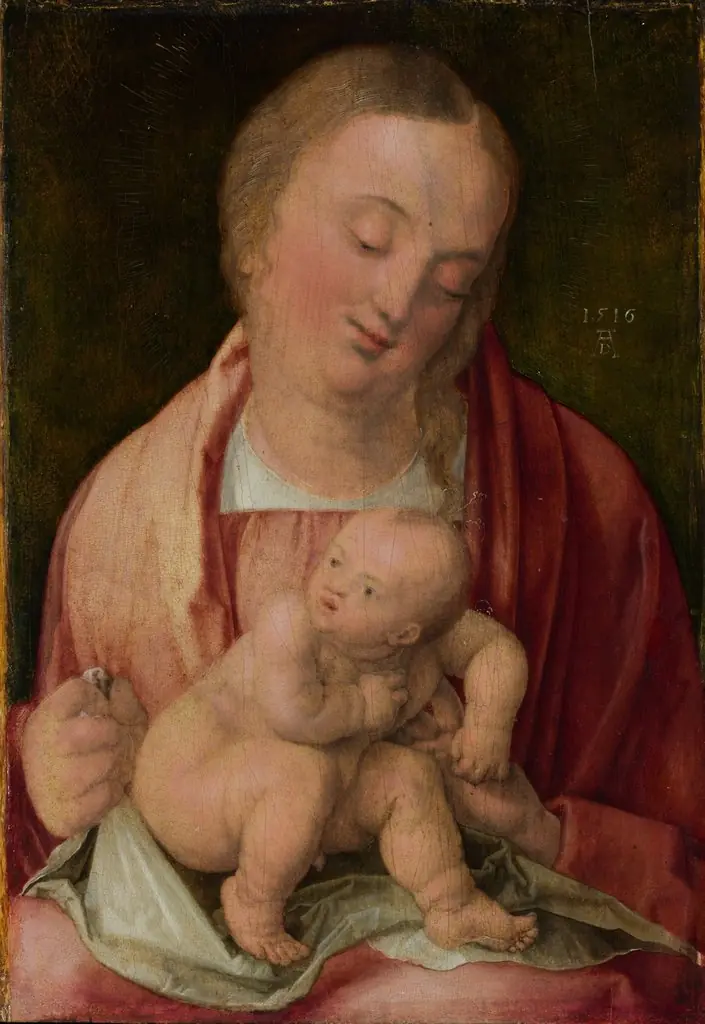
![Madonna and Child [obverse], by Albrecht Dürer](https://artifactworldgallery.com/img/albrecht-durer--madonna-and-child-obverse--d7b8ebf05d22ebe5-w320.webp)
![Lot and His Daughters [reverse], by Albrecht Dürer](https://artifactworldgallery.com/img/albrecht-durer--lot-and-his-daughters-reverse--b4ebf9b282faa17a-w320.webp)