Artwork
Le Dortoir d'un pensionnat bien tenu
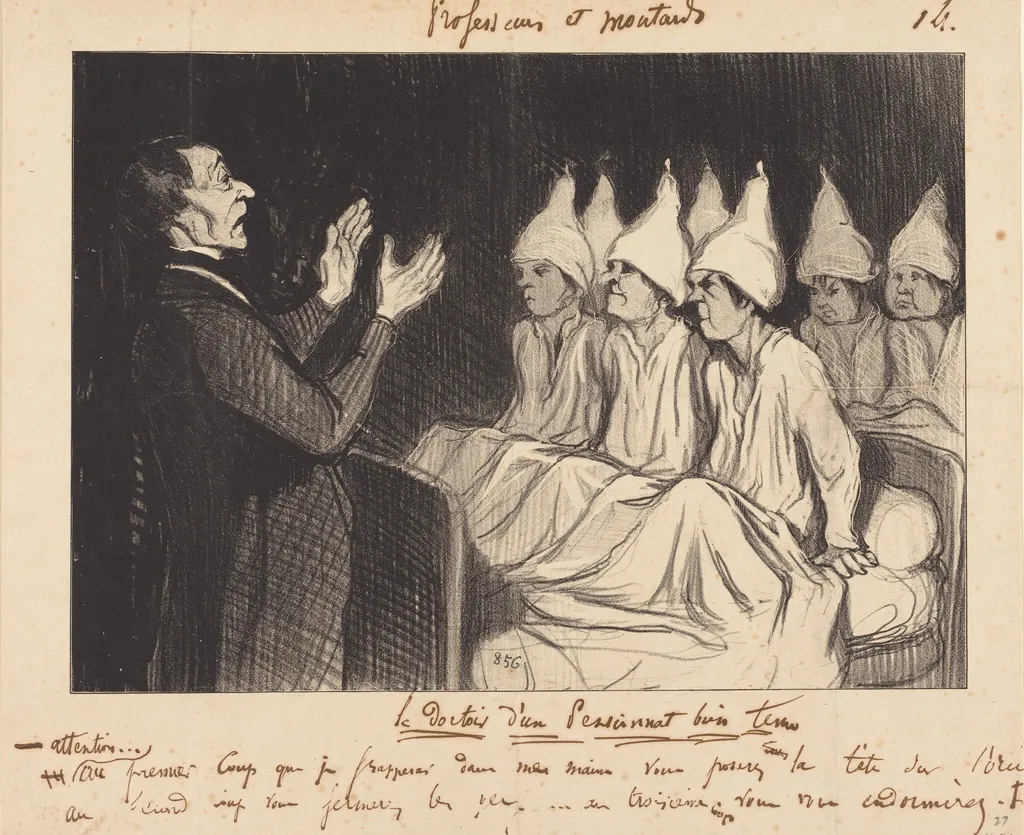
Le Dortoir d'un pensionnat bien tenu is an ink print by the Romanticist artist Honoré Daumier. It dates from 1846 and is held in the collection of the National Gallery of Art.
About this work
Overview
Created in 1846, this lithograph by Honoré Daumier portrays a quiet yet tense interior of a well-managed boarding school dormitory.
Created in 1846, this lithograph by Honoré Daumier portrays a quiet yet tense interior of a well-managed boarding school dormitory. Executed in the medium of lithography, it reflects Daumier’s commitment to social observation through printmaking. The image captures a moment of institutional control, rendered with minimal detail but strong emotional resonance, characteristic of his critical approach to French societal structures.
Subject & Meaning
The scene shows a group of children, dressed in identical white robes and conical hats, seated or reclining on narrow beds under the watchful gaze of a dark-suited authority figure. The uniformity of their attire and posture suggests enforced conformity, while the man’s gesture implies reprimand or instruction. Daumier subtly critiques the rigid discipline of state-run institutions, hinting at the suppression of individuality under bureaucratic order.
Technique & Style
Daumier employs stark contrasts of light and shadow to isolate figures against a deep, indistinct background. His use of lithographic line and tonal gradation creates a sense of claustrophobia and stillness. The figures are rendered with economical strokes, emphasizing form over detail, a hallmark of his satirical style. The dramatic chiaroscuro heightens the psychological weight of the moment without overt melodrama.
History & Provenance
The print was produced during Daumier’s most active period as a political cartoonist for journals like Le Charivari. Though not published in a periodical, it aligns with his broader body of work critiquing education, law, and class hierarchy. It likely circulated privately or was collected by patrons sympathetic to his reformist views, preserving its status as a quiet but pointed social commentary.
Context
In mid-19th century France, state-sponsored boarding schools were expanding as tools of social control, particularly for lower-class children. Daumier, a vocal critic of institutional authority, observed these environments with skepticism. His depiction reflects broader anxieties about the loss of personal freedom under centralized systems, resonating with republican ideals of individual dignity against state overreach.
Legacy
Daumier’s lithographs, including this one, influenced later realist and modernist artists who sought to depict everyday life with unflinching honesty. His ability to convey complex social critique through simplified forms and lighting became a model for visual journalism. Though not widely exhibited in his lifetime, his prints gained recognition in the 20th century as foundational works of social realism.
Own this work as a print
Artist & collection
Artist
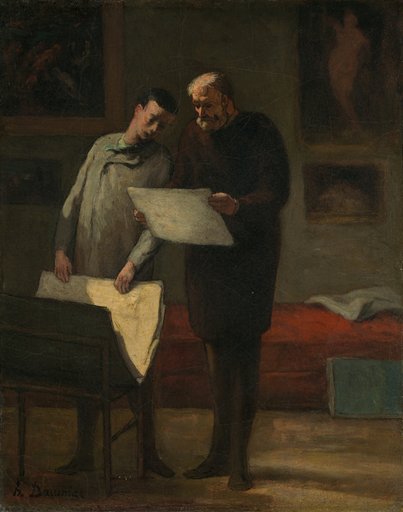
Honoré-Victorin Daumier (French: ; 26 February 1808 – 10 or 11 February 1879) was a French painter, sculptor, and printmaker, whose many works offer commentary on the social and political life in France, from the…

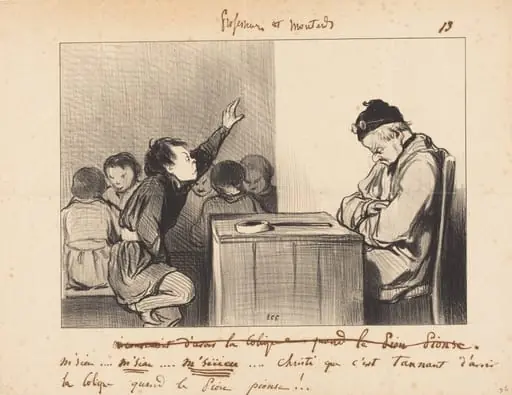
- M'sieu... que c'est tannant d'avoir la colique quand...
 Théâtre de Bordeaux - on joue la tragédie
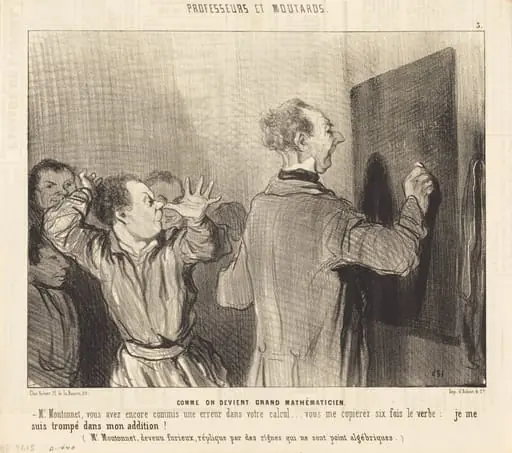 Comment on devient un grand mathématicien
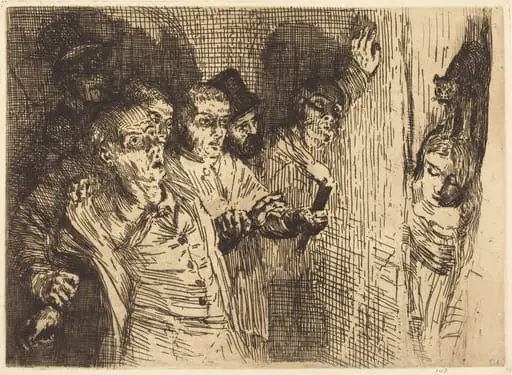 Black Cat (Le chat noir)
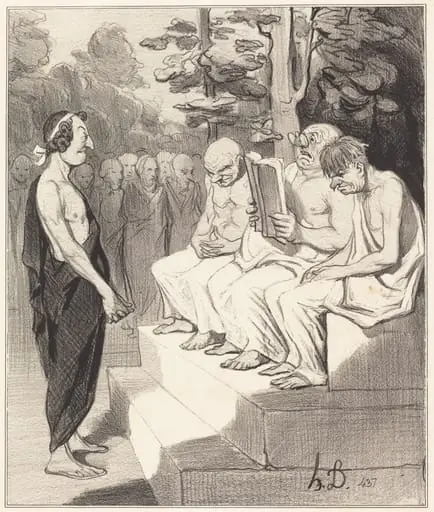 Télémaque interrogé par les sages
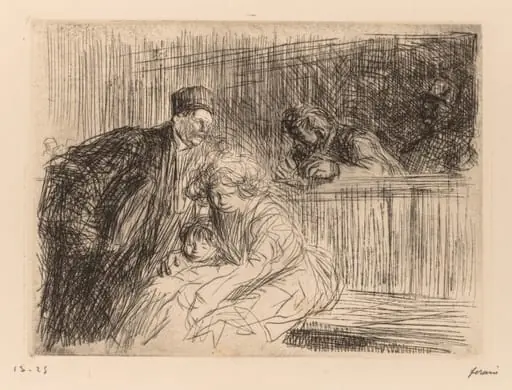 L'Avocat Parlant au prevenu
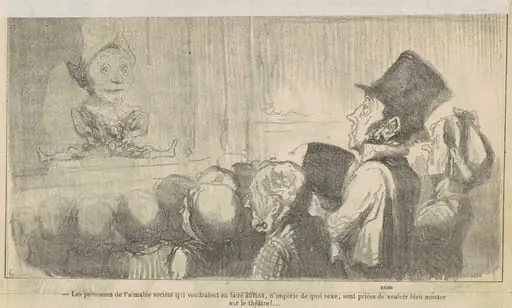 Les personnes de l'aimable société qui ...
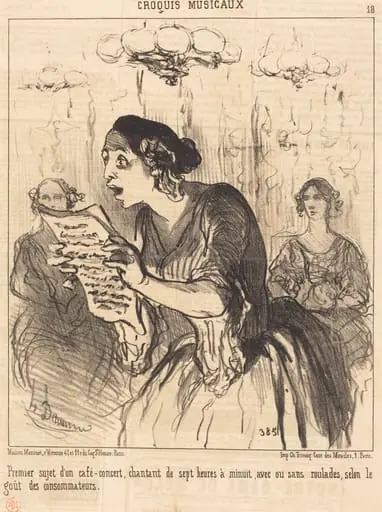 Premier sujet d'un café-concert chantant...
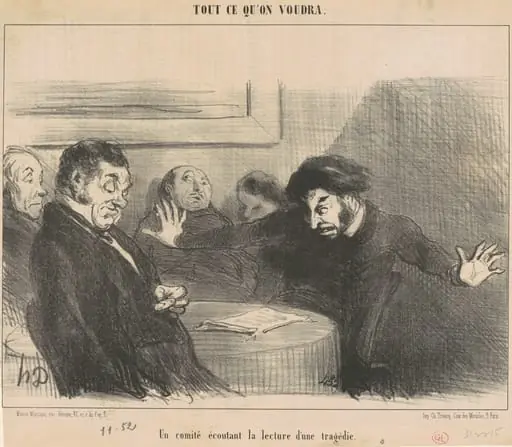 Un comité écoutant la lecture d'une tragédie
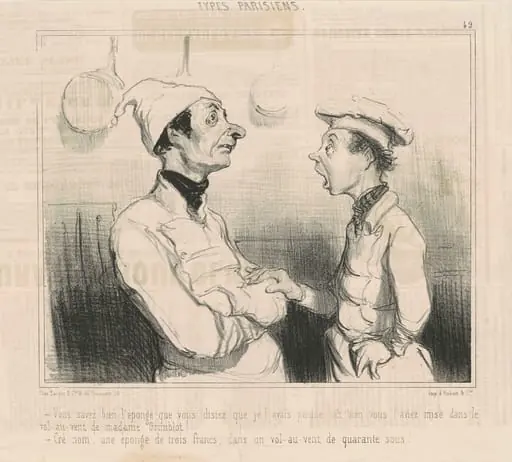 Vous savez bien l'éponge que vous disiez...
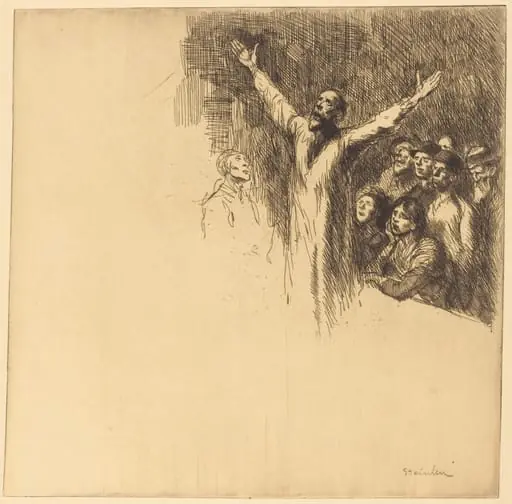 Prophet (Le prophete)
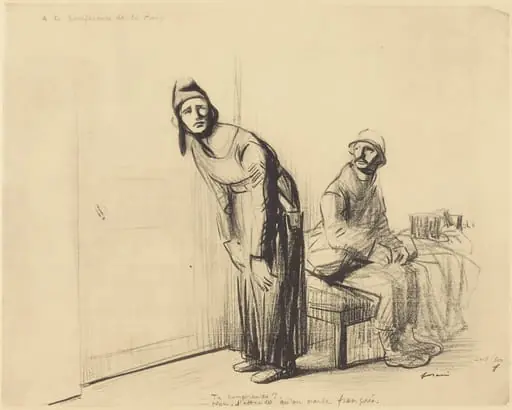 A la Conference de la Paix