Artwork
Vue prise au Père Lachaise
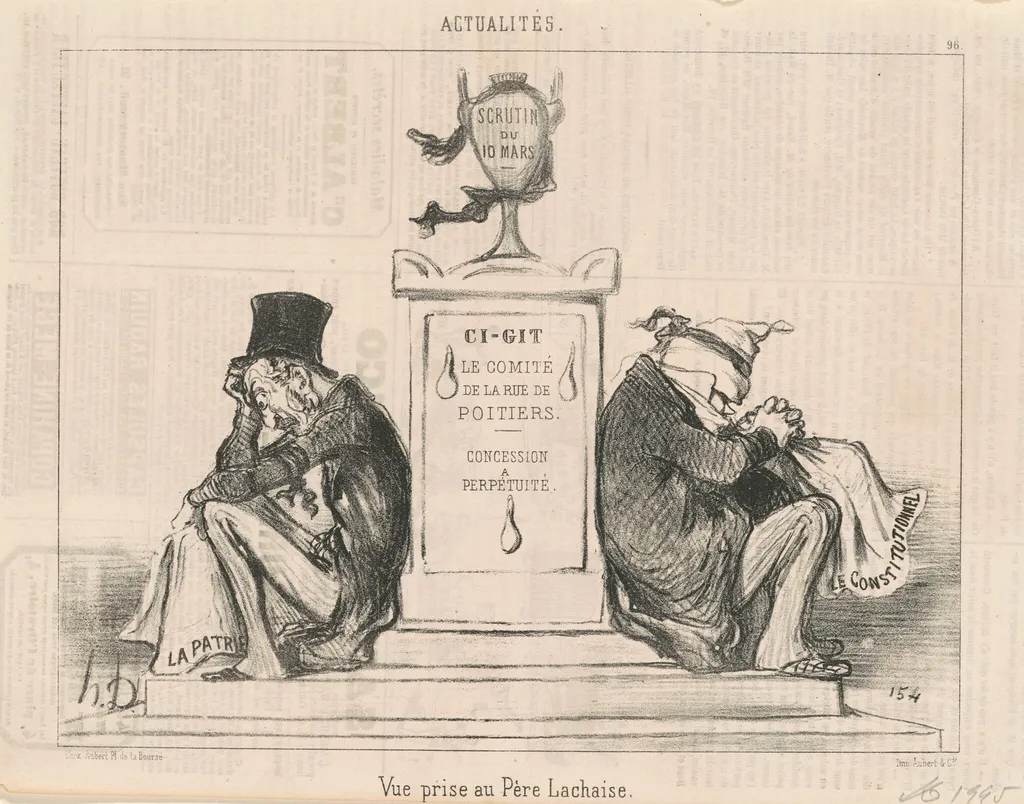
Vue prise au Père Lachaise is an ink print by the Impressionist artist Honoré Daumier. It dates from 1850 and is held in the collection of the National Gallery of Art.
About this work
Overview
Created by Honoré Daumier, 'Vue prise au Père Lachaise' is a lithograph portraying two mourners in a Parisian cemetery.
Created by Honoré Daumier, 'Vue prise au Père Lachaise' is a lithograph portraying two mourners in a Parisian cemetery. Rendered in a rapid, linear style, the work captures a quiet moment of grief with minimal detail. Daumier’s use of lithography allowed for multiple impressions, making such imagery accessible beyond elite audiences. The composition avoids ornamentation, focusing instead on posture and atmosphere to convey emotional weight.
Subject & Meaning
The two figures, one leaning against a tombstone, the other kneeling, suggest personal sorrow and ritualized mourning. The inscription on the stone, though not legible, implies a public or cultural reference to loss. Daumier does not identify the deceased, shifting focus to the universality of grief.
The scene reflects the cemetery’s role as a space where private emotion intersects with collective memory in 19th-century Paris.
Technique & Style
Daumier employed lithography, drawing directly onto a limestone surface with greasy crayon, then printing the image. His lines are loose, urgent, and unrefined, contrasting with the polished aesthetics of academic art. The monochrome palette and sketch-like quality emphasize immediacy over finish.
This approach aligns with his broader practice of using print media to document everyday life with unvarnished honesty.
History & Provenance
Produced during the 1840s or 1850s, the work emerged from Daumier’s prolific output of social commentary prints. It likely circulated in periodicals or as a standalone sheet, reaching a broad public. The Père Lachaise Cemetery, a popular burial ground for artists and intellectuals, provided a familiar setting for viewers.
No specific early ownership records are widely documented, but the image was part of a larger body of work critiquing urban life.
Context
In mid-19th century Paris, cemeteries like Père Lachaise became sites of public reflection amid rapid urbanization and political upheaval. Daumier’s depiction avoids grandeur, instead highlighting ordinary individuals in moments of private sorrow. This resonated with a society increasingly aware of mortality due to disease, revolution, and class disparity. His prints often subtly questioned societal norms through understated observation.
Legacy
Daumier’s approach influenced later artists who valued expressive line over idealized form. His ability to distill complex emotions into sparse, direct imagery prefigured modernist sensibilities in printmaking. While not widely exhibited in his lifetime as fine art, the work gained recognition in the 20th century as a significant example of social realism in graphic art, valued for its emotional clarity and technical economy.
Own this work as a print
Artist & collection
Artist
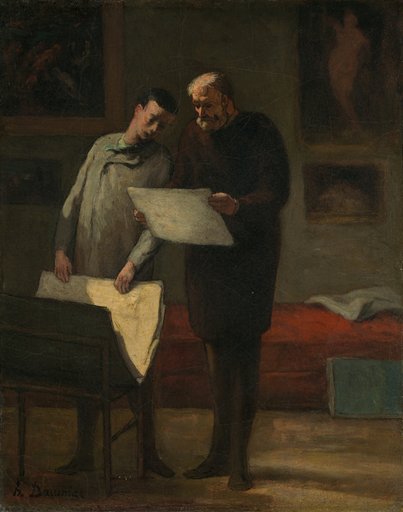
Honoré-Victorin Daumier (French: ; 26 February 1808 – 10 or 11 February 1879) was a French painter, sculptor, and printmaker, whose many works offer commentary on the social and political life in France, from the…









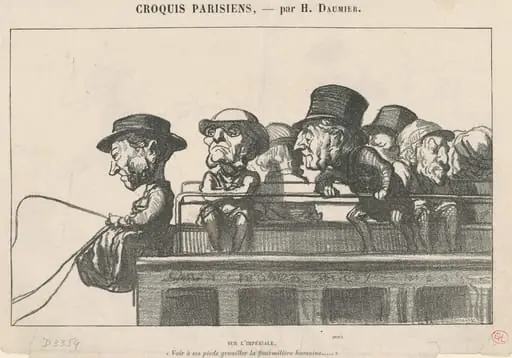 Sur l'Impériale
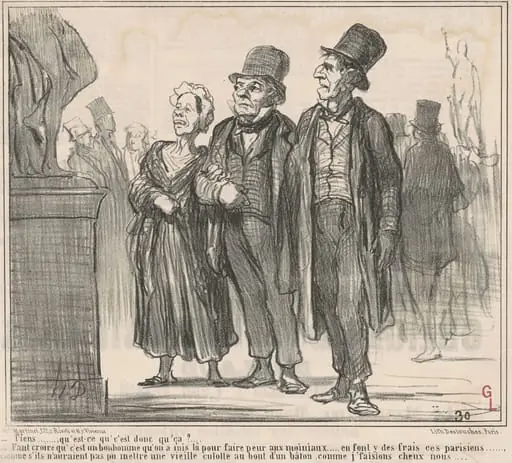 Tiens ... qu'est-ce qu'c'est donc qu'ça? ...
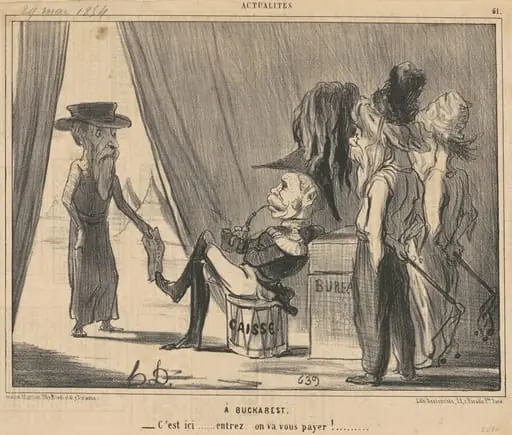 A Bucharest
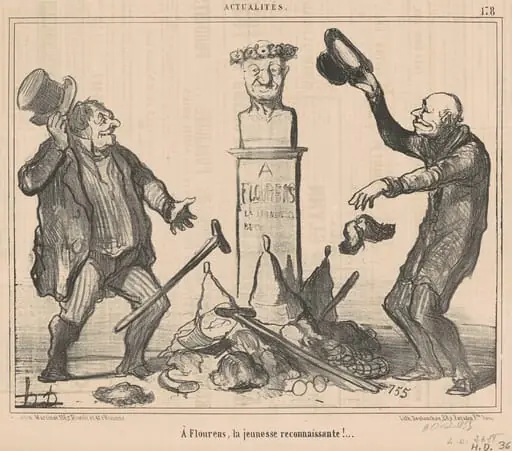 A Flourens, la jeunesse reconnaissante!
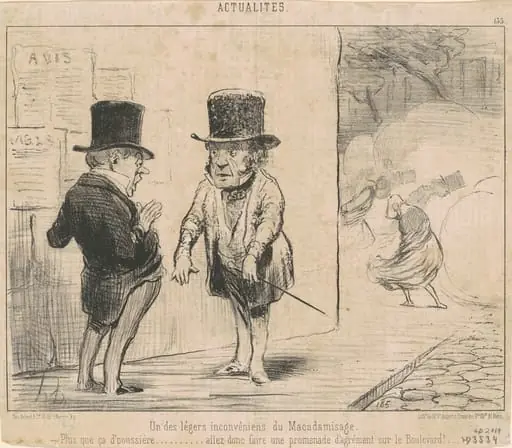 Un des ... inconvéniens du macadamisage ...
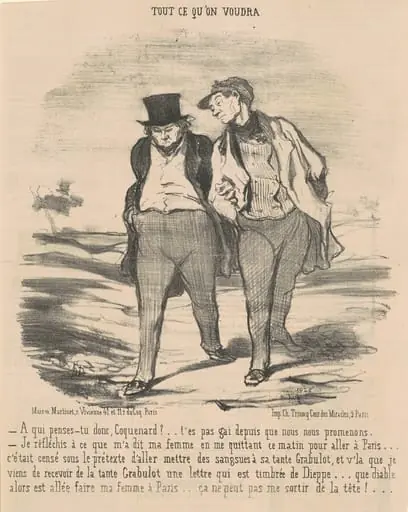 A qui penses-tu donc, coquenard? ...
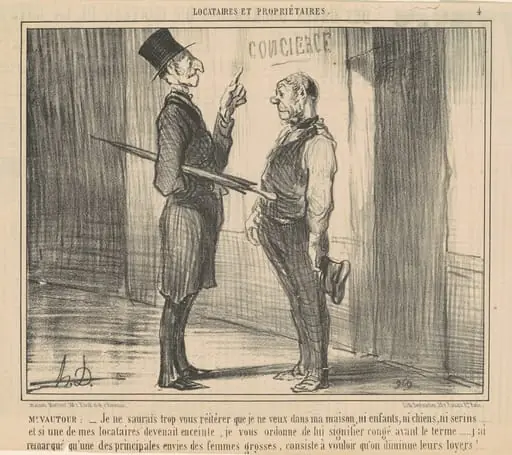 M. Vautour: Je ne saurais trop ...
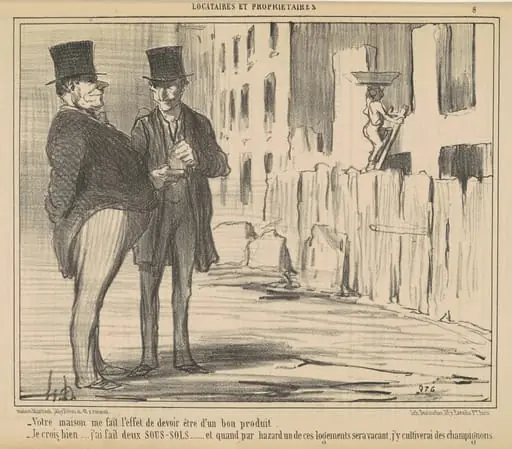 Votre maison me fait l'effet de devoir ...
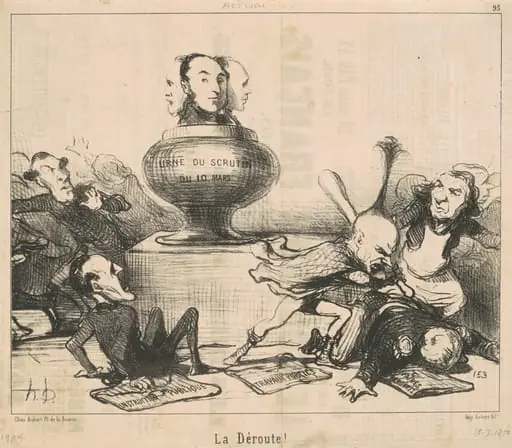 La dêroute!
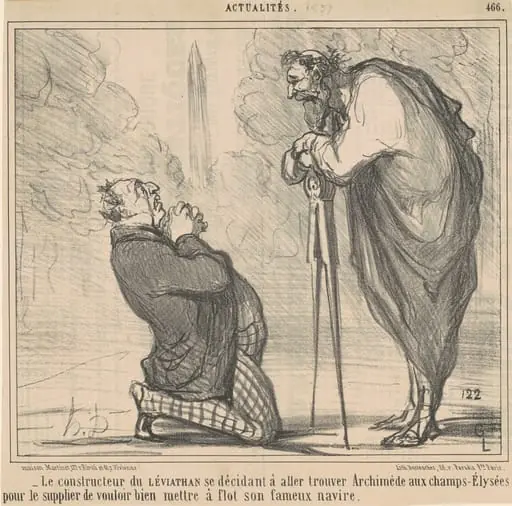 Le constructeur du Léviathan se décidant ...
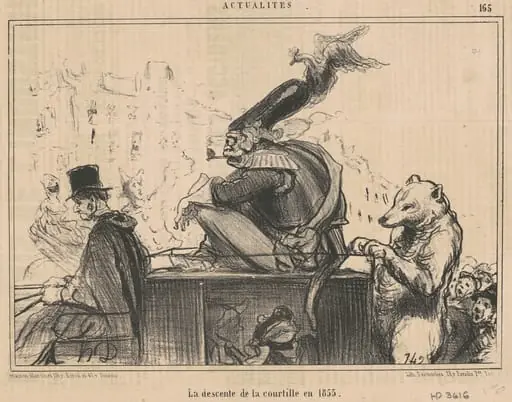 La descente de la courtille en 1855
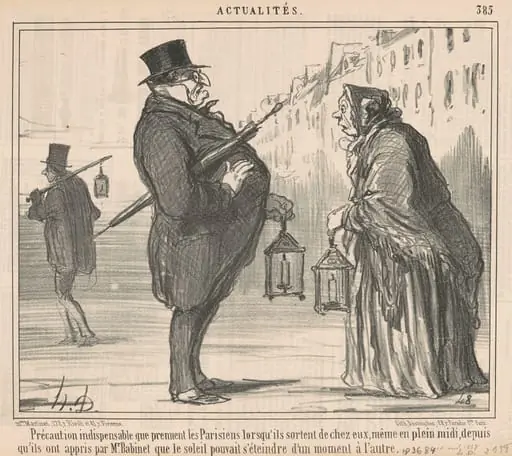
- Précaution indispensable que prennent les Parisiens ...