Artwork
Allegory of Painting
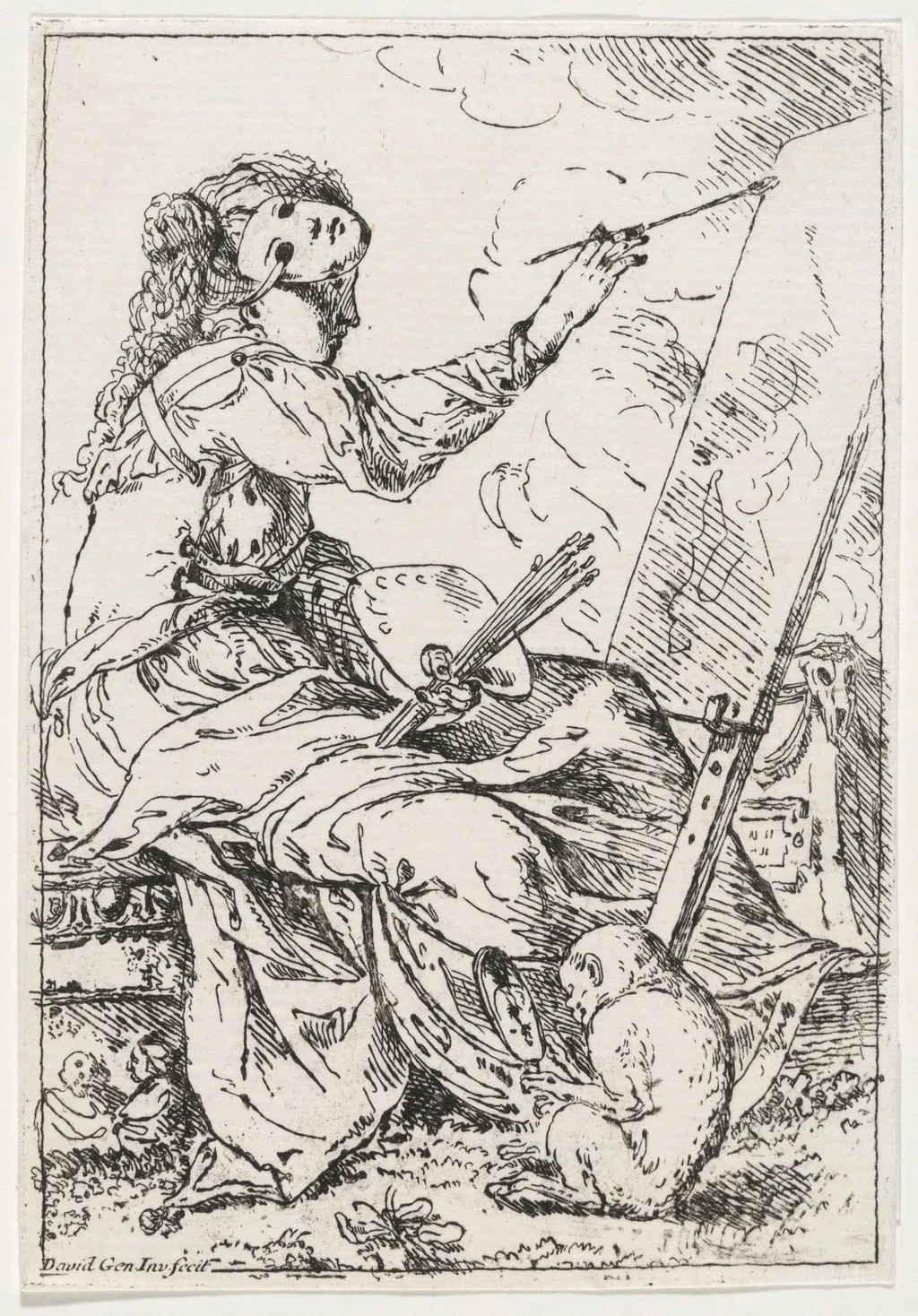
Allegory of Painting is an ink print by the Romanticist artist Giovanni David. It dates from 1776 and is held in the collection of the National Gallery of Art.
- Inscription
- Inscribed:lower left in image: David Gen. Inv. fecit; by later hand, lower center verso in graphite: [not deciphered]; by later hand, lower right verso in graphite: 200287
About this work
Overview
The work belongs to a tradition of printmaking that valued immediacy and expressive line, using etching to capture movement and texture with minimal detail.
Created around 1776 by Giovanni David, this etching on laid paper presents a symbolic representation of the act of painting. It is part of the National Gallery of Art’s collection in Washington, D.C. The work belongs to a tradition of printmaking that valued immediacy and expressive line, using etching to capture movement and texture with minimal detail. Its informal quality suggests it may have served as a study or conceptual sketch rather than a finished composition.
Subject & Meaning
The figure is a woman engaged in the act of drawing, hunched over a large sheet of paper, brush in hand, palette held nearby. A small satchel rests at her feet, possibly containing pigments or tools. Her posture and focused demeanor personify the labor of artistic creation.
The image functions as an allegory, not depicting a myth or historical scene, but embodying the discipline and physicality of painting through a solitary, anonymous figure.
Technique & Style
David employed etching, a method involving incising lines into a metal plate with acid, then inked and pressed onto paper. The lines are loose and dynamic, with varied pressure creating tonal contrasts that suggest fabric folds and paper texture. The rough, unpolished quality reflects a sketch-like approach, typical of preparatory prints in the 18th century. This technique allowed for spontaneity, favoring expressive gesture over refined finish.
History & Provenance
The print was likely produced in Italy during the latter half of the 18th century, a period when etching experienced a revival among artists seeking alternatives to formal academic styles. It entered the National Gallery of Art’s collection through established acquisition channels, though its early ownership history remains undocumented. Its survival as a single impression suggests it was not widely distributed or commercially targeted.
Context
In the 1770s, many artists turned to etching for its flexibility, using it to explore ideas outside the constraints of commissioned work. David’s image aligns with a broader interest in depicting the artist’s process, a theme emerging in both prints and paintings across Europe. Unlike grand allegories, this work emphasizes quiet, everyday labor, reflecting a shift toward valuing the artist’s personal engagement with their craft.
Legacy
Though not widely reproduced or cited in major art historical narratives, the etching stands as a quiet testament to the evolving perception of artistic labor in the late Enlightenment. Its informal style and focus on the act of creation, rather than the finished product, anticipate later 19th-century interests in the artist’s studio as a site of authenticity. It remains a modest but resonant example of printmaking’s capacity for conceptual clarity.
Own this work as a print
Artist & collection


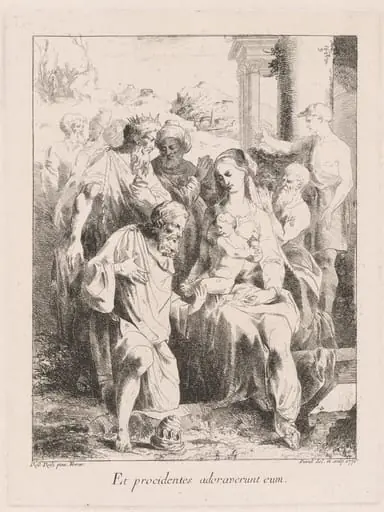 Adoration of the Magi
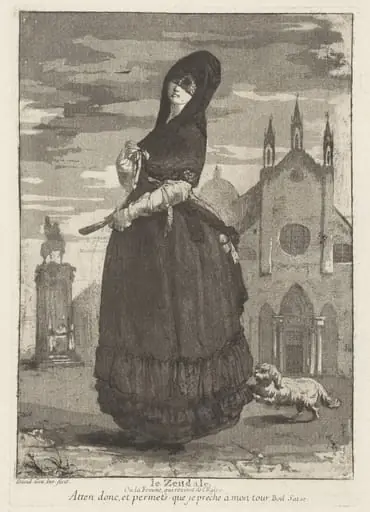 Le Zendale (Woman in a Hood, or the Woman Returning from Church)
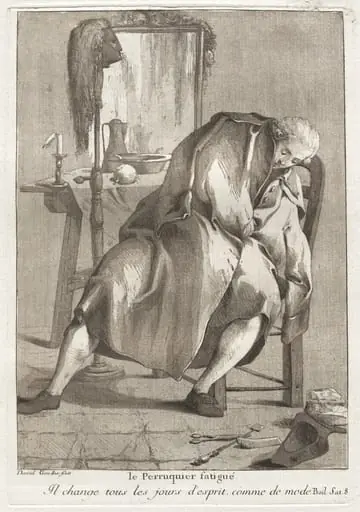 Le Perruquier fatigué (The Tired Wigmaker)
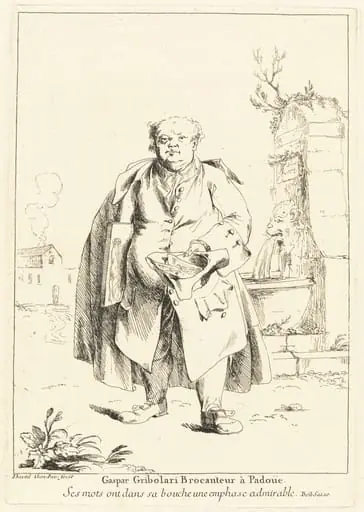 Gaspar Gribolari Brocanteur à Padoüe (Gaspar Gribolari, Secondhand Dealer in Padua)
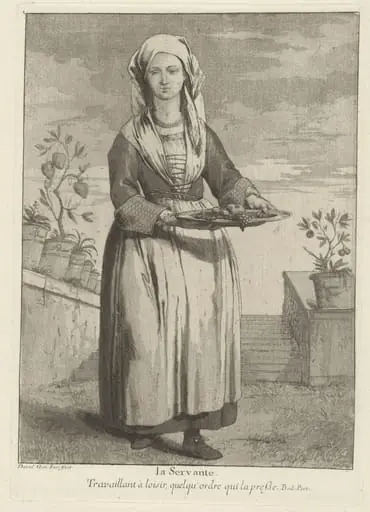 La Servante (The Servant)
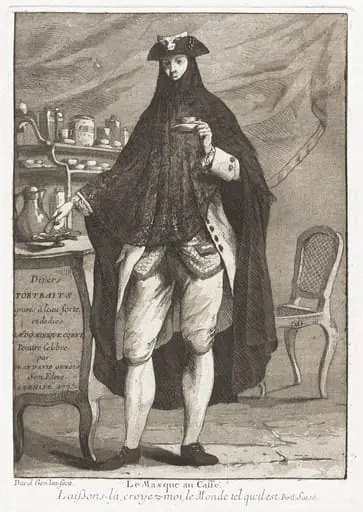 Le Masque au caffé (The Masked Man Taking Coffee)
 Le Paveur (The Road Paver)
 Democritus
 Allegory of Vanity
 Allegorical Figure (verso)
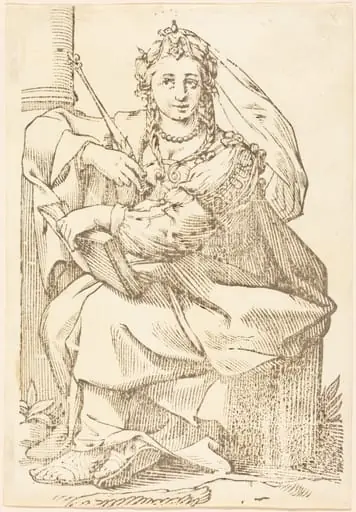 Sibylla Phrygia
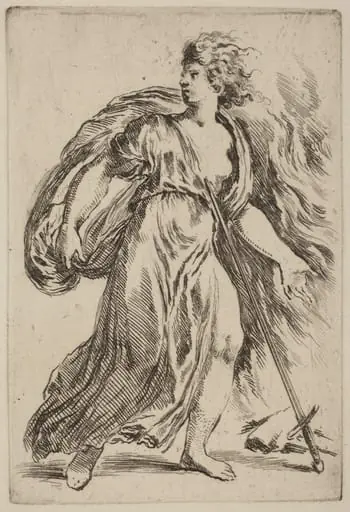 Suicide of Dido
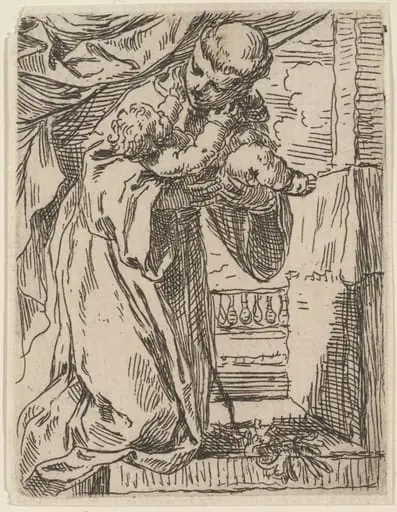 Saint Anthony of Padua Holding the Christ Child
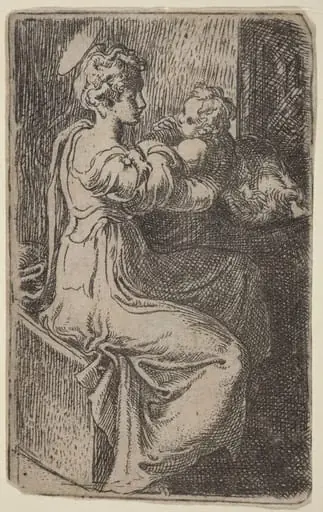 Virgin and Child
![Mary Magdalene [verso], by Biagio Pupini](https://artifactworldgallery.com/img/biagio-pupini--mary-magdalene-verso--8b62d2d37815f802-w320.webp) Mary Magdalene [verso]
Mary Magdalene [verso]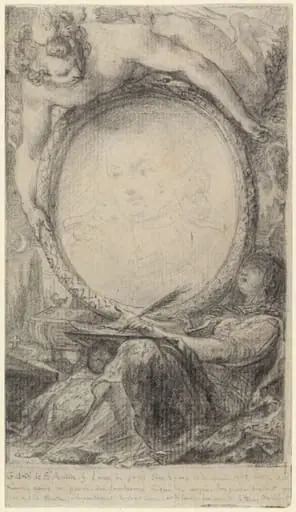 Allegorical Frame with a Genius and a Veiled Woman Writing
 Saint Jerome in the Desert Listening to the Angels
 Young Woman on the Terrace (La jeune femme a la terrasse)
![Seated Angel in a Landscape [recto], by Anicet Charles Gabriel Lemonnier](https://artifactworldgallery.com/img/anicet-charles-gabriel-lemonnier--seated-angel-in-a-landscape-recto--17dbd8d92a970c98-w320.webp) Seated Angel in a Landscape [recto]
Seated Angel in a Landscape [recto]- Study for an Allegory of Painting