Artwork
Portrait of the Jester Calabazas
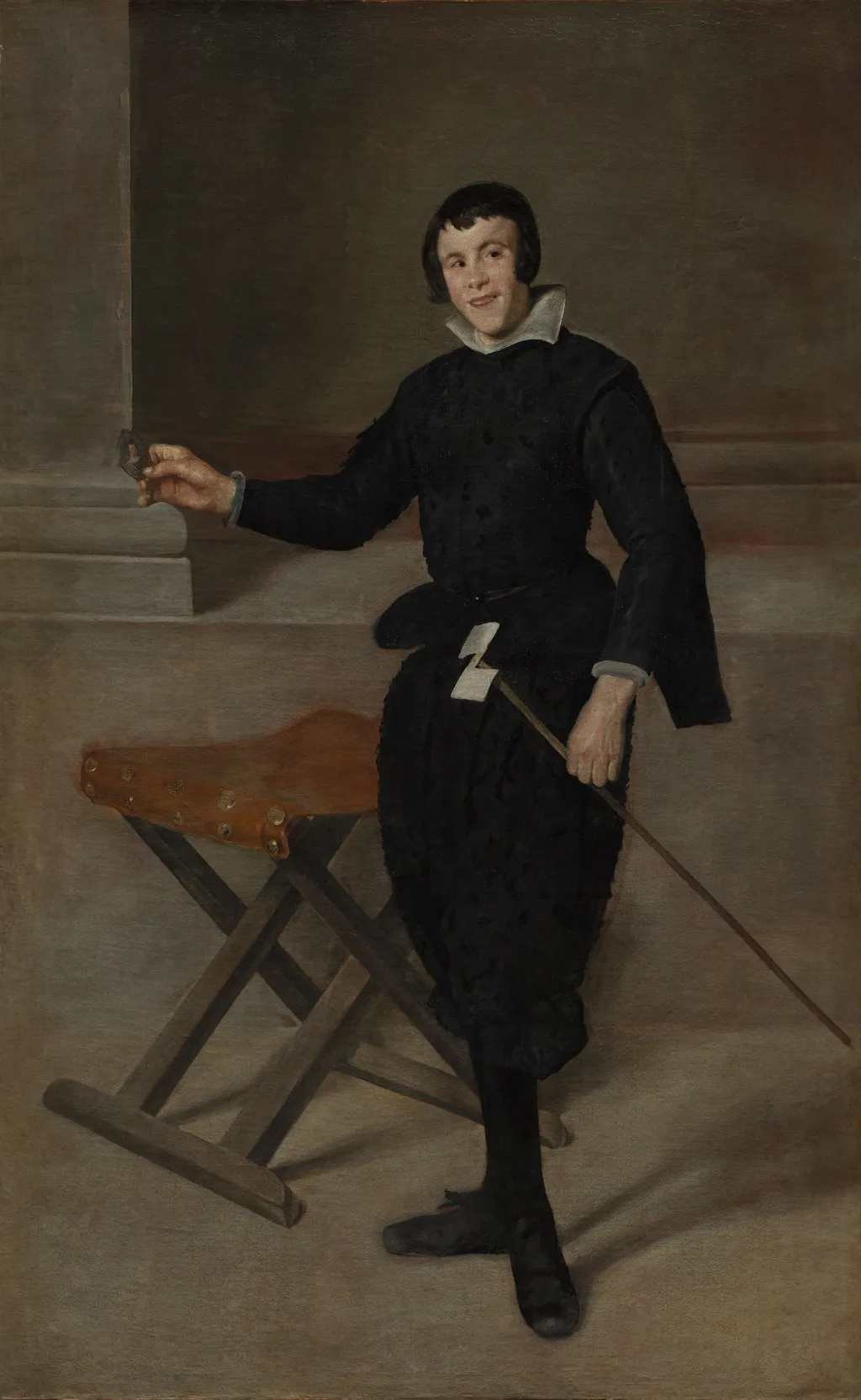
Portrait of the Jester Calabazas is an oil painting by the Early Baroque Italian artist Diego Velázquez. It dates from 1630 and is held in the collection of the Cleveland Museum of Art.
About this work
Art experts point out how the face here looks a lot like the one in Velázquez’s other work, The Triumph of Bacchus.
This oil painting shows a man named Calabazas. Diego Velázquez painted it between 1626 and 1632, and it now lives at The Cleveland Museum of Art.
The jester’s lively face suggests Velázquez liked painting playful, real people, not just fancy portraits. Art experts point out how the face here looks a lot like the one in Velázquez’s other work, The Triumph of Bacchus.
Check out another jester portrait by Diego Velázquez.
Subject & Meaning
The painting shows a court jester identified as Juan Calabacillas, a dwarf with pronounced strabismus and unsteady stance, dressed in black velvet. He holds a paper windmill in his left hand, a conventional emblem of folly recorded by Cesare Ripa, and in his right hand a miniature portrait in an oval frame, suggesting a personal or allegorical reference. The plain interior with a pillar, a simple chair and a leather seat places the figure within a palace antechamber, emphasizing his status as a court entertainer.
Stylistic analysis links the work to Velázquez’s early Spanish period, though attribution remains debated among scholars who question the identification and the symbolism of the windmill versus other possible objects.
Technique & Style
Executed in oil on canvas, the work measures approximately 175 by 106 centimeters. Stylistic analysis reveals a nervous and concise treatment of the face, comparable to the figure of Bacchus in Velázquez's other works, alongside homogeneous brushwork that some scholars argue predates the artist's first Italian journey. The composition features a full-length figure dressed in black satin velvet, positioned within a palace interior defined by an architectural plinth and pillar.
Critics noting potential non-Velázquez attribution point to the slightly amorphous background architecture, uniform brushstrokes, and heavy execution of the right hand. The painting's physical condition has been compromised by a historical re-stretching of the canvas, which reportedly swept across the paint surface, potentially altering the original texture and handling.
History & Provenance
Likely originating from the Buen Retiro Palace, the painting presumably left Spain following the French occupation in 1808. By 1866, it belonged to the Duke of Persigny and was exhibited in Paris. The work subsequently passed through various private collections before being sold at Christie's in London in 1965 for 170,000 guineas, after which it entered the Cleveland Museum of Art's collection.
Dating remains contested; José López-Rey proposes 1628–1629, linking it to a 1701 palace inventory, while skeptics like Jonathan Brown argue the jester Calabacillas did not enter royal service until 1632. Discrepancies between the canvas dimensions and historical inventories, alongside stylistic concerns regarding the brushwork and background architecture, have led some scholars to attribute the work to Alonso Cano or suggest it depicts the jester Velasquillo instead.
The painting is housed in the Cleveland Museum of Art, where it is recorded under accession number 1965.15 within the museum’s Cook collection. Its provenance traces back to the Buen Retiro Palace, where it was listed in 1701 and 1789 inventories; it later entered a Paris retrospective in 1866 as part of the Duke of Persigny’s holdings. The work was sold at Christie's London in 1965 for 170,000 guineas and has remained in the Cleveland Museum of Art ever since. Exhibition records include the 1866 Paris retrospective and subsequent displays in the museum’s permanent collection.
Context
The attribution of the Portrait of the Jester Calabazas to Diego Velázquez rests largely on stylistic arguments advanced by José López-Rey, who dated the work to 1628–1629, before the painter's first trip to Italy, and noted similarities in the nervous, concise handling of the face with that of the god Bacchus in The Triumph of Bacchus. López-Rey further identified the painting with a jester portrait recorded in the 1701 Buen Retiro Palace inventory. The attribution has nevertheless been contested by several scholars: Leo Steinberg attributed the canvas to Alonso Cano, while Elizabeth du Gué Trapier and Jonathan Brown have questioned both authorship and subject, citing the work's dimensions relative to the old inventories, the decolletage of the woman in the miniature portrait, the apparently amorphous background architecture, uniform brushwork, and the heavy execution of the right hand.
Brown has reiterated his refusal of the Velázquez attribution on these stylistic grounds. Julián Gállego has additionally argued that the object held by the figure is not a paper windmill but a small arrow or banderilla.
Overview
This oil painting, Portrait of the Jester Calabazas, was created by Diego Velázquez between 1626 and 1632. It depicts a court jester, likely Juan Calebasse, known for his lively demeanor. The work is executed in oil on canvas and is currently housed at the Cleveland Museum of Art, representing a significant example of Velázquez's early portraiture.
Own this work as a print
Artist & collection
Artist
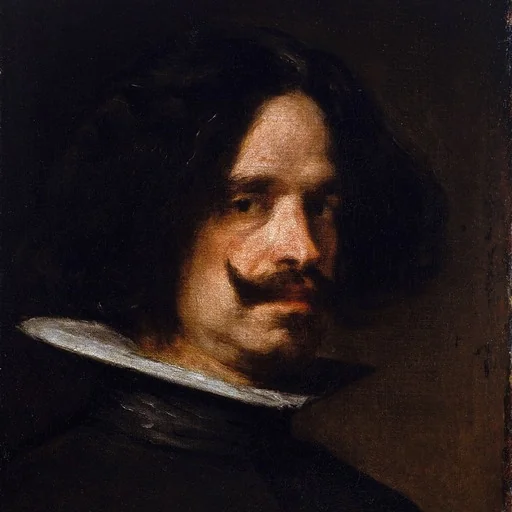
Diego Rodríguez de Silva y Velázquez was a Spanish Baroque painter, the leading artist in the court of King Philip IV of Spain and Portugal, and of the Spanish Golden Age.

 Portrait of Íñigo Fernández de Velasco
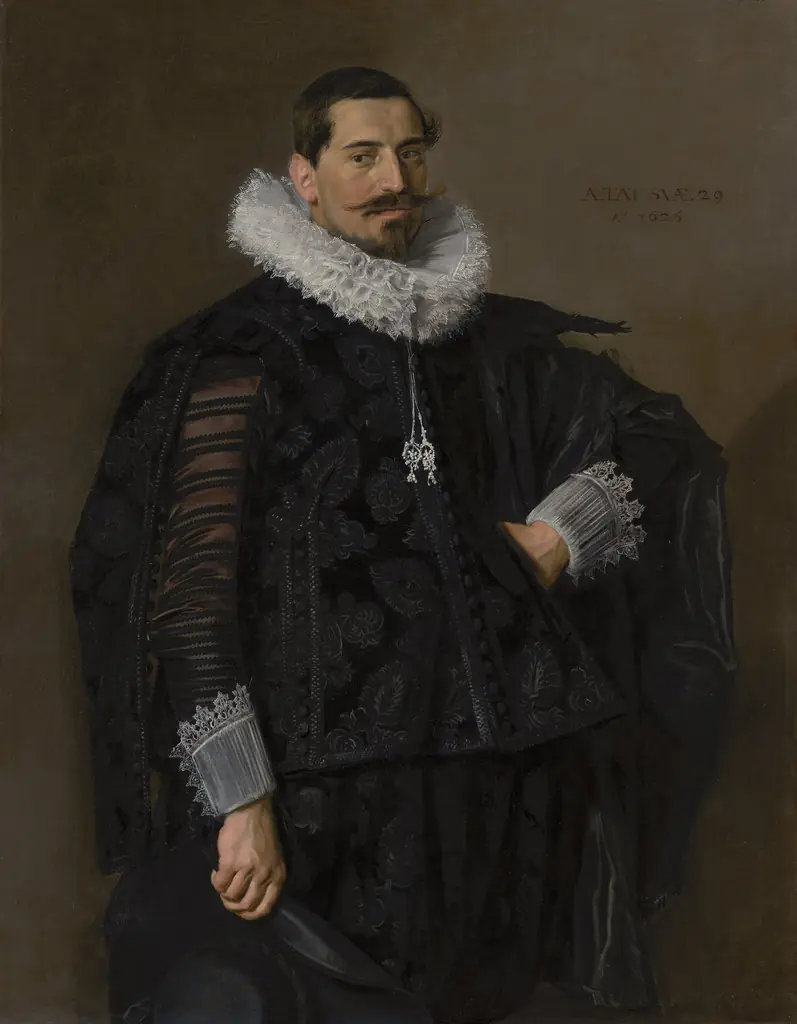 Portrait of Jacob Pietersz Olycan (1596-1638)
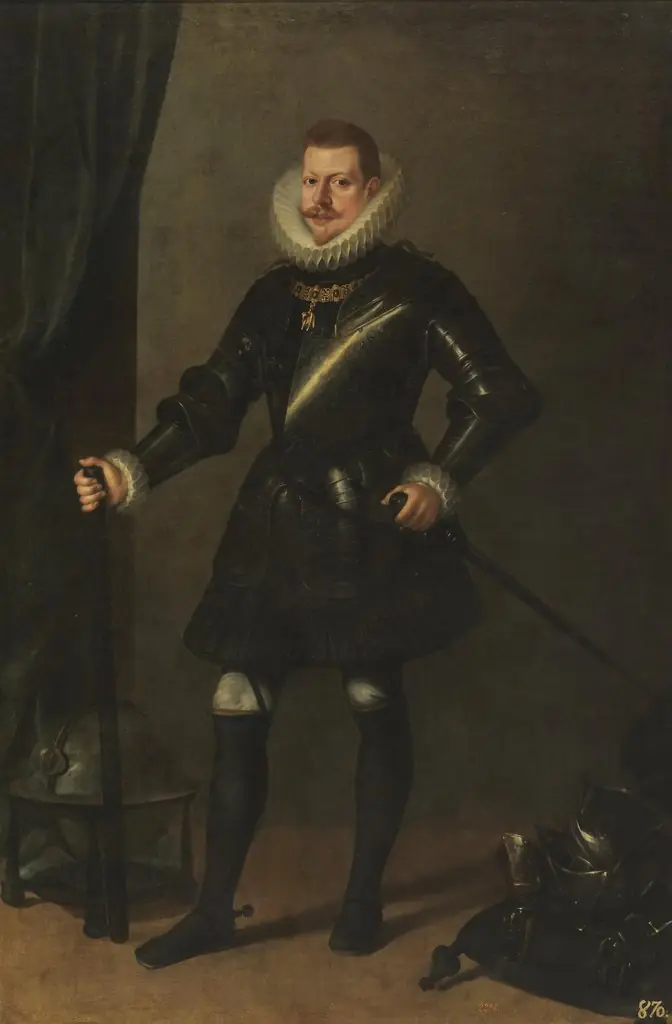 Philip III in Armour
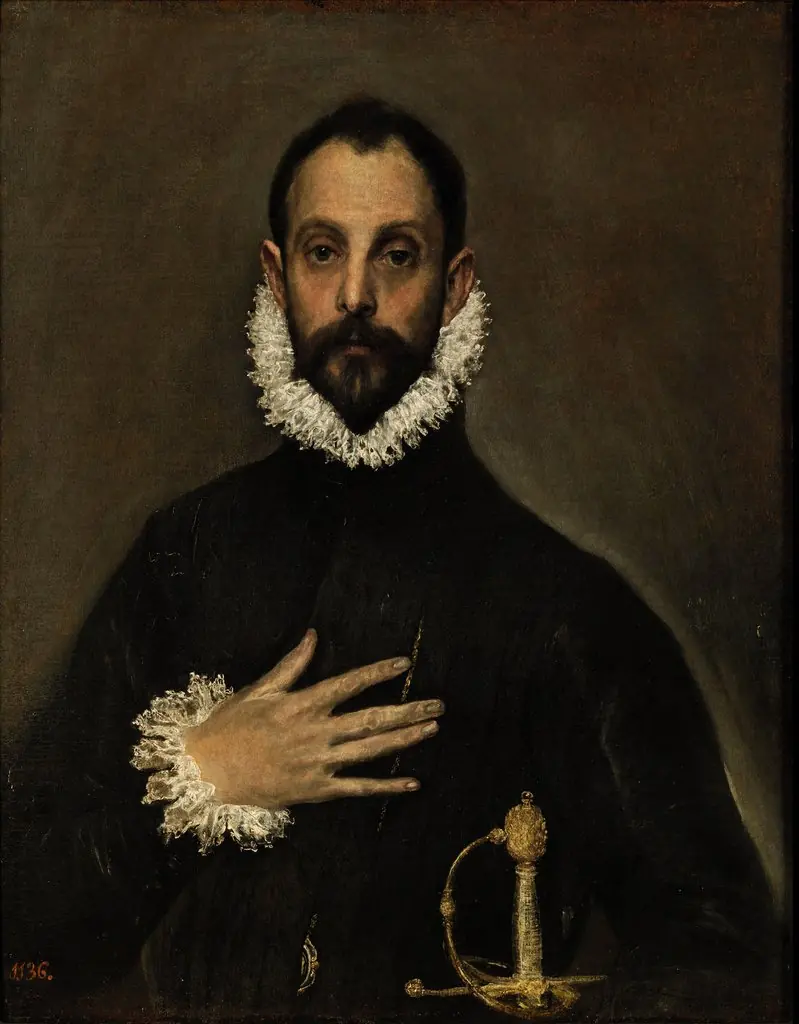 The Nobleman with his Hand on his Chest
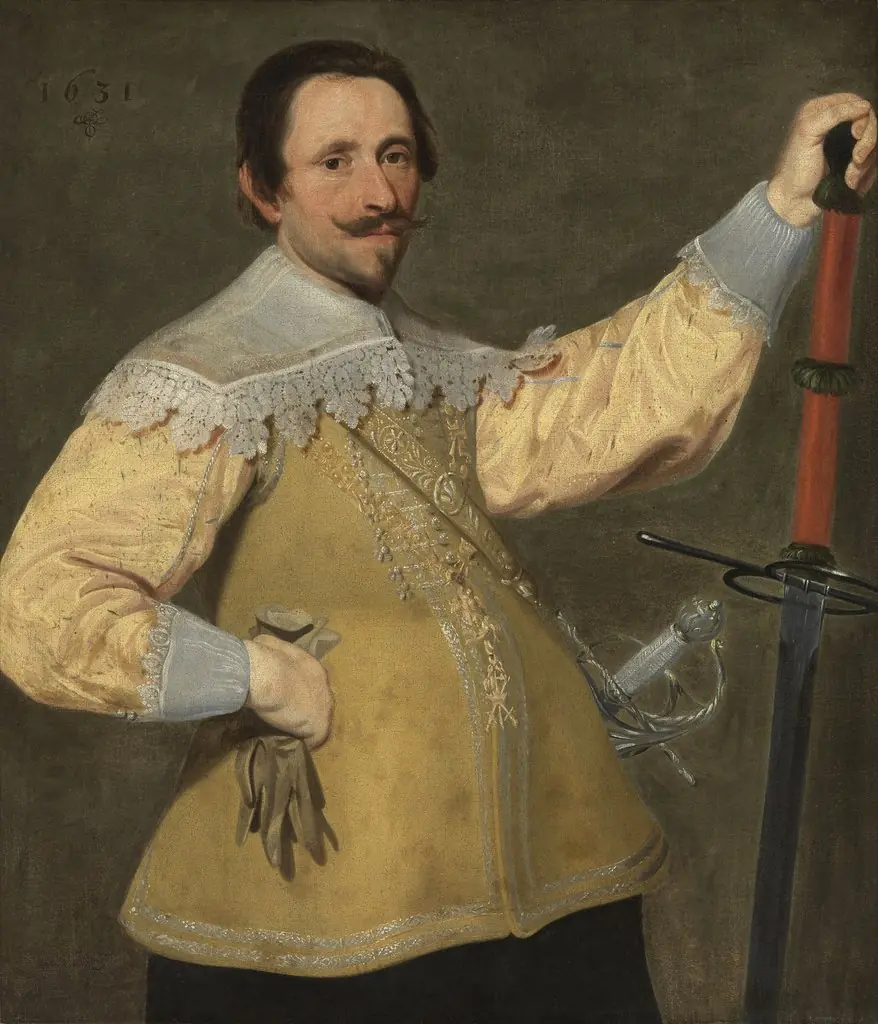 Portrait of a Dean of the St. Michael's Guild in Bruges
 Portrait of a Young Man
 Portrait of a Man
 Blaise de Montesquiou, seigneur de Montluc, maréchal de France
 Portrait of Jean Fourmenois