Artwork
The Nobleman with his Hand on his Chest
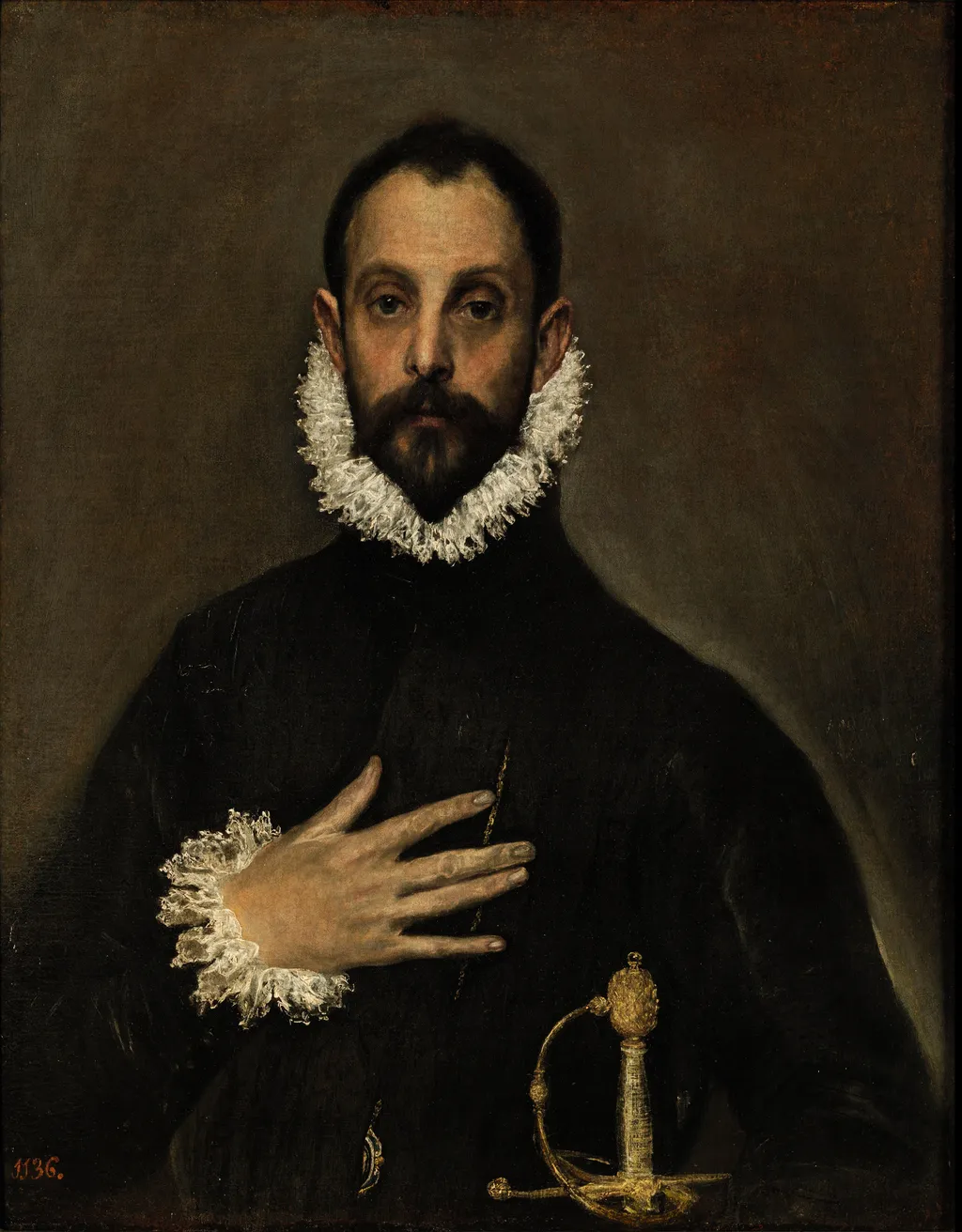
The Nobleman with his Hand on his Chest is an oil painting by the Mannerist artist El Greco. It dates from 1590 and is held in the collection of the Museo del Prado.
About this work
El Greco painted The Nobleman with his Hand on his Chest early in his time in Spain. It’s oil paint on canvas, made between 1580 and 1614. This work counts as one of his first pieces done in Spain.
The hand-on-chest pose often showed honor or oaths in portraits then. El Greco later became known for his dramatic style, but this early piece looks plainer.
Look up the artist next: El Greco.
Subject & Meaning
The composition establishes an archetypal image of the honorable Spanish knight of the Golden Age, balancing earthly duty with spiritual gravity.
The painting depicts an unknown gentleman dressed in sober black court attire with a white ruff, holding a sword with a golden hilt while placing his right hand over his chest. This specific gesture is widely interpreted as the act of taking a solemn oath, likely reflecting the sitter's role as a high-ranking official or military commander swearing loyalty to the Spanish crown. The composition establishes an archetypal image of the honorable Spanish knight of the Golden Age, balancing earthly duty with spiritual gravity.
Historically, the work acquired profound nationalistic symbolism in the early 20th century, serving as an icon of Spanish identity during periods of political fragmentation and civil conflict. While the subject's identity remains debated, with theories ranging from Miguel de Cervantes to a self-portrait, the prevailing view identifies him as Juan de Silva y Ribera, whose official positions would explain the juridical nature of the pose.
Technique & Style
The painting is executed in oil on canvas, measuring 81.8 cm in height by 66.1 cm in width, and was created around 1580 in Toledo during El Greco’s Spanish period. It depicts a gentleman in black attire with a white ruff, his left hand resting flat on his chest, suggesting an oath, and holding a sword whose golden hilt extends toward the left armpit. The work shows clear influence of Venetian school techniques, particularly in its use of light and subtle tonal gradations revealed after a 1996 restoration that uncovered a grayish, not black, background and a delicate chiaroscuro effect. The signature in Greek letters, ΔΟΜHΝΙΚΟΣ ΘΕΟΤΟΚOΠΟYΛΟΣ EΠΟIΕΙ, confirms its early Spanish provenance, as El Greco later used Latin script. Formal qualities include a dark, austere palette, precise rendering of fabric textures, and a composed, direct gaze that conveys solemnity and spiritual gravity.
History & Provenance
The Nobleman with his Hand on his Chest was painted by El Greco around 1580, during his first Spanish period in Toledo. The work is signed in Greek capital letters with the artist's birth name, ΔΟΜΗΝΙΚΟΣ ΘΕΟΤΟΚΟΠΟΥΛΟΣ ΕΠΟΙΕΙ (Domínikos Theotokópoulos e'poíei), indicating it is an early work from his Spanish phase, as he later signed works using the Latin alphabet.
The painting is held in the collection of the Museo del Prado in Madrid. It was restored in 1996, during which it was discovered that the background was not black but light grey, and the signature, previously barely legible, became readable. The work gained its current popular title from writer Pío Baroja, who used it in a note published in the newspaper El Globo in the late 19th century.
The work is held in the Museo del Prado, Madrid, inventoried as oil on canvas, 81.8 cm high by 66.1 cm wide.
It has been exhibited prominently in the museum’s El Greco gallery since the gallery’s opening in 1920, where it occupied the central position among seven portraits as part of a curated display aimed at establishing a Spanish national canon.
Context
The painting The Nobleman with his Hand on his Chest, created by El Greco around 1580, is a seminal example of Mannerist portraiture housed in the Museo del Prado, where it has become emblematic of Spanish Golden Age identity. Its depiction of a dark-clad nobleman placing his hand upon his chest was interpreted in the early twentieth century as a symbolic oath of loyalty, a reading reinforced by the work’s central placement in the Prado’s 1920 El Greco gallery and its frequent reproduction in Spanish cultural discourse. Contemporary scholarship, as reflected in sources 2, 4, 5, and 6, emphasizes the unresolved debate over the sitter’s identity, with the most credible hypothesis linking him to Juan de Silva y de Ribera, 3rd Marquis of Montemayor, a military commander and notary appointed by Philip II, a connection that explains the solemn gesture. Earlier theories proposing Cervantes or self-portrait interpretations are now dismissed, while the painting’s influence extended into literature and nationalist politics, inspiring poems by Machado and appearing in works such as Thomas Mann’s Doktor Faustus.
Legacy
The painting became a defining symbol of Spanish identity in the early 20th century, especially after its prominent display in the Prado's 1920 El Greco gallery, where it was positioned as a cornerstone of a deliberately national art canon. Its visibility led to widespread reproduction, making it the most copied work in the Prado's collection and a favored motif among Spanish intellectuals, even appearing in literature such as Fernando Iglesias Figueroa's writings and Thomas Mann's Doktor Faustus. The work's legacy was further cemented through nationalist reinterpretations, including its use by Falangist propaganda during the Spanish Civil War as a symbol against the Second Spanish Republic, and its role in shaping a romanticized vision of Spanish honor tied to the depicted gesture of taking an oath. Modern scholarship, including analyses from the Prado and academic studies, continues to debate its subject, ranging from a possible self-portrait to depictions of Juan de Silva y Ribera, 3rd Marquis of Montemayor, while its restoration history, such as the 1996 cleaning revealing a gray background and El Greco's Greek signature, has reinforced its technical and historical significance.
Own this work as a print
Artist & collection
Artist
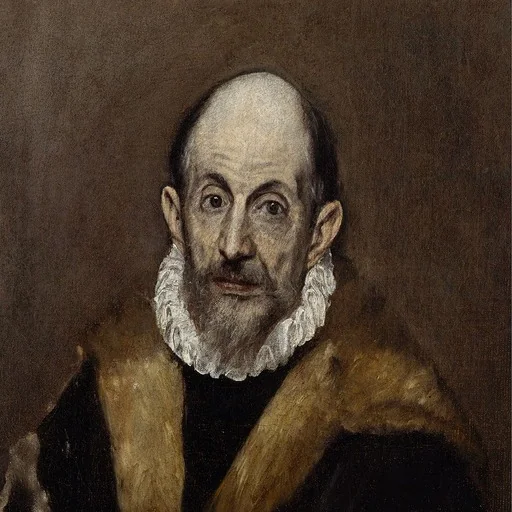
Doménikos Theotokópoulos was born in 1541 in Candia (modern Heraklion), the capital of Venetian-ruled Crete, where he was trained in the post-Byzantine tradition of icon painting.

- Portrait of a Gentleman
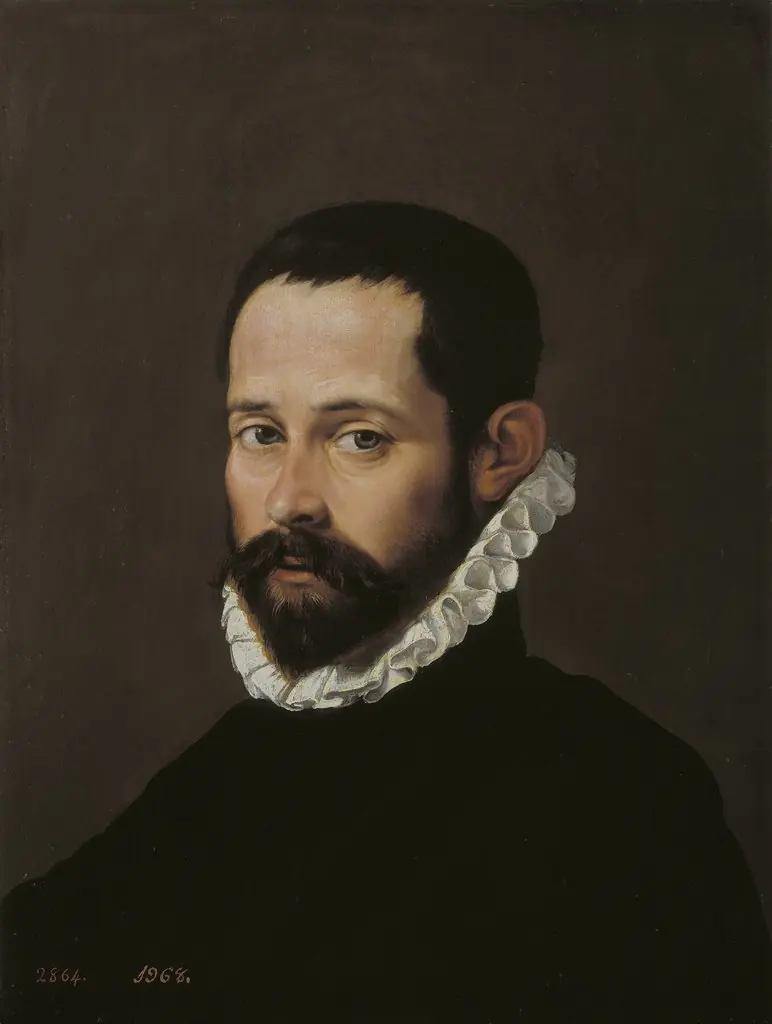 Portrait of Diego Hurtado de Mendoza
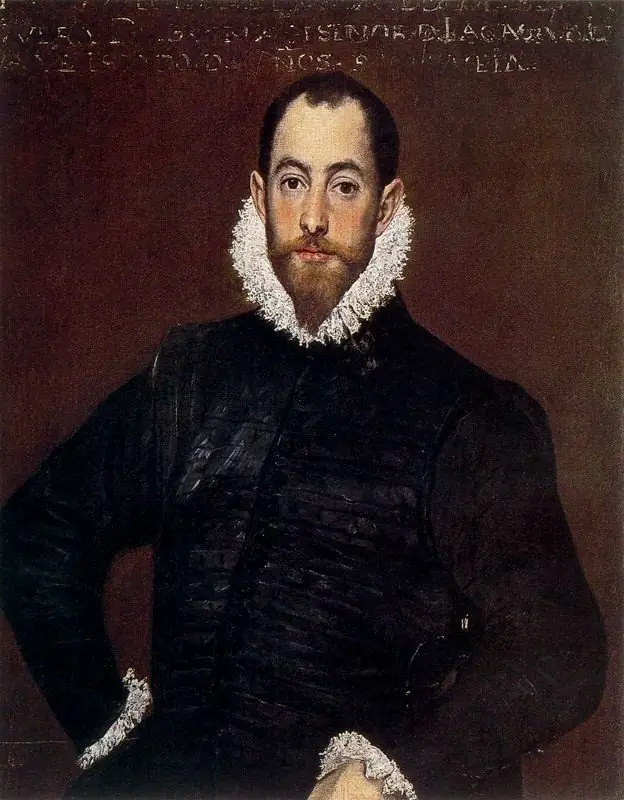 Portrait of a Gentleman from the Casa de Leiva
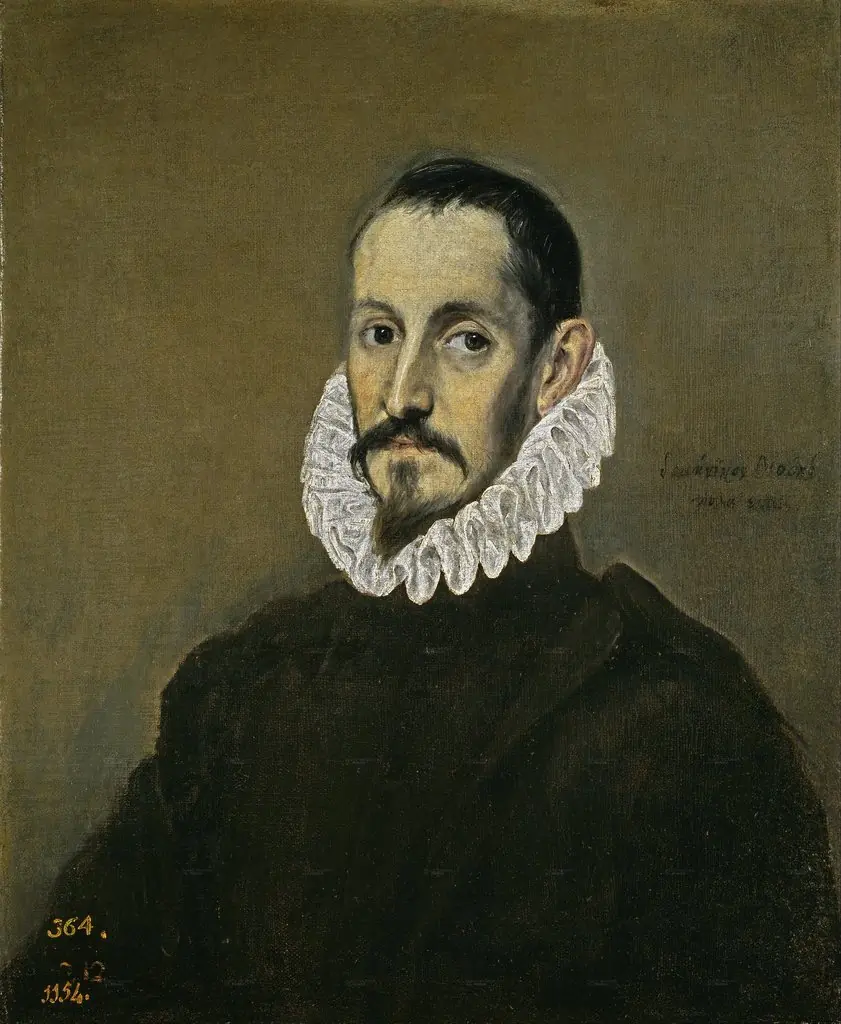 Portrait of a gentleman
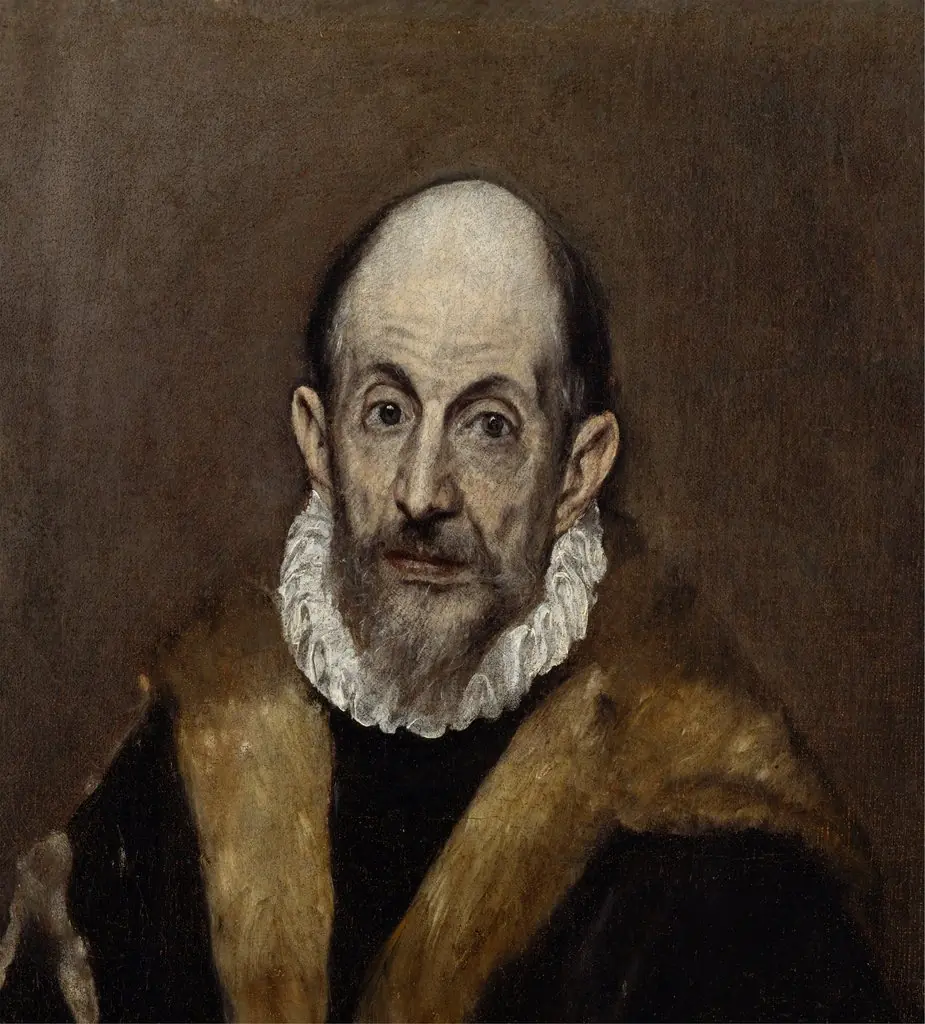 Self-Portrait (?)
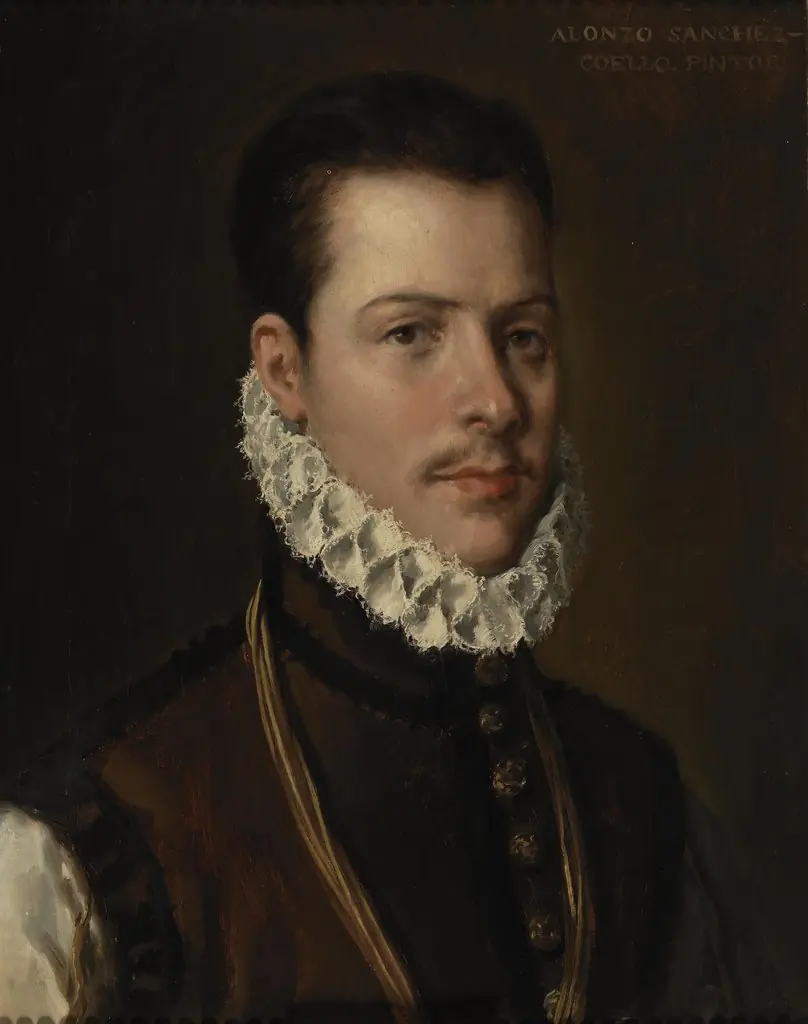 Fernando de Aragón y Borja duque de Villahermosa y conde de Ribagorza (copia)
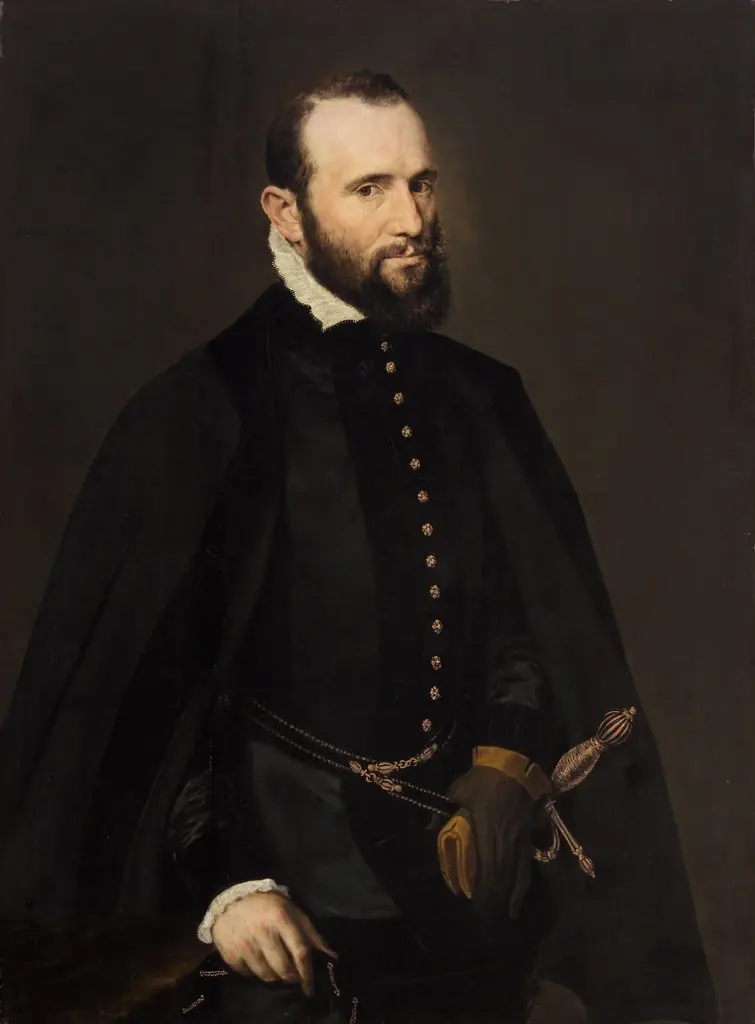 Portrait of a man
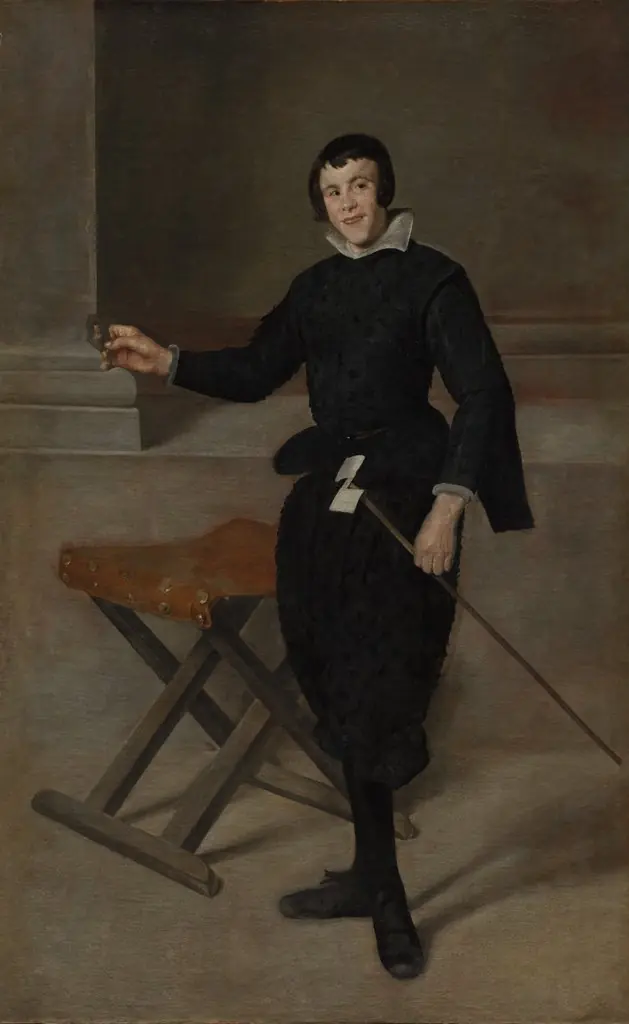 Portrait of the Jester Calabazas
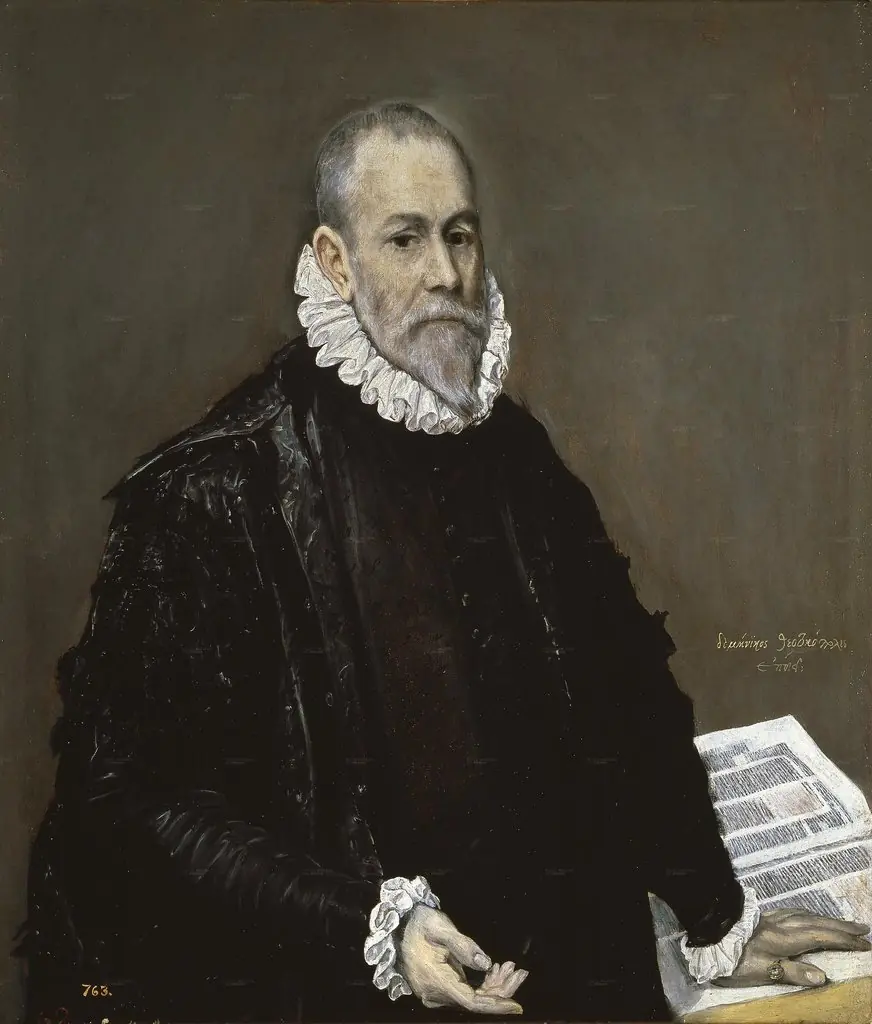 Portrait of Rodrigo de la Fuente
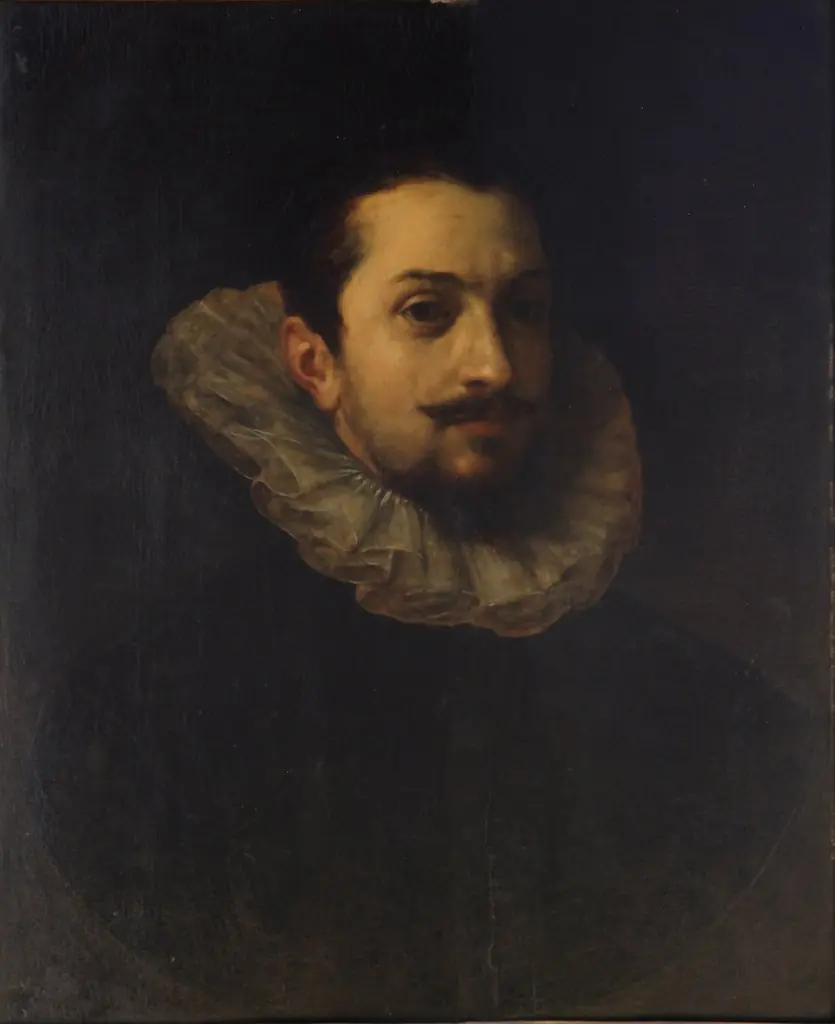 Portrait of a man
 Portrait of a Gentleman
 Portrait of a Man