Artwork
John the Evangelist
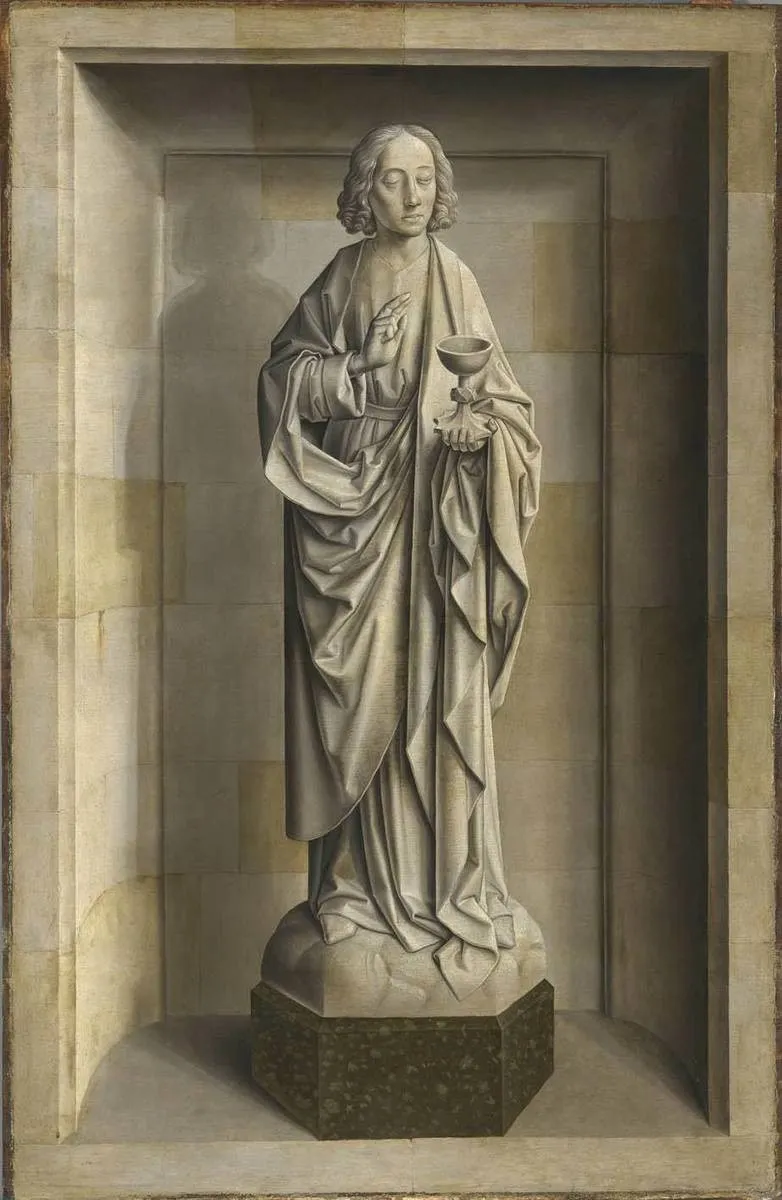
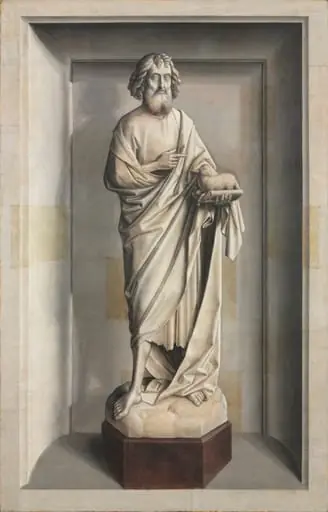
John the Evangelist is an oil painting by the Northern Renaissance artist Dieric Bouts. It is held in the collection of the Bavarian State Painting Collections.
About this work
Subject & Meaning
The iconography emphasizes John’s role as the beloved disciple and theological writer, linking his person to themes of divine revelation and martyrdom.
The painting shows John the Evangelist as the central figure, clothed in traditional red and blue robes that signify his apostolic authority. He holds a chalice, referencing the legend of the poisoned drink, and a manuscript, symbolizing his authorship of the Gospel. The work belongs to the Early Netherlandish tradition, noted for its meticulous detail and devotional intensity, and was created for St Laurentius Church in Bavaria.
The iconography emphasizes John’s role as the beloved disciple and theological writer, linking his person to themes of divine revelation and martyrdom. The chalice alludes to his miraculous survival of poison, while the book underscores his contribution to Christian scripture. Together, these symbols convey his spiritual authority and the contemplative purpose of the artwork within its ecclesiastical setting.
Technique & Style
The panel is executed in oil paint on oak, with a vertical format measuring 105 cm in height and 68.4 cm in width. The handling aligns with Early Netherlandish conventions, emphasizing precise linear definition and smooth, blended modeling of drapery and flesh to convey volume. Stylistic traits include a restrained palette dominated by deep blues and earth tones, heightened by subtle glazing to articulate folds and anatomical contours.
The figure’s calm demeanor and the refined articulation of the evangelist’s attributes reflect the workshop’s adherence to Dieric Bouts’s late idiom, characterized by clarity and measured elegance.
History & Provenance
The panel is dated to about 1485, aligning with the documented activity of Dieric Bouts’s workshop and followers in the final decades of the fifteenth century.
It entered the collection of the St Laurentius Church, from which it later passed into the holdings of the Bavarian State Painting Collections. The work is now located in the Alte Pinakothek.
Context
John the Evangelist, painted by Dieric Bouts in 1485, exemplifies Early Netherlandish religious art with its precise oil technique on panel. The work depicts the apostle in contemplative stillness, reflecting the devotional intensity characteristic of Late Gothic spirituality. Stylistic analysis situates it within Bouts' mature period, where naturalistic detail and emotional restraint converge to convey theological narrative.
Contemporary scholarship emphasizes its significance as a devotional object within the context of 15th-century Netherlandish ecclesiastical patronage, particularly in relation to the artist's workshop practices and evolving use of space. The painting's compositional clarity and symbolic precision continue to inform studies of Early Netherlandish visual theology.
The attribution to Bouts remains debated, with recent research examining workshop collaboration and regional stylistic influences in the Upper Rhineland. Comparative studies highlight its relationship to other depictions of John the Evangelist in Early Netherlandish art, underscoring broader trends in iconographic representation during the period. Its inclusion in major collections reflects evolving scholarly appreciation for the genre's role in shaping Northern European artistic identity.
Scholarly discourse situates this work within the larger trajectory of Early Netherlandish painting, particularly in how it bridges devotional function and artistic innovation. The piece is frequently referenced in studies of religious imagery in the Low Countries, with particular attention to its material execution and devotional context within the Alte Pinakothek's collection. Current research continues to explore its place in the development of Netherlandish naturalism and its influence on subsequent generations of artists.
Overview
John the Evangelist is an oil painting attributed to the Early Netherlandish artist Dieric Bouts. Executed in 1493, the work presents a solitary, elongated figure in a simple robe, set against an unadorned dark background. The composition is framed by a narrow border that isolates the saint, emphasizing his contemplative demeanor.
Artist & collection
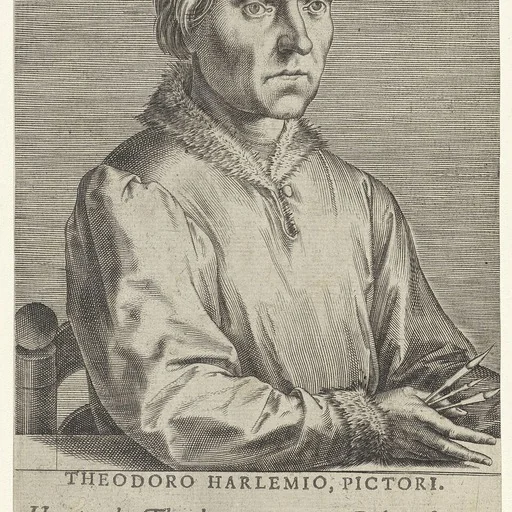
Artist
Dieric Bouts (born c. 1415 – 6 May 1475) was an Early Netherlandish painter. Bouts may have studied under Rogier van der Weyden, and his work was influenced by van der Weyden and Jan van Eyck. He worked in Leuven from…

 Saint John the Baptist
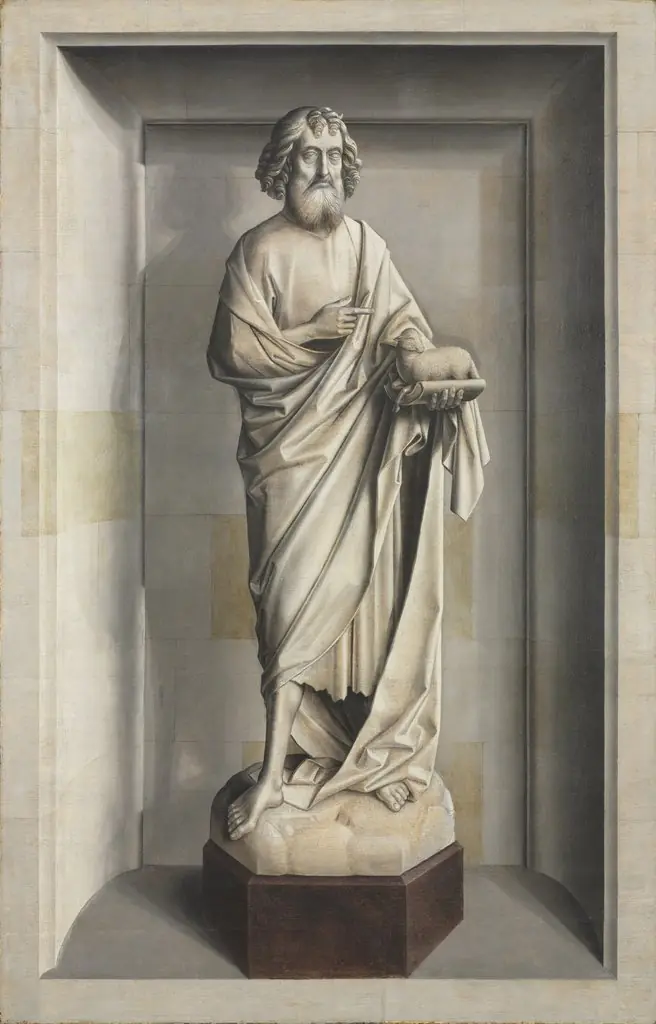 Saint John the Baptist
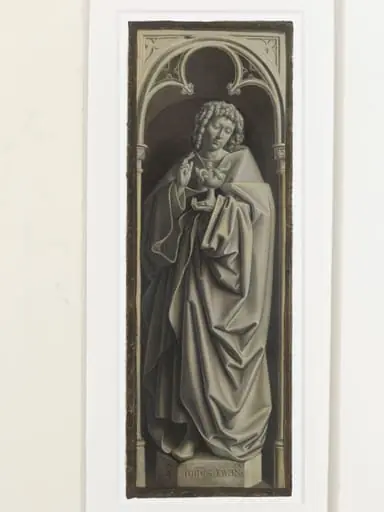 Copy of a detail of the Ghent Altarpiece, St John the Evangelist, by Hubert and Jan van Eyck in the church of St Bavon, Ghent.
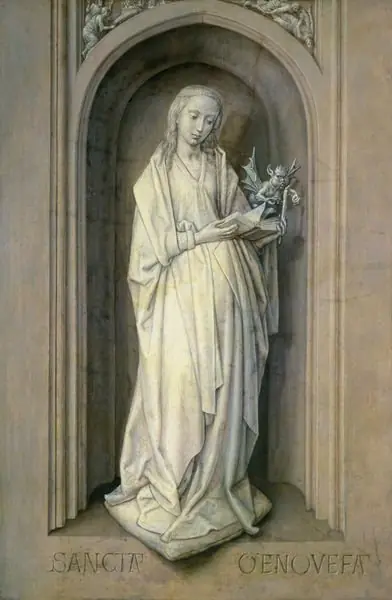 Genevieve
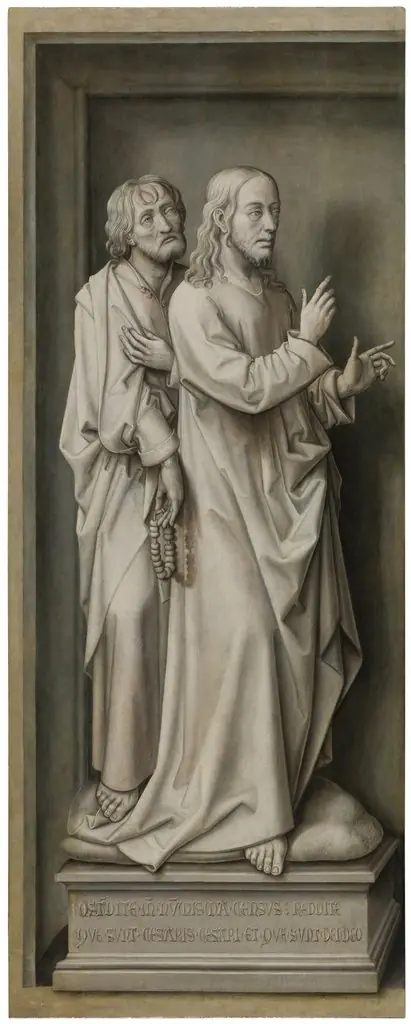 Redemption Triptych: Tribute to Caesar
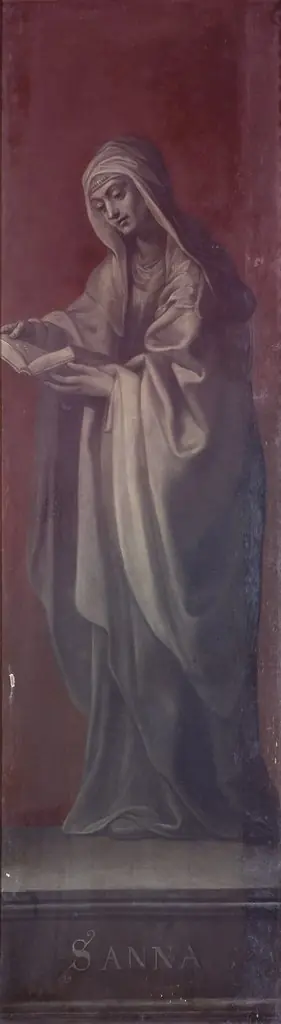 Saint Ann
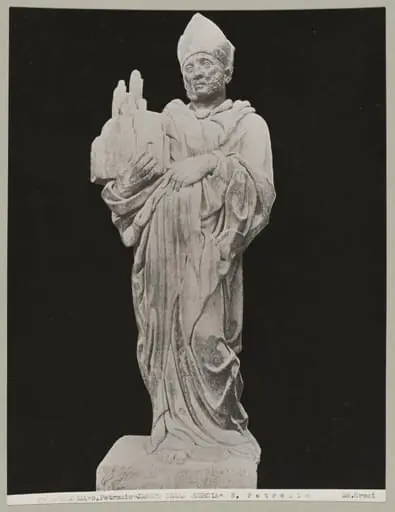 Untitled
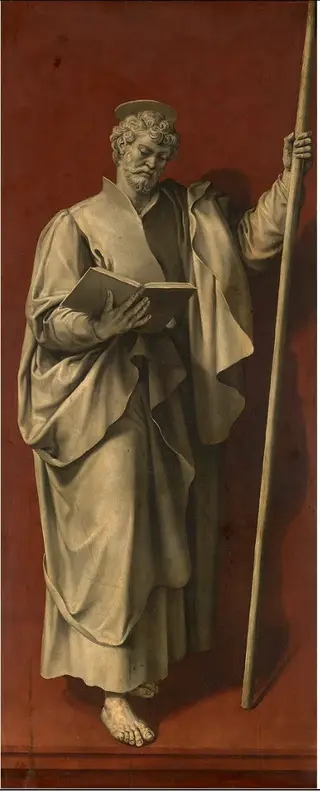 Saint Thomas the Apostle
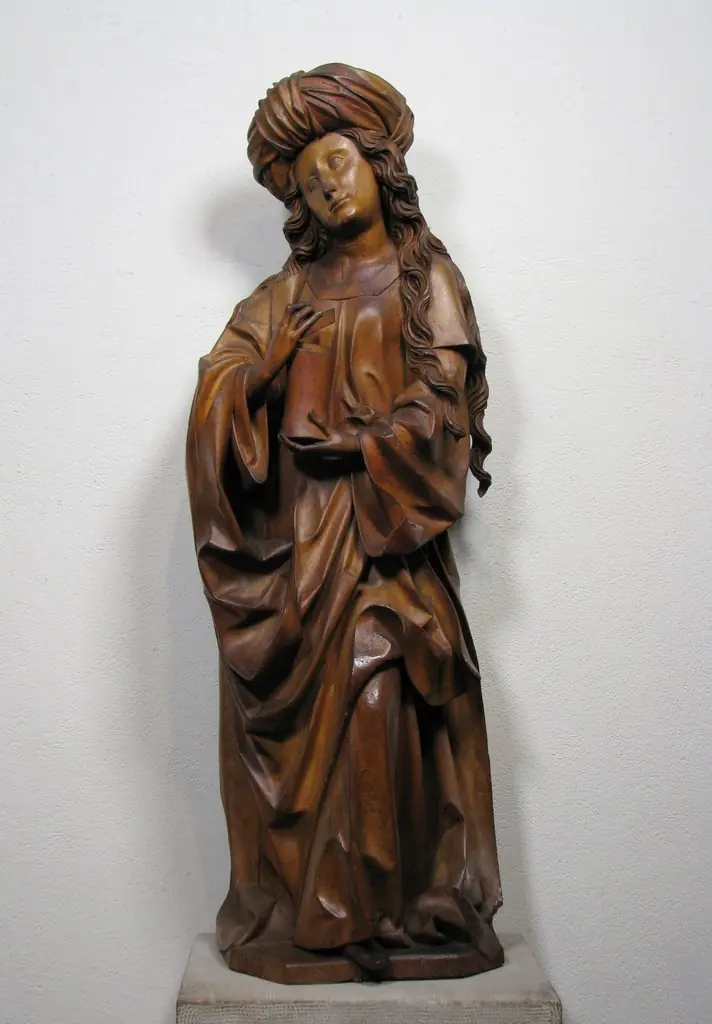 Saint Mary Magdalene
 Saint Cosmas, Physician and Martyr