Artwork
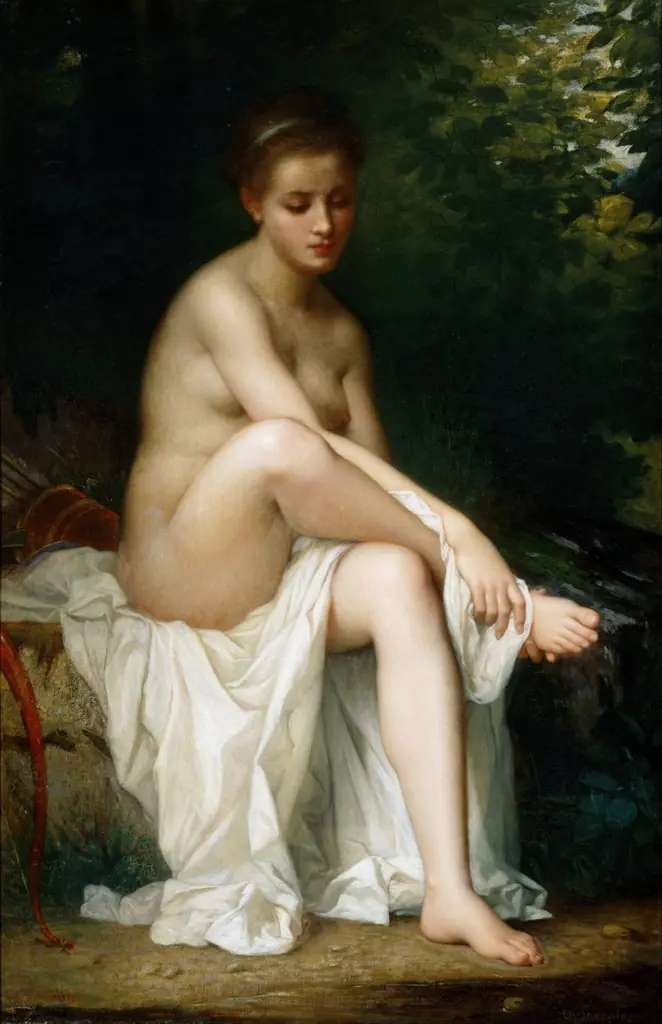
La Nymphe surprise
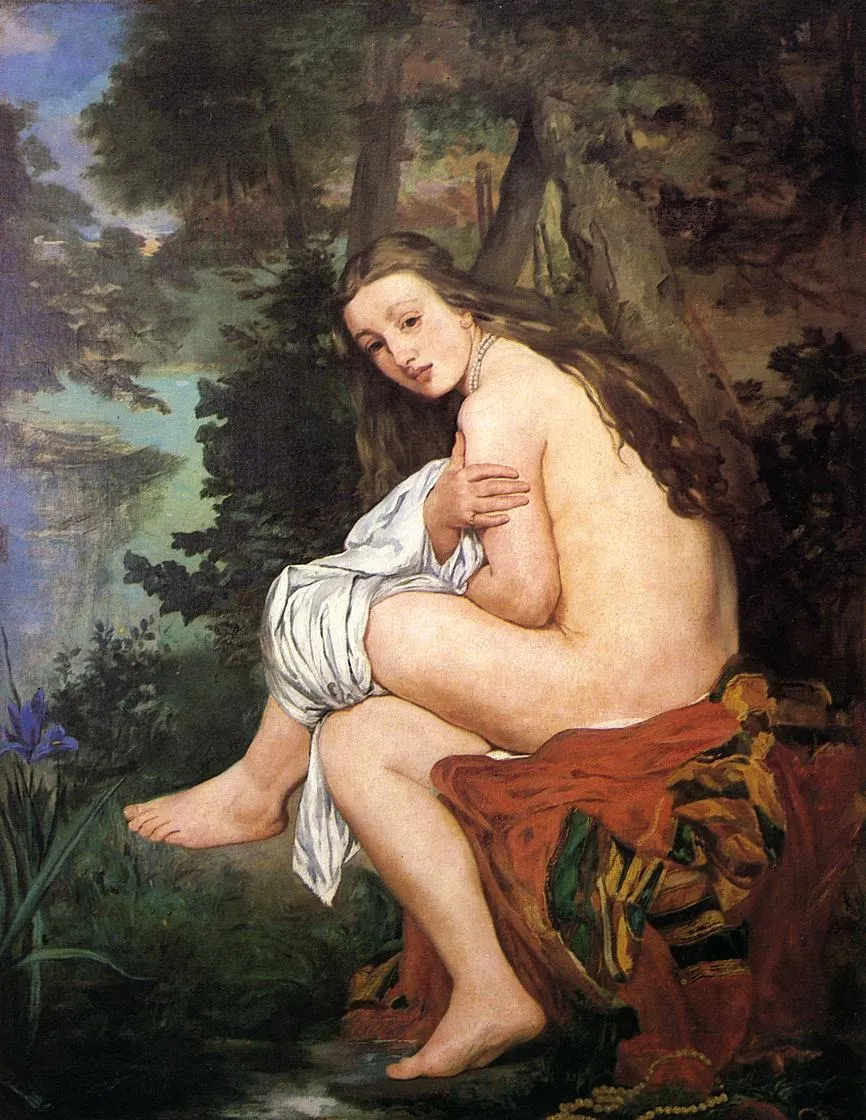
La Nymphe surprise is an oil painting by the Impressionist artist Édouard Manet. It dates from 1860 and is held in the collection of the National Museum of Fine Arts, Argentina.
About this work
Subject & Meaning
The painting depicts a nude young woman, identified as the artist's partner Suzanne Leenhoff, situated in a wooded landscape beside a body of water.
The painting depicts a nude young woman, identified as the artist's partner Suzanne Leenhoff, situated in a wooded landscape beside a body of water. She is portrayed as a nymph, a figure from Greek mythology, with her gaze directed toward the viewer in an expression of surprise and shyness, suggesting she has been discovered bathing. The figure is adorned only with white pearls and a ring, while a blue iris grows near her foot.
Art historical analysis suggests the composition references Rembrandt's Susanna and the Elders due to the model's name and pose, or Jean-Baptiste Santerre's 1704 painting of the same subject. Technical studies reveal the work originated as a larger composition intended to depict Moses Saved from the Waters, which was subsequently cut down to focus on the nude figure. Infrared imaging further uncovered a hidden faun or satyr head in the foliage, hinting at a mythological narrative of surprise and intrusion.
Technique & Style
Executed in oil on canvas, the work measures 144.5 cm in height and 112.5 cm in width.
Manet's handling combines fluid, open brushwork with sharply defined contours, particularly in the delineation of the nymph's torso and pearl necklace. The background landscape is rendered with abbreviated, atmospheric strokes, while the figure's skin is modeled with cooler, silvery tones that contrast against warmer greens and blues of the foliage. Technical studies identify underdrawing and repentirs beneath the paint, including adjustments to the position of the left arm and the addition of a faun's head concealed in the foliage, later revealed by infrared imaging.
The composition's stylistic qualities align with Manet's transitional phase, synthesizing references to Italian and Dutch sixteenth- and seventeenth-century models through a modern, anti-idealized treatment of the nude and a confrontational gaze directed at the viewer.
History & Provenance
La Nymphe surprise was created by Édouard Manet between 1859 and 1861, with the model identified as his partner Suzanne Leenhoff, whom he married in 1863. Technical studies conducted in Buenos Aires (1956–1982) confirmed links between the painting and a smaller preparatory sketch (35 × 46 cm) in Oslo's National Gallery, supporting the theory that the composition originated as a larger work depicting Moses saved from the waters, later reduced to the surviving nude figure titled Nymphe surprise.
Manet retained the painting until his death in 1883. After his death, it appeared under variant titles at the 1897 Hôtel Drouot sale as Bethsabé au bain and was listed in Manet's 1871 inventory of 25 unsold works simply as Nymphe. It was purchased by the Argentine state from Buenos Aires' Galería Witcomb in 1914 and entered the collection of the National Museum of Fine Arts, Argentina, where it remains.
La Nymphe surprise is housed in the National Museum of Fine Arts in Buenos Aires, where it is part of the museum's permanent collection and listed under the institution's inventory as a work by Édouard Manet. The painting entered the museum's collection after its purchase by the Argentine state, although the exact accession number is not specified in the available sources. Its exhibition history includes a showing at the Salon des Artistes Français in 1865, a personal exhibition organized by Manet on avenue de l'Alma in 1867, inclusion in Manet's 1871 catalogue of his twenty‑five most important unsold works, and subsequent display in the museum's galleries as a highlighted piece.
Context
Scholars identify La Nymphe surprise as a pivotal work marking the onset of modernism in French painting and a new phase in Manet's career. Created between 1859 and 1861, it is considered his first major experimental canvas, synthesizing models from sixteenth- and seventeenth-century Italian and Dutch art following his studies at the Bibliothèque nationale de France. Art historians have debated its iconographic sources; while some link the composition and the model's name, Suzanne Leenhoff, to Rembrandt's Susanna and the Elders, Françoise Cachin argues for inspiration from Jean-Baptiste Santerre's 1704 treatment of the subject.
Technical analysis by Juan Corradini between 1956 and 1983 confirmed that the painting was originally conceived as a larger scene of Moses Saved from the Waters, later cut down by the artist. Infrared studies revealed hidden elements, including a satyr's head in the foliage, supporting Antonin Proust's earlier accounts. Manet retained the work throughout his life, listing it among his finest unsold pieces in 1871 and exhibiting it in his personal 1867 retrospective.
Legacy
La Nymphe surprise is regarded as a pivotal work in Édouard Manet's career, marking the beginning of a new period in his artistic development and, more broadly, in the history of modernism in French painting. Manet kept the canvas in his studio throughout his life and treated it as one of his most important achievements; in 1871 he placed it eighth on his own list of his twenty-five best unsold works. He had earlier exhibited it at the Salon des Artistes Français in 1865 and again in his 1867 solo show on the Avenue de l'Alma, organized after his rejection from the Universal Exhibition.
The painting's afterlife has been shaped by sustained scholarly attention. Antonin Proust's 1897 memoirs in La Revue Blanche argued that the canvas was originally conceived as a larger Moses saved from the waters, later cut down to the single nude figure. Technical studies conducted in Buenos Aires by Juan Corradini between 1956 and 1982, followed by infrared analysis in 1983, confirmed pentimenti linking the painting to a 35 × 46 cm sketch in the National Gallery of Oslo and revealed a hidden faun or satyr head in the foliage.
Today the work is considered a highlight of the National Museum of Fine Arts in Buenos Aires, acquired in 1914 from the Witcomb Gallery.
Overview
Édouard Manet's 1861 oil painting, La Nymphe surprise (The Surprised Nymph), marks a pivotal moment in the artist's career and in the development of modern French painting. This significant work is housed in the National Museum of Fine Arts in Buenos Aires, where it is considered a highlight of the collection. Its creation signaled a new artistic direction for Manet, influencing the trajectory of art in the mid-19th century.
Artist & collection
Artist
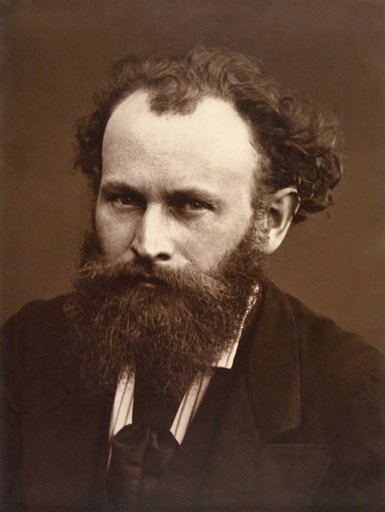
Édouard Manet was a French modernist painter. He was one of the first 19th-century artists to paint modern life, as well as a pivotal figure in the transition from Realism to Impressionism.

Museum
National Museum of Fine Arts, Argentina
Continue through works from the same source collection.