Artwork
Beggar with Oysters (Philosopher)
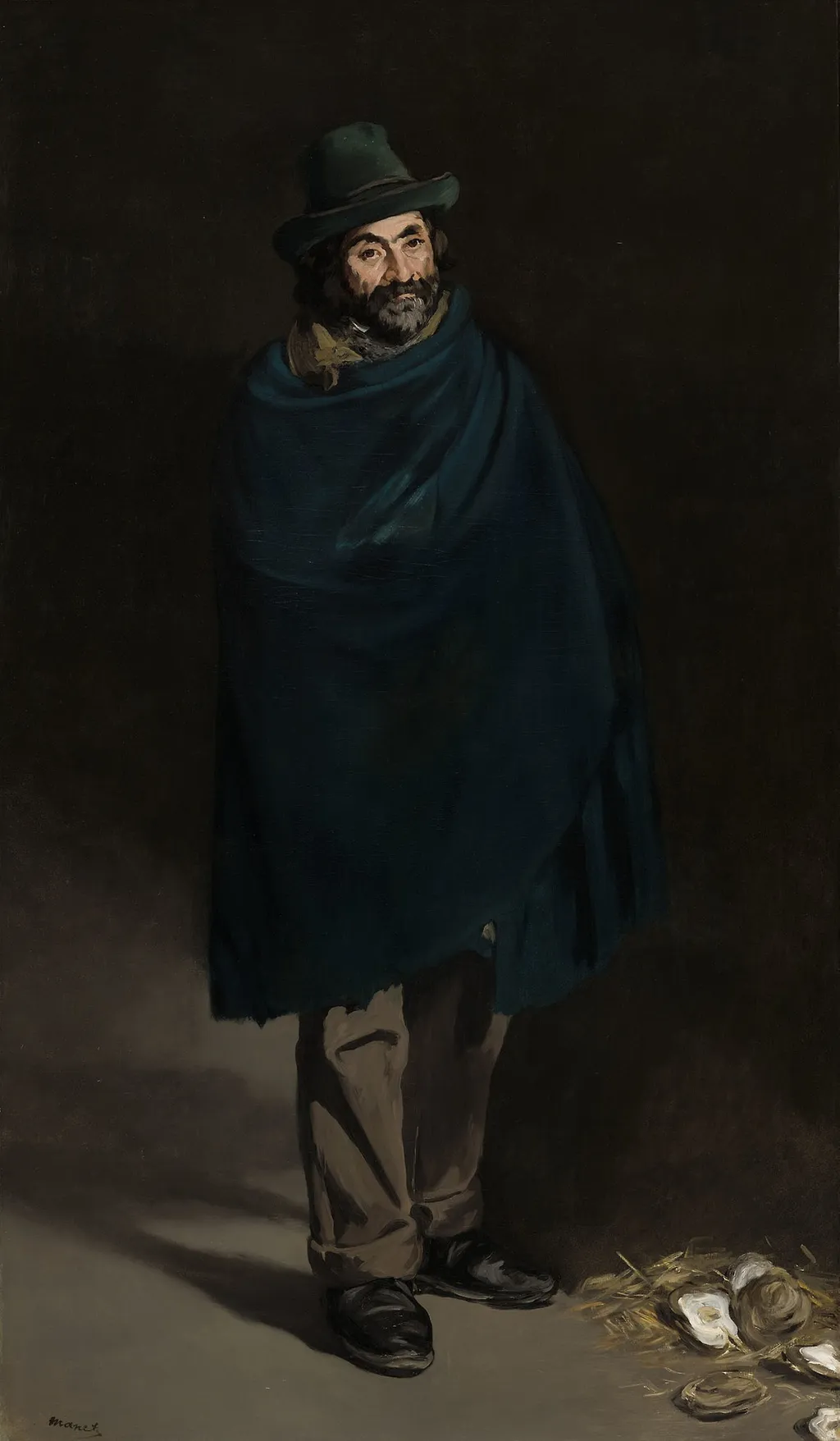
Beggar with Oysters (Philosopher) is an oil painting by the Realist artist Édouard Manet. It dates from 1864 and is held in the collection of the Art Institute of Chicago.
About this work
Overview
Manet employs a loose, direct brushwork style typical of his mature period, prioritizing the immediate visual impact of light and form over intricate detail.
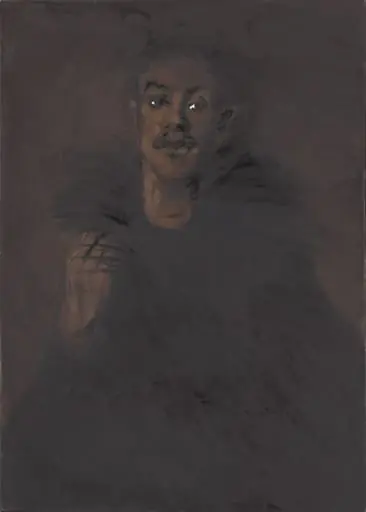
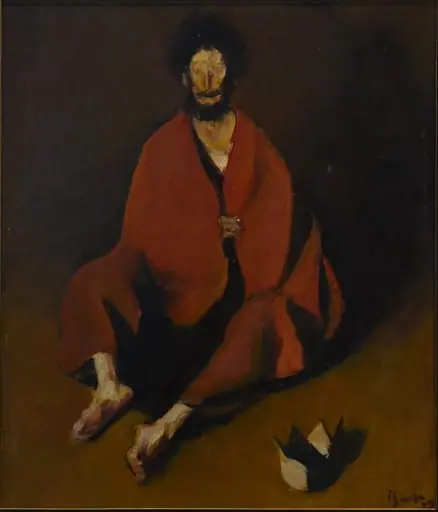
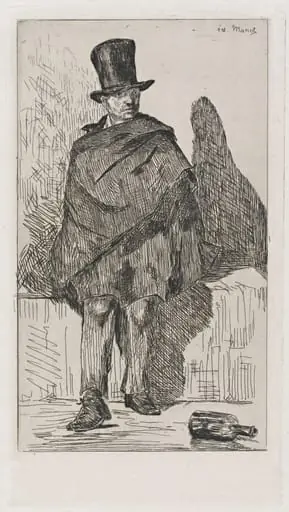
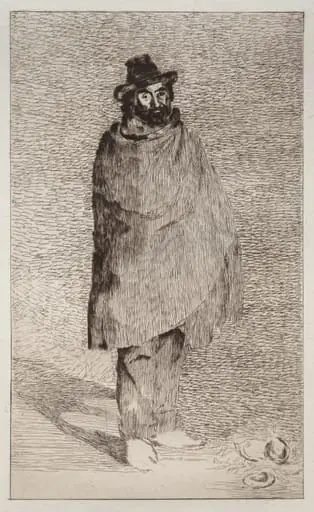
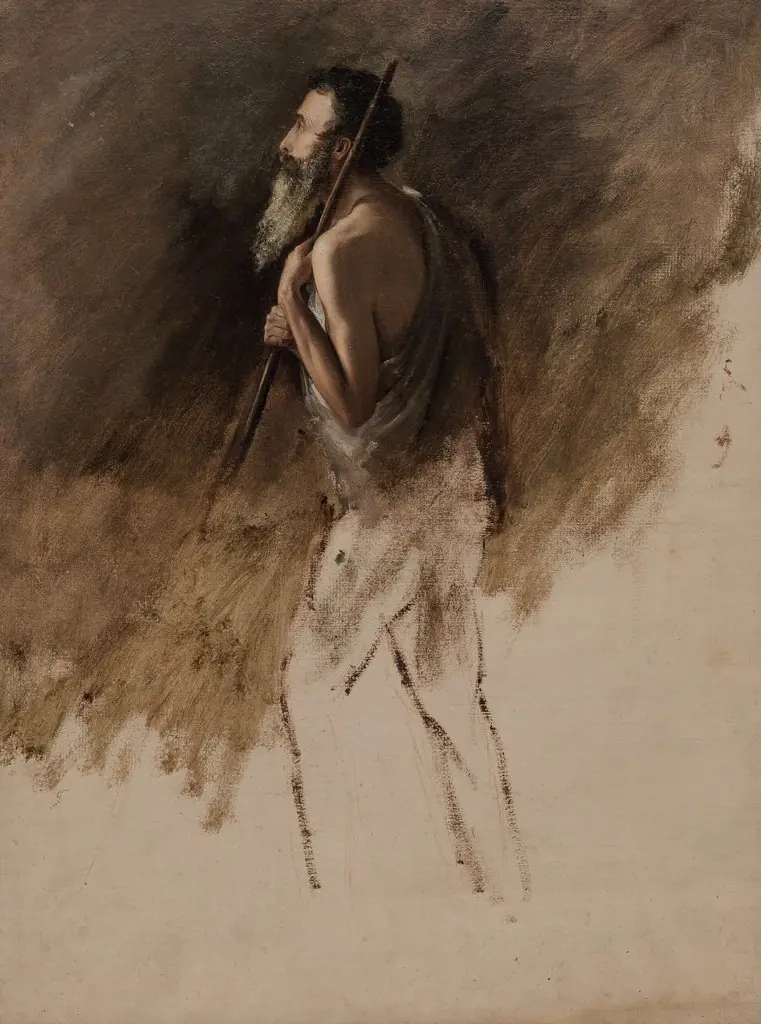
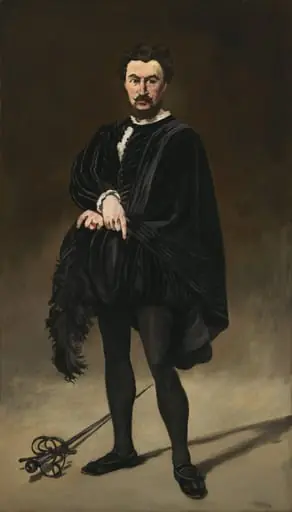
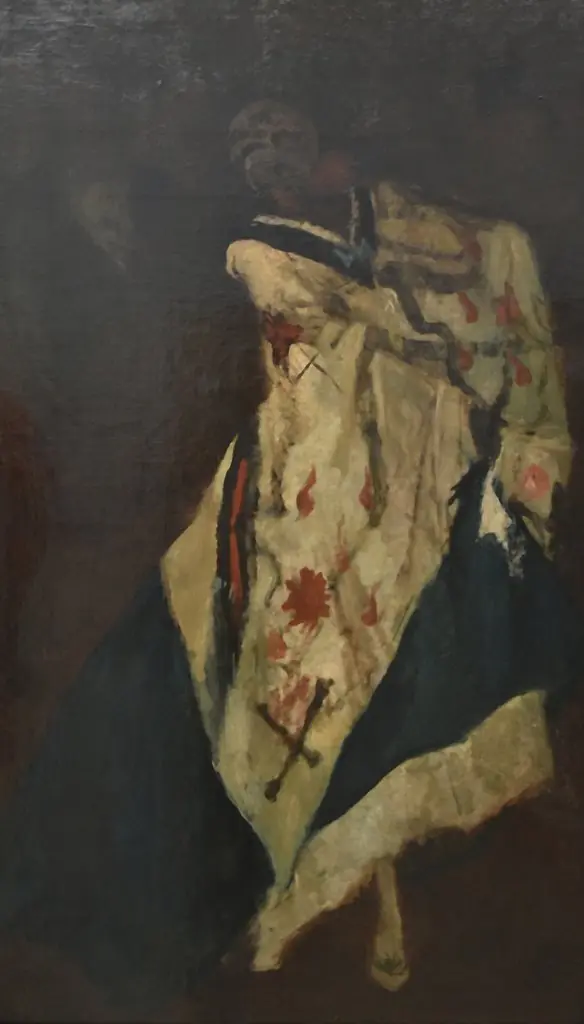
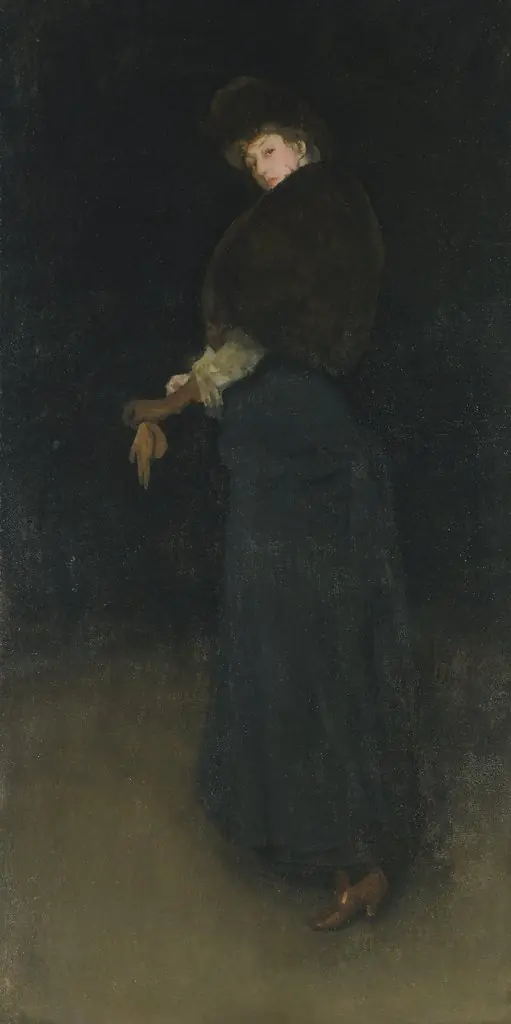
Édouard Manet's Beggar with Oysters (1864) presents a full-length portrait of a man, often identified as a philosopher or beggar, standing against a neutral, dark background. The figure is clad in a voluminous blue cloak that drapes over brown trousers and black shoes, topped with a distinctive green hat. His face, characterized by a thick beard and mustache, serves as the composition's focal point, with his gaze directed sharply to the side, suggesting a moment of contemplation or observation.
Manet employs a loose, direct brushwork style typical of his mature period, prioritizing the immediate visual impact of light and form over intricate detail. The hands are obscured by the folds of the cloak, emphasizing the isolation of the head and the upper torso. Painted during a pivotal moment in Manet's career, shortly after his controversial Luncheon on the Grass, this work reflects his ongoing engagement with the depiction of modern life and the marginalized figures of Parisian society.
The title's juxtaposition of "Beggar" and "Philosopher" invites interpretations regarding the intellectual dignity of the lower classes, a theme Manet frequently explored. The painting exemplifies his move away from academic idealization toward a more candid, realist approach that would profoundly influence the development of Impressionism.
Subject & Meaning
The central figure is a bearded, moustached man cloaked in a long blue coat and a green hat, his gaze turned away from the viewer. He holds a plate of oysters, an object often associated with indulgence and intellectual conversation in 19th‑century French culture, suggesting a blend of poverty and philosophical contemplation.
Technique & Style
Manet employs a limited palette of muted earth tones contrasted with the deep blues of the cloak, allowing the illuminated facial features to dominate the composition. The background is rendered in near‑black tones, creating a chiaroscuro effect that isolates the subject and emphasizes texture in the beard and fabric.
History & Provenance
Painted in the mid‑1860s, the canvas entered the Art Institute of Chicago’s holdings in the early 20th century through a private donation. Its acquisition reflects the museum’s early commitment to representing pivotal French realist and early modern works.
Context
Created during a period when Manet was exploring contemporary life beyond traditional academic subjects, the painting aligns with his interest in depicting ordinary people in candid moments. The inclusion of oysters references the Parisian café culture that served as a backdrop for artistic and philosophical exchange.
Artist & collection
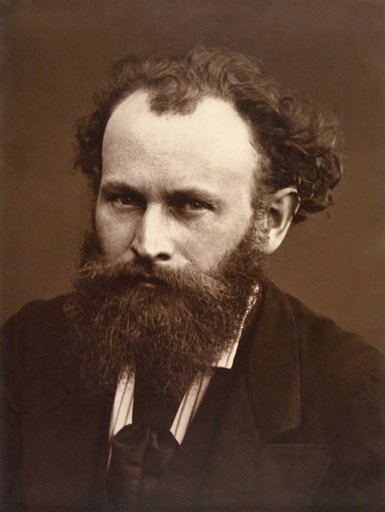
Artist
Édouard Manet was a French modernist painter. He was one of the first 19th-century artists to paint modern life, as well as a pivotal figure in the transition from Realism to Impressionism.