Artwork
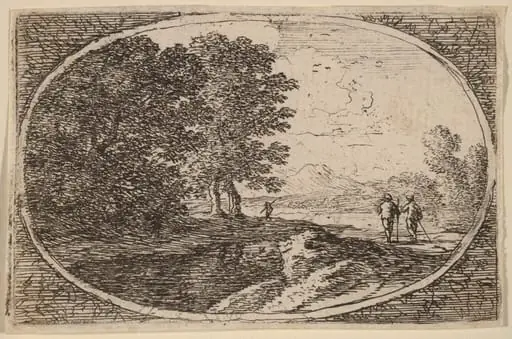
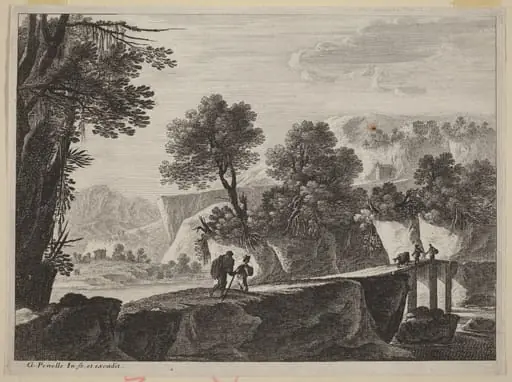
Two Travelers and a Peddler
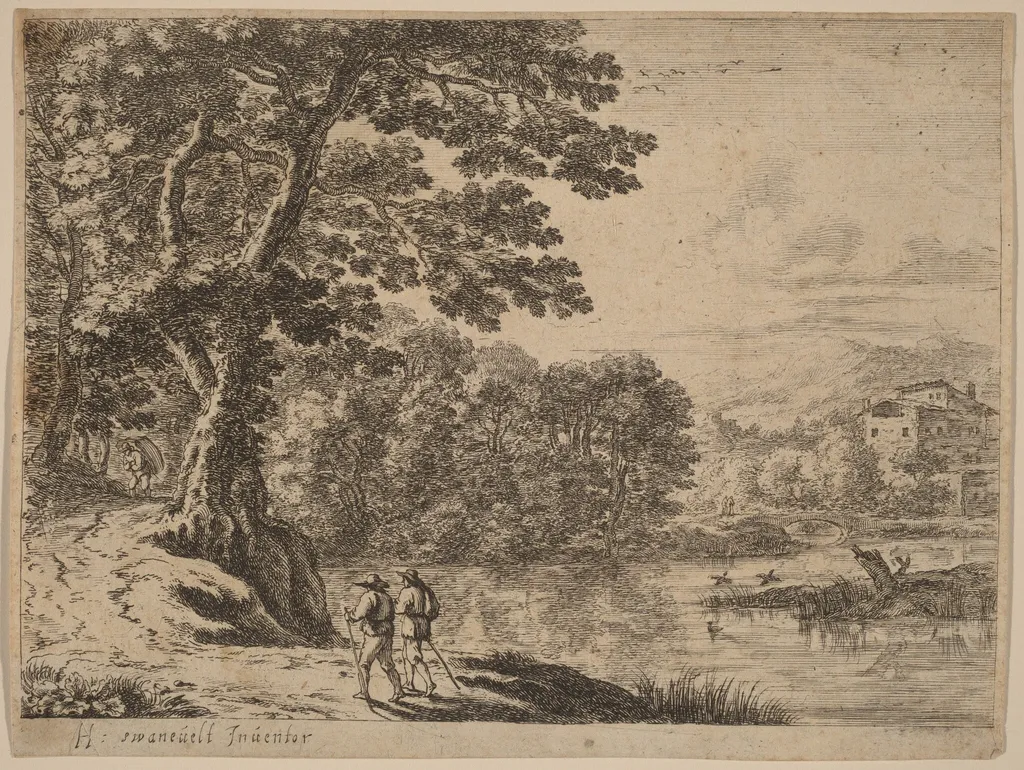
Two Travelers and a Peddler is an ink print by the Baroque artist Dutch 17th Century. It dates from 1650 and is held in the collection of the National Gallery of Art.
About this work
Overview
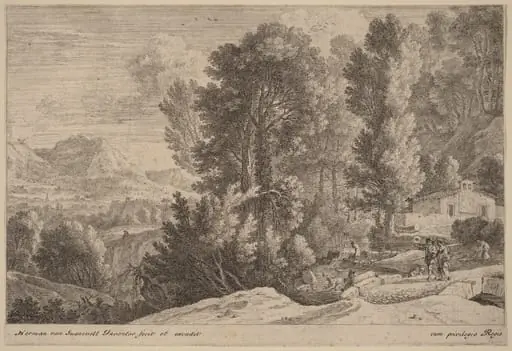
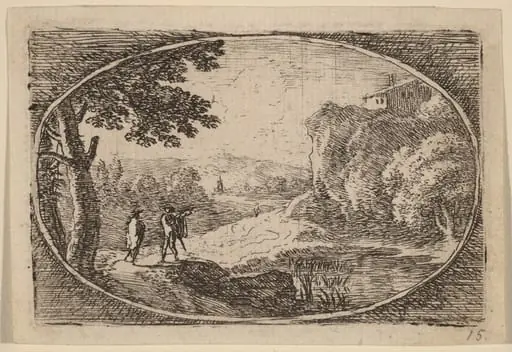
The work is a black‑and‑white etching titled “Two Travelers and a Peddler.” It depicts a narrow, earthen path winding beneath a large, leafy tree, with two figures in motion and a third figure, a peddler, implied by the title. Beyond the path a modest village clings to a hillside, while a shallow stream with floating logs occupies the foreground.
Subject & Meaning
The composition presents a moment of rural travel, emphasizing the relationship between the itinerant figures and the landscape they traverse. The juxtaposition of the travelers with the distant settlement suggests themes of movement, commerce, and the connection between isolated communities and the broader world they engage with.
Technique & Style
Executed through traditional etching, the artist employs fine incised lines to render deep shadows and surface texture, achieving a sense of depth without color. The contrast between densely hatched areas and open spaces creates a tactile quality, characteristic of 19th‑century printmaking practices that relied on line work to model form and atmosphere.
History & Provenance
The print belongs to a period when etching was a favored medium for disseminating scenic and genre scenes to a wider audience. While specific ownership records are not provided, works of this type were commonly collected by patrons interested in depictions of everyday life and the countryside.
Context
Set against a backdrop of increasing interest in rural genre subjects, the image reflects contemporary fascination with travel and the everyday experiences of common folk. The inclusion of a peddler aligns with the era’s focus on itinerant merchants as symbols of economic exchange within agrarian societies.
Artist & collection

Artist
This Dutch printmaker made small, sharp engravings and etchings, mostly portraits and sea battles pulled from metal plates.