Artwork
Self-Portrait
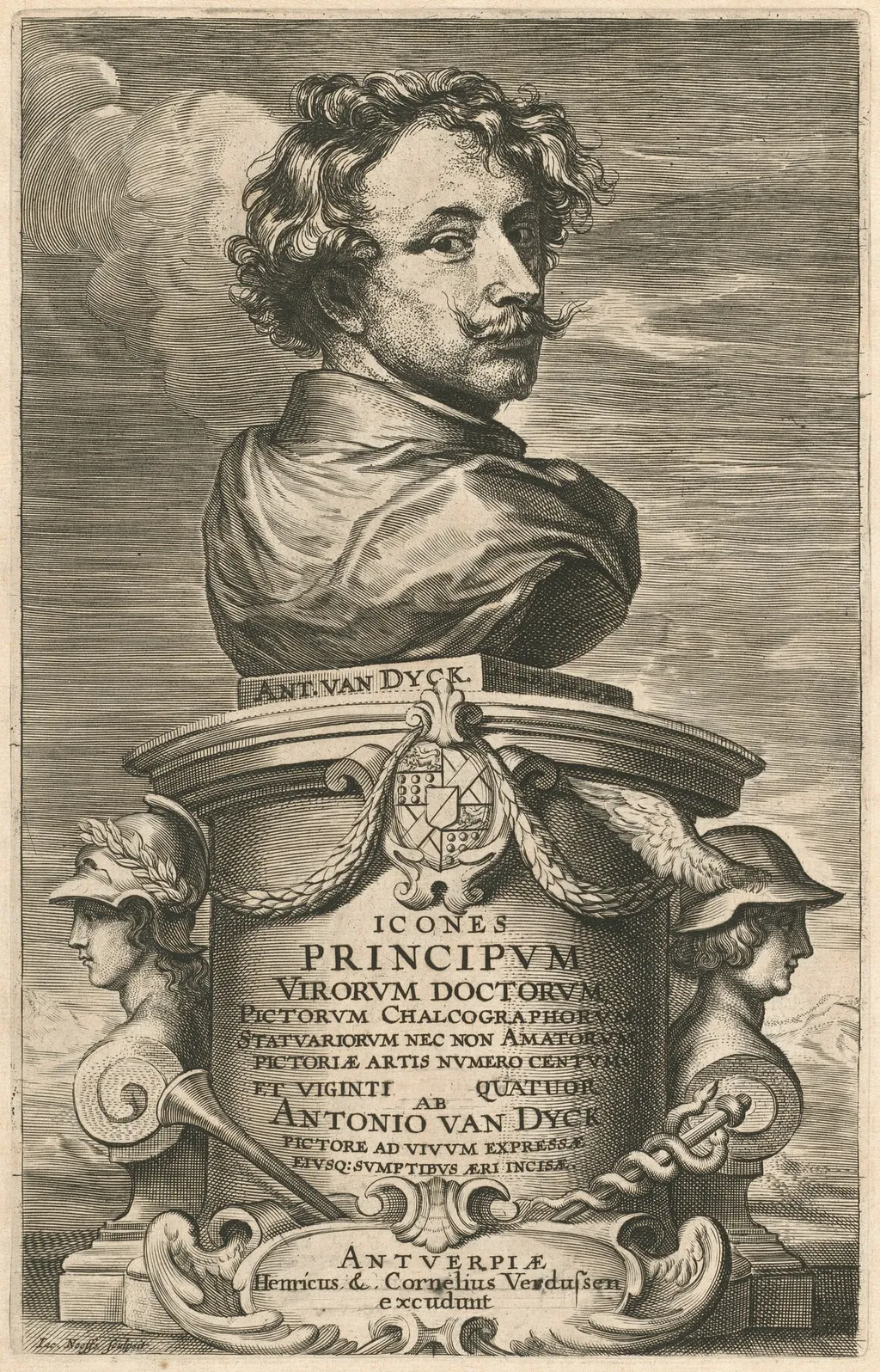
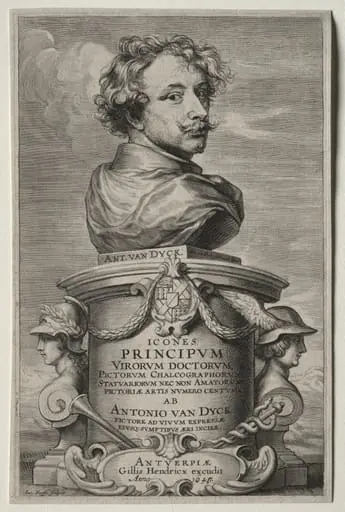
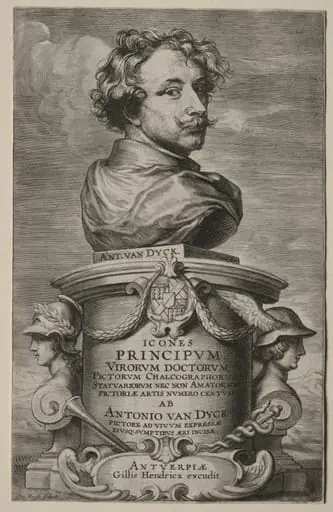
Self-Portrait is an ink print by the Baroque artist Anthony van Dyck. It dates from 1634 and is held in the collection of the National Gallery of Art.
- Inscription
- Inscribed:center in plate: Ant. van Dyck fecit aqua forti; lower center in plate: ICONES / PRINCIPVM / VIRORVM DOCTORVM ...; lower left in plate: Iac. Neeffs Sculpsit; lower center in plate: ANTVERPIAE / Henricus & Cornelius Verdussen / excudunt
About this work
Overview
The artist himself rendered the head through etching, while the finishing details, likely the clothing and background, were added by the engraver J.
This print, dated around 1634, is a self-portrait by Anthony van Dyck, executed in a hybrid technique combining etching and engraving. The artist himself rendered the head through etching, while the finishing details, likely the clothing and background, were added by the engraver J. Neeffs. The work appears on laid paper, a common support for prints of the period, and reflects the collaborative nature of print production in early 17th-century Europe.
Subject & Meaning
Van Dyck depicts himself with a composed, direct gaze, conveying quiet self-assurance rather than flamboyance. The absence of elaborate adornment or symbolic props shifts focus to his demeanor and the precision of his features. This restrained presentation aligns with his professional identity as a court painter, emphasizing intellectual authority and technical mastery over aristocratic display.
Technique & Style
The portrait merges two distinct printmaking methods: etching, which allowed van Dyck to capture the softness of skin and hair with fluid lines, and engraving, which Neeffs used to define sharper details in the collar and background. The contrast between the two techniques highlights the division of labor in print workshops, while the tonal subtlety and controlled line work reflect the refined aesthetic of Flemish portraiture.
History & Provenance
The print was produced during van Dyck’s years in England, where he served as court painter to Charles I. While the exact early ownership is undocumented, the work circulated among collectors and artists familiar with his prints. Its survival in multiple impressions suggests it was valued for its technical innovation and personal insight into the artist’s image during his most influential period.
Context
In the 1630s, self-portraiture in print form became a tool for artists to assert their status and control their public image. Van Dyck’s approach diverged from the theatricality of earlier self-representations, instead favoring understated realism. This shift paralleled broader trends in European portraiture, where psychological depth and technical virtuosity replaced symbolic ornamentation.
Legacy
This print remains a key example of how artists used collaborative printmaking to shape their reputations. Van Dyck’s self-portrait influenced later generations of engravers and portraitists who sought to blend expressive intimacy with technical precision. Its dual-authorship also underscores the often-overlooked role of specialist engravers in the dissemination of painterly imagery.
Own this work as a print
Artist & collection
Artist
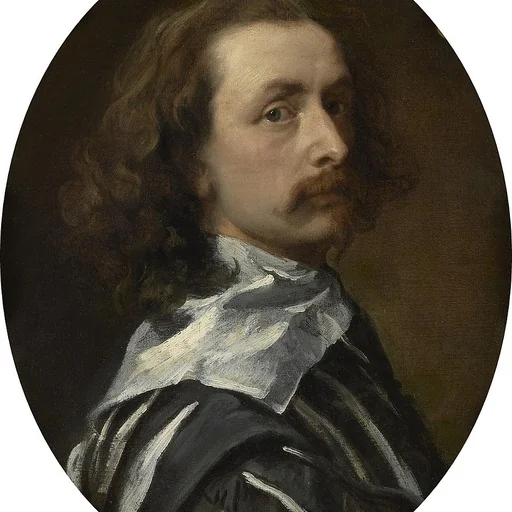
Sir Anthony van Dyck (; Dutch: Antoon van Dijck; 22 March 1599 – 9 December 1641) was a Flemish Baroque artist, who became the leading court painter in England after success in the Spanish Netherlands and Italy.