Artwork
Self-Portrait
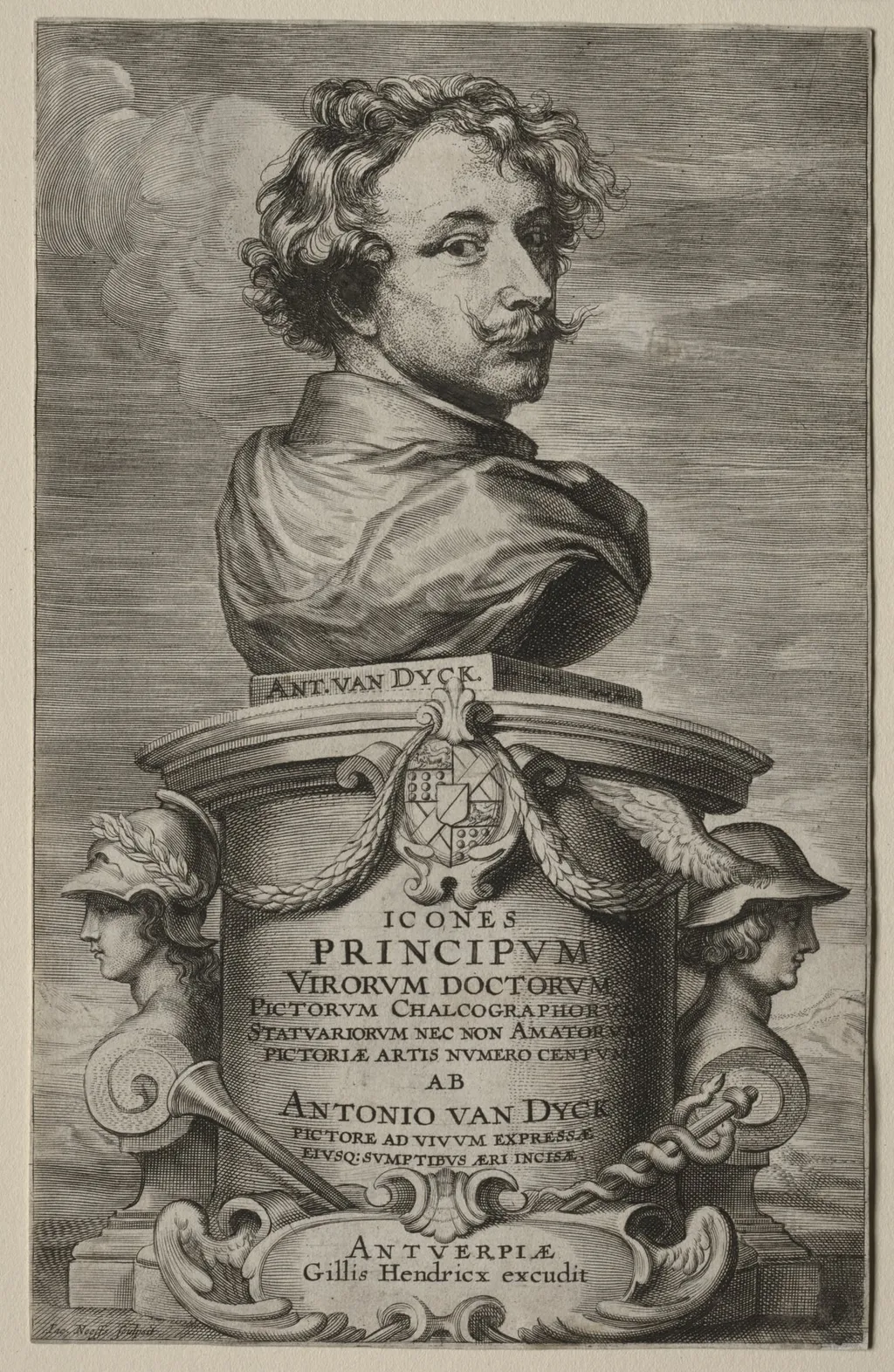
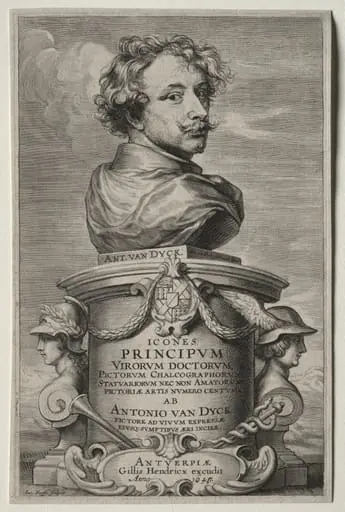
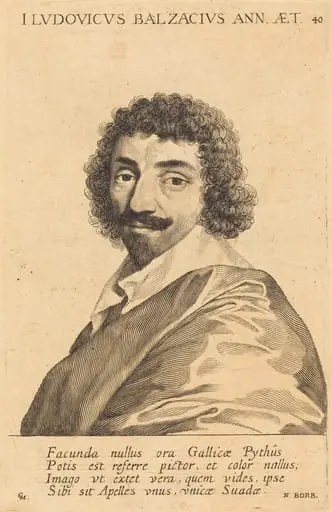
Self-Portrait is a print by the Baroque artist Anthony van Dyck. It is held in the collection of the Cleveland Museum of Art.
- Accession no.
- 1923.1100
- Credit line
- Gift of Ralph King
About this work
Overview
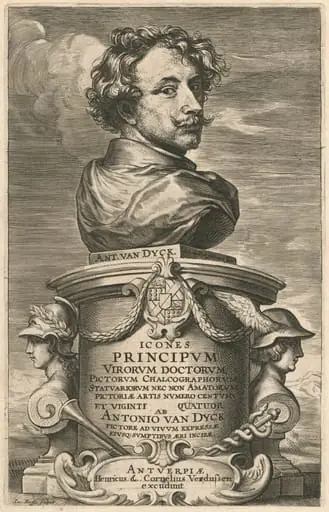
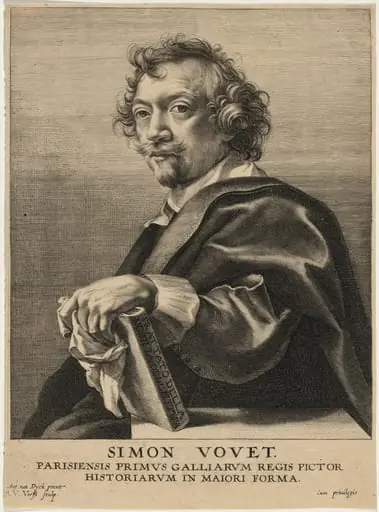
Anthony van Dyck’s Self‑Portrait (1645) is an engraved print that presents the artist in a sober, forward‑looking pose. Rendered in black ink on paper, the image shows a man with curled hair, a moustache, and a ruffled collar, framed by a decorative border that includes two diminutive figures and a heraldic device.
Subject & Meaning
The work functions as a personal declaration of van Dyck’s identity as a painter. The Latin inscription surrounding the frame praises his skill, reinforcing the portrait’s role as both a likeness and a statement of professional stature.
Technique & Style
Executed as an intaglio engraving, the piece relies on fine lines and cross‑hatching to model volume and suggest depth. The contrast between dense shading and lighter areas creates a three‑dimensional effect despite the medium’s inherent flatness, reflecting the Baroque interest in dramatic chiaroscuro.
History & Provenance
Created near the end of van Dyck’s life, the print now belongs to the Cleveland Museum of Art. Its acquisition history is not detailed here, but the piece has remained within institutional collections, ensuring its preservation and scholarly access.
Context
Van Dyck, a Flemish artist trained under Peter Paul Rubens, rose to prominence as the principal court painter in England. By 1617 he had achieved master status in Antwerp’s Guild of Saint Luke, and his reputation for portraiture was well established, making this self‑portrait a natural extension of his celebrated genre.
Own this work as a print
Artist & collection
Artist
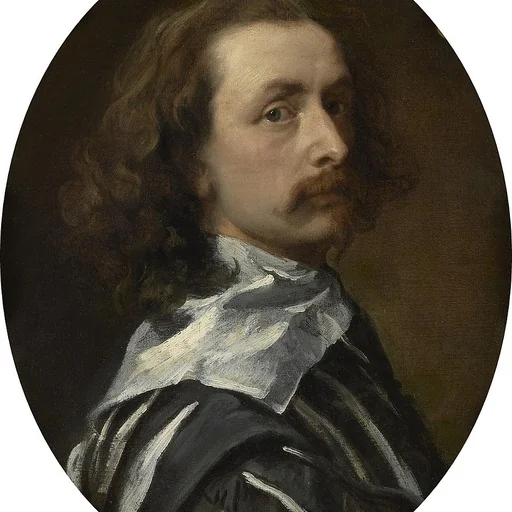
Sir Anthony van Dyck (; Dutch: Antoon van Dijck; 22 March 1599 – 9 December 1641) was a Flemish Baroque artist, who became the leading court painter in England after success in the Spanish Netherlands and Italy.