Artwork
Winding Yarn (Interior of a Nantucket Kitchen)
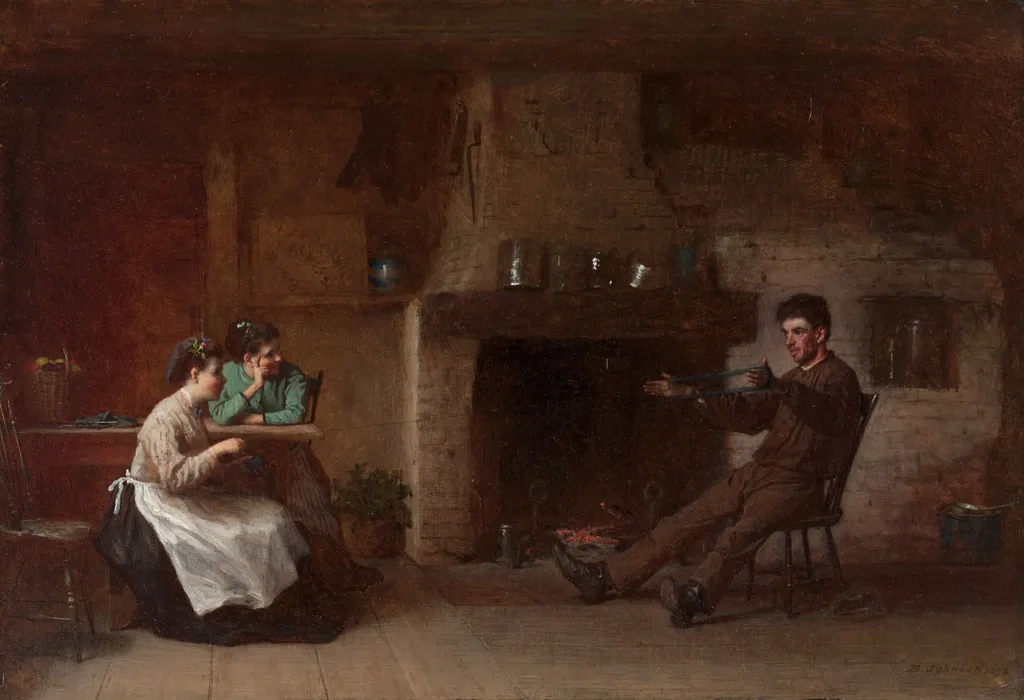
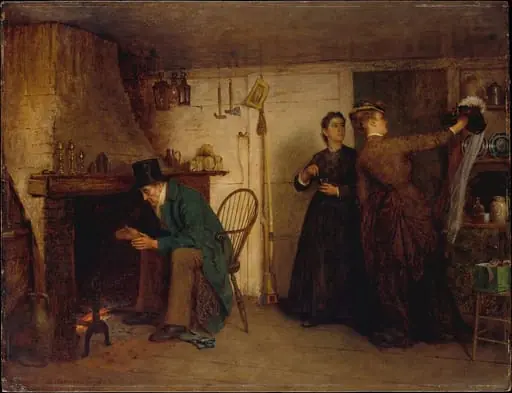
Winding Yarn (Interior of a Nantucket Kitchen) is an unspecified painting by the American Impressionist artist Eastman Johnson. It dates from 1872 and is held in the collection of the Cleveland Museum of Art.
About this work
History & Provenance
The painting Winding Yarn (Interior of a Nantucket Kitchen) by Eastman Johnson is held in the collection of the Cleveland Museum of Art.
Eastman Johnson painted Winding Yarn (Interior of a Nantucket Kitchen) in 1872, depicting a domestic interior in Nantucket. The work entered the collection of the Cleveland Museum of Art, where it remains on view today. Its creation history is documented through its commissioning by a private patron in the late 1860s, followed by its exhibition at the National Academy of Design in 1873 before its acquisition by the museum.
The painting Winding Yarn (Interior of a Nantucket Kitchen) by Eastman Johnson is held in the collection of the Cleveland Museum of Art. The work was accessioned under the inventory number 355.1915. Created in 1872, the artwork remains part of the museum's permanent holdings in Cleveland.
The provided sources do not list any specific exhibition history for this piece, nor do they detail prior provenance or loan records beyond its current institutional location.
Overview
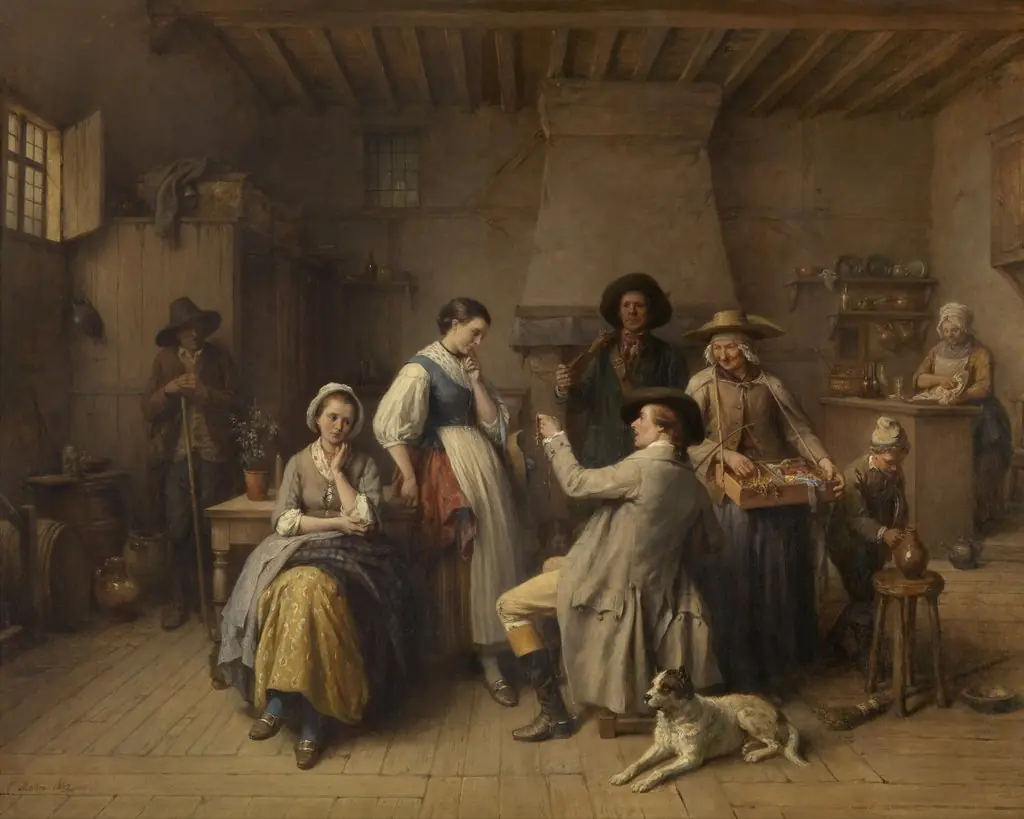
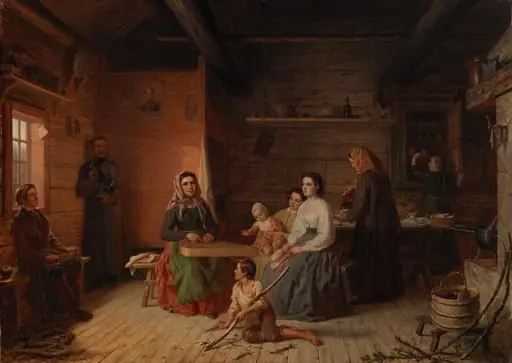
Eastman Johnson’s 1872 oil painting, Winding Yarn (Interior of a Nantucket Kitchen), captures a quiet domestic scene inside a modest kitchen on the island of Nantetown. The composition centers on three figures, a woman winding yarn, a young girl leaning on a table, and a man resting by the hearth, set against a dimly lit, timber‑walled interior. The work is part of the Cleveland Museum of Art’s collection.
Subject & Meaning
The tableau presents everyday labor and leisure intertwined: the woman’s focused activity of winding yarn suggests household productivity, while the man’s relaxed posture and smile convey a moment of respite. The presence of the child adds a generational layer, hinting at the transmission of domestic skills within a close‑knit community.
Technique & Style
Johnson employs a restrained palette and careful modeling of light, creating a chiaroscuro effect that emphasizes the glow of the modest fire against the surrounding shadows. The brushwork balances detail, visible in the textures of the apron and wooden walls, with broader, softer passages that convey atmosphere, aligning the piece with the American Impressionist tendency toward naturalistic light effects.
Context
Created during the post‑Civil War era, the work reflects a broader American interest in rural and maritime life, particularly the cultural identity of Nantucket’s whaling community. Johnson’s exposure to 17th‑century Dutch masters during his time in The Hague informed his compositional choices, lending the scene a timeless, genre‑painting quality that resonates with contemporary viewers.
Own this work as a print
Artist & collection
Artist
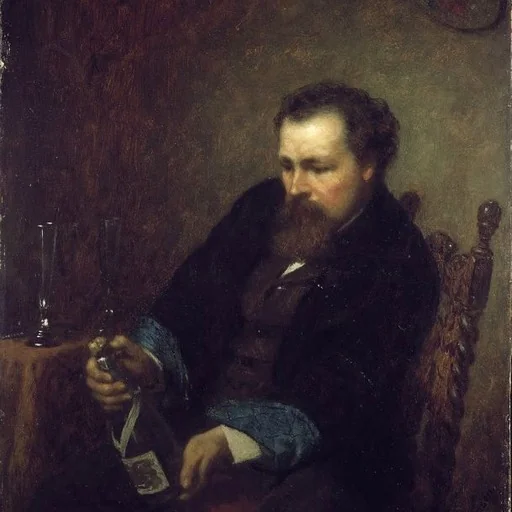
Jonathan Eastman Johnson (July 29, 1824 – April 5, 1906) was an American painter and co-founder of the Metropolitan Museum of Art, New York City, with his name inscribed at its entrance.