Artwork
Winding Yarn (Interior of a Nantucket Kitchen)
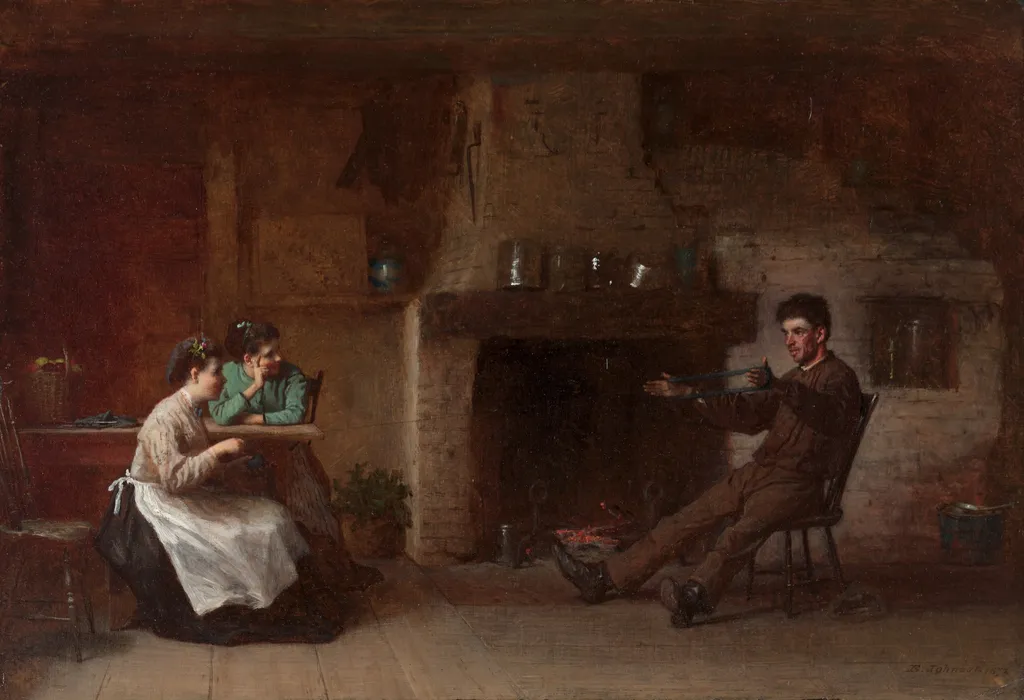
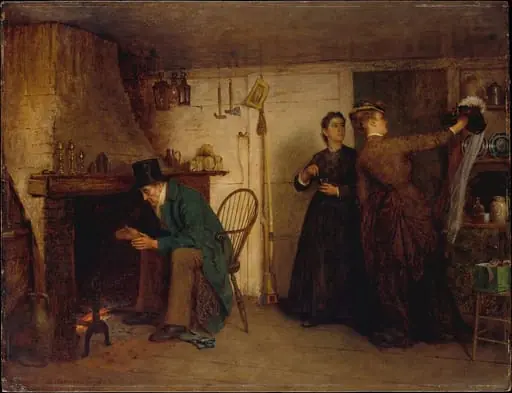
Winding Yarn (Interior of a Nantucket Kitchen) is an unspecified painting by the American Impressionist artist Eastman Johnson. It dates from 1872 and is held in the collection of the Cleveland Museum of Art.
About this work
History & Provenance
It is presently held in the collection of the Cleveland Museum of Art, where it has been catalogued as part of the museum’s holdings.
Winding Yarn (Interior of a Nantucket Kitchen) is a painting created by the American artist Eastman Johnson in 1872. The work is classified as a painting and bears an inception date of January 1, 1872. It is presently held in the collection of the Cleveland Museum of Art, where it has been catalogued as part of the museum’s holdings. The title indicates that the scene represents an interior of a Nantucket kitchen.
Context
Eastman Johnson created Winding Yarn (Interior of a Nantucket Kitchen) in 1872, capturing a domestic interior with quiet narrative detail characteristic of his realist genre scenes. The work situates Johnson within the American realist tradition, reflecting his focus on everyday life and subtle social observation. Its presence in the Cleveland Museum of Art collection underscores its significance within institutional holdings of 19th-century American painting.
Legacy
Eastman Johnson's 1872 painting Winding Yarn (Interior of a Nantucket Kitchen) has been recognized for its nuanced portrayal of domestic interior scenes, contributing to discussions of 19th-century American genre painting. Its inclusion in major museum collections, notably the Cleveland Museum of Art, has ensured continued scholarly attention to Johnson's role in documenting everyday life in the post-Civil War era. The work is frequently referenced in studies of American realism and domestic interiors, underscoring its enduring significance in art historical narratives.
Overview
Eastman Johnson’s 1872 canvas Winding Yarn (Interior of a Nantucket Kitchen) captures a quiet domestic moment in a New England kitchen. The composition centers on three figures, a seated man holding a skein of yarn and two women at a table, one actively winding the thread, set against a dimly lit room with a brick hearth and wooden floor.
Subject & Meaning
The work illustrates everyday household labor, emphasizing the rhythm of daily life in a 19th‑century Nantucket home. By focusing on the simple act of winding yarn, Johnson highlights themes of domestic industry, familial cooperation, and the understated dignity of ordinary tasks.
Technique & Style
Johnson employs a restrained palette and chiaroscuro to model the figures, allowing light from the fireplace to carve out forms and create spatial depth. The brushwork balances detailed observation with a softer, atmospheric quality characteristic of American Impressionism, while echoing his earlier study of Dutch genre painting.
Own this work as a print
Artist & collection
Artist
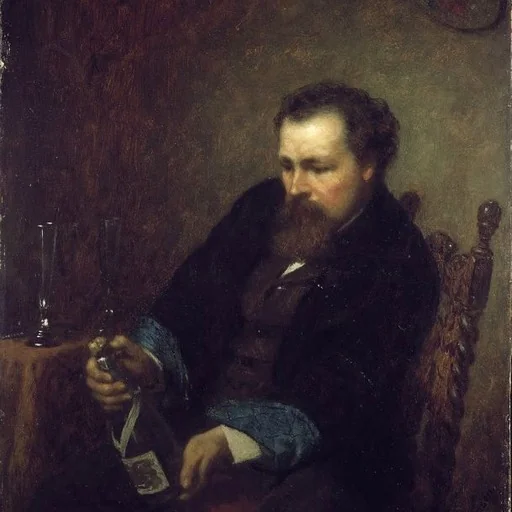
Jonathan Eastman Johnson (July 29, 1824 – April 5, 1906) was an American painter and co-founder of the Metropolitan Museum of Art, New York City, with his name inscribed at its entrance.